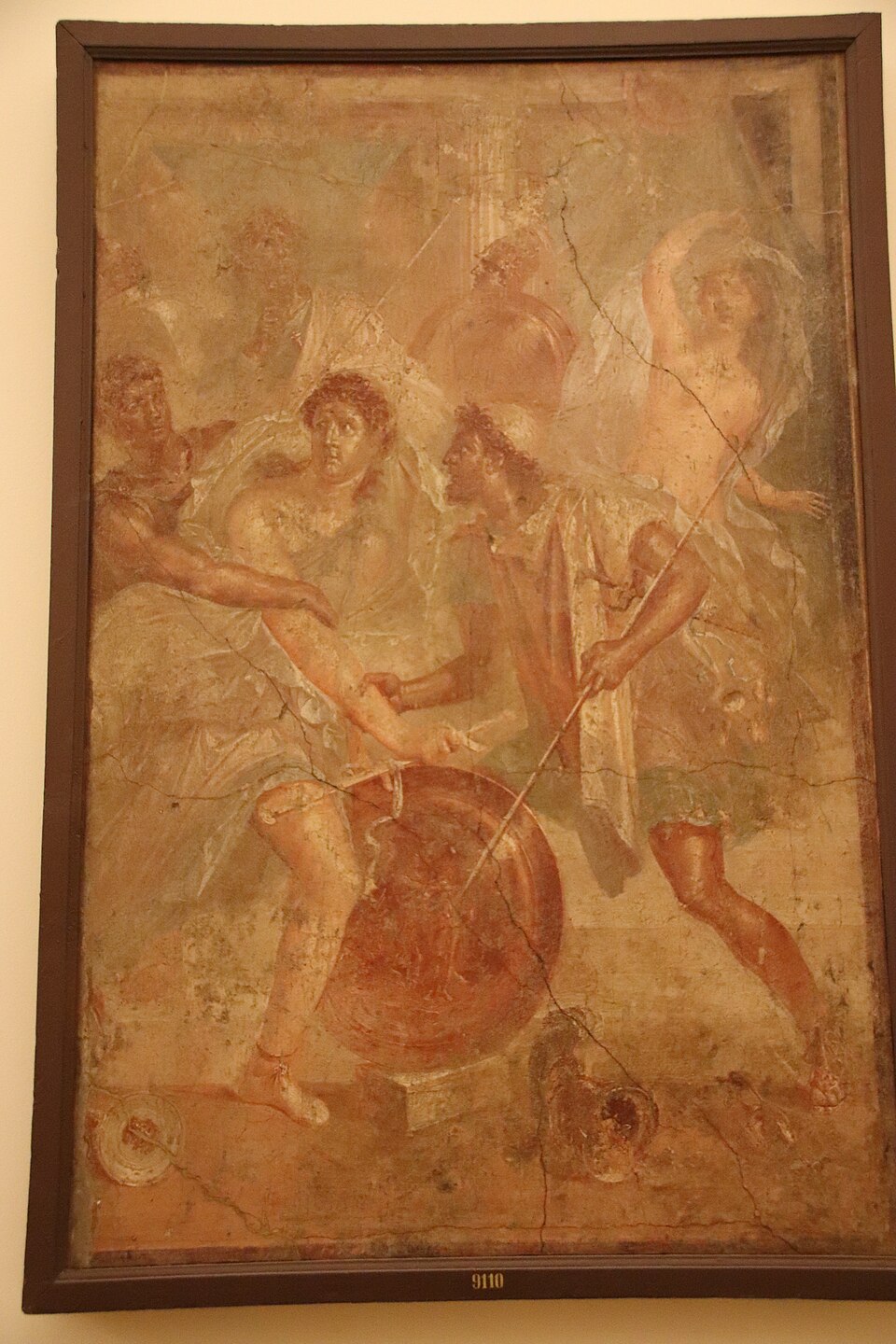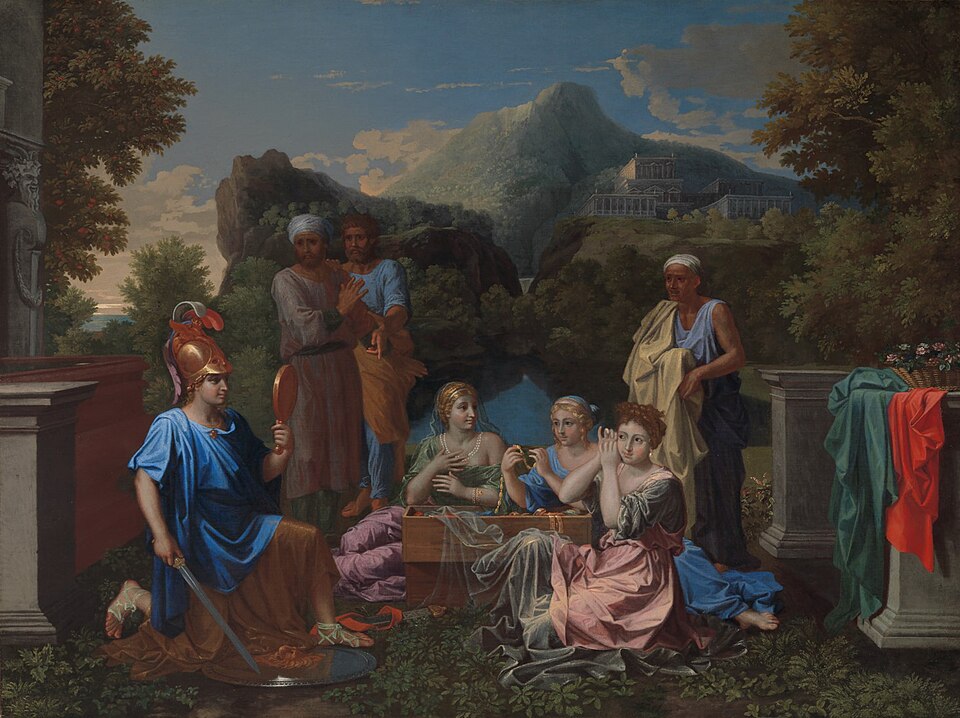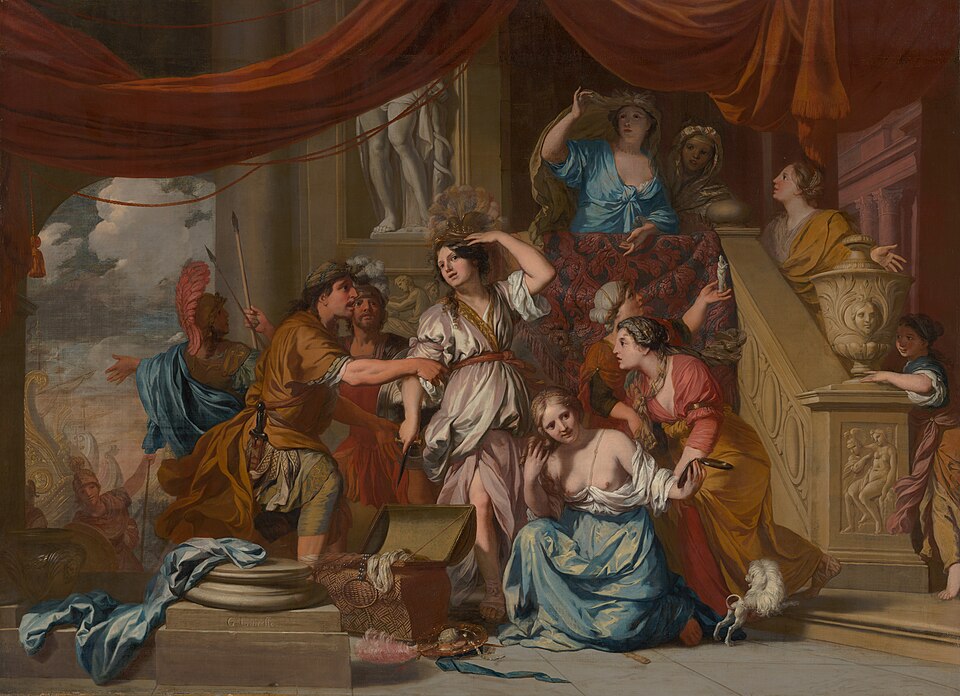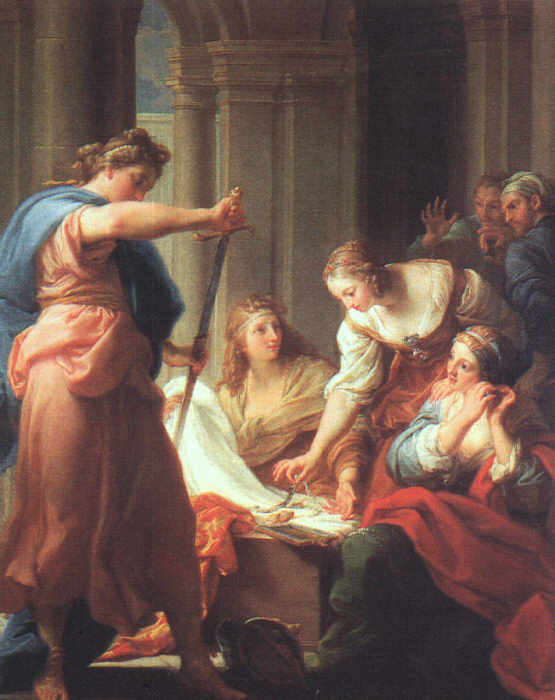
Achilles at the Court of Lycomedes
At the elegant court of Lycomedes, Achilles sits in women's silks — but the game is ending. Ulysses has arrived with his planted weapons, and the disguised hero betrays himself the moment his hand finds a sword. Batoni surrounds the discovery with courtly grace: fine fabrics, polished poses, perfect manners about to be shattered.
Batoni was the most fashionable painter in eighteenth-century Rome, and it shows: the myth is staged like an aristocratic drawing room. The pleasure of the picture is the mismatch — the deadliest warrior of the age, exquisitely dressed, one gesture from war.
When the war begins, Thetis tries one last trick to save her son. She hides Achilles on the island of Skyros, disguised as a girl among the daughters of King Lycomedes. A prophecy has said Troy cannot fall without him, so the Greeks come looking.
Odysseus, king of Ithaca and the cleverest of the Greeks, arrives disguised as a merchant. He lays out gifts for the princesses: jewelry, dresses — and among them, a sword and shield. Then he has a battle-alarm sounded. The girls flee. One of them grabs the weapons. Achilles is caught, and he stops pretending. He chooses the short, famous life.
Pompeo Batoni (1708–1787) was the most sought-after painter in Rome in his day, famous above all for portraits of British aristocrats on the Grand Tour, as well as polished mythological and religious works.