A storyline in 19 scenes · 50 works of art
The Odyssey
❧
Tell me, Muse, of the man of many turns, who wandered far after he had sacked the sacred city of Troy.
Ten years of wandering, told in the order Odysseus lived them — from the Cyclops' cave to the marriage bed carved from a living olive tree. Read the scenes in order for the whole story; select any artwork for a closer look.
I.
In the Cave of the Cyclops
Book IX
The Odyssey begins after the Trojan War is over. Odysseus — the Romans later called him Ulysses — has spent ten years fighting at Troy, and it will take him ten more to get home to the island of Ithaca, where he is king. Homer's poem actually opens in the middle of that journey; these scenes follow the trip in the order Odysseus lived it.
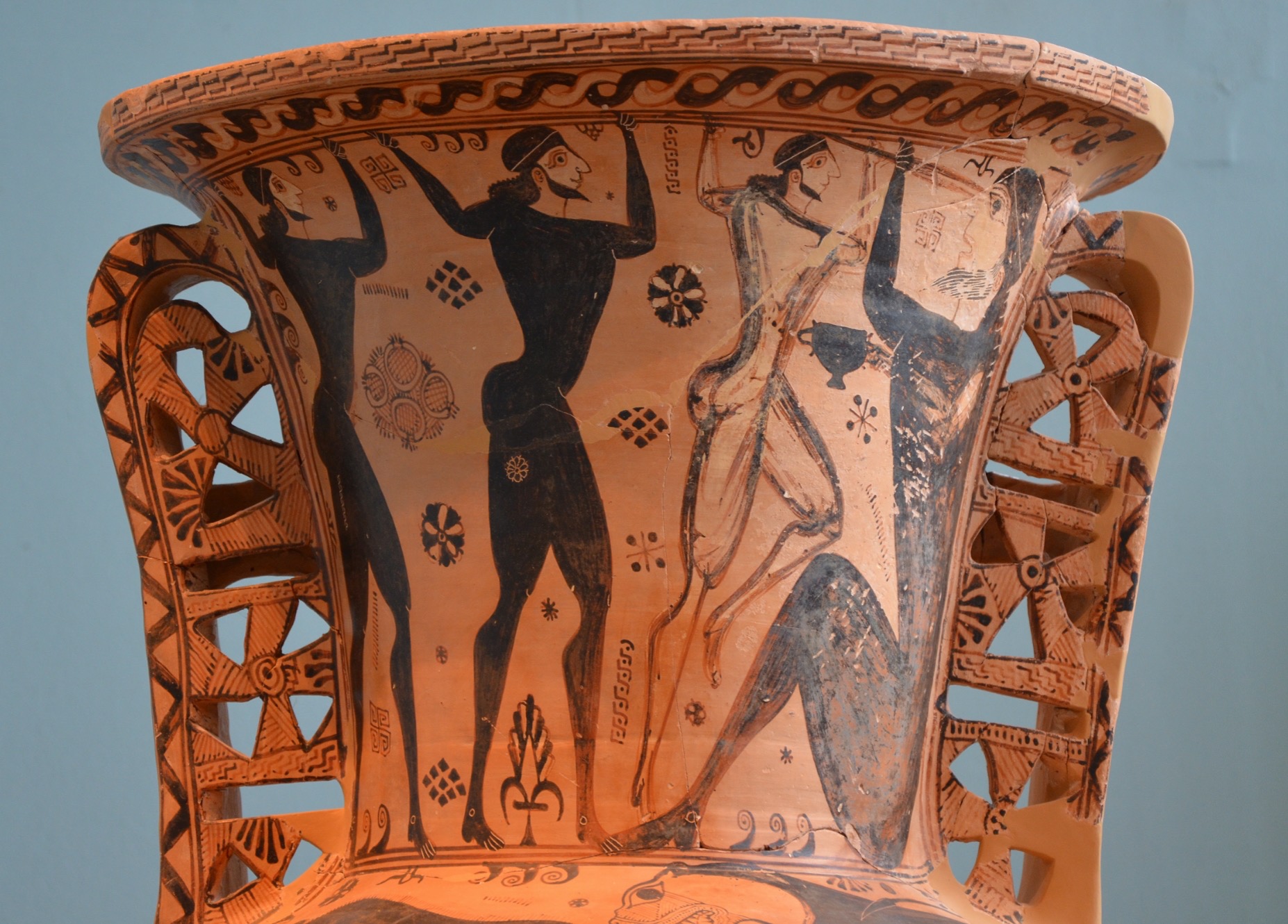
The voyage goes wrong almost immediately. His twelve ships raid the Cicones, a people allied with Troy, and lose men. A storm then drives the fleet to the land of the Lotus-eaters, where anyone who tastes the sweet lotus fruit forgets home entirely; Odysseus has to drag his own men back to the ships by force. Then, scouting an unknown coast with twelve companions, he walks into a huge cave stocked with cheeses and lambs. It belongs to Polyphemus, a one-eyed giant — a Cyclops, and a son of the sea god Poseidon.
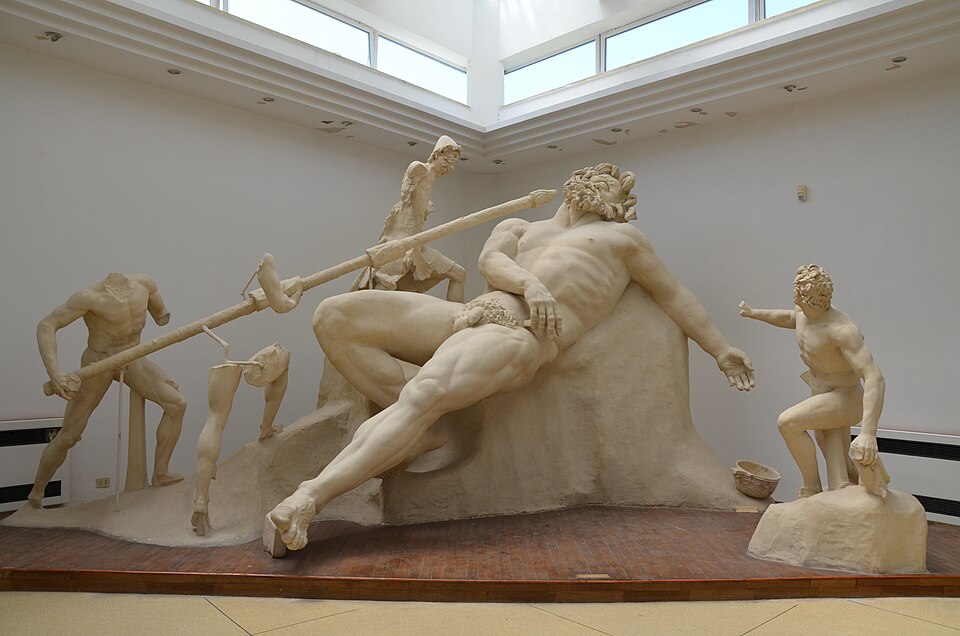
The giant rolls a boulder across the entrance and starts eating the crew, two at a time. Odysseus thinks instead of fighting: kill the giant and they are sealed in the cave forever. So he gives Polyphemus strong wine, tells him his name is “Nobody,” and when the giant passes out, drives a sharpened, fire-heated stake into his single eye. When Polyphemus screams that “Nobody is hurting me,” the other Cyclopes shrug and go home.
Other depictions of this scene
II.
The Escape from Polyphemus
Book IX
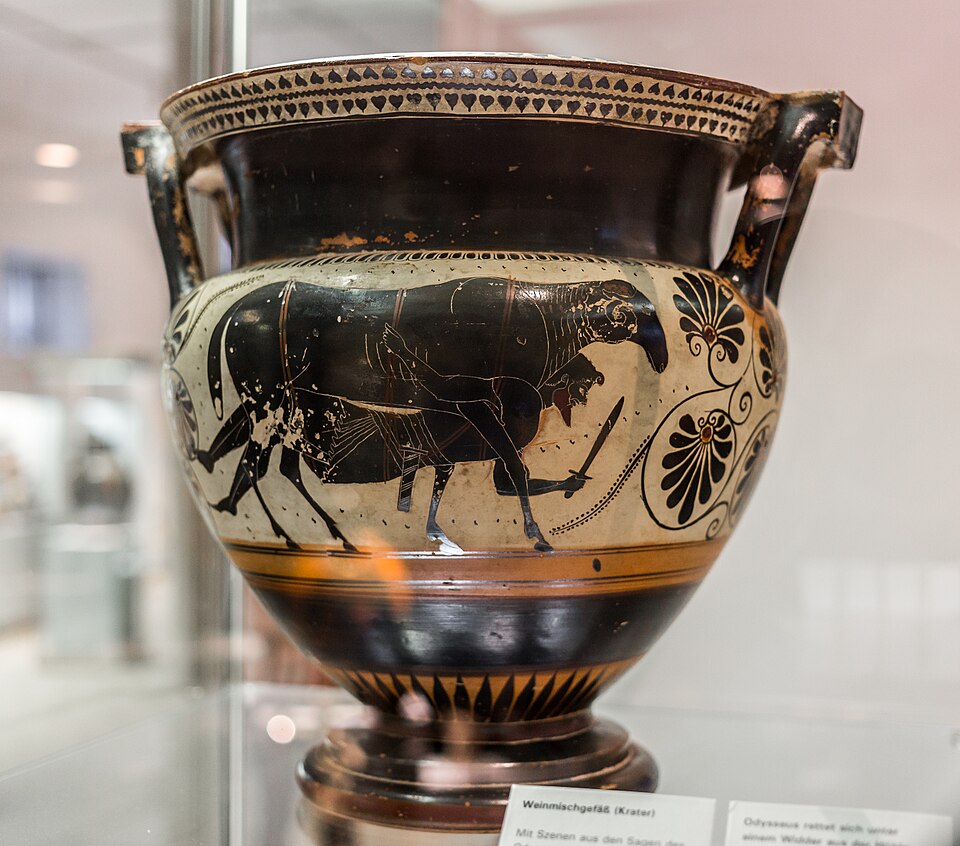
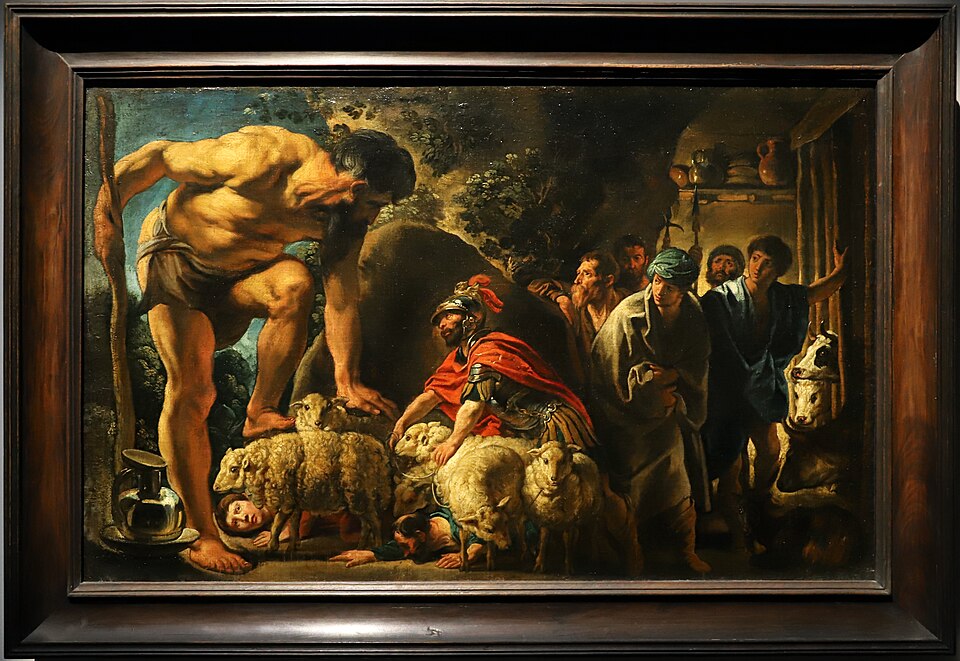
In the morning the blinded Polyphemus rolls back the stone and feels the backs of his sheep as they file out, checking that no man rides them. Odysseus has thought of that too: he and his men slip out slung underneath the animals, clinging to the wool. They run for the ship and pull for open water.
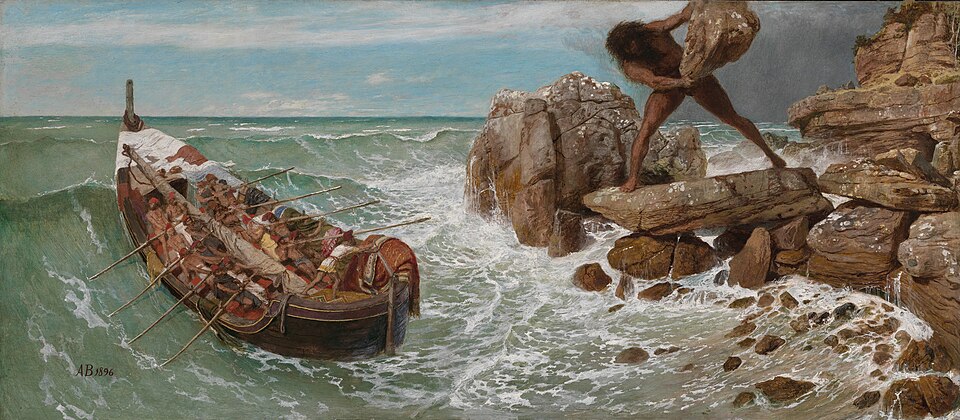
Then Odysseus makes the worst mistake of the voyage. He cannot resist shouting his real name back at the shore — tell them Odysseus of Ithaca blinded you. Polyphemus hurls half a hilltop at the sound of his voice, then prays to his father Poseidon: let this man lose every companion, wander for years, and come home late, alone, to trouble in his house. The sea god hears him. The rest of the Odyssey is that curse playing out.
Other depictions of this scene
III.
The Attack of the Laestrygonians
Book X
The fleet next reaches the floating island of Aeolus, keeper of the winds, who does Odysseus an extraordinary favor: he ties every unfavorable wind into a leather bag and sends the ships off with a fair breeze. Within sight of Ithaca's fires, while Odysseus sleeps, his crew opens the bag, certain it holds gold. The freed winds blow them all the way back, and Aeolus refuses to help a second time — a man this unlucky, he decides, must be hated by the gods.
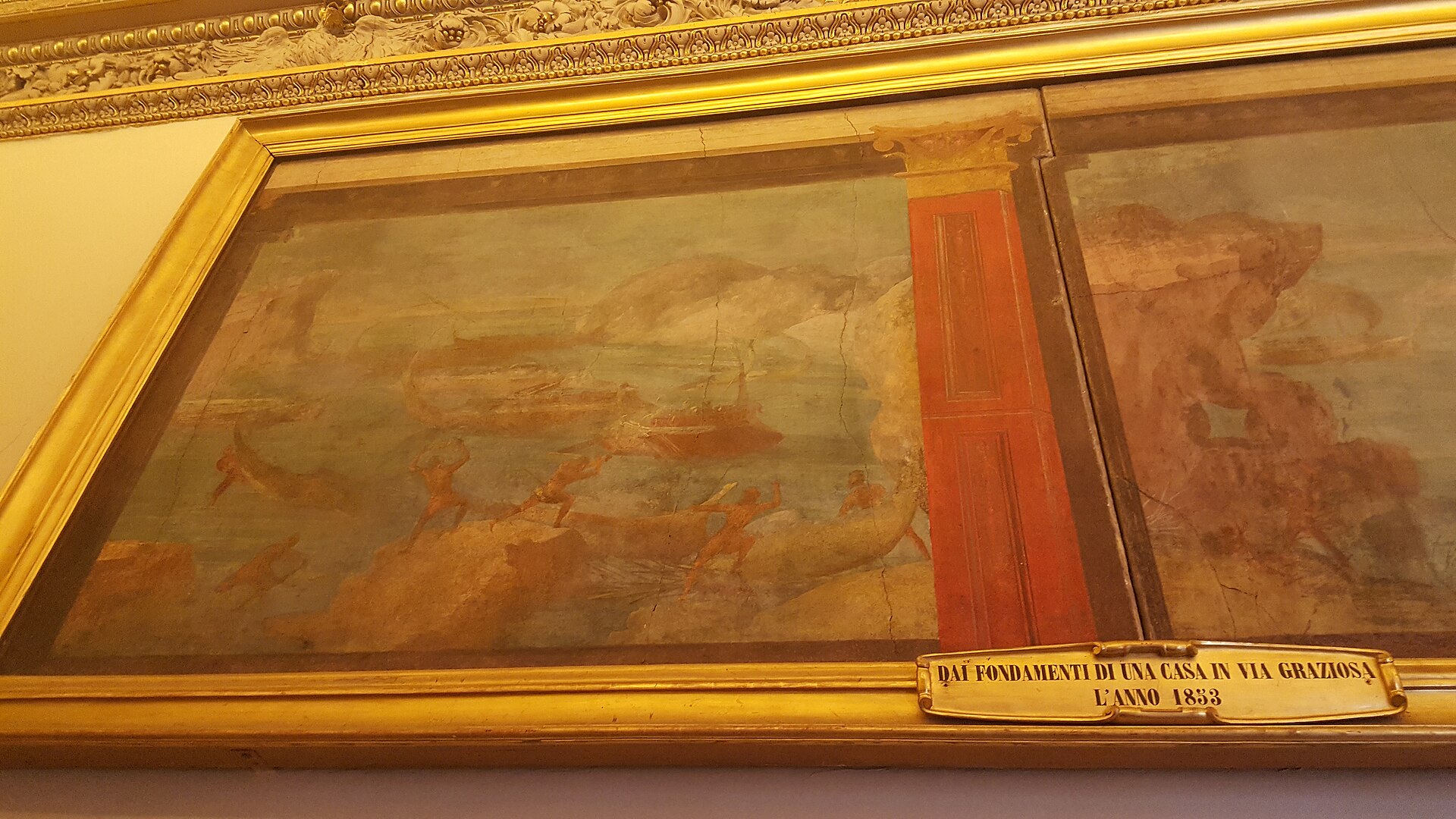
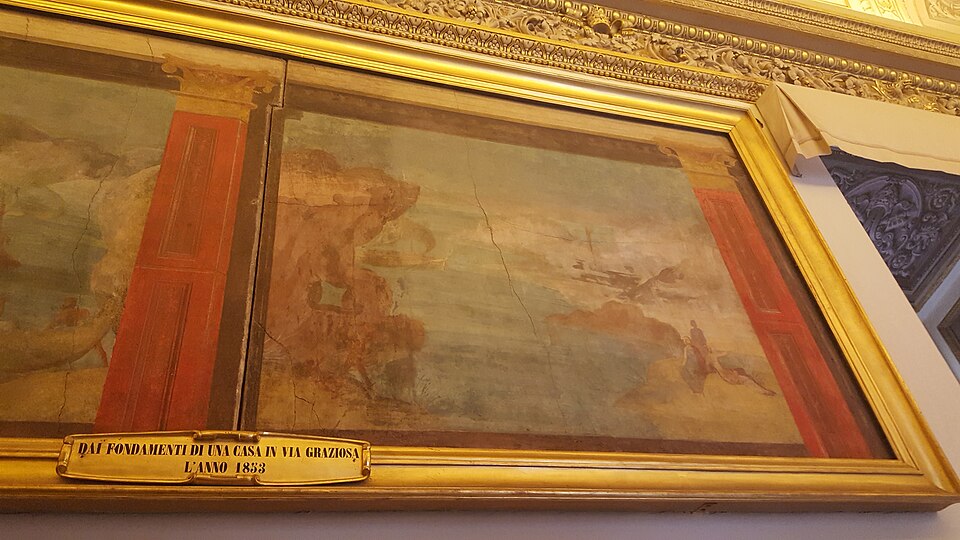
Rowing on, the fleet finds a harbor ringed by cliffs in the land of the Laestrygonians. The locals turn out to be giants. They rain boulders down on the trapped ships and spear the swimming sailors like fish. Of the twelve ships that left Troy, only Odysseus's own — cautiously moored outside the harbor mouth — gets away. In one afternoon he loses eleven ships and most of the men he was trying to bring home.
Other depictions of this scene
IV.
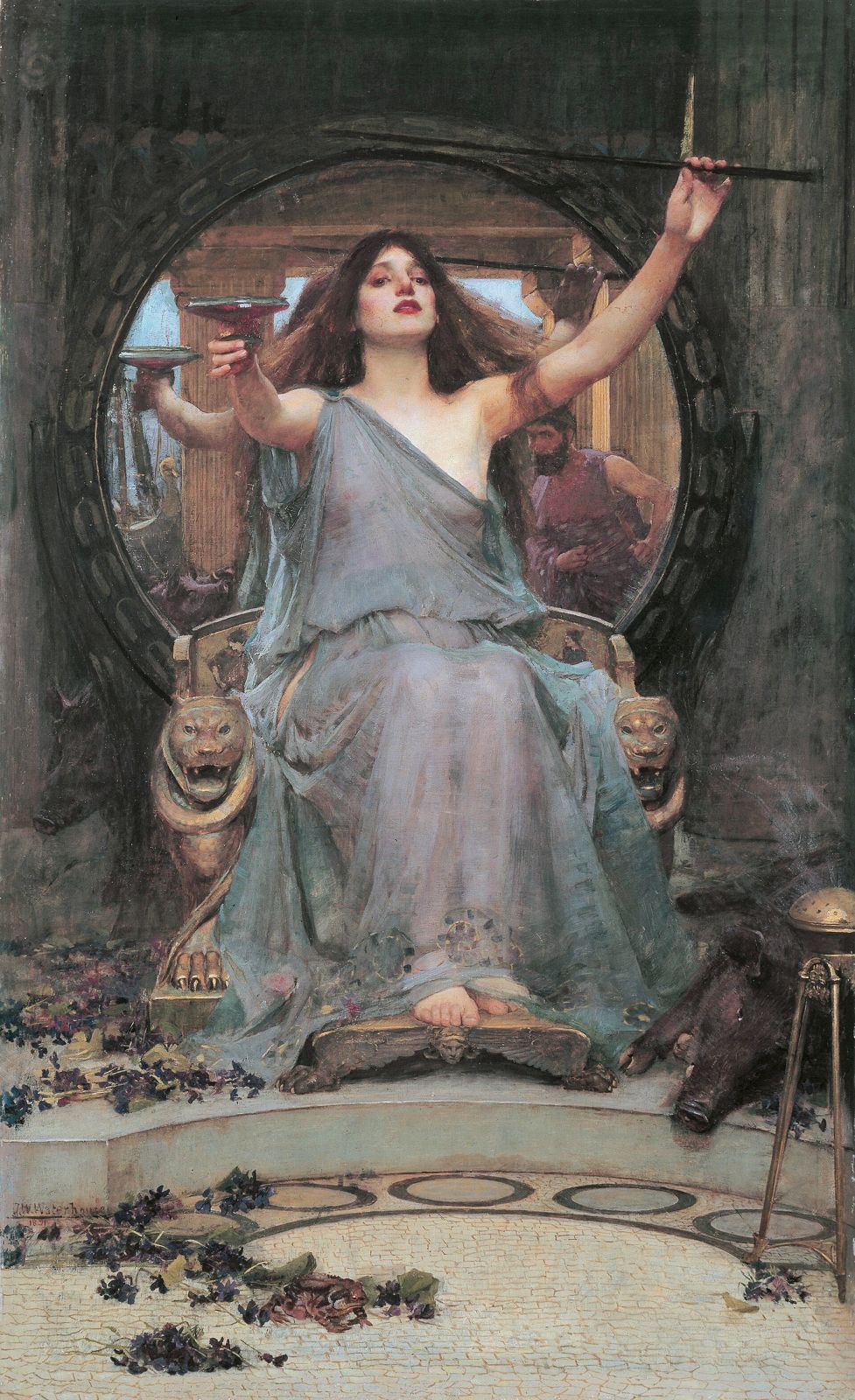
Circe the Enchantress
Book X
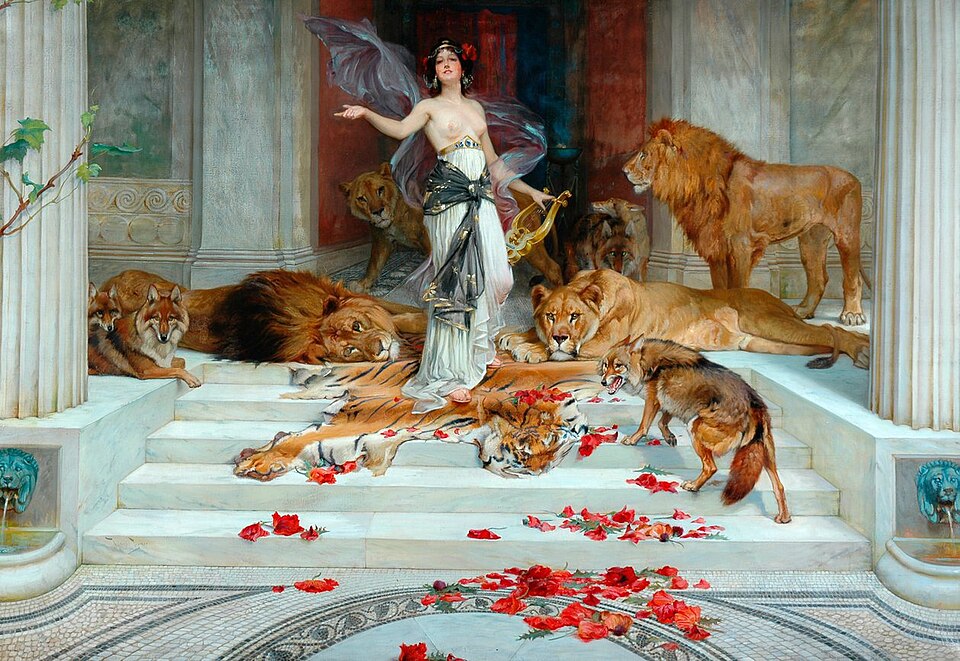
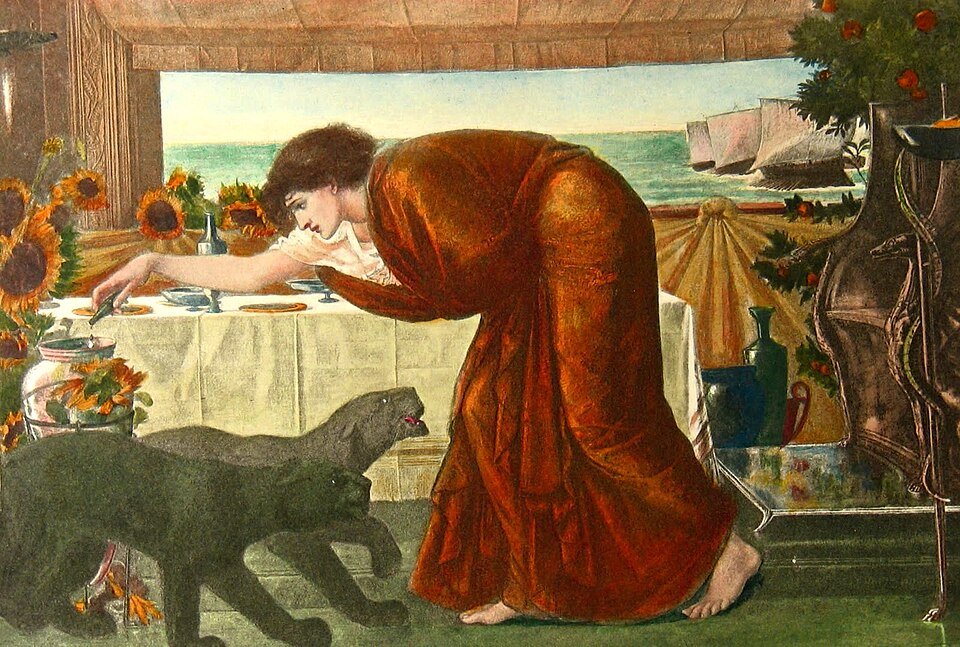
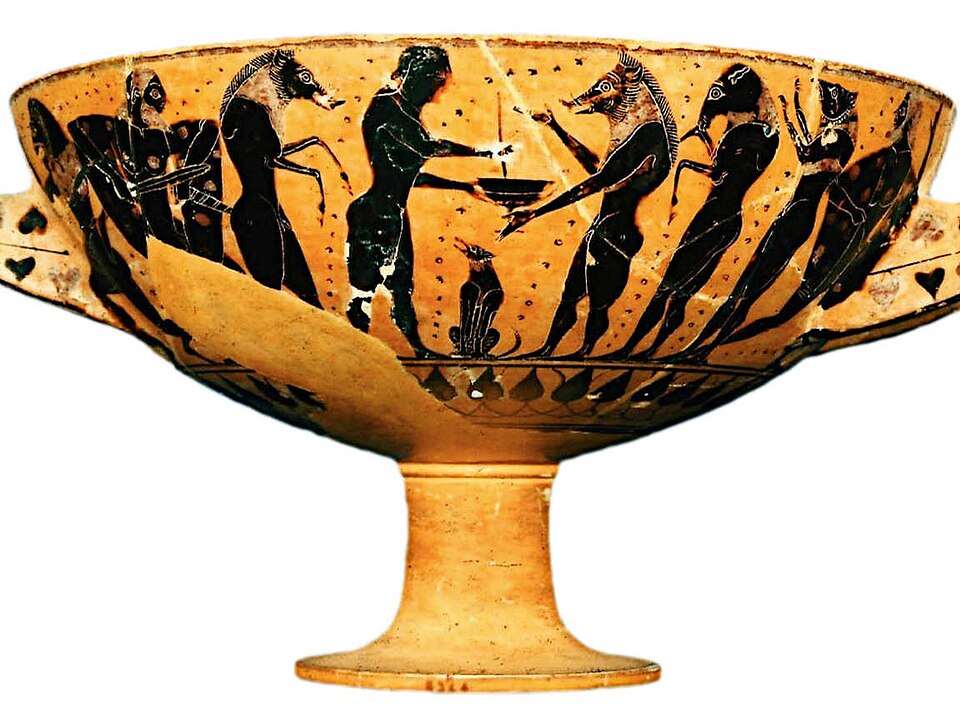
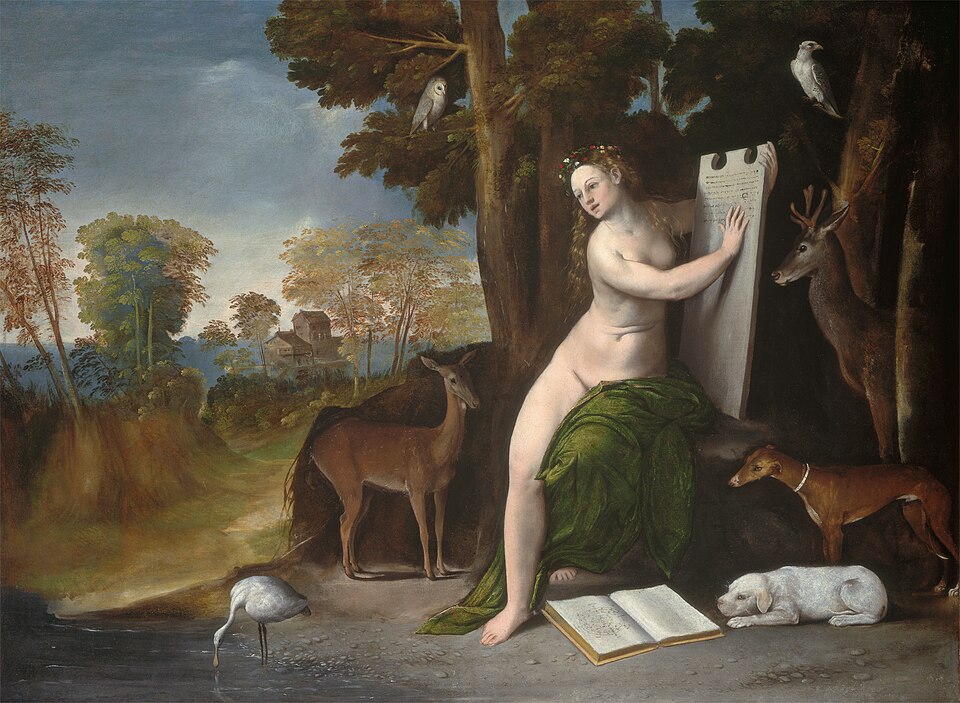
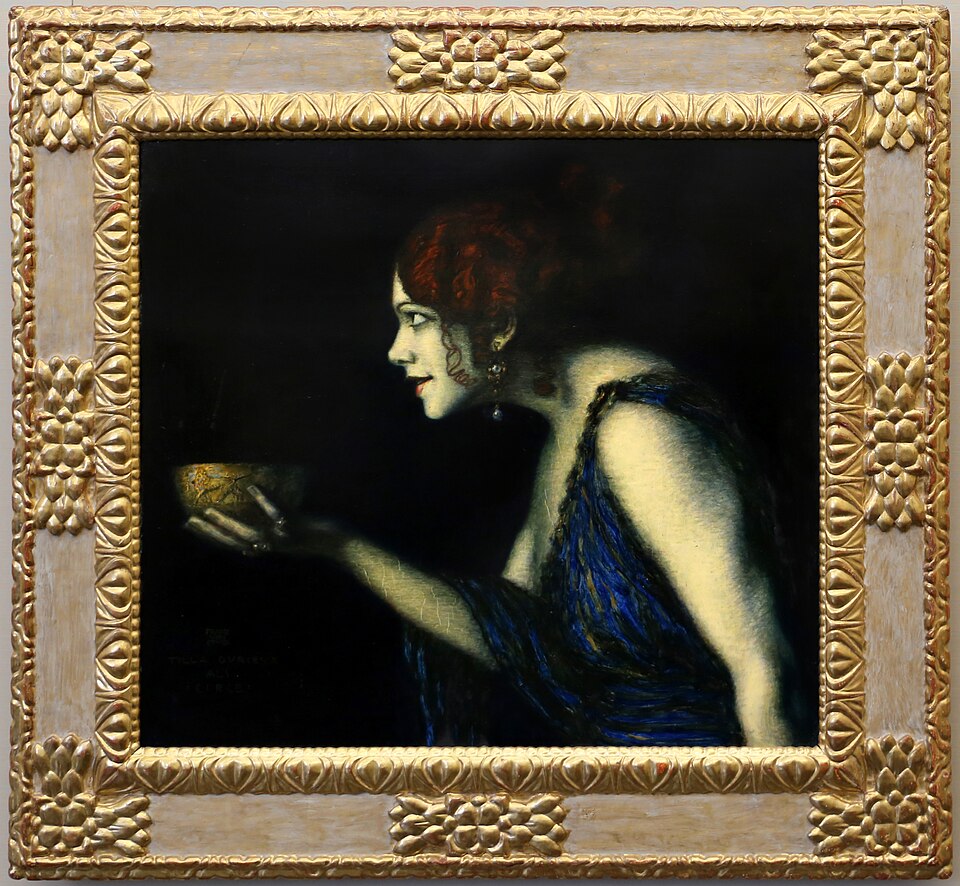
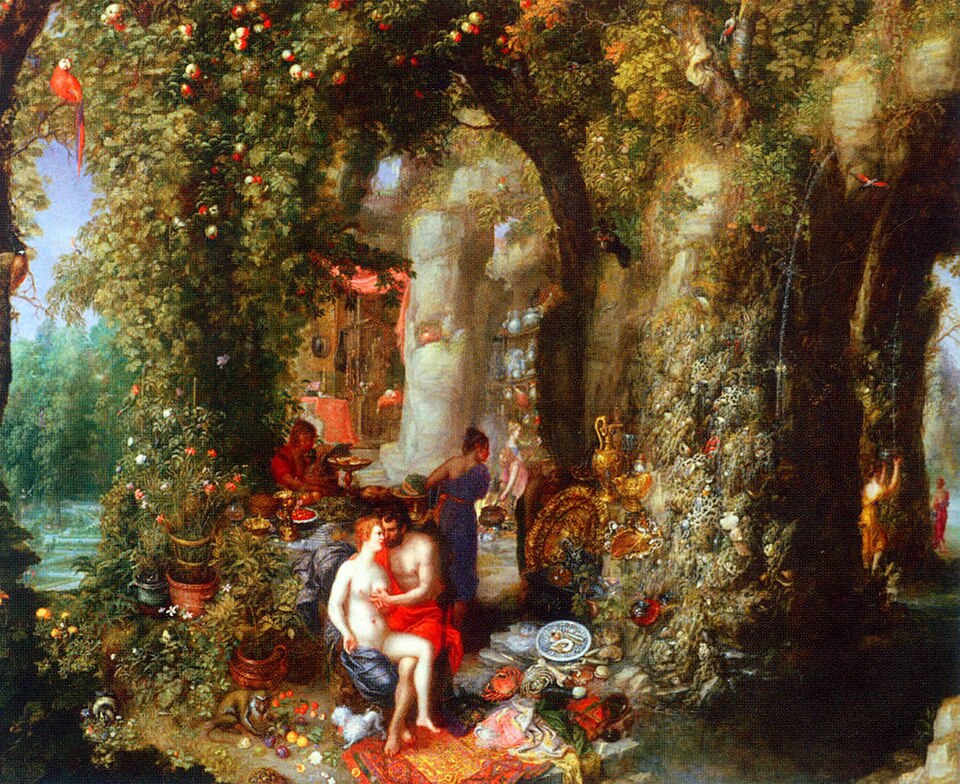
The single surviving ship reaches Aeaea, the island of Circe, a goddess and an enchantress. A scouting party finds her stone house in a clearing, guarded by wolves and mountain lions that fawn like dogs — men she has already transformed. She invites the sailors in, feeds them drugged cheese and wine, touches them with a wand, and turns them into pigs: pig bodies, human minds.
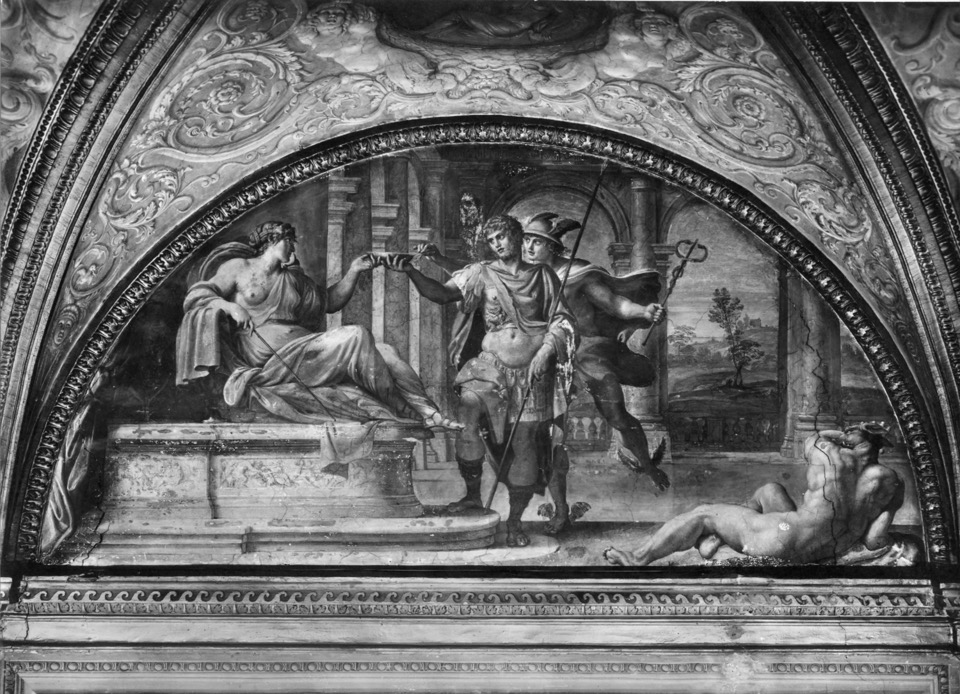
One man escapes to warn Odysseus, who goes back alone. On the way the god Hermes stops him, gives him a protective herb called moly, and tells him exactly what to do. Circe's drug fails; when she raises her wand, Odysseus draws his sword. Recognizing the man a prophecy warned her about, she restores his crew and takes him as her lover.
They stay a year, resting and feasting, until the crew reminds their captain that home still exists. Circe does not try to keep him. But she tells him the road home runs through a place no living man visits: he must sail to the edge of the world and question the dead.
Other depictions of this scene
V.
The Land of the Dead
Book XI
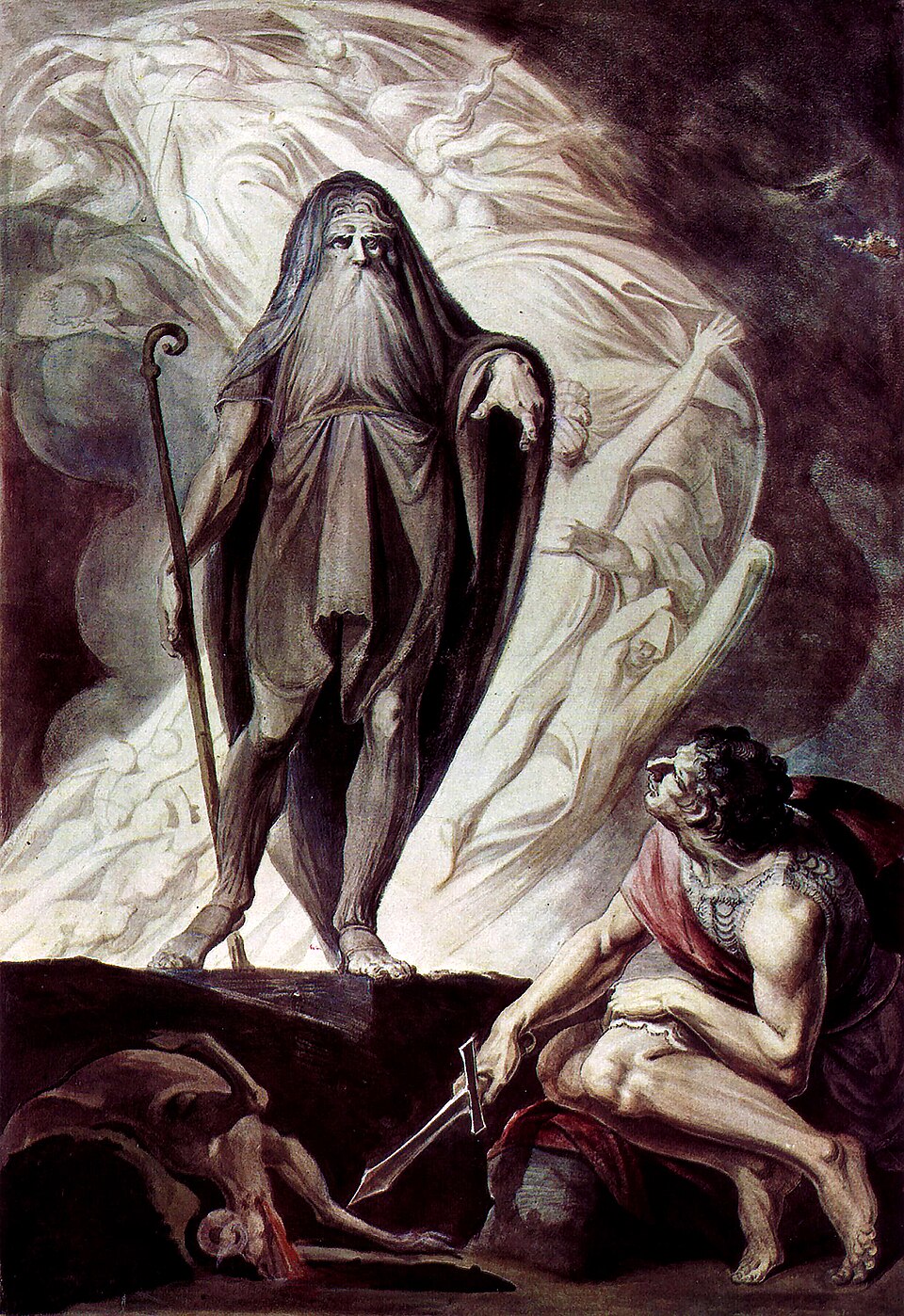
At the far shore of the world-circling river Ocean, Odysseus digs a trench and fills it with sacrificial blood, and the dead crowd up out of the dark to drink and speak. He has come for one ghost: Tiresias, the blind prophet who kept his wits even in death. The prophecy is conditional. He can still reach home — if his men leave the cattle of the sun god untouched. Either way he will arrive late, on a stranger's ship, to find arrogant men devouring his household.
Then come the ghosts he did not ask for. His mother Anticlea, who died of grief waiting for him; three times he tries to embrace her, and three times she drifts through his arms like smoke. Agamemnon, the Greek commander at Troy, murdered by his own wife the day he reached home — a dark mirror of the homecoming Odysseus hopes for. And Achilles, the greatest warrior of the war, who tells him flatly that he would rather be a poor farmhand alive than king of all the dead.
Other depictions of this scene
VI.
The Song of the Sirens
Book XII
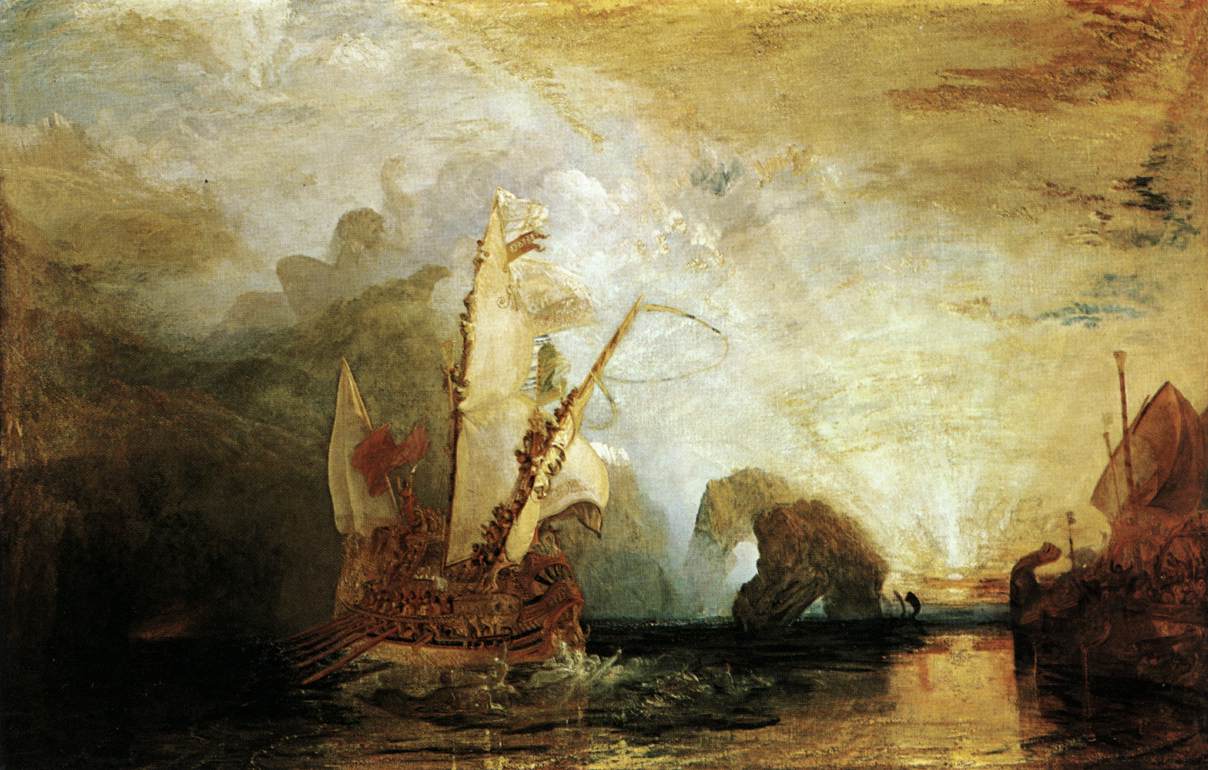
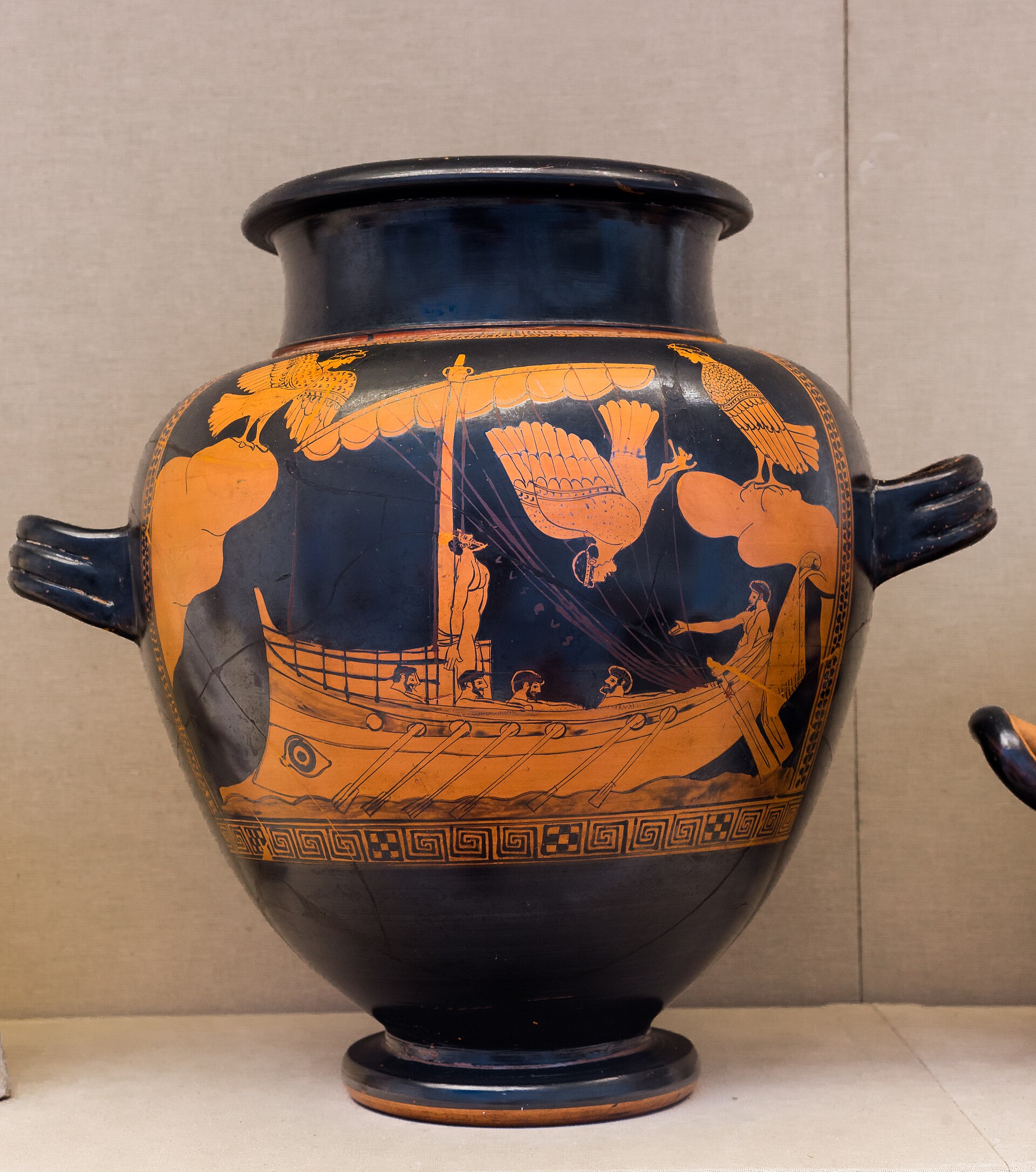
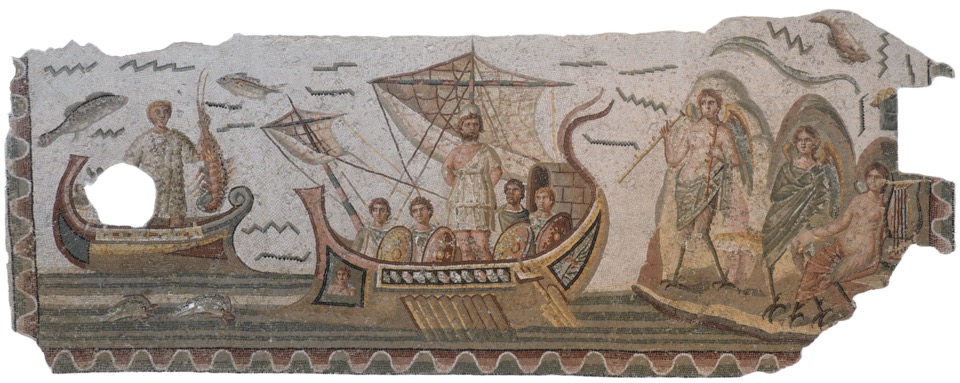
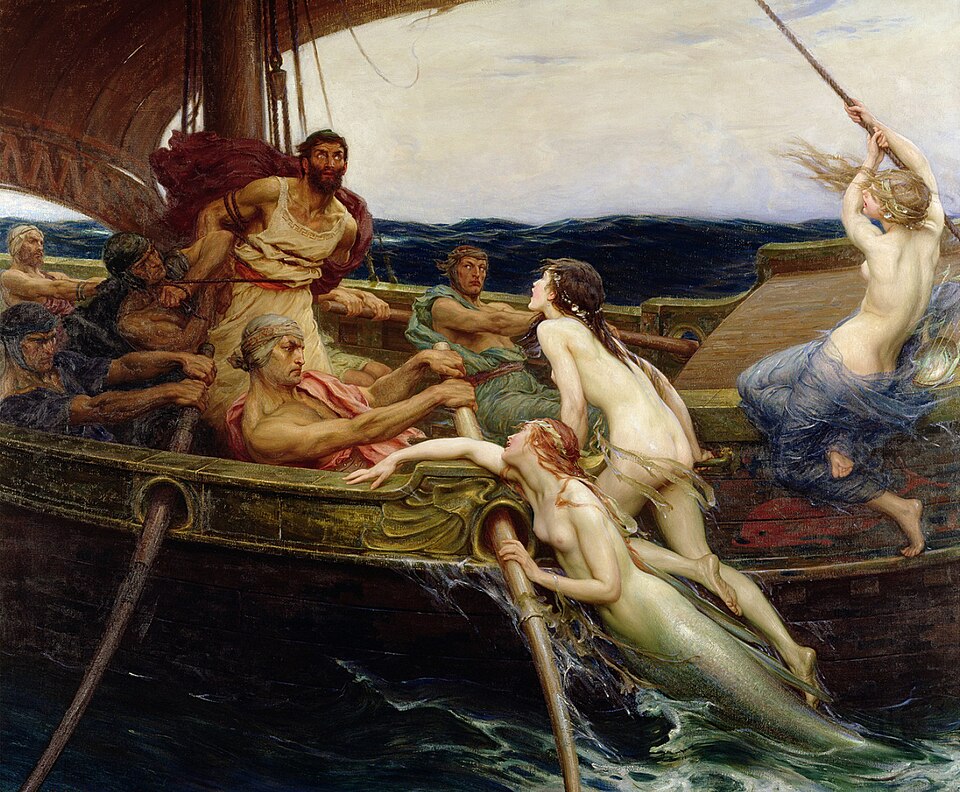
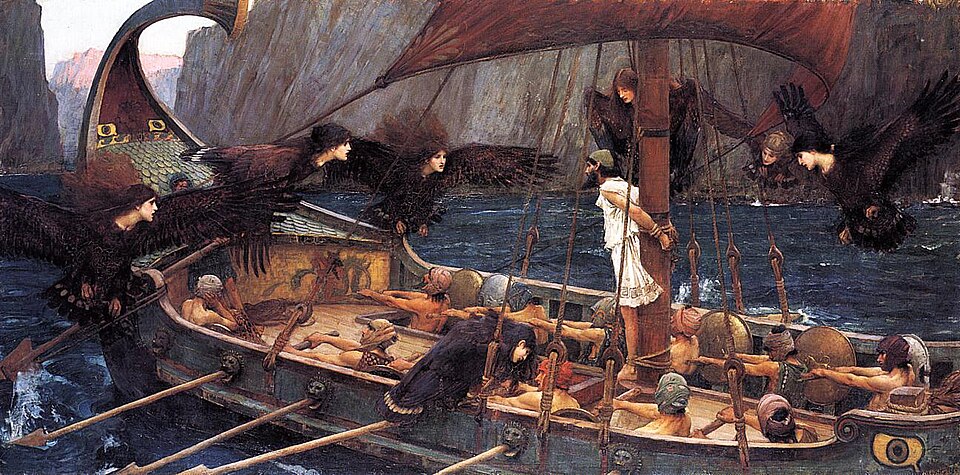
Sailing back past Aeaea — where Circe gives him precise directions for the horrors ahead — Odysseus approaches the island of the Sirens. They are singers with the bodies of birds, and their song makes an irresistible promise: listen, and you will know everything that has ever happened on earth. No one who hears it sails on. Their meadow is heaped with the bones of men who stayed to listen until they died.
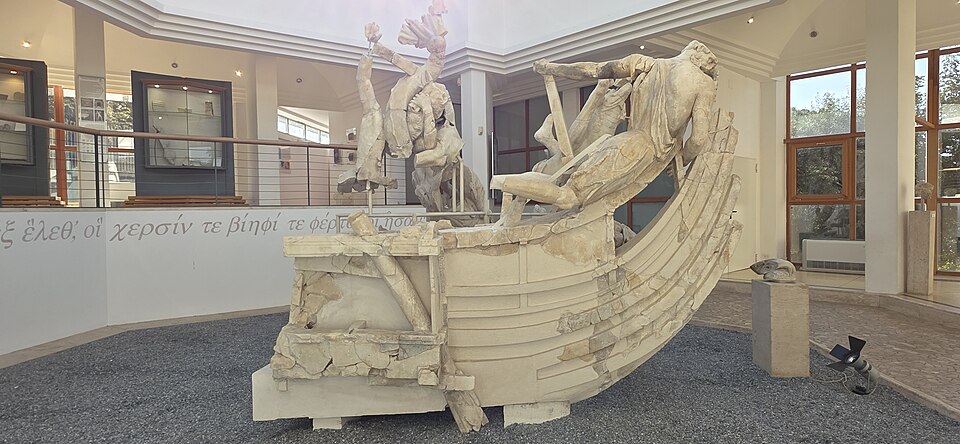
Circe has told him the trick, and it is pure Odysseus: he wants to hear the song and live. He plugs his crew's ears with softened beeswax, then has them tie him upright to the mast, ears open — with orders to bind him tighter the more he begs. The song reaches him and he strains against the ropes, shouting to be released. The deaf crew just rows harder until the island is out of earshot.
Other depictions of this scene
VII.
Scylla and Charybdis
Book XII
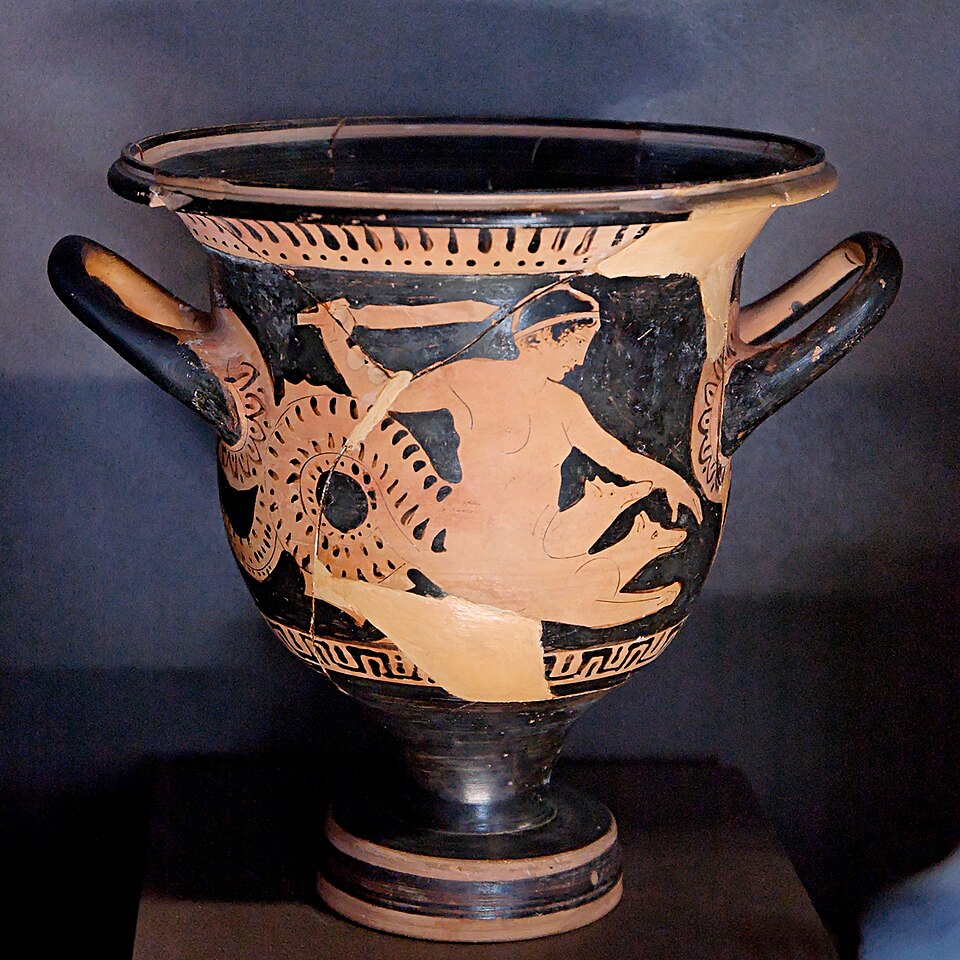
The next passage offers no good choice. On one side of a narrow strait, under a fig tree, is Charybdis: a whirlpool that swallows the whole sea three times a day and spews it back. On the other side, in a cliff-face cave, lives Scylla: six heads on six long necks, each mouth packed with three rows of teeth.
Circe's advice was cold arithmetic — steer close to Scylla, because Charybdis takes the whole ship and Scylla takes only six men. Odysseus puts on his armor anyway, unable to simply stand and watch. It changes nothing. While every eye is on the whirlpool, the six heads strike the deck and lift six rowers into the air, calling his name as they go. It is, he says later, the most pitiful thing he saw in all his years at sea.
Other depictions of this scene
VIII.
The Cattle of the Sun
Book XII
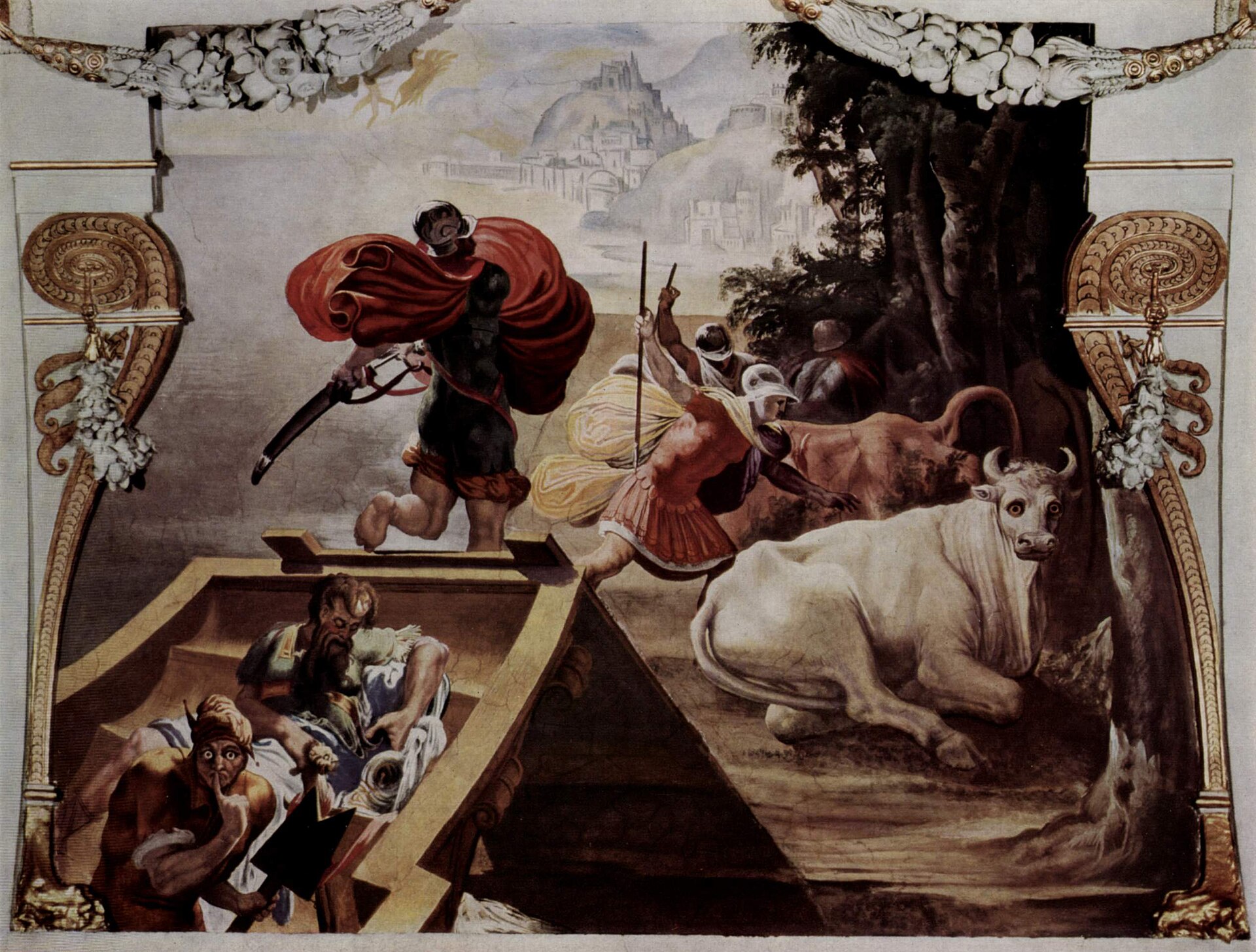
The exhausted crew begs to land on Thrinacia, the island where Helios, the sun god, pastures his sacred cattle — exactly the place Tiresias warned about. Odysseus makes every man swear an oath not to touch the herds. Then the winds turn contrary and pin them on the island for a month, and the provisions run out.
While Odysseus sleeps, his men butcher the best of the cattle. The omens are immediate and horrible: the hides crawl, and the meat lows on the spits. When the ship finally sails, Zeus, king of the gods, answers Helios with a single thunderbolt. The ship is smashed and every man drowns — except Odysseus, who lashes mast and keel together, rides the wreck back through Charybdis itself, and after nine days washes ashore alone on a distant island.
IX.
Seven Years with Calypso
Books I, V
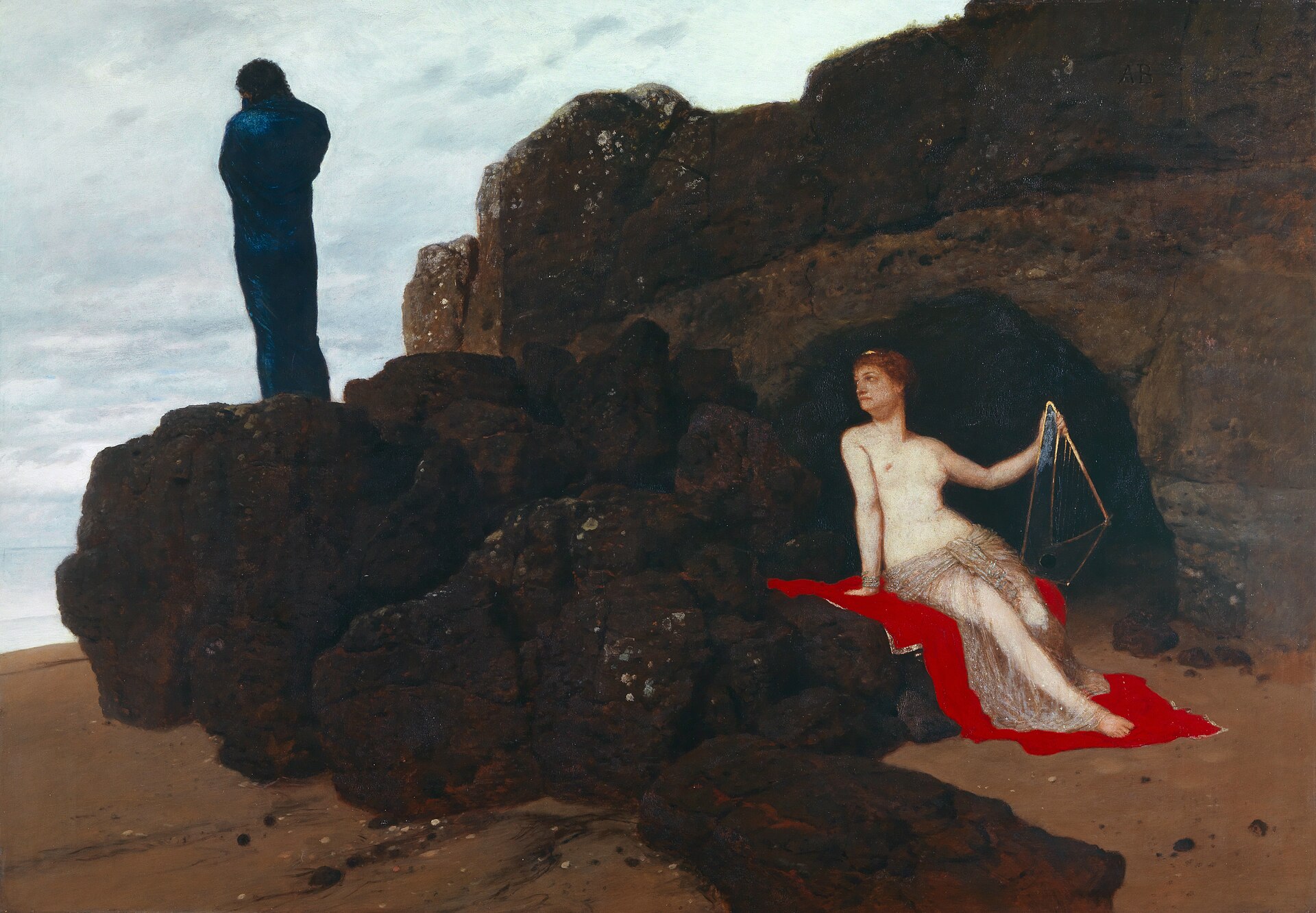
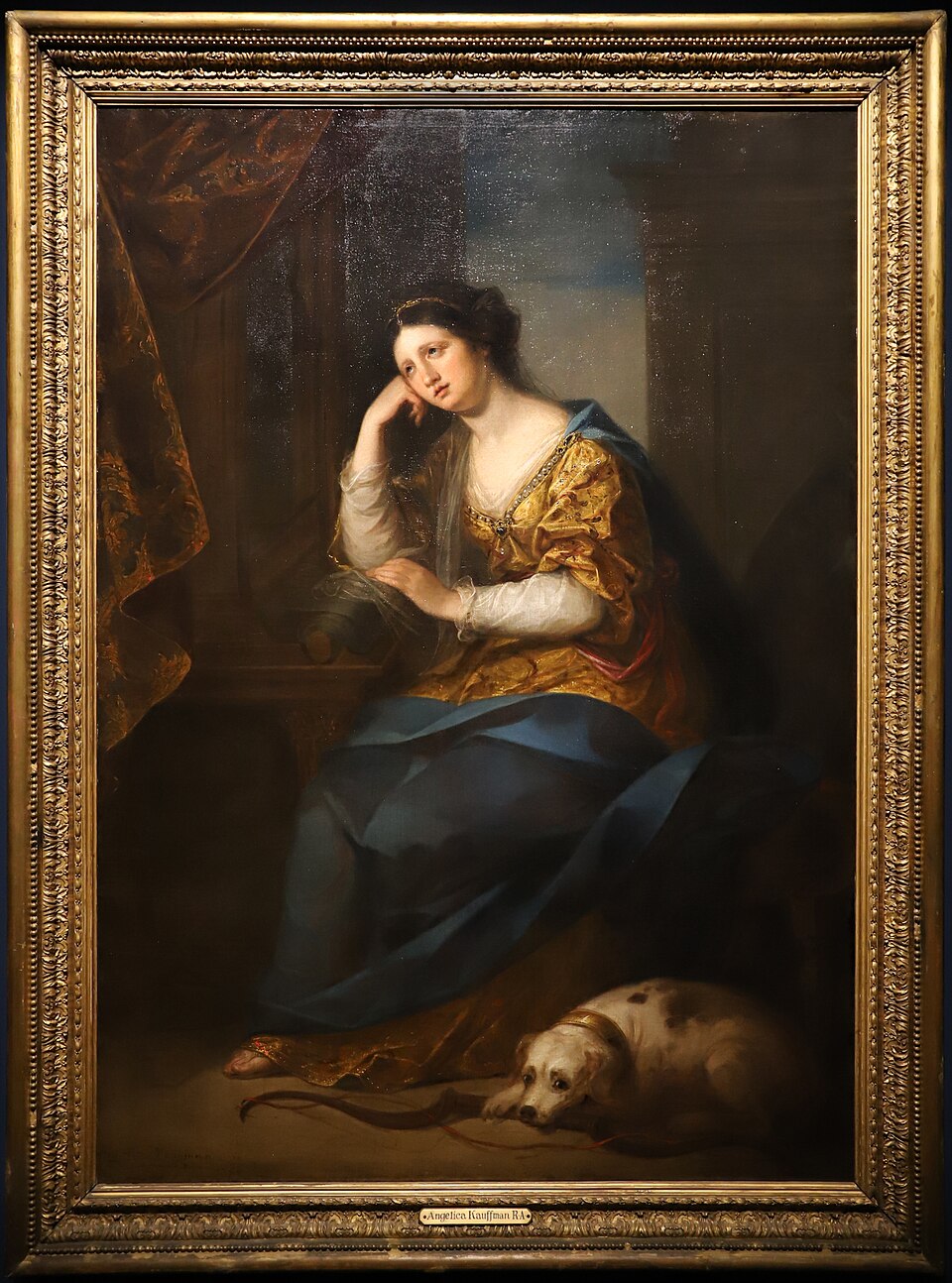
The island is Ogygia, home of Calypso, a goddess-nymph who lives in a cave surrounded by alder woods, meadows, and vine-hung springs. She takes in the castaway, falls in love with him, and simply keeps him — for seven years. She offers the one bribe no mortal is supposed to refuse: stay, and never age, and never die.
He refuses it, politely, every day. He spends his days on the shore, staring at the horizon and weeping for Ithaca and for Penelope, his wife. When Calypso points out that no mortal woman can match a goddess, he agrees with her — and asks to go home anyway. It is the poem's clearest statement of what its hero actually wants: not immortality, but his own one life back.
Other depictions of this scene
X.
The Raft and the Storm
Book V
On Olympus, the goddess Athena — Odysseus's constant protector — finally forces the issue, and Zeus sends Hermes, the messenger god, to order Calypso to release her prisoner. She protests the gods' double standard bitterly, then gives in with grace: tools, timber, provisions, a favoring wind. Odysseus builds a raft with his own hands and sails alone for seventeen days.
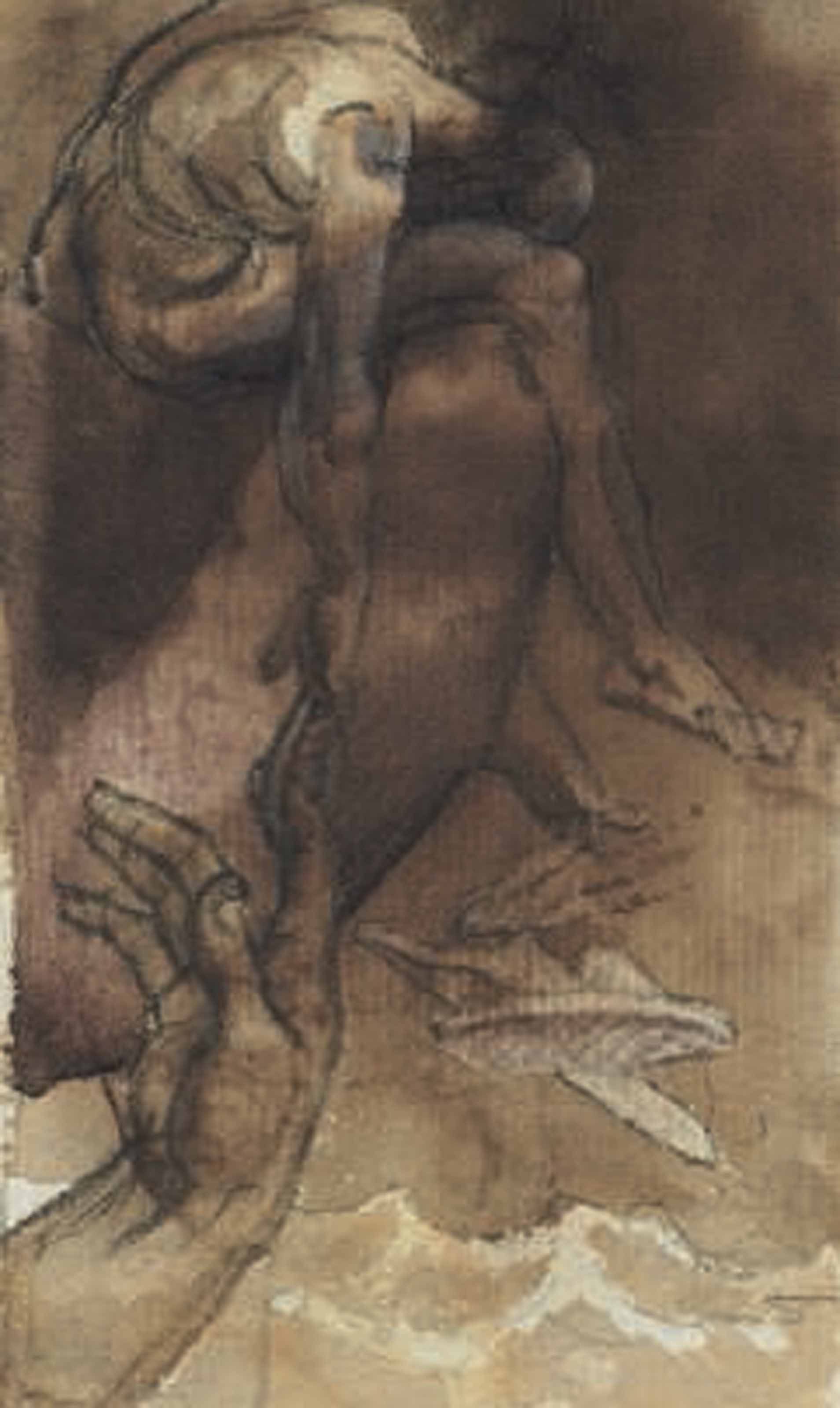
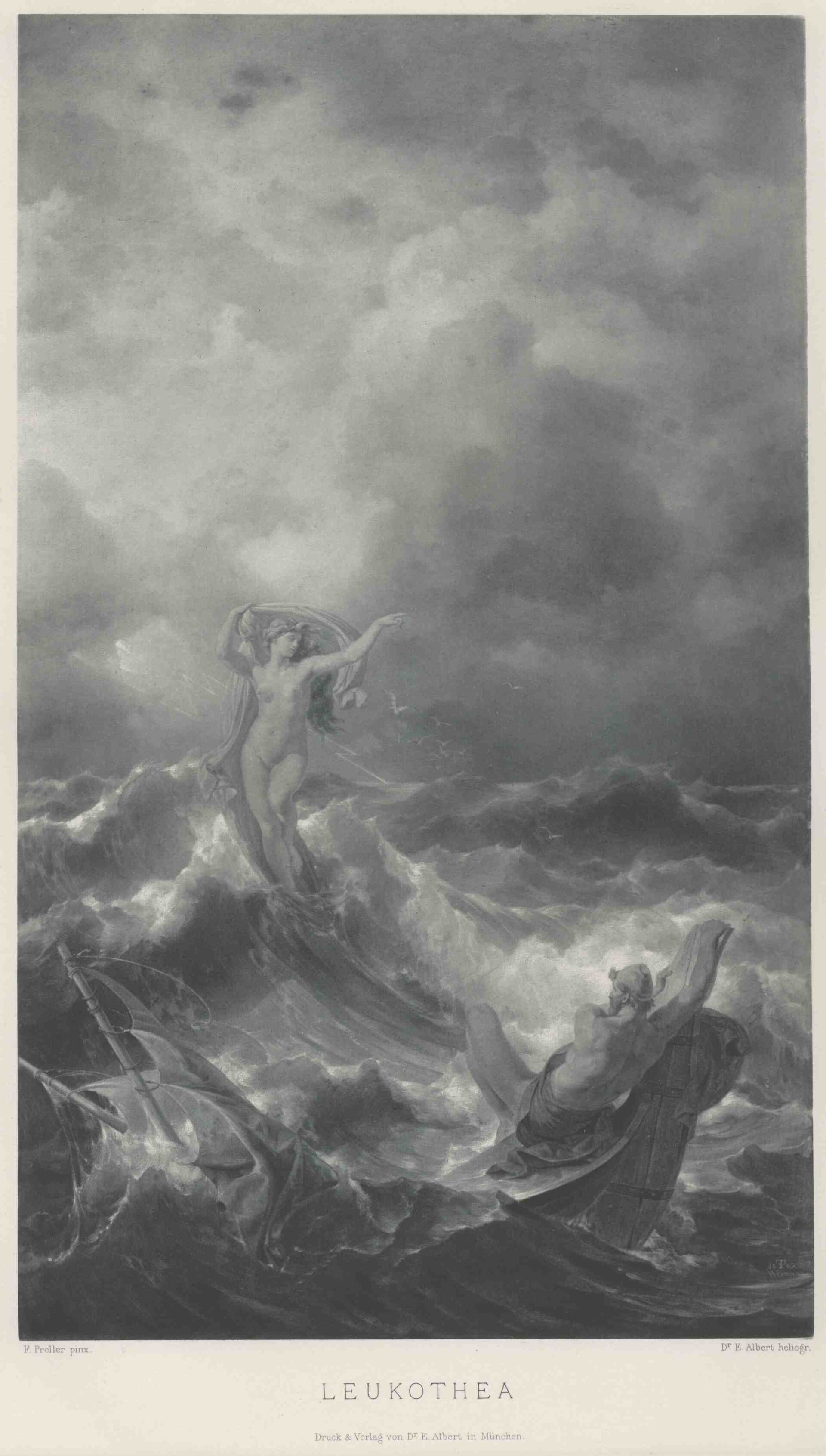
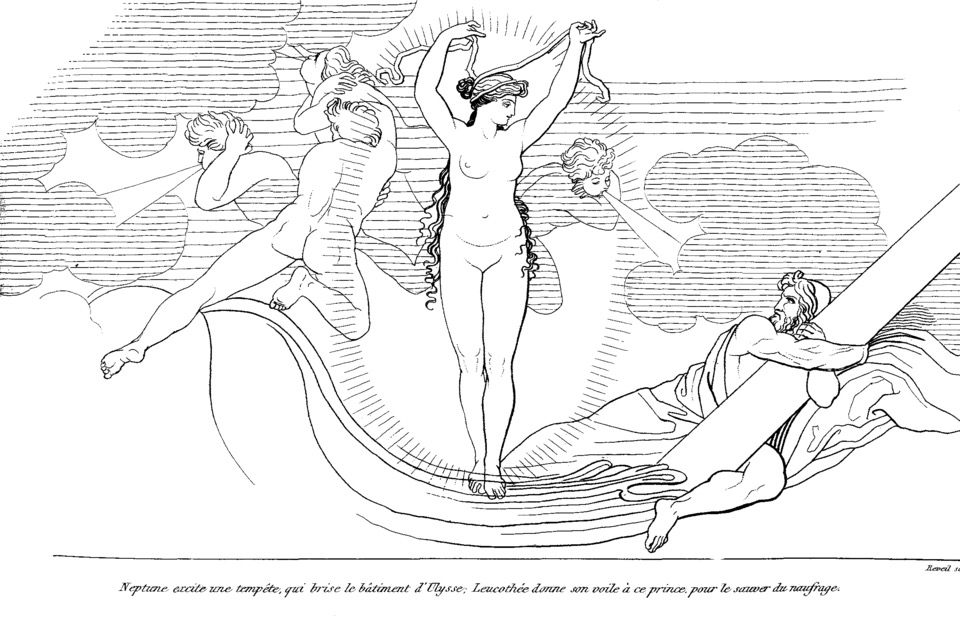
Then Poseidon, returning from a feast, spots the raft and remembers his blinded son. He stirs the sea into a chaos of wind from every direction, and a wave the size of a hillside tears the raft apart. What saves Odysseus is Ino Leucothea, the “white goddess” of the waves, who rises like a seabird and lends him her veil — with it, he cannot drown. He swims for two days and two nights and crawls ashore, naked and half dead, in the mouth of a river on the island of Scheria.
Other depictions of this scene
XI.
Nausicaä on the Shore
Book VI
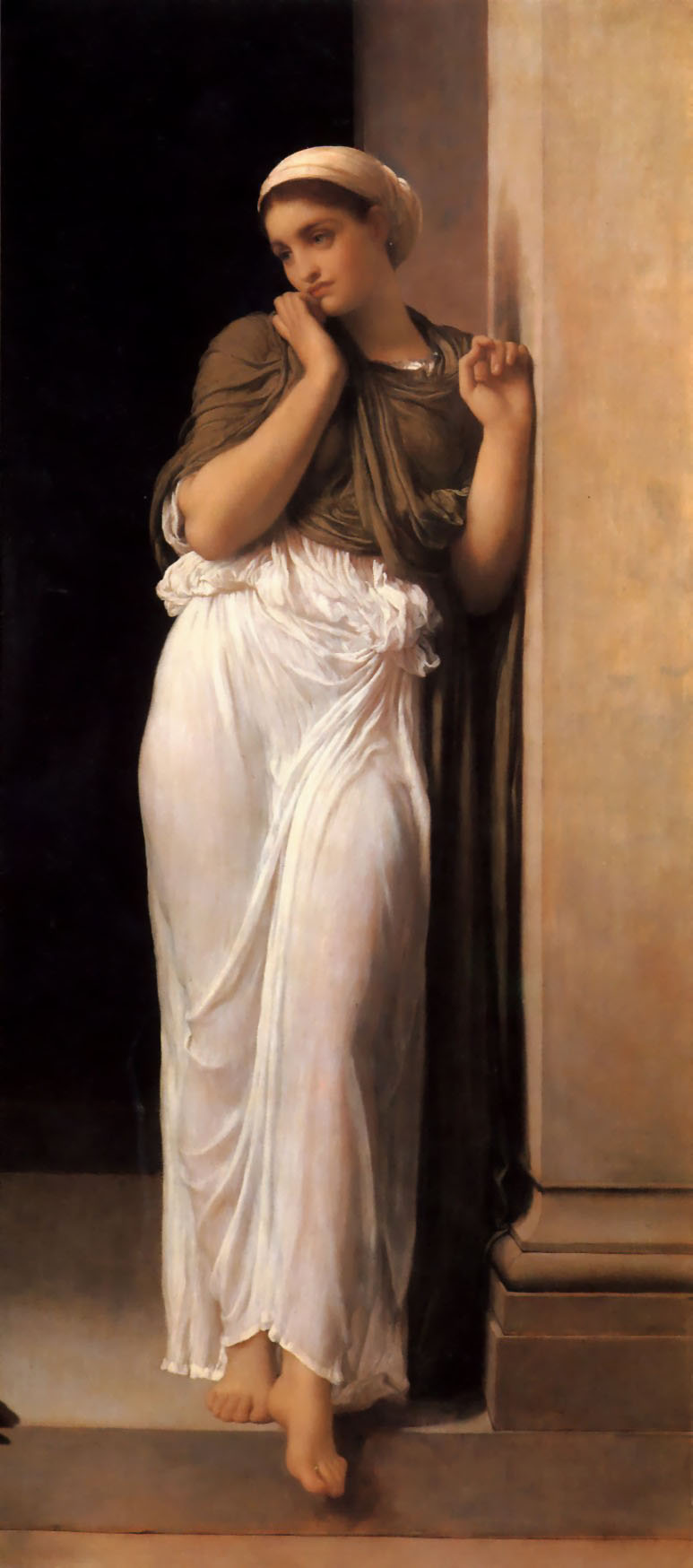
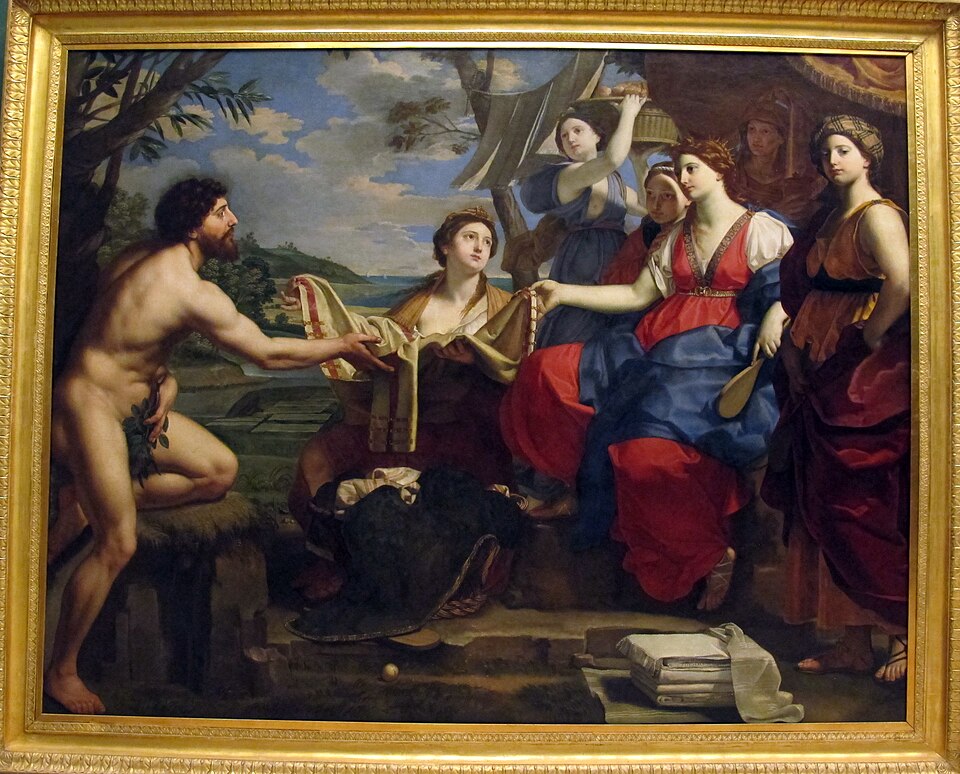
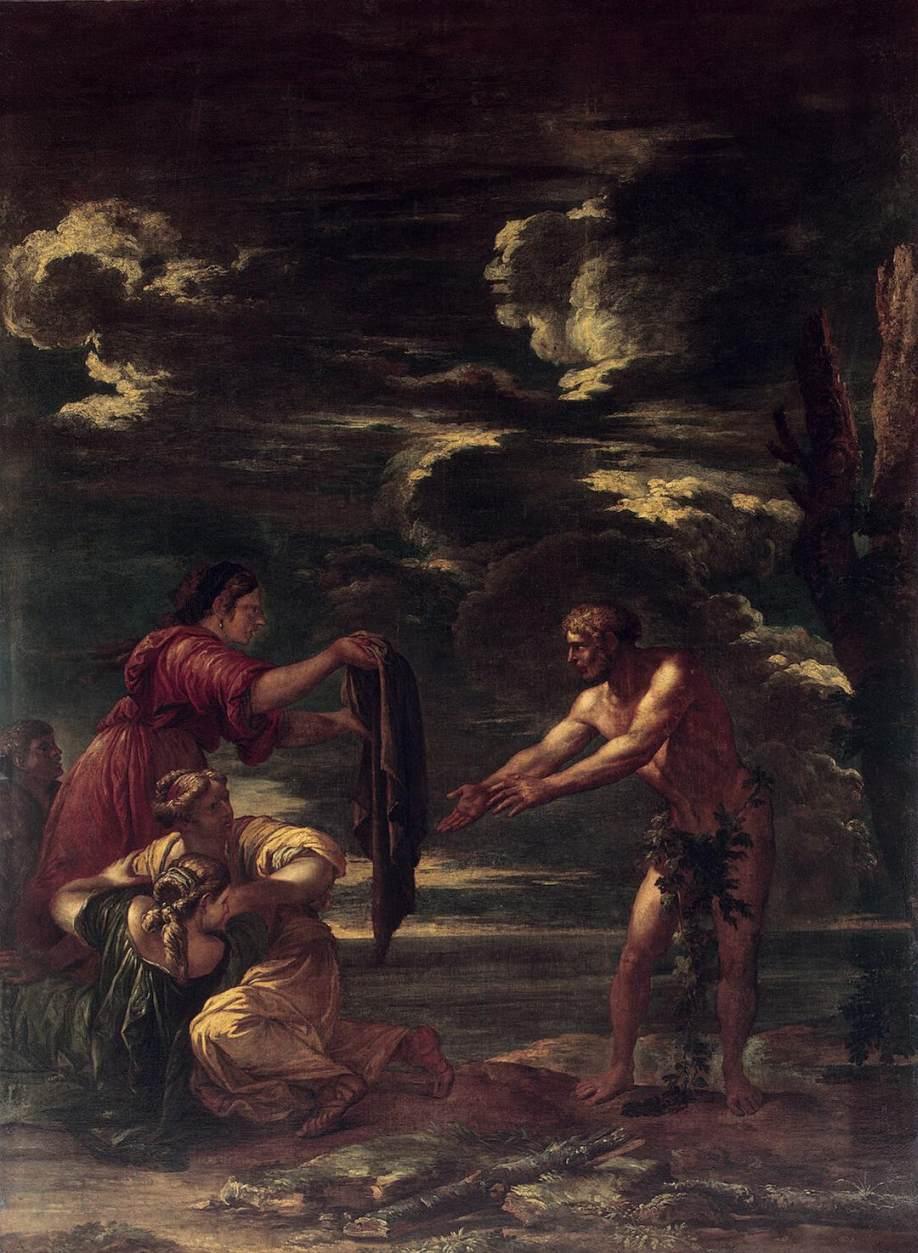
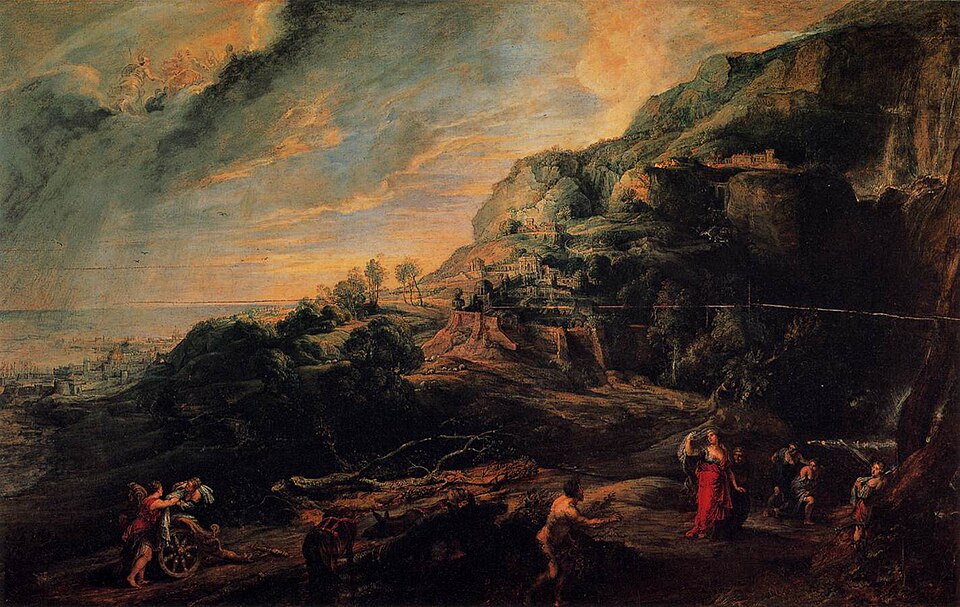
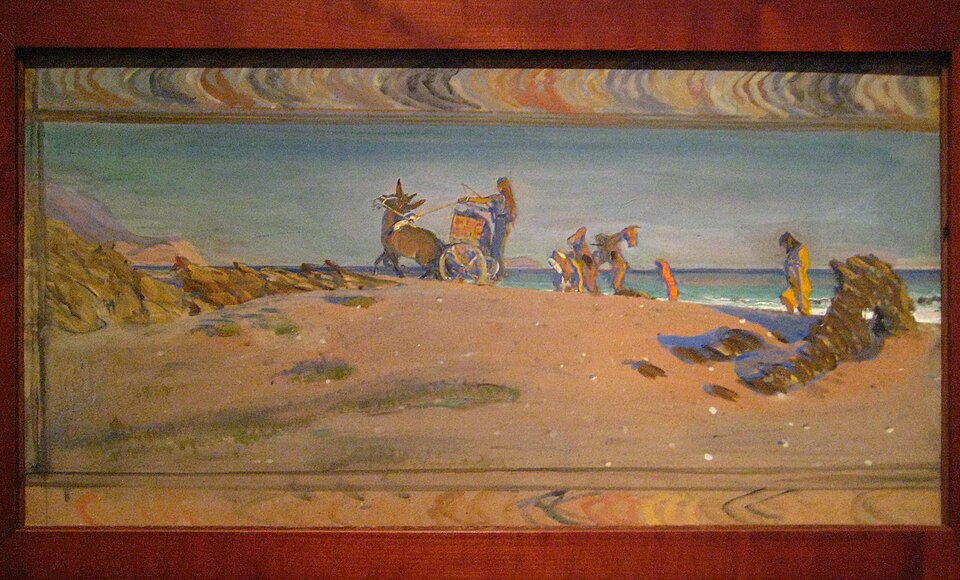
Scheria belongs to the Phaeacians, the best sailors in the world, and its princess is Nausicaa, daughter of King Alcinous. Nudged by a dream Athena sends her, she has driven the palace laundry down to the river mouth with her maids. Washing done, the girls play ball on the beach — and a stray throw and the shouting wake the salt-crusted stranger sleeping in the bushes.
He rises, naked, holding an olive branch in front of himself, and every maid runs — except Nausicaa, who stands her ground and hears him out. Odysseus delivers perhaps the most tactful speech in Greek literature: are you a goddess or a mortal, I have suffered, I ask only for a rag and the way to town. She gives him clothes, food, and shrewd advice — enter the palace and appeal first to her mother, the queen. Then she walks the stranger toward her father's city.
Other depictions of this scene
XII.
At the Court of Alcinous
Books VII–VIII
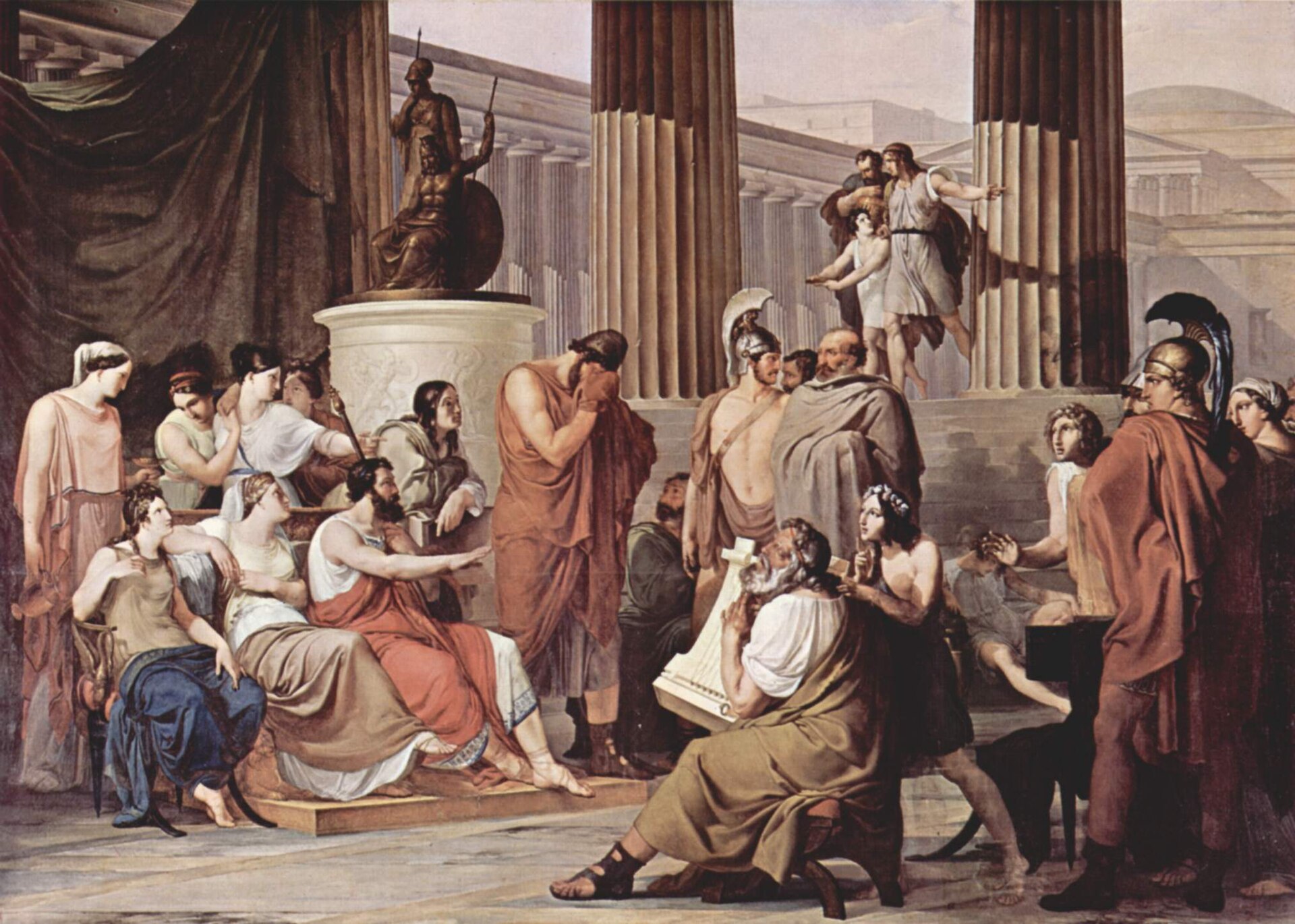
At the palace of Alcinous, Odysseus is treated the way Greeks believed strangers must be treated: bathed, fed, seated in honor, and entertained — all before anyone asks his name. Then the blind court bard Demodocus sings of the Trojan War, and the honored guest pulls his cloak over his face to hide that he is weeping. The king stops the music and asks the question directly. The answer: I am Odysseus, son of Laertes, known to all the world for my schemes.
Everything told so far — the Cyclops, Circe, the land of the dead, the Sirens, Scylla, the cattle of the sun, Calypso — he now tells the court himself, holding the hall spellbound through the night. This is the poem's famous design: its wildest adventures come from the hero's own mouth. The Phaeacians heap him with gifts and row him home overnight, laying him — asleep — on a beach on Ithaca, twenty years after he left it.
XIII.
The Web of Penelope
Books II, XIX
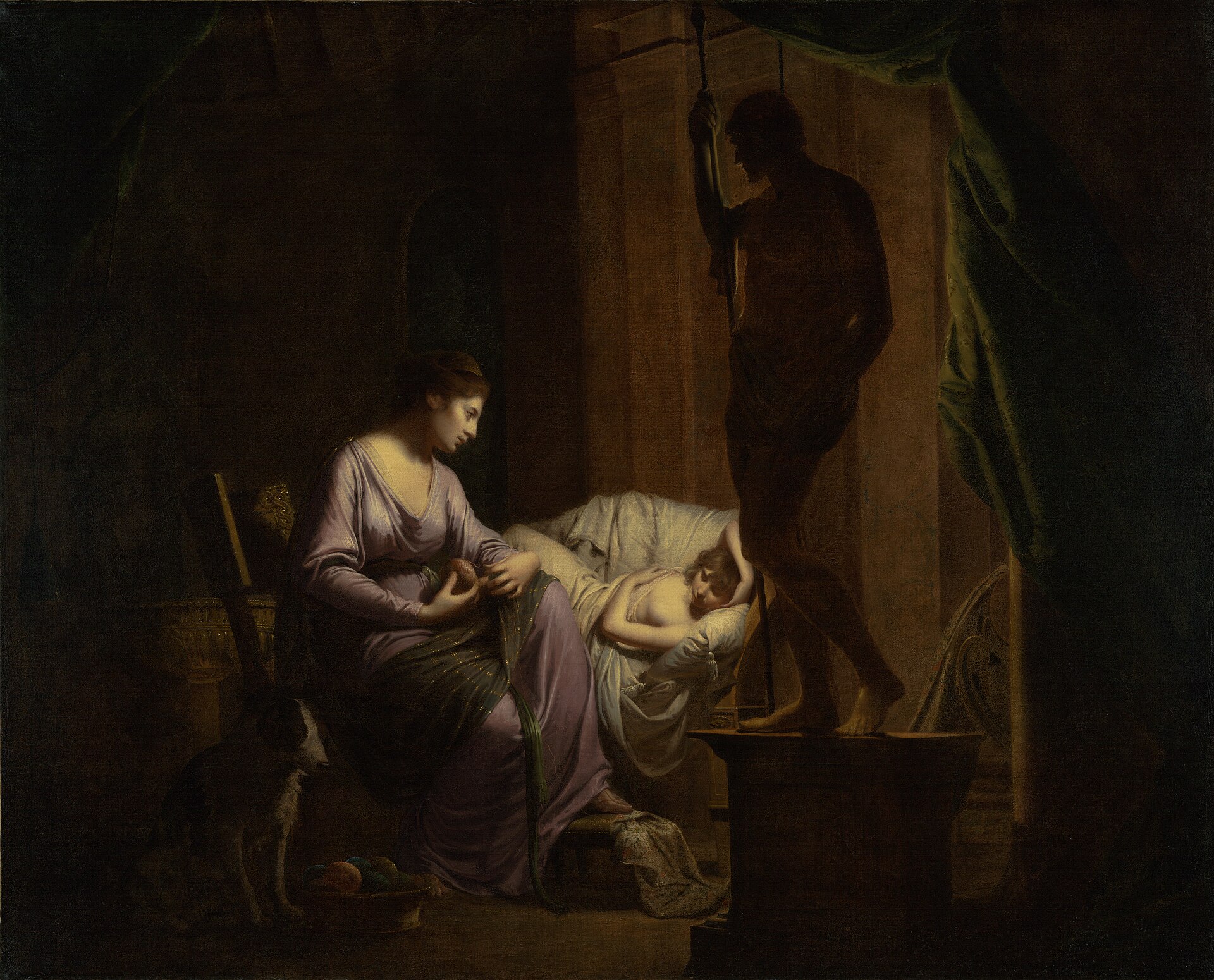
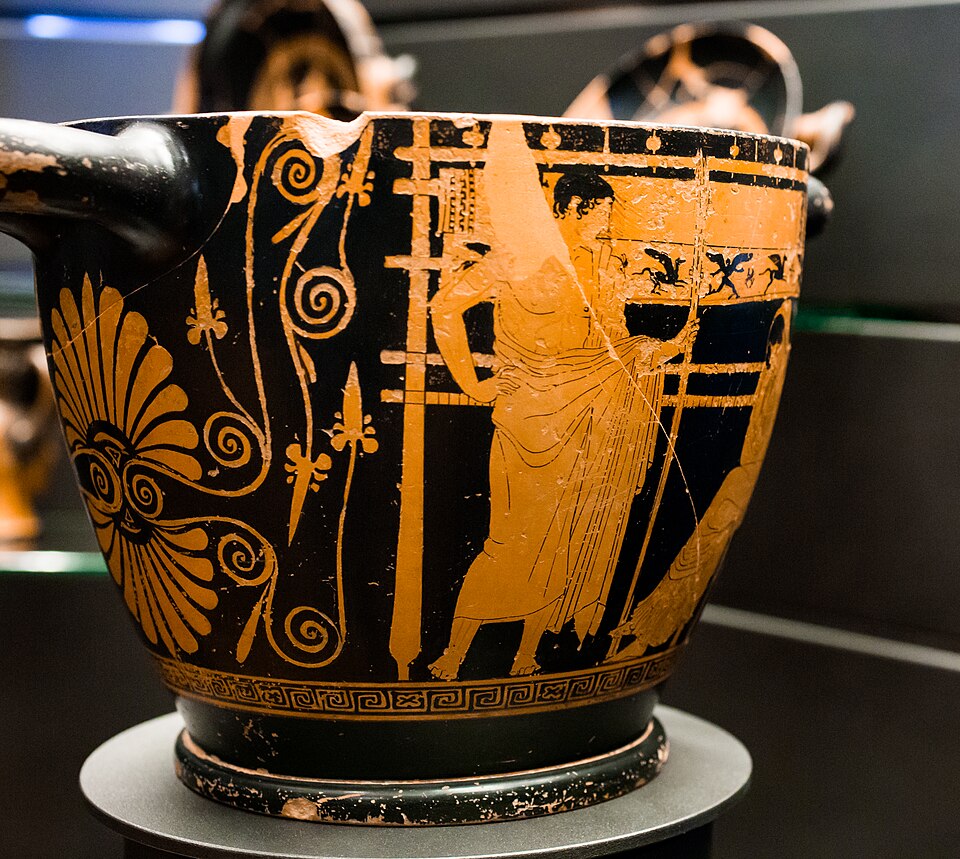
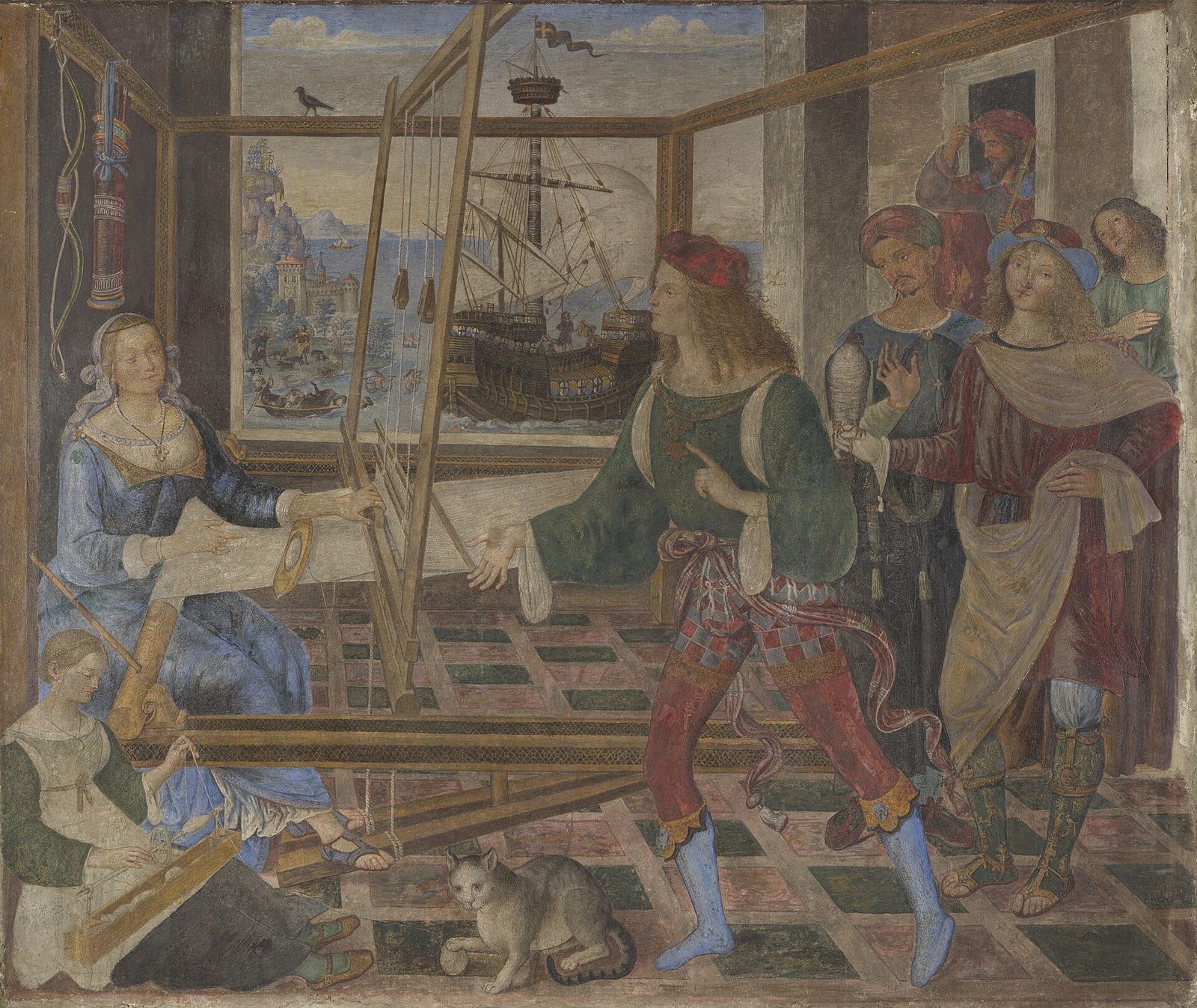
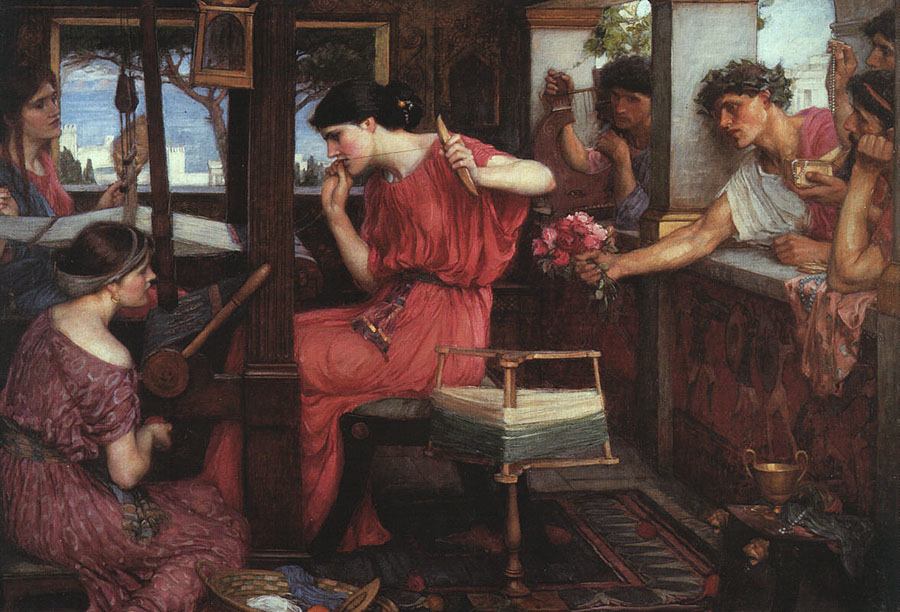
The story now turns to what he comes home to. His wife Penelope has held Ithaca together alone for twenty years, with no proof her husband is alive or dead. For years, more than a hundred young nobles have occupied her palace as unwanted suitors, demanding she declare Odysseus dead and marry one of them — and eating and drinking the kingdom's wealth while they wait.
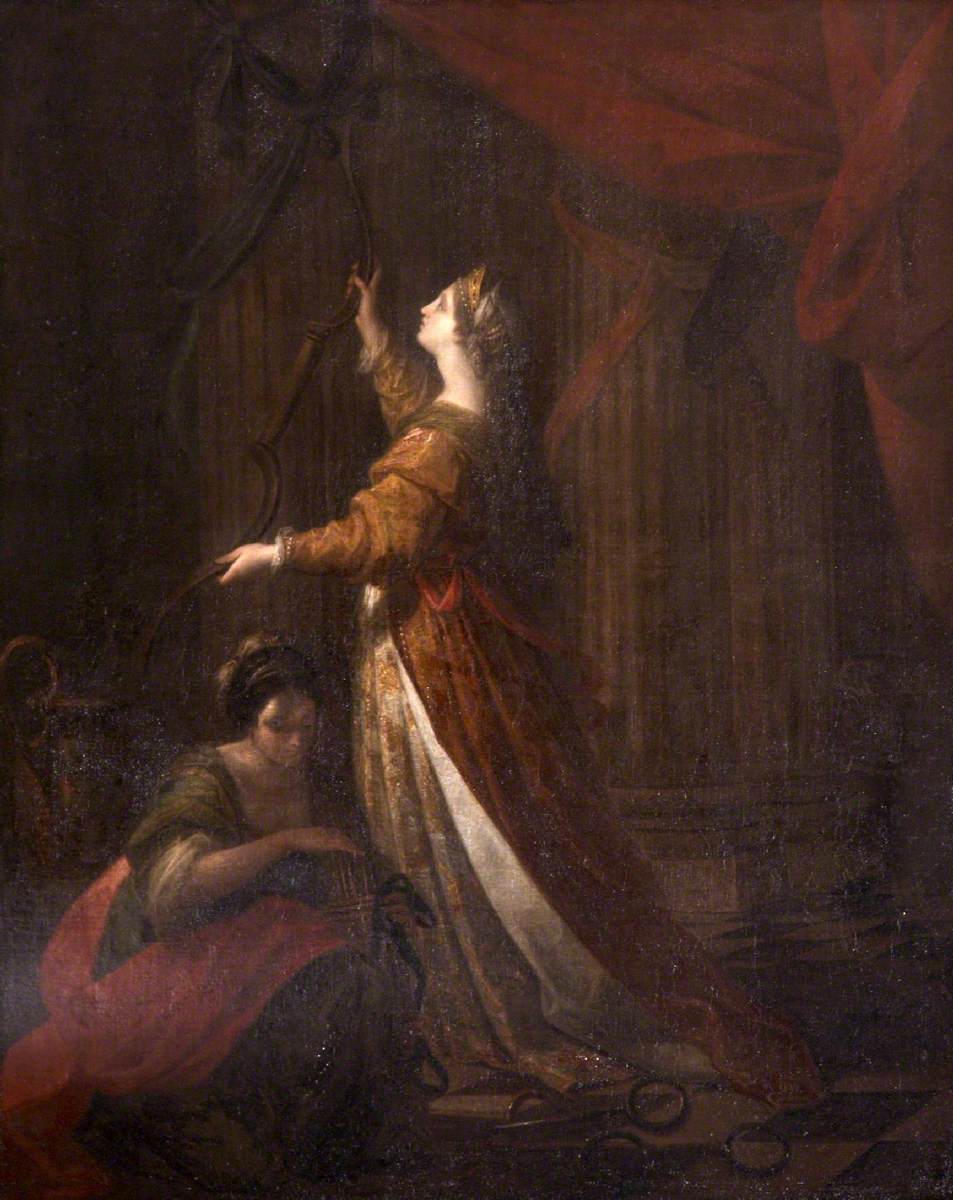
Her famous defense is a loom. She announces she will remarry once she finishes weaving a burial shroud for Laertes, her aging father-in-law. All day she weaves in public view; at night, by torchlight, she secretly unpicks the day's work. The trick holds the suitors off for three years before a maid betrays her. Homer means the marriage of Odysseus and Penelope to be a marriage of equals: he survives abroad by inventing stories, she survives at home by weaving and unweaving one.
Other depictions of this scene
XIV.
The Suitors in the Hall
Books I–II, XVIII
The suitors are the poem's true villains: young, entitled, and certain Odysseus is bones on the sea floor. Their ringleaders, Antinous and Eurymachus, go as far as plotting to murder Telemachus — the son Odysseus left as a baby, now twenty and beginning to push back. Guided by Athena, Telemachus has sailed to the mainland to ask his father's old comrades Nestor and Menelaus for news, and he returns from the trip a grown man, slipping past the suitors' ambush on the way home.
This is the situation Odysseus wakes to on the beach. His palace is occupied, his son is marked for death, and he has no army. Athena disguises him as a ragged old beggar, and he goes first to the hut of Eumaeus, his loyal swineherd, who feeds the stranger and mourns his lost king to his face. There Odysseus reveals himself to his son. Father and son, who have never really known each other, sit down together and plan the counterattack.
Other depictions of this scene
XV.
The Old Nurse Knows Him
Book XIX
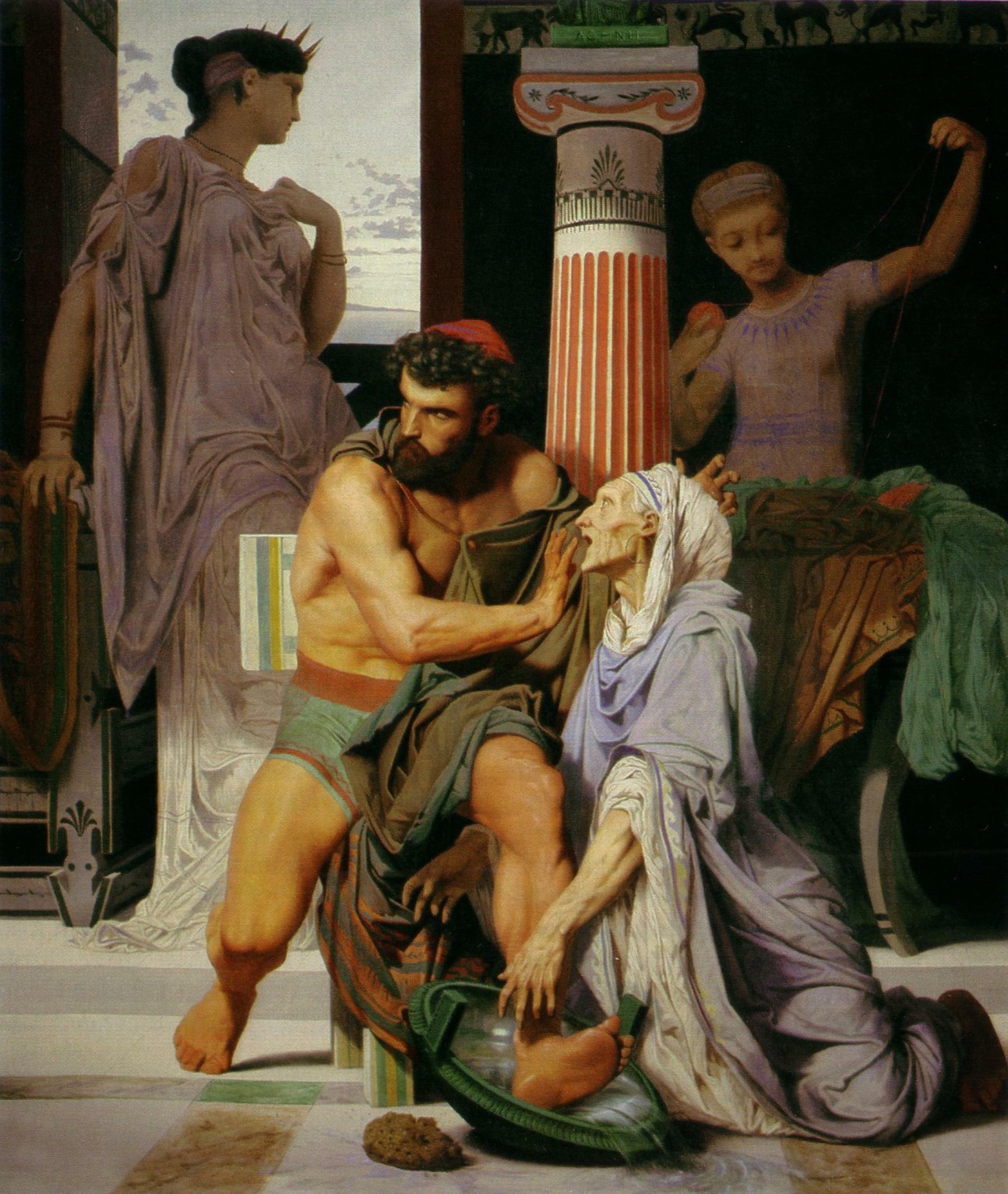
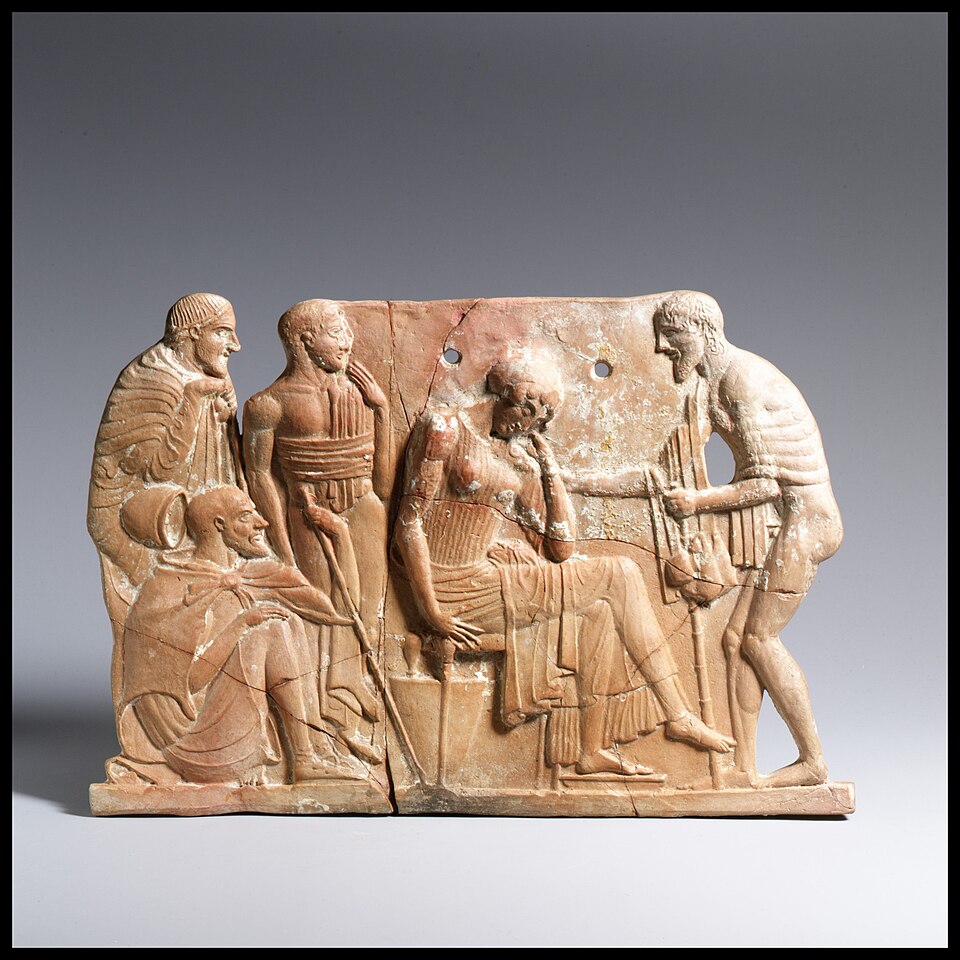
Odysseus walks into his own palace as a beggar and takes the suitors' abuse — Antinous throws a footstool at him — while he counts men and memorizes the room. At the gate, one creature knows him instantly: Argos, the hunting dog he trained as a puppy, now old and discarded on a dung heap. The dog thumps his tail, and dies. Odysseus wipes away a tear without breaking stride.
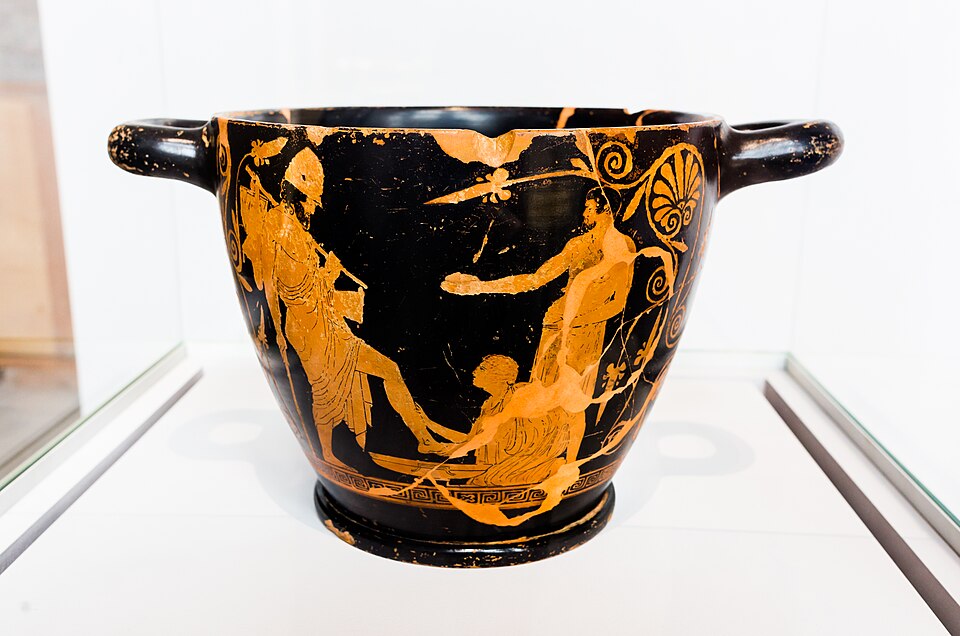
That evening Penelope, kind to the strange beggar who claims news of her husband, orders the old nurse Eurycleia to wash his feet — the woman who nursed Odysseus as an infant. Her hands find what the rags hide: the long white scar above his knee, from a boar hunt when he was a boy. She knows him at once. His hand closes on her throat, gently, and he swears her to silence. The household is now one secret away from war.
Other depictions of this scene
XVI.
The Trial of the Bow
Book XXI
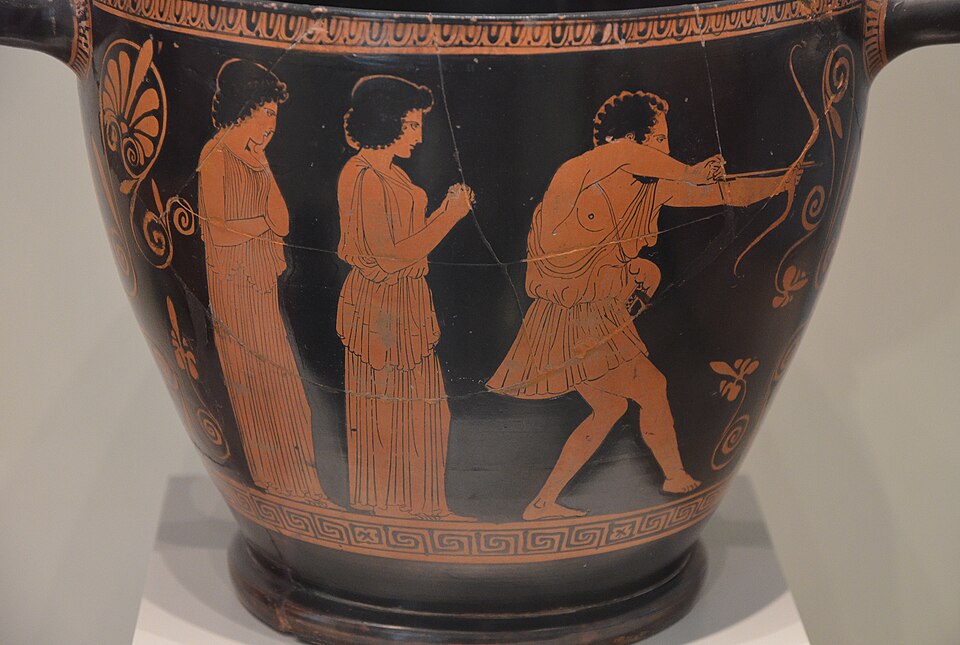
Penelope — out of time, and perhaps sensing something she cannot name — announces a contest. Servants carry out the great bow of Odysseus, untouched for twenty years. She will marry the man who can string it and shoot an arrow through the sockets of twelve axe-heads set in a line, a trick shot her husband used to perform.
One by one the strongest suitors warm the bow at the fire, grease it, strain at it — and cannot even bend it. Then the beggar by the door asks for a try, and the hall erupts in outrage. Telemachus insists, having first sent his mother upstairs and quietly locked every weapon out of the hall. Odysseus turns the bow over in his hands like a craftsman checking his tools, strings it as easily as a bard strings a lyre, and — still sitting on his stool — sends the arrow through all twelve axes.
XVII.
The Slaughter of the Suitors
Book XXII
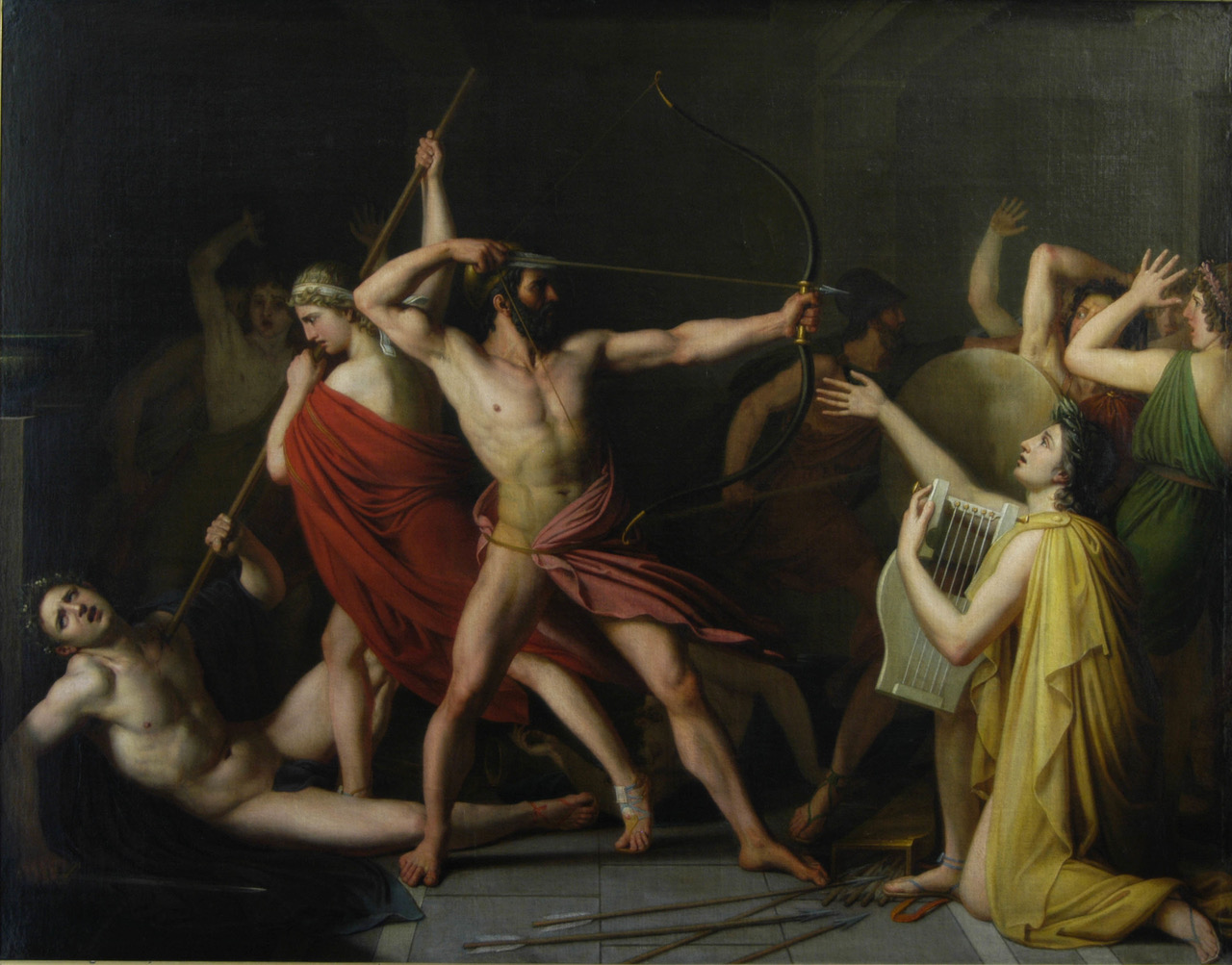
The second arrow goes through the throat of Antinous as he lifts a golden wine cup. For a moment the suitors think it is a shooting accident. Then the beggar throws off his rags, and names himself, and the hall understands: the man they have robbed for years is standing in the only doorway with a full quiver.
They have numbers; he has the locked door, the bow, Telemachus, two loyal herdsmen, and Athena. Homer gives the fight the full, unsparing brutality of an Iliad battle, fought indoors among the dinner tables. By the end every suitor — more than a hundred men — is dead, the disloyal maids are hanged, and the hall is fumigated with sulfur. Poseidon's curse has run its course exactly: he has come home late, alone, and to trouble.
Other depictions of this scene
XVIII.
Odysseus and Penelope
Book XXIII
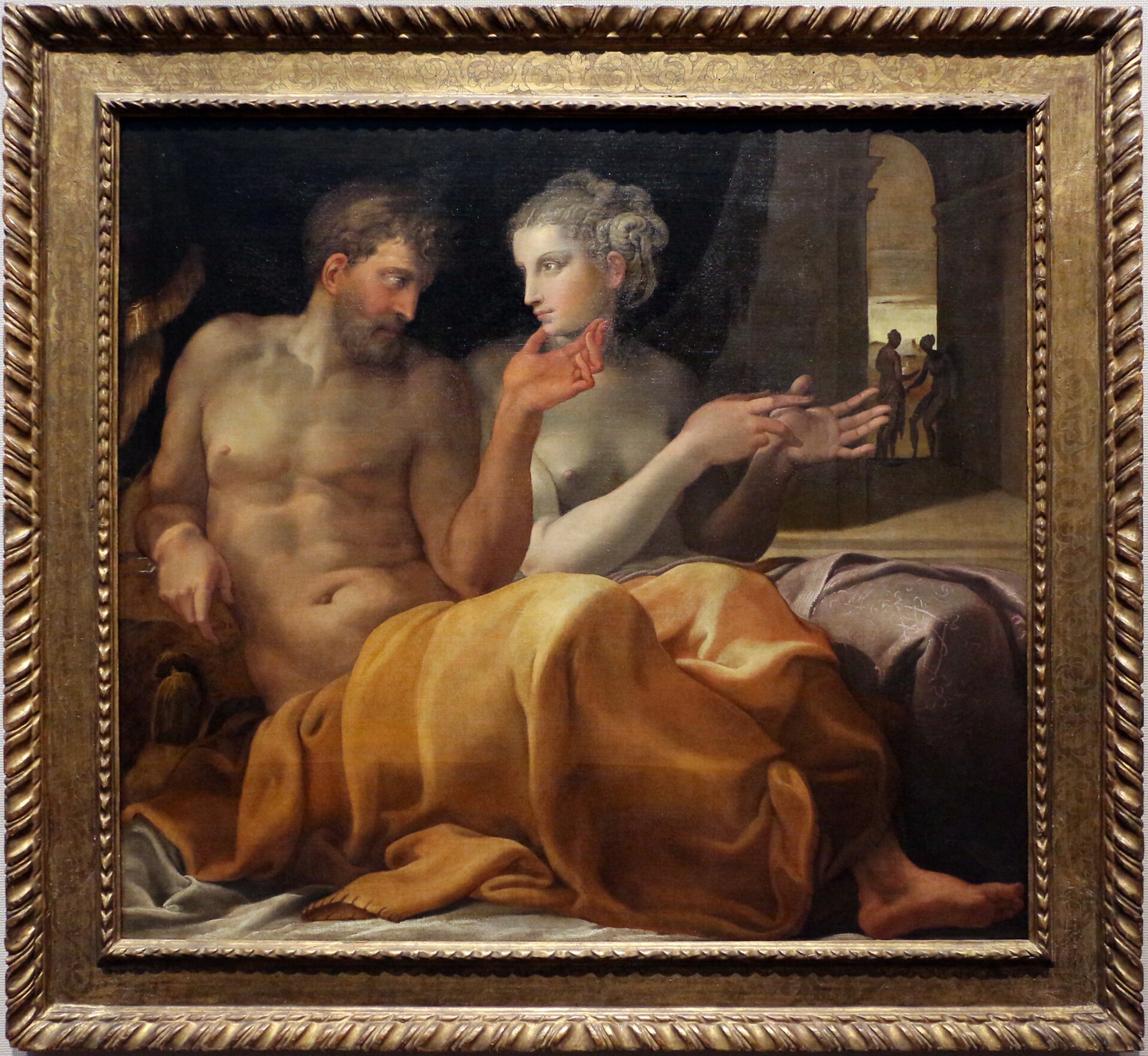
Penelope will not simply believe. Twenty years of rumors and con men have made her as wary as her husband, and the man by the fire, bathed and restored, could still be some god's trick. So she runs a test of her own. Within his hearing, she tells Eurycleia to move the great bed out of the bedchamber and make it up for the stranger there.
Odysseus flares up: no living man could move that bed. He built it himself around a living olive tree, trimming the trunk into a bedpost, and its roots still hold the ground — a secret only he, Penelope, and one maid have ever known. Her knees give way. She runs to him and holds on, and Homer says he was as welcome to her as the sight of land to a shipwrecked swimmer. Athena holds back the dawn to stretch the night. The next day Odysseus finds his old father Laertes in the orchard, and the goddess imposes peace on Ithaca. The long war and the long voyage are finally over.
Other depictions of this scene
XIX.
The Man of Many Turns
The hero himself
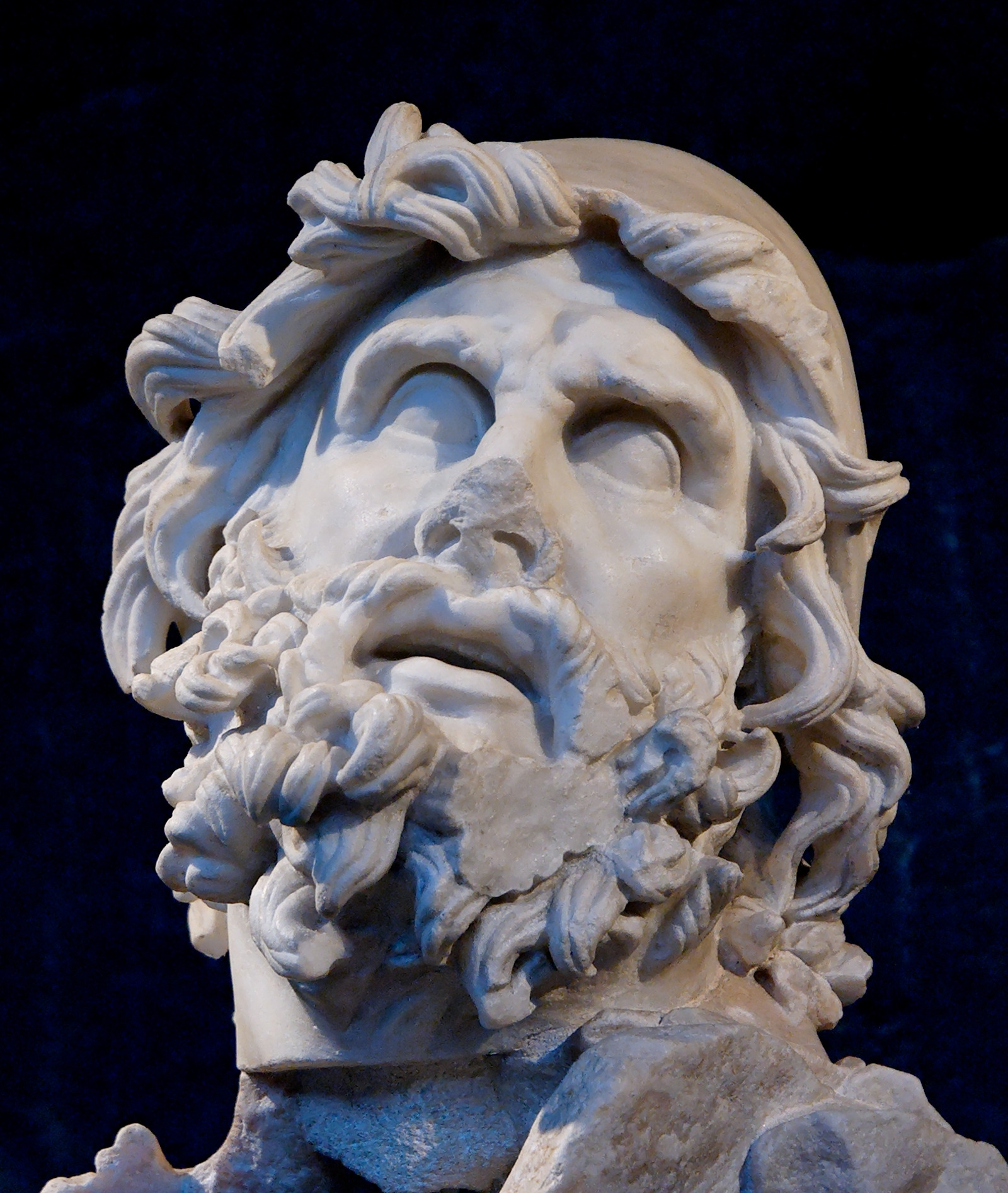
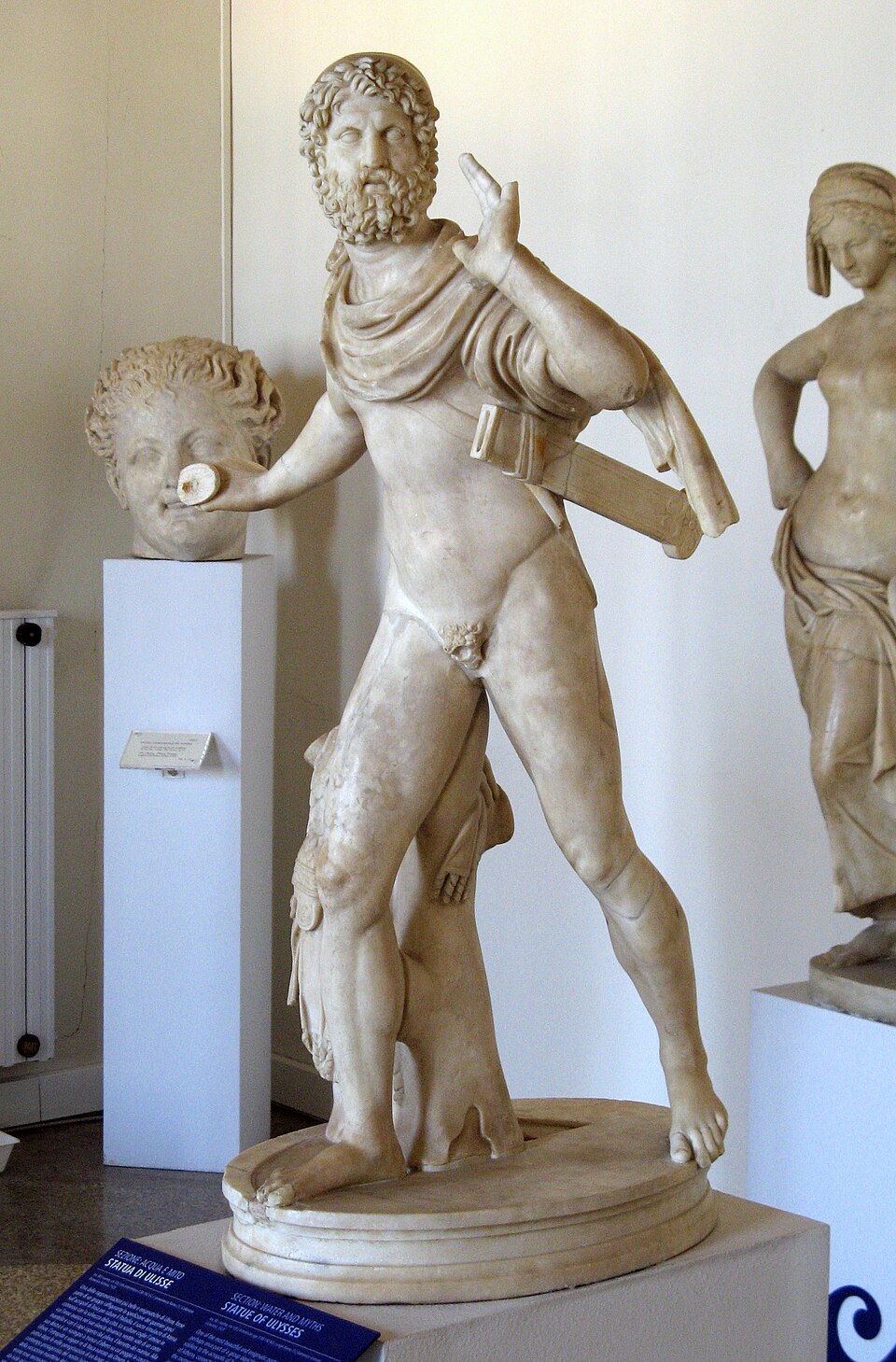
Odysseus is the first hero in Western literature who wins mainly with his mind. Homer's repeated epithets for him are “the man of many turns” and “much-enduring”: a schemer, a survivor, a teller of necessary lies, and a man who weeps openly and often. What drives him is not glory — he has that — but homesickness: the stubborn preference for one ordinary mortal life, with its wife, son, father, dog, and olive-tree bed, over the immortality he is offered and turns down.
Ancient artists gave him a recognizable face and kept it for centuries: compact and muscular rather than tall, short-bearded, and usually wearing the pilos, the conical felt cap of a sailor. Where Achilles is shown young, beautiful, and bare-headed, Odysseus looks like what he is — a weathered captain who has seen everything. The knotted brow that Hellenistic sculptors carved into his forehead makes cunning and suffering the same expression.
Other depictions of this scene