Achilles Discovered Among the Daughters of Lycomedes
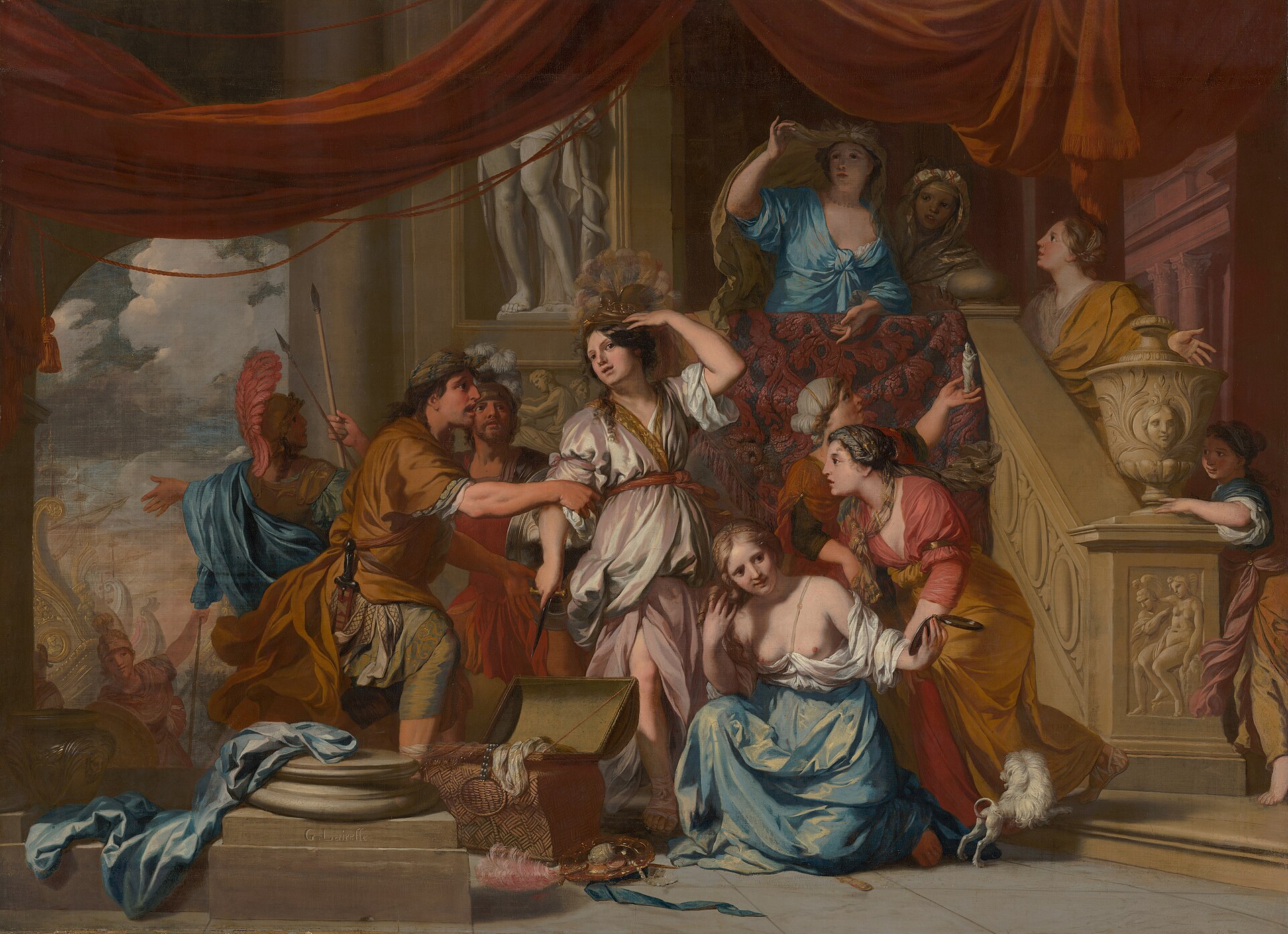
The same trap, sprung at full Baroque volume. Achilles, in women's clothes, reaches for the sword among the peddler's goods while the daughters of Lycomedes crowd around the treasures; the disguised Odysseus watches his trick succeed. The women's silks and the glinting metal are painted with obvious pleasure.
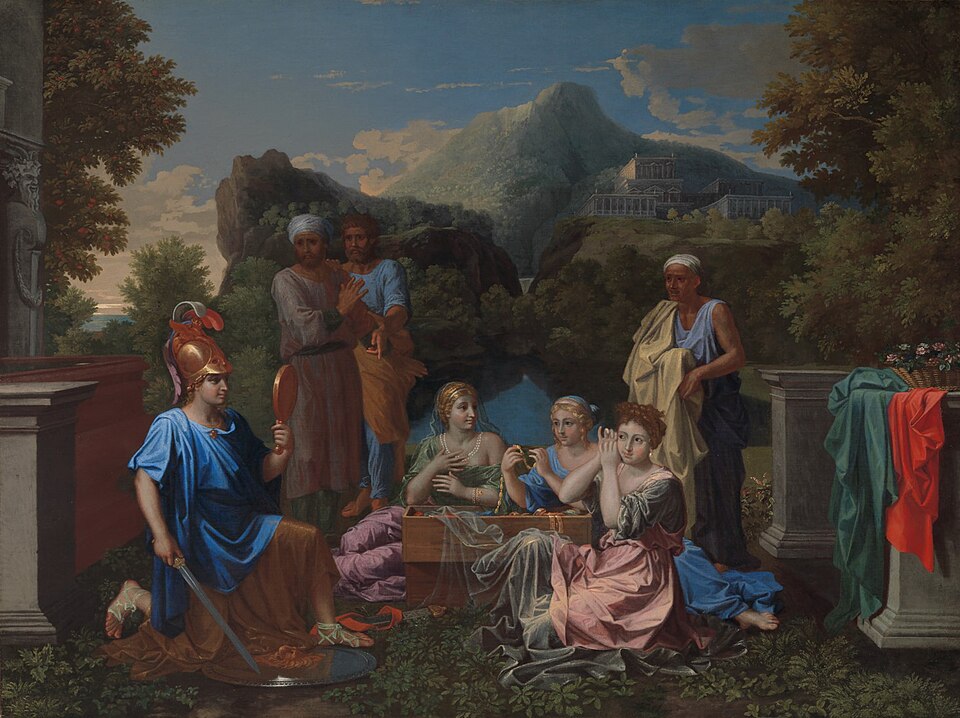
The picture came out of the Rubens workshop with the young Anthony van Dyck involved — two of the greatest Flemish painters on one canvas. Compared with Poussin's cool version of the story, this one runs on color, movement and abundance.
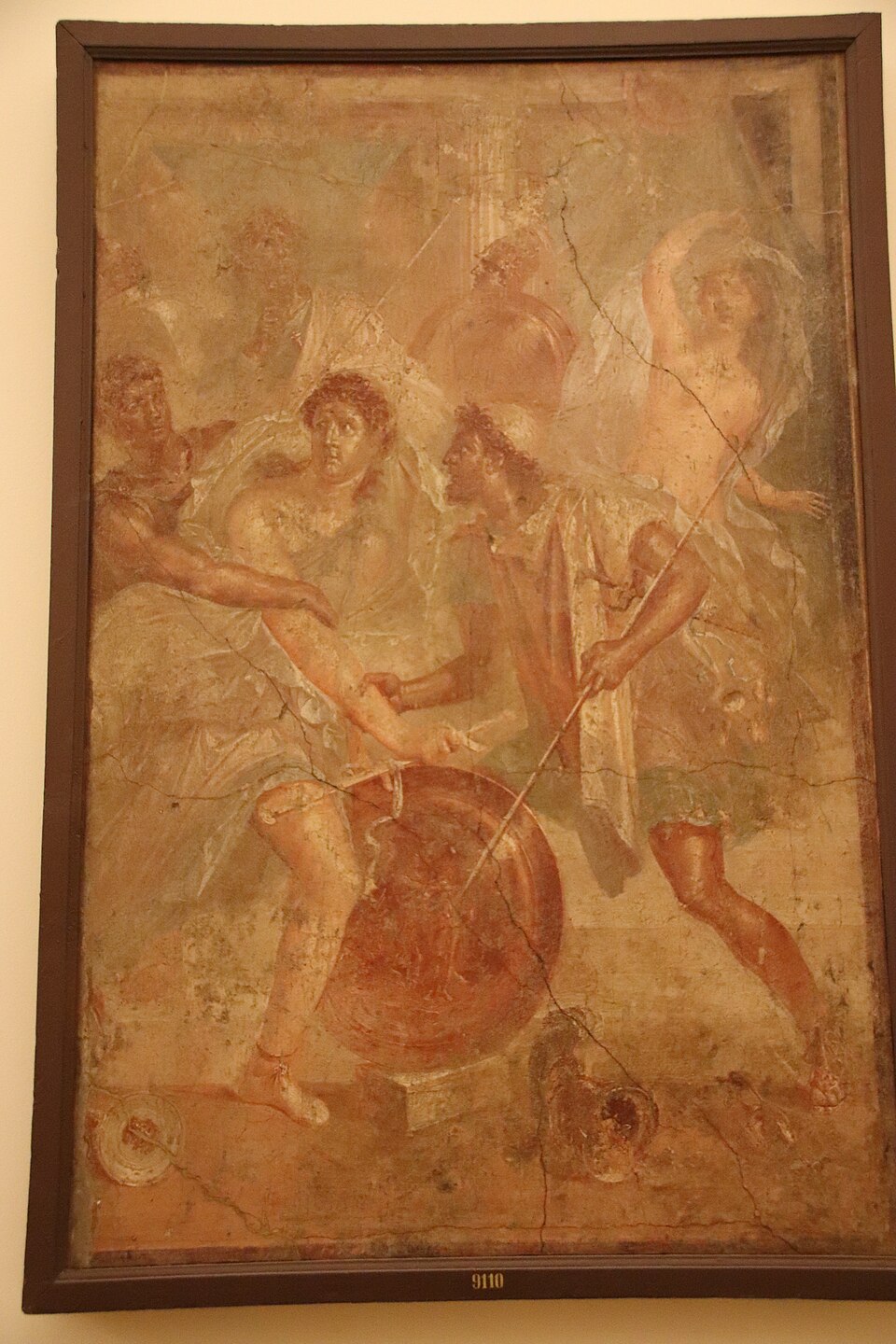
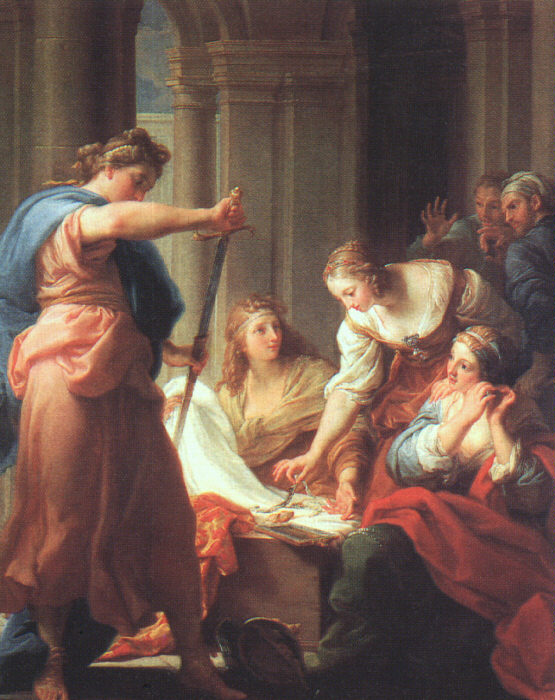
When the war begins, Thetis tries one last trick to save her son. She hides Achilles on the island of Skyros, disguised as a girl among the daughters of King Lycomedes. A prophecy has said Troy cannot fall without him, so the Greeks come looking.
Odysseus, king of Ithaca and the cleverest of the Greeks, arrives disguised as a merchant. He lays out gifts for the princesses: jewelry, dresses — and among them, a sword and shield. Then he has a battle-alarm sounded. The girls flee. One of them grabs the weapons. Achilles is caught, and he stops pretending. He chooses the short, famous life.
This canvas unites the two giants of Flemish Baroque painting: Peter Paul Rubens (1577–1640), whose workshop produced it, and the young Anthony van Dyck (1599–1641), then Rubens's most gifted assistant, later court painter to Charles I of England.