Ulysses Recognized by Eurycleia
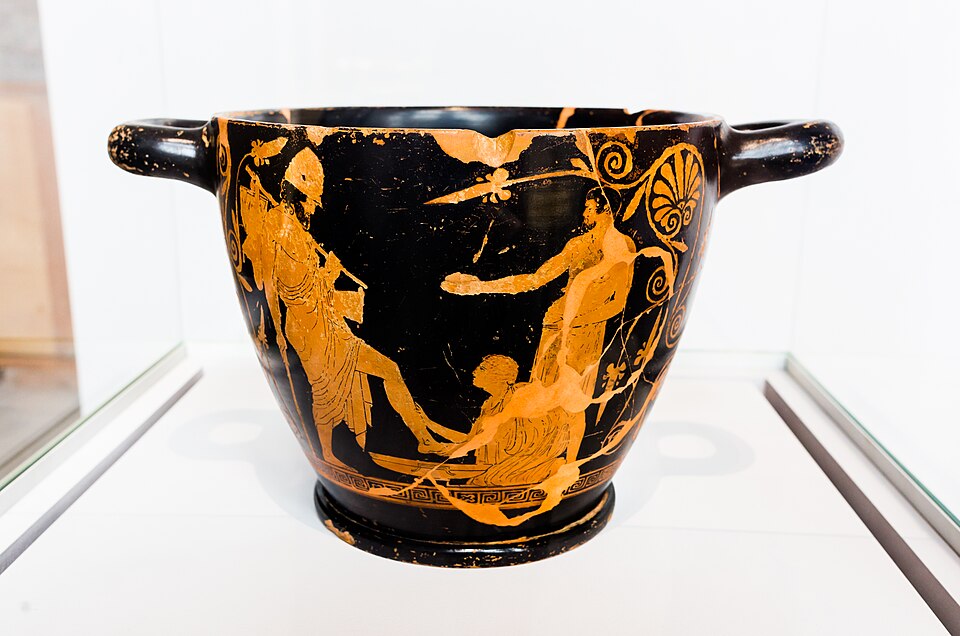
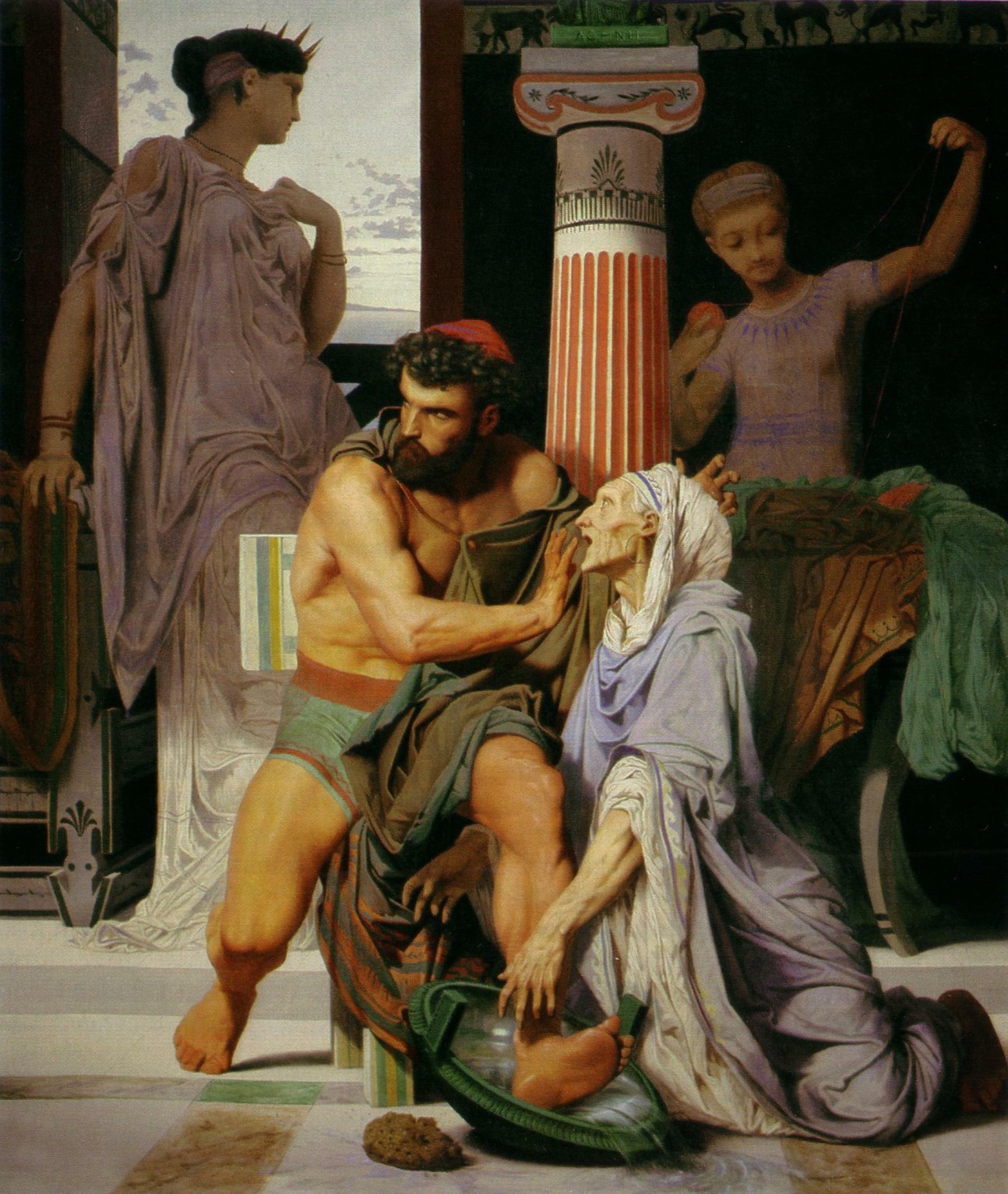
Odysseus has come home disguised as a beggar, and the old nurse Eurycleia washes the stranger's feet as courtesy requires. Her hands have just found the scar on his thigh — the one she has known since he was a boy. She starts; he moves to silence her before she can cry out his name.
Boulanger compresses recognition, danger and command into a single touch. The painting won him the Prix de Rome in 1849, the highest prize a young French painter could earn.
Odysseus walks into his own palace as a beggar and takes the suitors' abuse — Antinous throws a footstool at him — while he counts men and memorizes the room. At the gate, one creature knows him instantly: Argos, the hunting dog he trained as a puppy, now old and discarded on a dung heap. The dog thumps his tail, and dies. Odysseus wipes away a tear without breaking stride.
That evening Penelope, kind to the strange beggar who claims news of her husband, orders the old nurse Eurycleia to wash his feet — the woman who nursed Odysseus as an infant. Her hands find what the rags hide: the long white scar above his knee, from a boar hunt when he was a boy. She knows him at once. His hand closes on her throat, gently, and he swears her to silence. The household is now one secret away from war.
Gustave Boulanger (1824–1888) was a French academic painter trained in the studio of Paul Delaroche. After winning the Prix de Rome he built a career on polished scenes of classical antiquity and North Africa, and taught at the École des Beaux-Arts.