Tiresias Appears to Ulysses
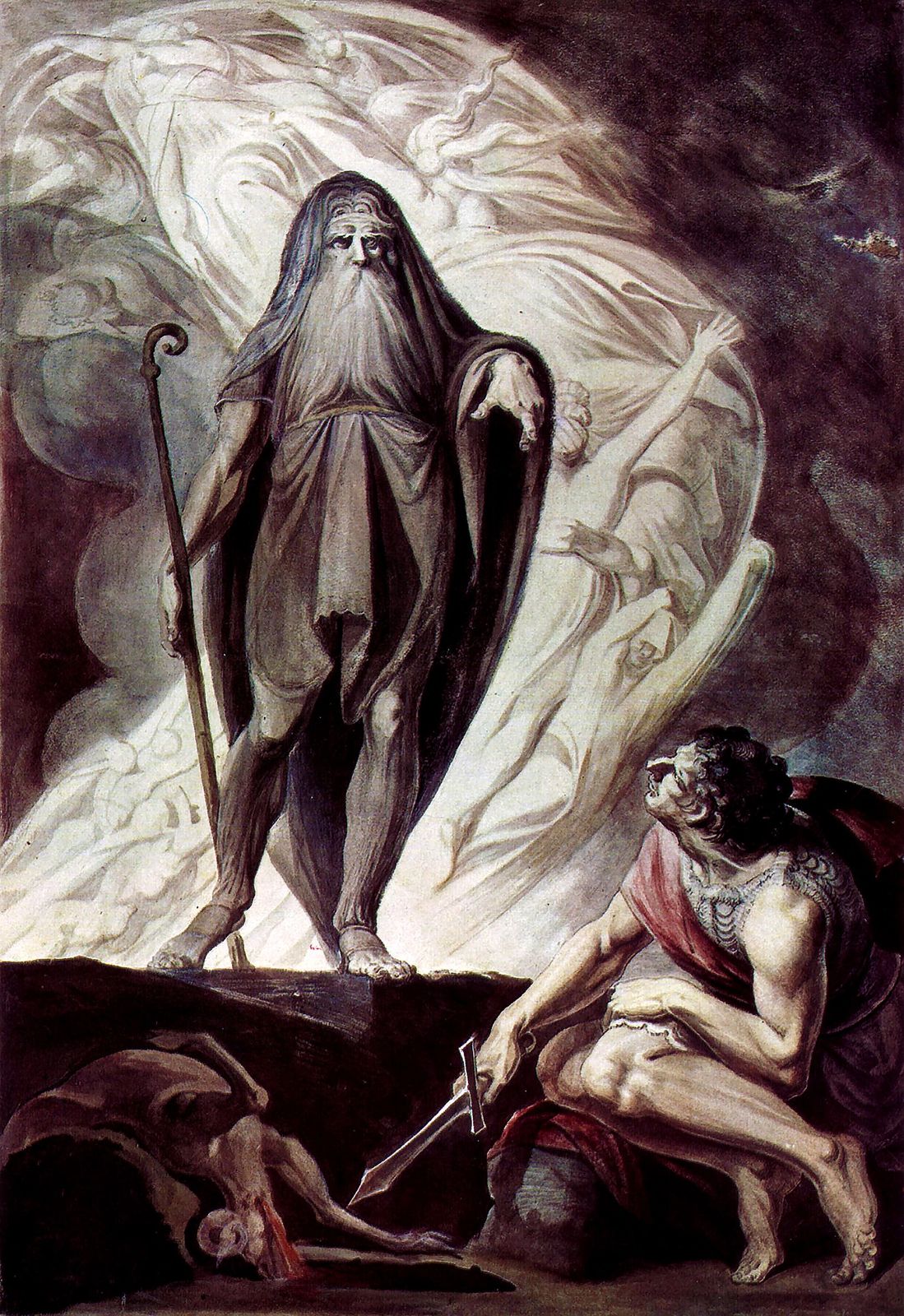
Odysseus crouches over the pit of sacrificial blood, sword drawn to keep the crowding ghosts away, as the shade of the blind prophet Tiresias rises before him. Only Tiresias can tell him the way home — and the price of getting there.
Fuseli, painter of nightmares, was made for this scene. The bodies are elongated and theatrical, the light comes from nowhere, and the dead seem more solid than the living hero. It is the Odyssey's darkest chapter drawn in its darkest style.
At the far shore of the world-circling river Ocean, Odysseus digs a trench and fills it with sacrificial blood, and the dead crowd up out of the dark to drink and speak. He has come for one ghost: Tiresias, the blind prophet who kept his wits even in death. The prophecy is conditional. He can still reach home — if his men leave the cattle of the sun god untouched. Either way he will arrive late, on a stranger's ship, to find arrogant men devouring his household.
Then come the ghosts he did not ask for. His mother Anticlea, who died of grief waiting for him; three times he tries to embrace her, and three times she drifts through his arms like smoke. Agamemnon, the Greek commander at Troy, murdered by his own wife the day he reached home — a dark mirror of the homecoming Odysseus hopes for. And Achilles, the greatest warrior of the war, who tells him flatly that he would rather be a poor farmhand alive than king of all the dead.
Henry Fuseli (1741–1825) was a Swiss-born painter who made his career in London, where he became a Royal Academy professor. Famous for The Nightmare, he specialized in the supernatural side of Shakespeare, Milton, and Homer.