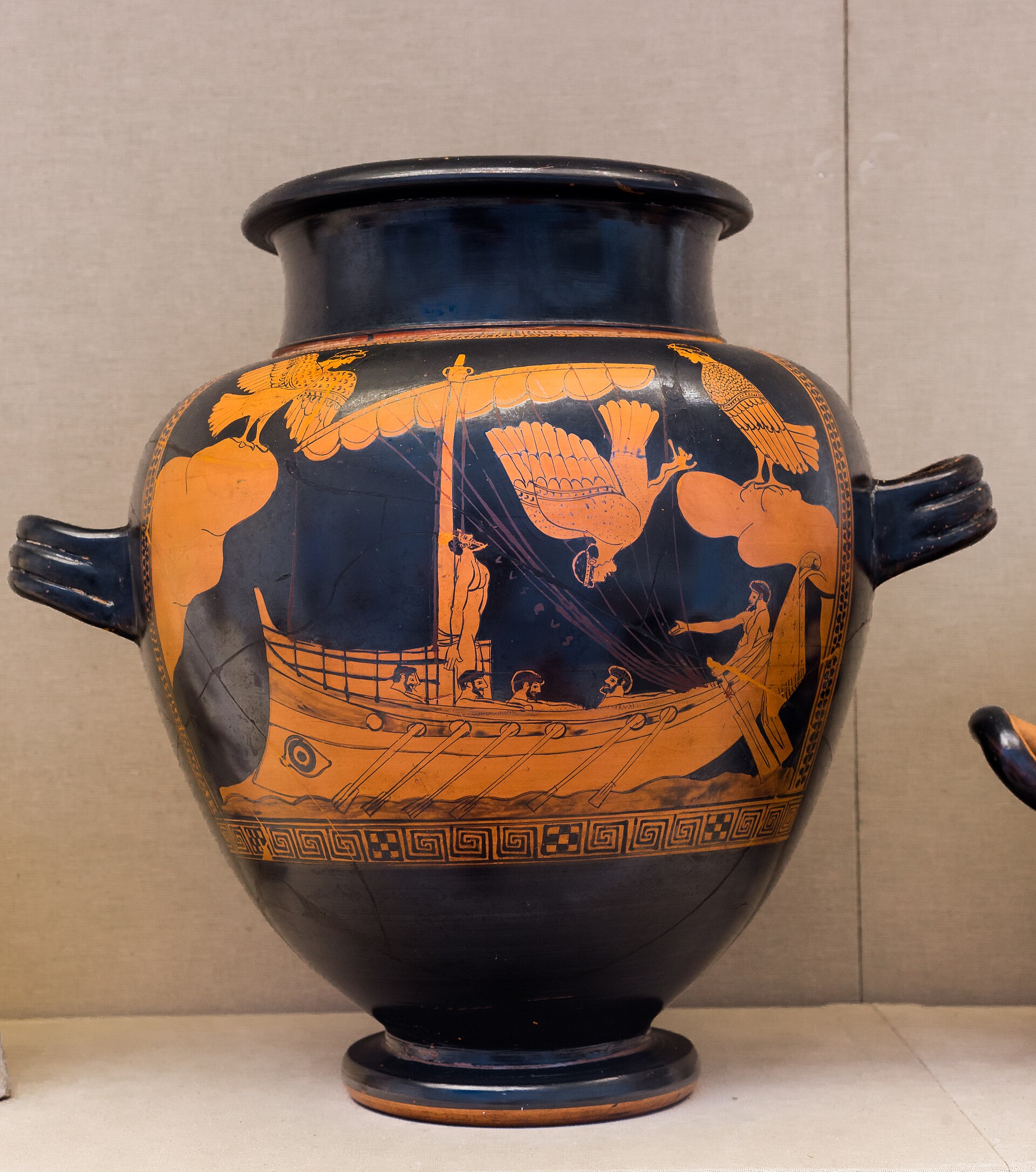
The Siren Vase
Odysseus stands lashed to the mast, head thrown back to hear the song. His crew row hard, their ears plugged with wax, while bird-bodied Sirens with women's heads watch from the cliffs on either side. One Siren plunges headlong toward the sea, eyes closed — defeated, in some tellings dying, because a man has heard the song and sailed on.
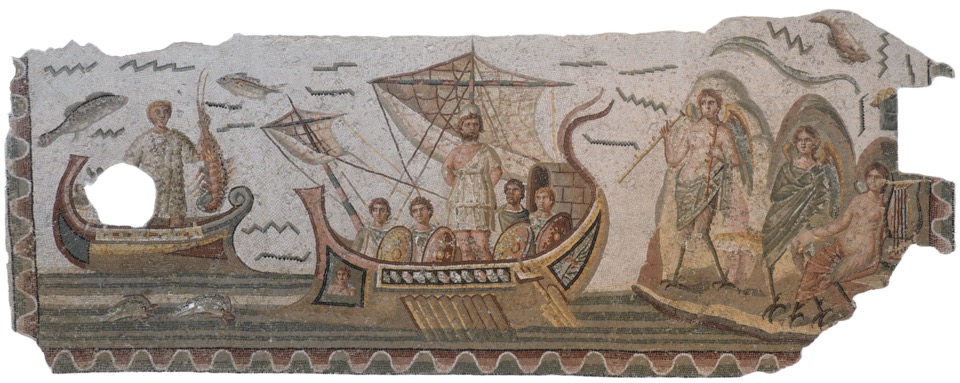
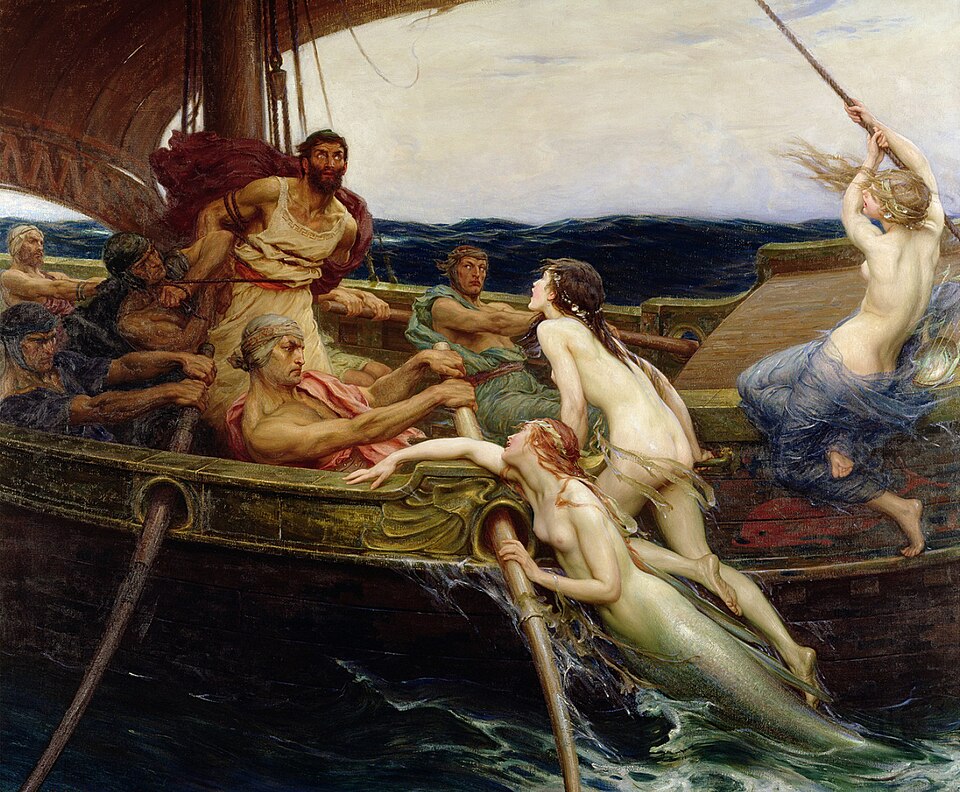
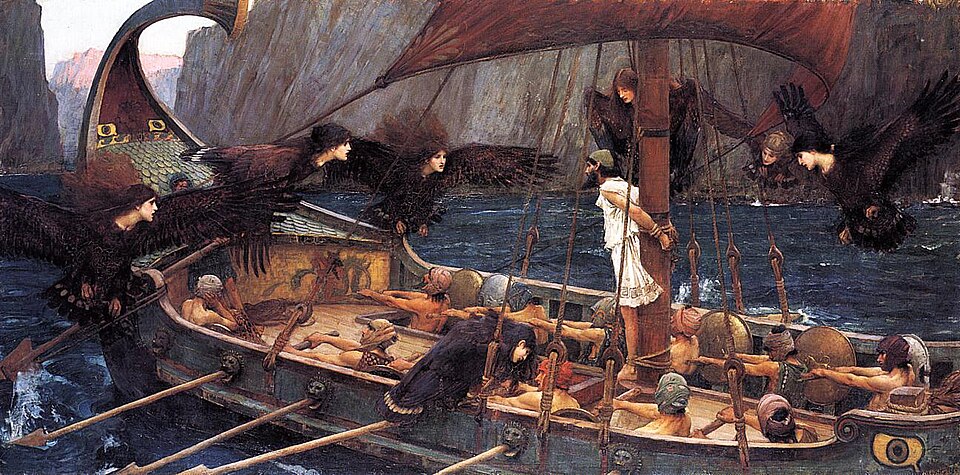
This little jar is the oldest surviving picture of the scene and still the most famous. Every later artist who painted the Sirens — Draper, Waterhouse, and the rest — was answering this composition, whether they knew it or not.
Sailing back past Aeaea — where Circe gives him precise directions for the horrors ahead — Odysseus approaches the island of the Sirens. They are singers with the bodies of birds, and their song makes an irresistible promise: listen, and you will know everything that has ever happened on earth. No one who hears it sails on. Their meadow is heaped with the bones of men who stayed to listen until they died.
Circe has told him the trick, and it is pure Odysseus: he wants to hear the song and live. He plugs his crew's ears with softened beeswax, then has them tie him upright to the mast, ears open — with orders to bind him tighter the more he begs. The song reaches him and he strains against the ropes, shouting to be released. The deaf crew just rows harder until the island is out of earshot.
The Siren Painter is the modern name for the Athenian artist who decorated this red-figure stamnos around 480–470 BC. Almost nothing else is known of him beyond a handful of attributed vases.
.jpg)