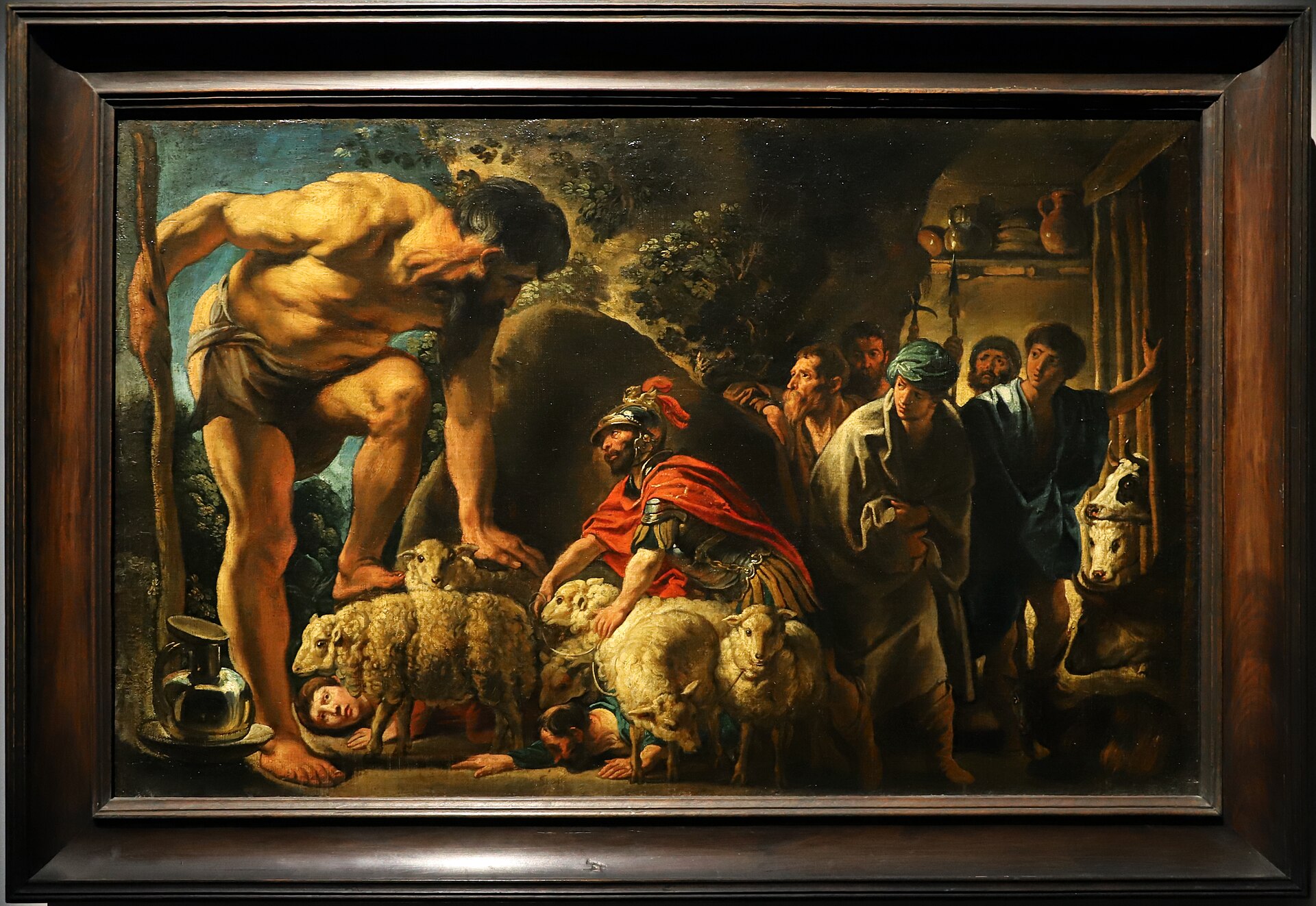
Odysseus in the Cave of Polyphemus
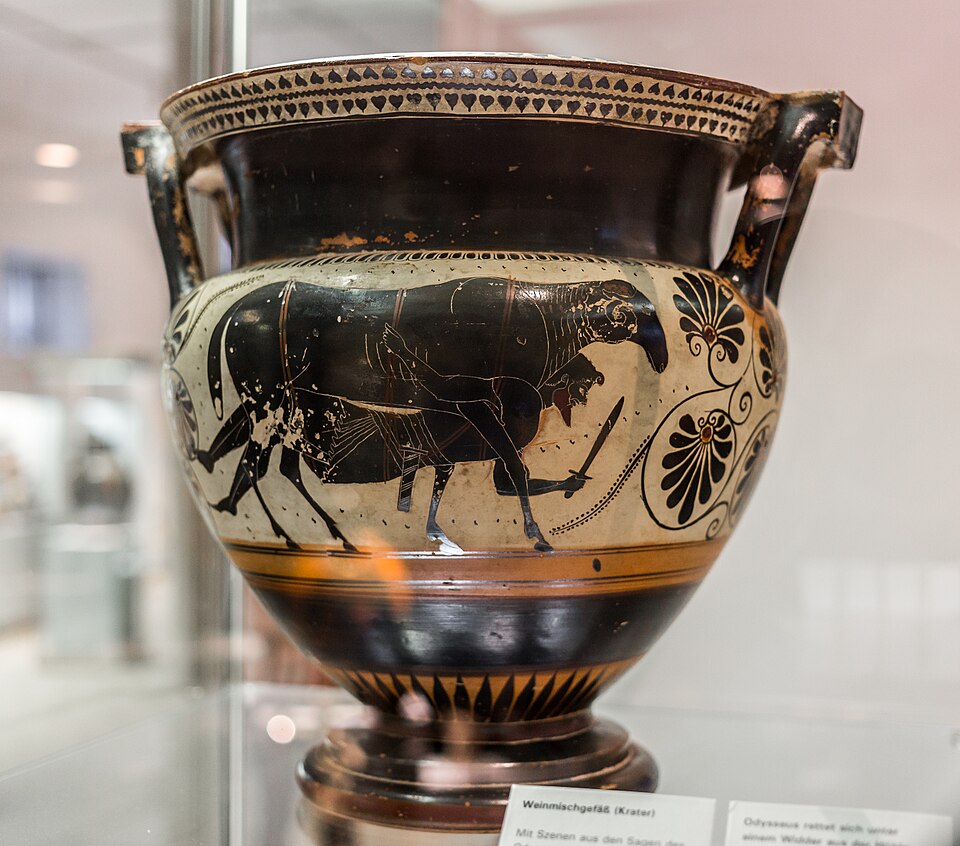
Inside the crowded cave, Odysseus and his men put their escape plan to work among the Cyclops' flock. The painting is full of livestock — heavy rams, ewes, a goat — because the animals are the plan: each man will leave the cave tied beneath a ram, hidden from the giant's groping hands.
Jordaens loved painting muscular bodies, animals, and cluttered, earthy scenes, and this subject gave him all three. Instead of showing the horror of the blinding, he shows the tense, practical moment before the trick — ordinary men handling sheep, with a monster just out of frame.
The Odyssey begins after the Trojan War is over. Odysseus — the Romans later called him Ulysses — has spent ten years fighting at Troy, and it will take him ten more to get home to the island of Ithaca, where he is king. Homer's poem actually opens in the middle of that journey; these scenes follow the trip in the order Odysseus lived it.
The voyage goes wrong almost immediately. His twelve ships raid the Cicones, a people allied with Troy, and lose men. A storm then drives the fleet to the land of the Lotus-eaters, where anyone who tastes the sweet lotus fruit forgets home entirely; Odysseus has to drag his own men back to the ships by force. Then, scouting an unknown coast with twelve companions, he walks into a huge cave stocked with cheeses and lambs. It belongs to Polyphemus, a one-eyed giant — a Cyclops, and a son of the sea god Poseidon.
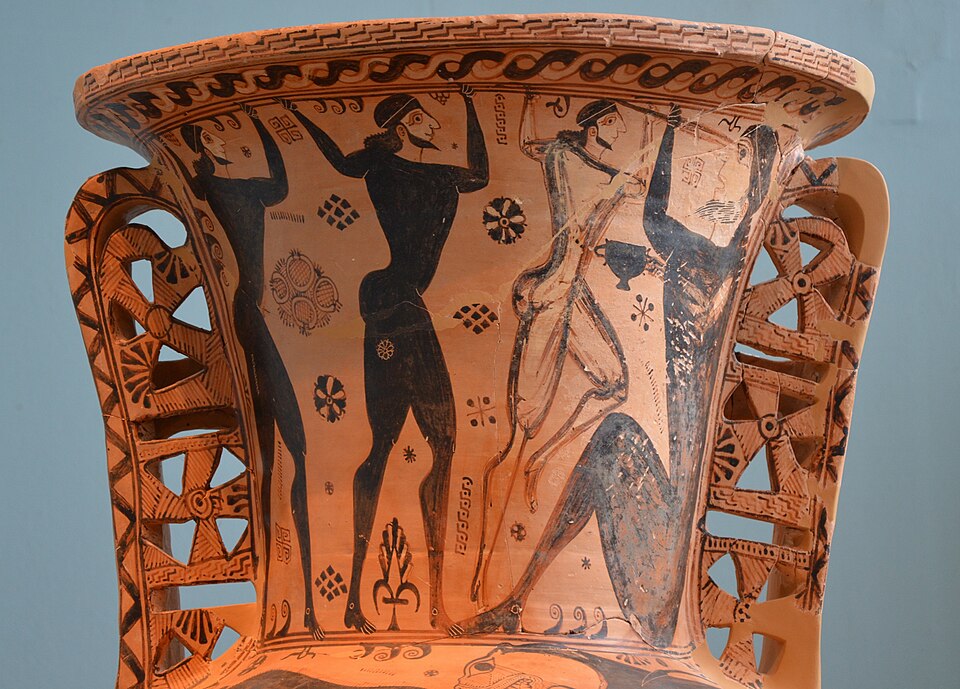
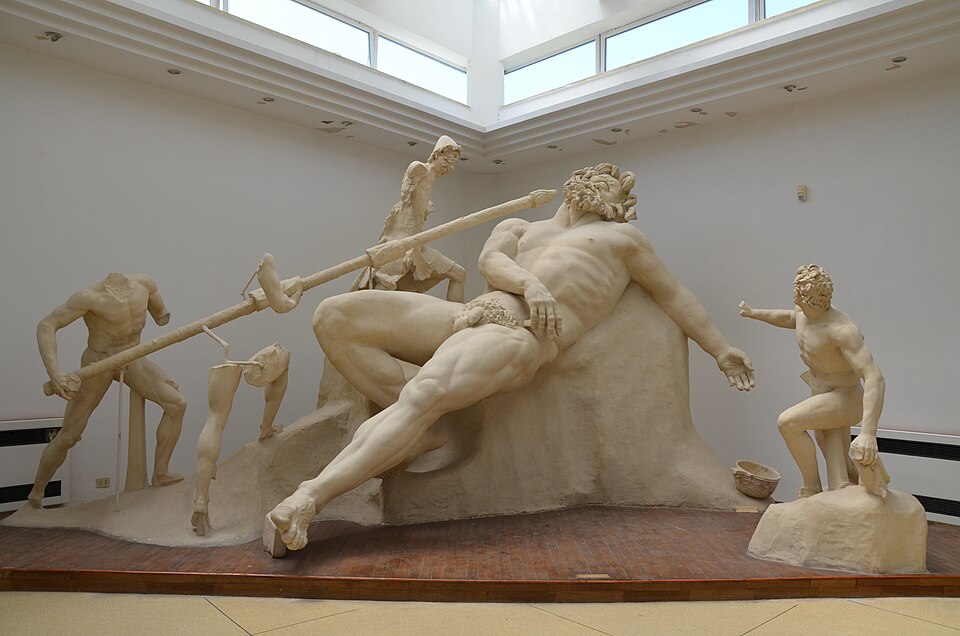
The giant rolls a boulder across the entrance and starts eating the crew, two at a time. Odysseus thinks instead of fighting: kill the giant and they are sealed in the cave forever. So he gives Polyphemus strong wine, tells him his name is “Nobody,” and when the giant passes out, drives a sharpened, fire-heated stake into his single eye. When Polyphemus screams that “Nobody is hurting me,” the other Cyclopes shrug and go home.
Jacob Jordaens (1593–1678) was one of the three great painters of the Flemish Baroque, alongside Rubens and van Dyck. After both died, he became the leading painter of Antwerp, known for robust, lively scenes of myth and everyday life.
.jpg)