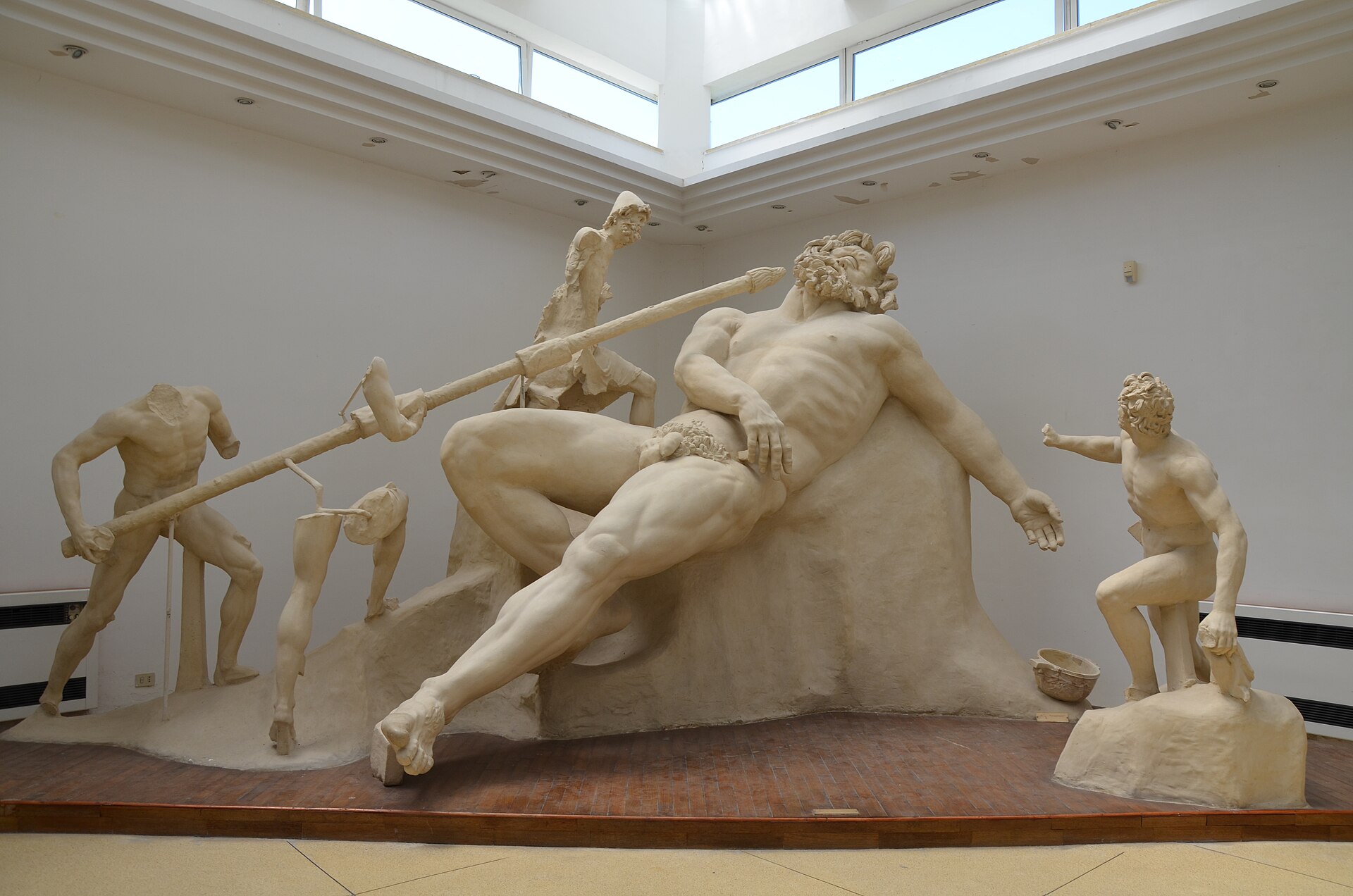
The Blinding of Polyphemus (Sperlonga Group)
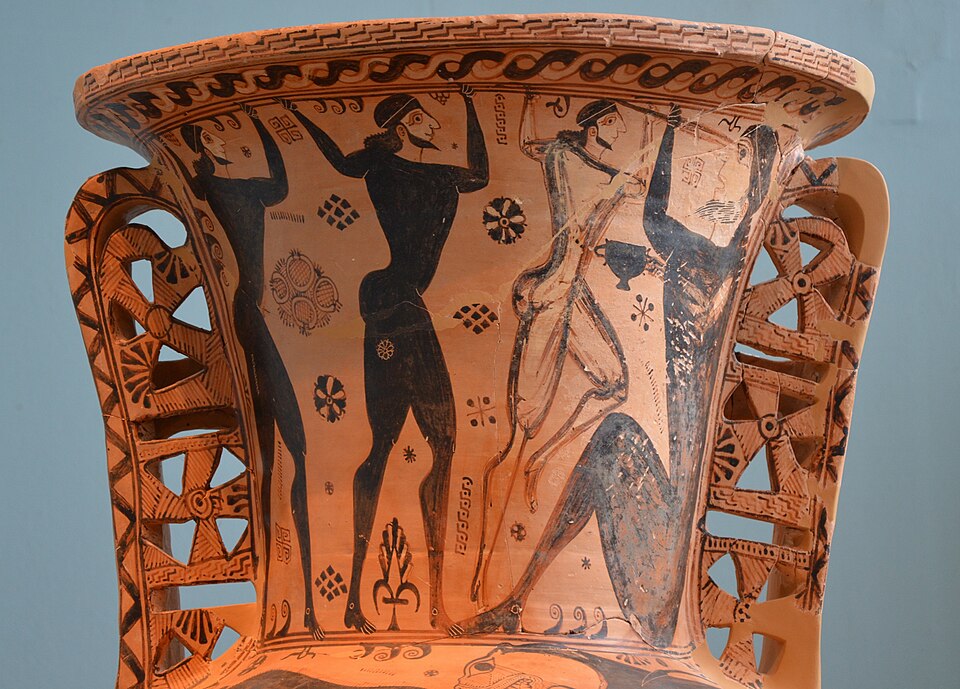
This colossal marble group shows the same moment as the Eleusis vase, six centuries later: Odysseus and his men lift a massive stake and aim it at the eye of the sleeping, wine-drunk giant. The figures are far over life size, carved with twisting bodies and straining muscles.
The group decorated a seaside grotto at Sperlonga where the emperor Tiberius dined, surrounded by marble scenes from the Odyssey. It was found in 1957, shattered into thousands of fragments, and has been pieced back together. An inscription names the same three Rhodian sculptors that ancient writers credit with the Laocoön.
The Odyssey begins after the Trojan War is over. Odysseus — the Romans later called him Ulysses — has spent ten years fighting at Troy, and it will take him ten more to get home to the island of Ithaca, where he is king. Homer's poem actually opens in the middle of that journey; these scenes follow the trip in the order Odysseus lived it.
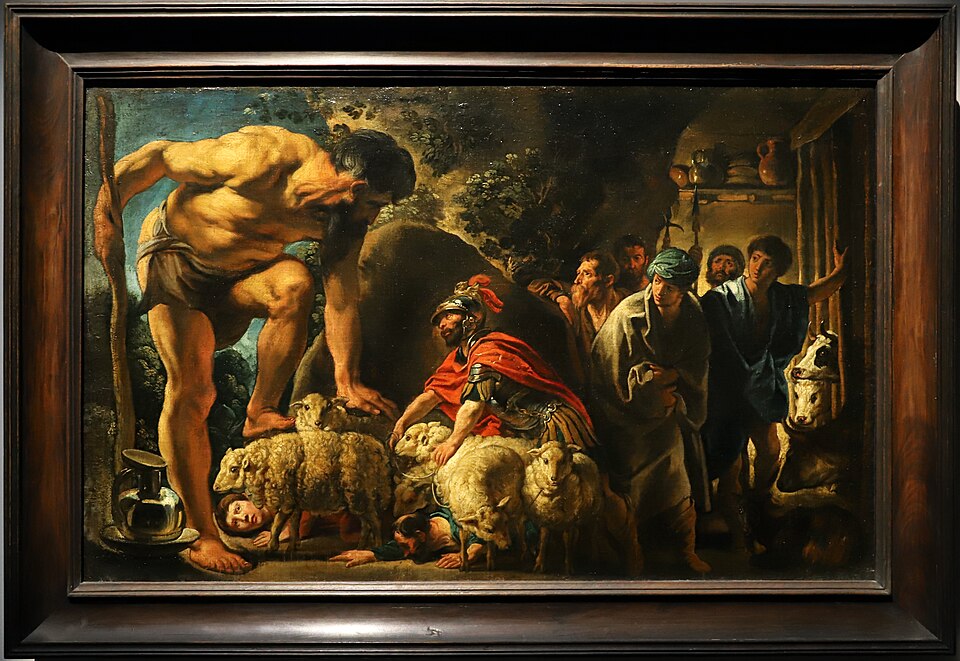
The voyage goes wrong almost immediately. His twelve ships raid the Cicones, a people allied with Troy, and lose men. A storm then drives the fleet to the land of the Lotus-eaters, where anyone who tastes the sweet lotus fruit forgets home entirely; Odysseus has to drag his own men back to the ships by force. Then, scouting an unknown coast with twelve companions, he walks into a huge cave stocked with cheeses and lambs. It belongs to Polyphemus, a one-eyed giant — a Cyclops, and a son of the sea god Poseidon.
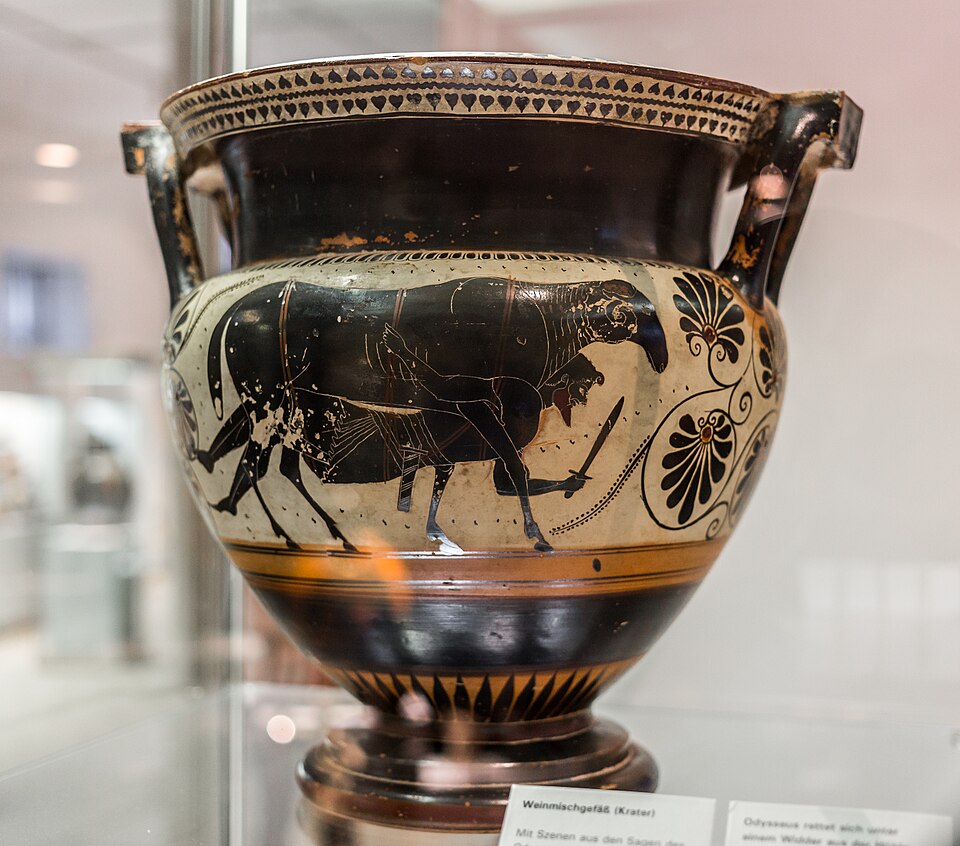
The giant rolls a boulder across the entrance and starts eating the crew, two at a time. Odysseus thinks instead of fighting: kill the giant and they are sealed in the cave forever. So he gives Polyphemus strong wine, tells him his name is “Nobody,” and when the giant passes out, drives a sharpened, fire-heated stake into his single eye. When Polyphemus screams that “Nobody is hurting me,” the other Cyclopes shrug and go home.
The sculptors — Athanodoros, Hagesandros, and Polydoros of Rhodes — belonged to a Hellenistic tradition that specialized in huge, dramatic marble groups full of motion and pain, made for Roman patrons of the highest rank.
.jpg)