The Education of Achilles by Chiron
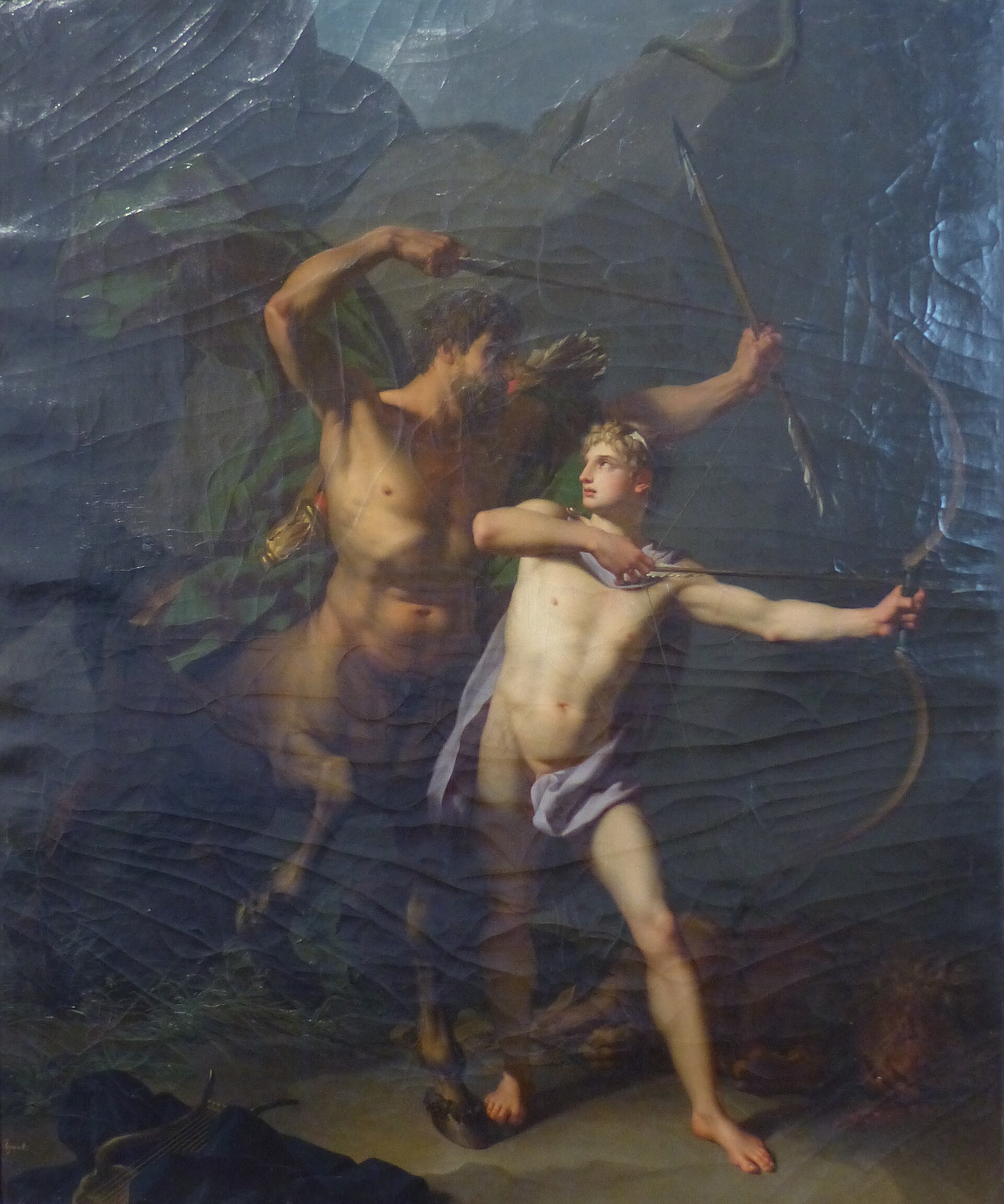
Chiron guides the young Achilles as the boy draws a great bow, the centaur's human torso bent close over his pupil, his horse body planted behind. Teacher and student make a single interlocking group — half beast, half boy, all concentration.
Regnault painted this for the French crown in 1782, and it became one of the standard images of heroic education: talent shaped by discipline. The smooth finish and sculptural bodies are Neoclassicism in full stride, a decade before the Revolution changed what heroes were for.
Achilles, son of Peleus and Thetis, grows up knowing his fate. His mother, being a goddess, has heard the prophecy: her son will either live a long, quiet, forgotten life, or die young at Troy with everlasting fame. She spends his childhood trying to cheat that fate.
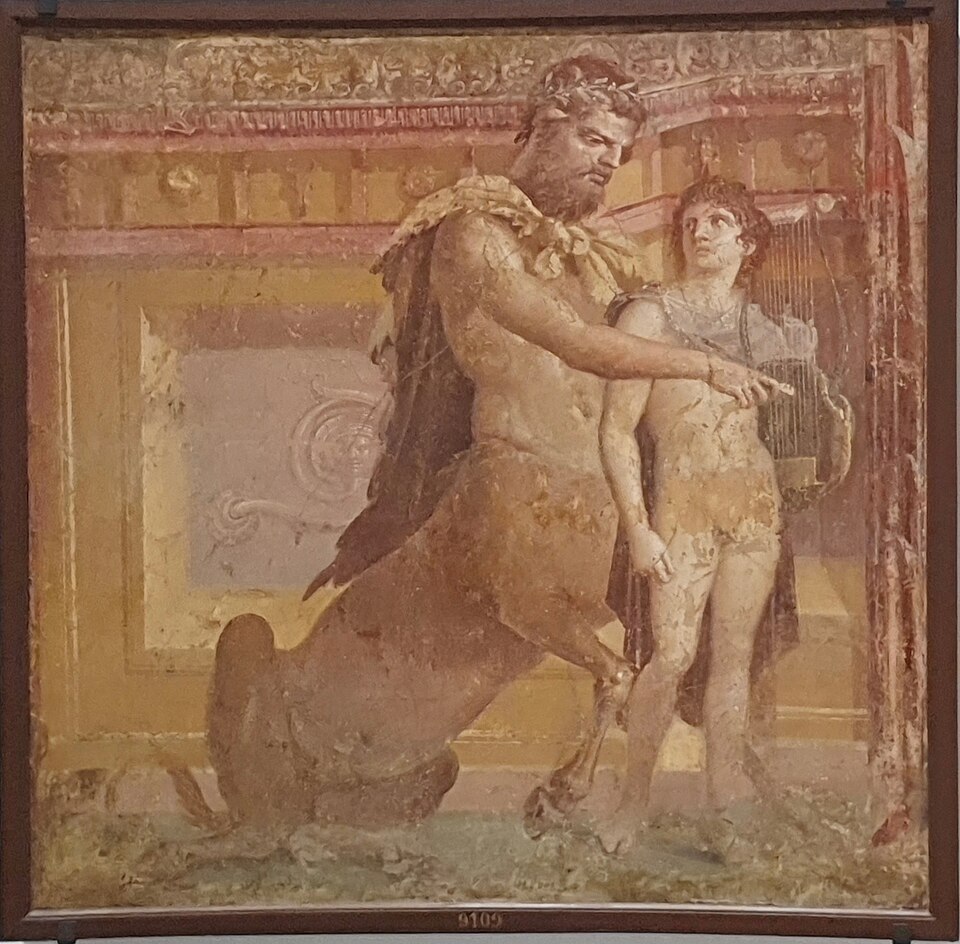
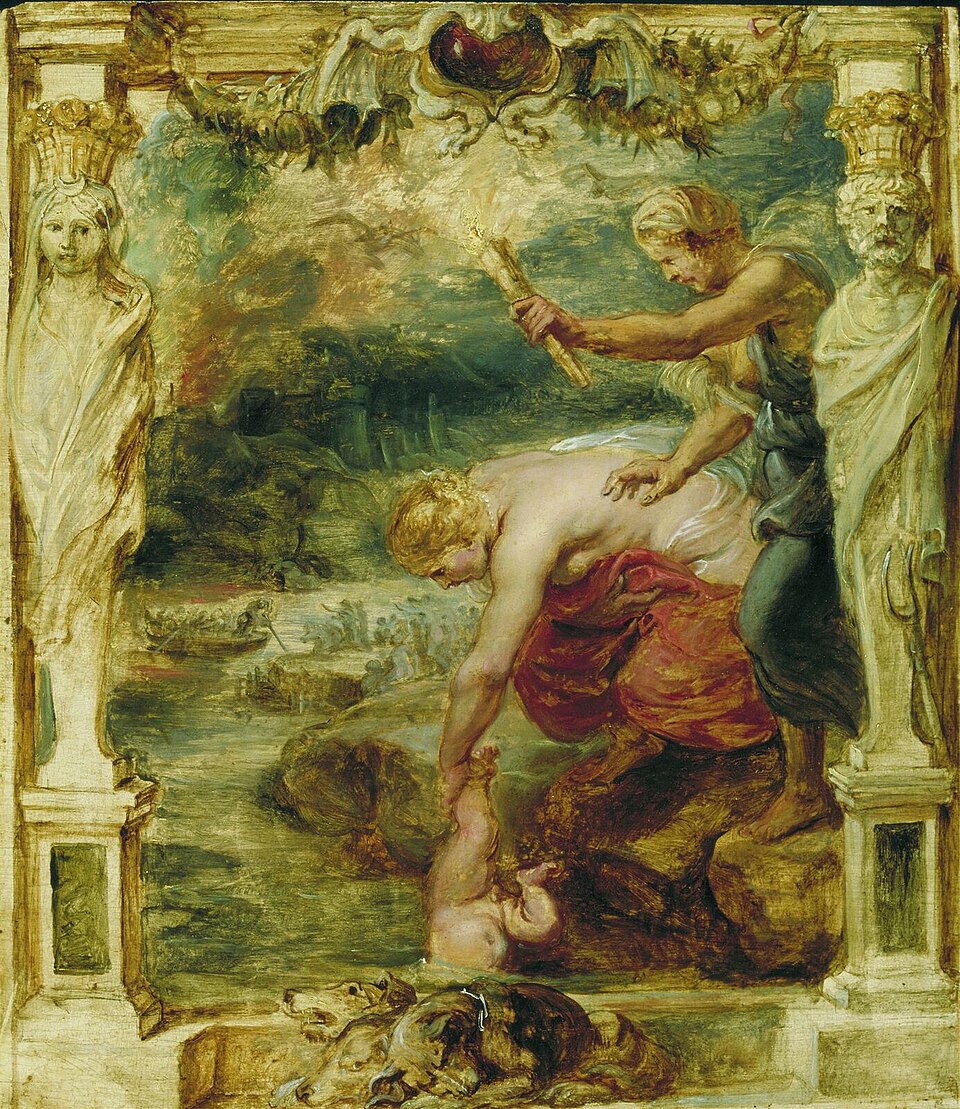
In the most famous story, she dips the infant Achilles in the river Styx, the river of the dead, to make his body invulnerable. She holds him by one heel — the one spot the water never touches. The boy is then sent to be raised by Chiron, a wise centaur — half man, half horse — who teaches him medicine, music, and war.
Jean-Baptiste Regnault (1754–1829) was one of the leading French Neoclassical painters and the chief rival of Jacques-Louis David, running a large teaching studio in Paris.