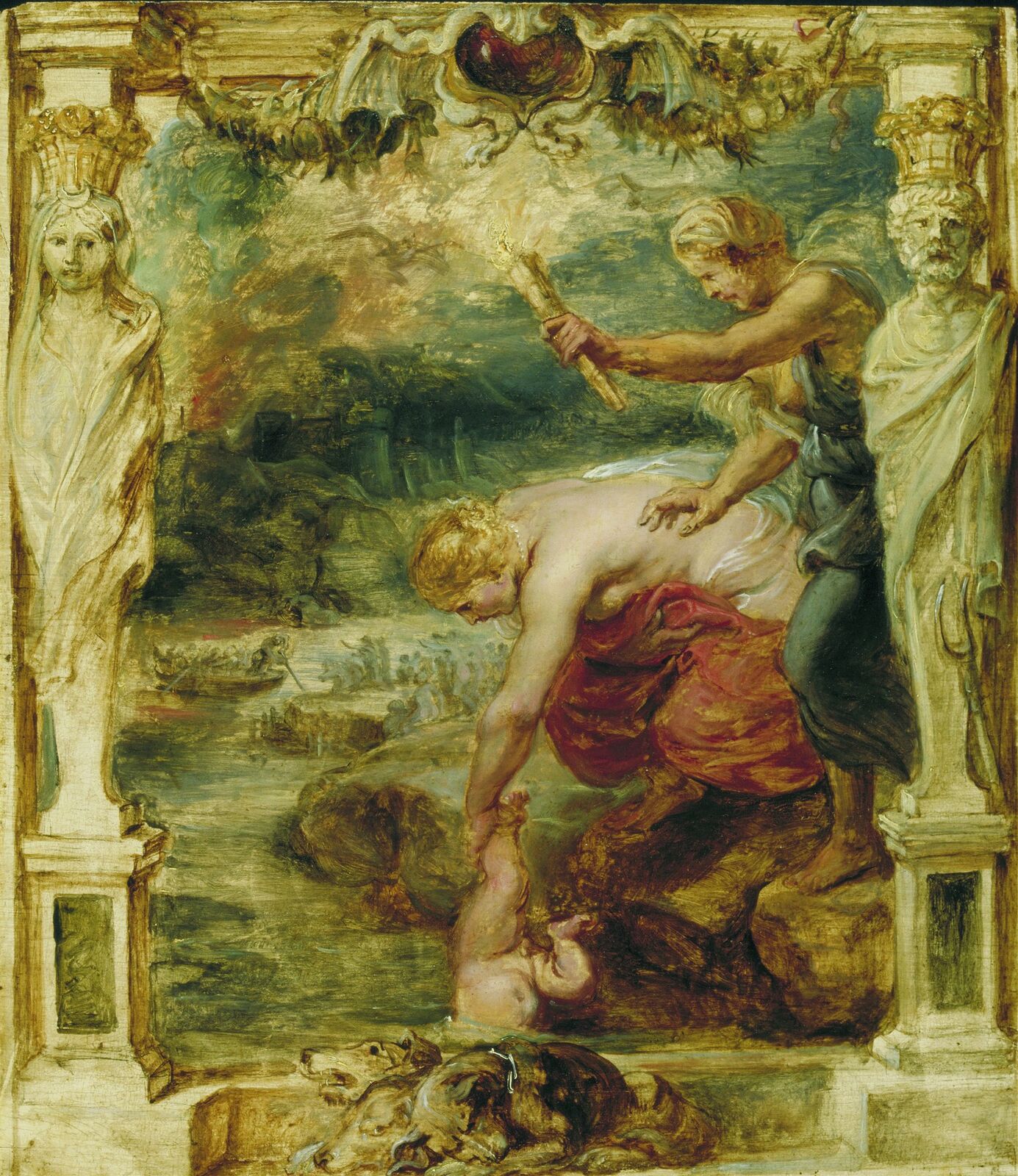
Thetis Dipping Achilles in the Styx
Thetis, knowing her son is fated to die young, dips the infant Achilles into the river Styx to make him invulnerable. Rubens shows her gripping the baby by one heel over the dark water — and that heel, the one part the river never touches, will one day take the arrow that kills him.
This is an oil sketch for a tapestry series on the life of Achilles, which is why painted herms frame the scene like a woven border. Rubens designed the whole cycle himself; his quick, sure brushwork here is the master thinking out loud.
Achilles, son of Peleus and Thetis, grows up knowing his fate. His mother, being a goddess, has heard the prophecy: her son will either live a long, quiet, forgotten life, or die young at Troy with everlasting fame. She spends his childhood trying to cheat that fate.
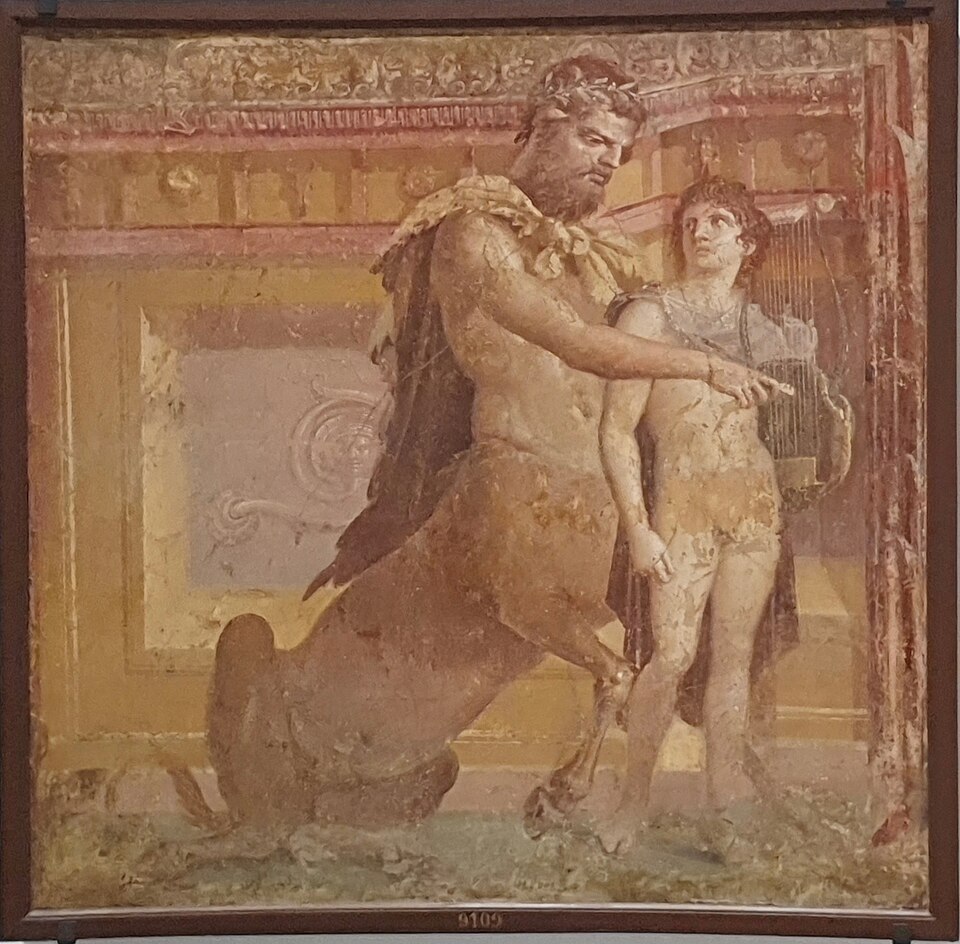
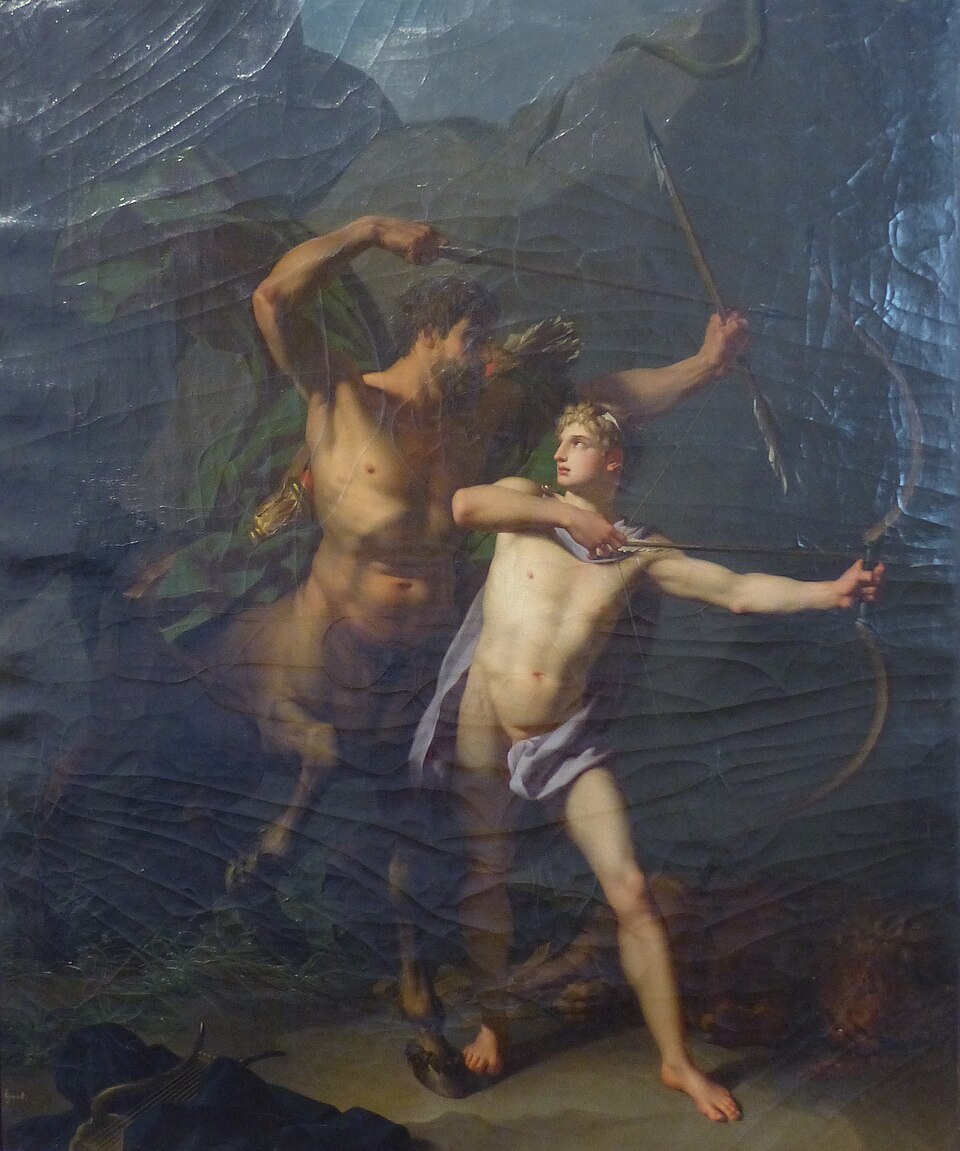
In the most famous story, she dips the infant Achilles in the river Styx, the river of the dead, to make his body invulnerable. She holds him by one heel — the one spot the water never touches. The boy is then sent to be raised by Chiron, a wise centaur — half man, half horse — who teaches him medicine, music, and war.
Peter Paul Rubens (1577–1640) led the largest and most influential workshop in northern Europe. His oil sketches — fast, small first versions of big commissions — are prized as the most personal works from his own hand.