Statue of Odysseus
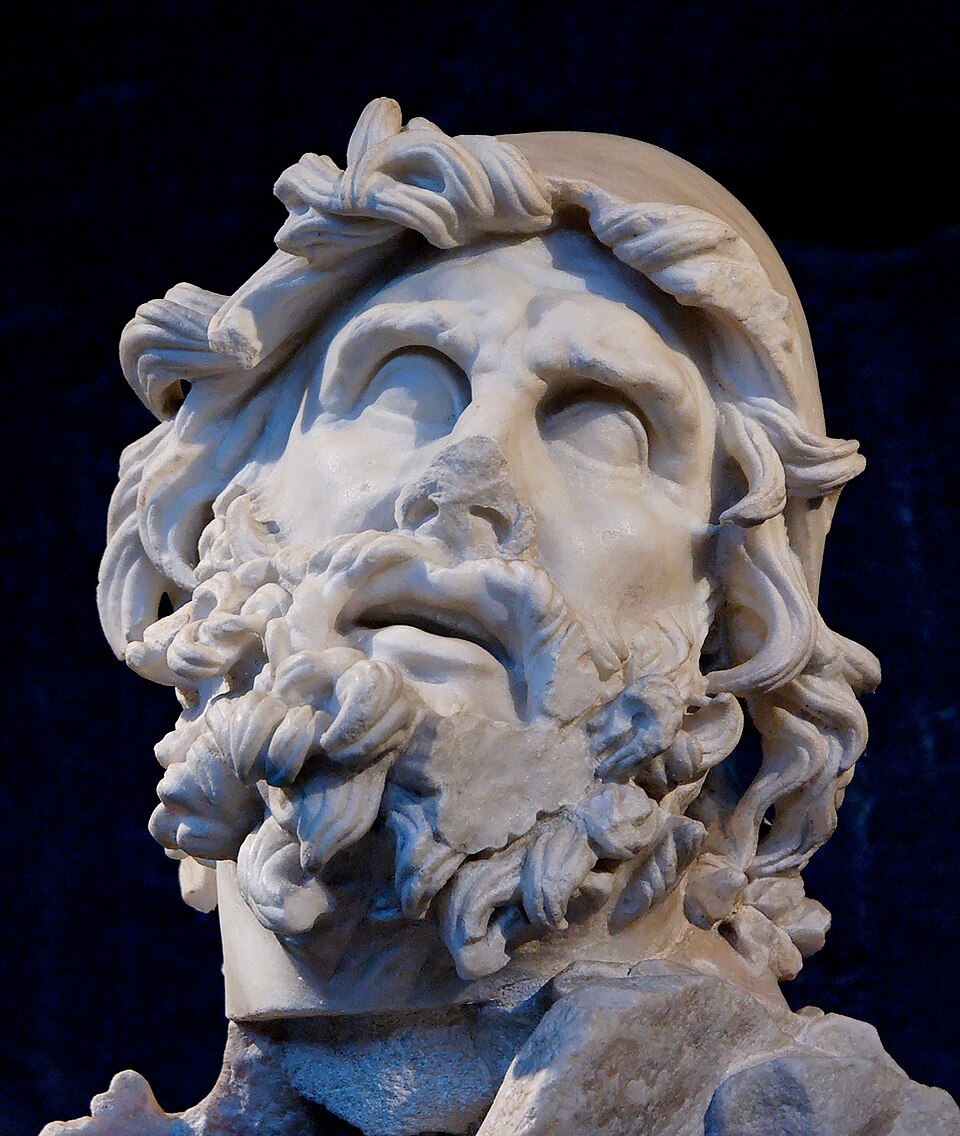
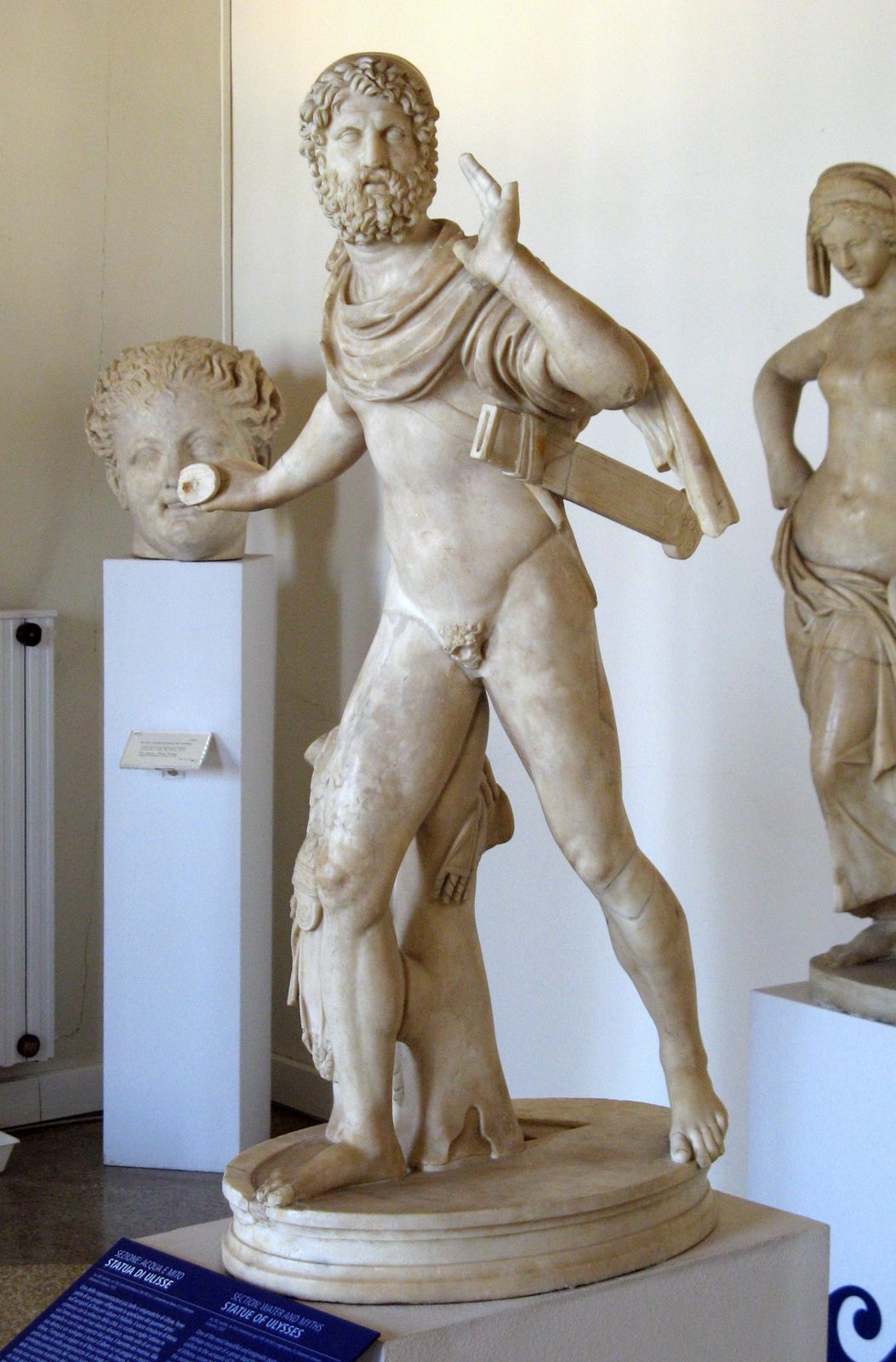
A bearded man in the pilos, the pointed felt cap of sailors and travelers, marks this marble as Odysseus — ancient viewers knew him by the hat as surely as by name. The stocky build and watchful expression fit the poem's man of endurance rather than a glamorous hero.
Statues like this descend from Hellenistic compositions in which Odysseus acted out a famous episode — offering wine to the Cyclops, or crouching in ambush. Detached from its group, the figure becomes a portrait of resourcefulness itself.
Odysseus is the first hero in Western literature who wins mainly with his mind. Homer's repeated epithets for him are “the man of many turns” and “much-enduring”: a schemer, a survivor, a teller of necessary lies, and a man who weeps openly and often. What drives him is not glory — he has that — but homesickness: the stubborn preference for one ordinary mortal life, with its wife, son, father, dog, and olive-tree bed, over the immortality he is offered and turns down.
Ancient artists gave him a recognizable face and kept it for centuries: compact and muscular rather than tall, short-bearded, and usually wearing the pilos, the conical felt cap of a sailor. Where Achilles is shown young, beautiful, and bare-headed, Odysseus looks like what he is — a weathered captain who has seen everything. The knotted brow that Hellenistic sculptors carved into his forehead makes cunning and suffering the same expression.
Roman sculptors kept the image of Odysseus alive for centuries, copying and adapting Greek models for villas, gardens and grottoes. The pointed cap and short tunic became his fixed costume in marble.