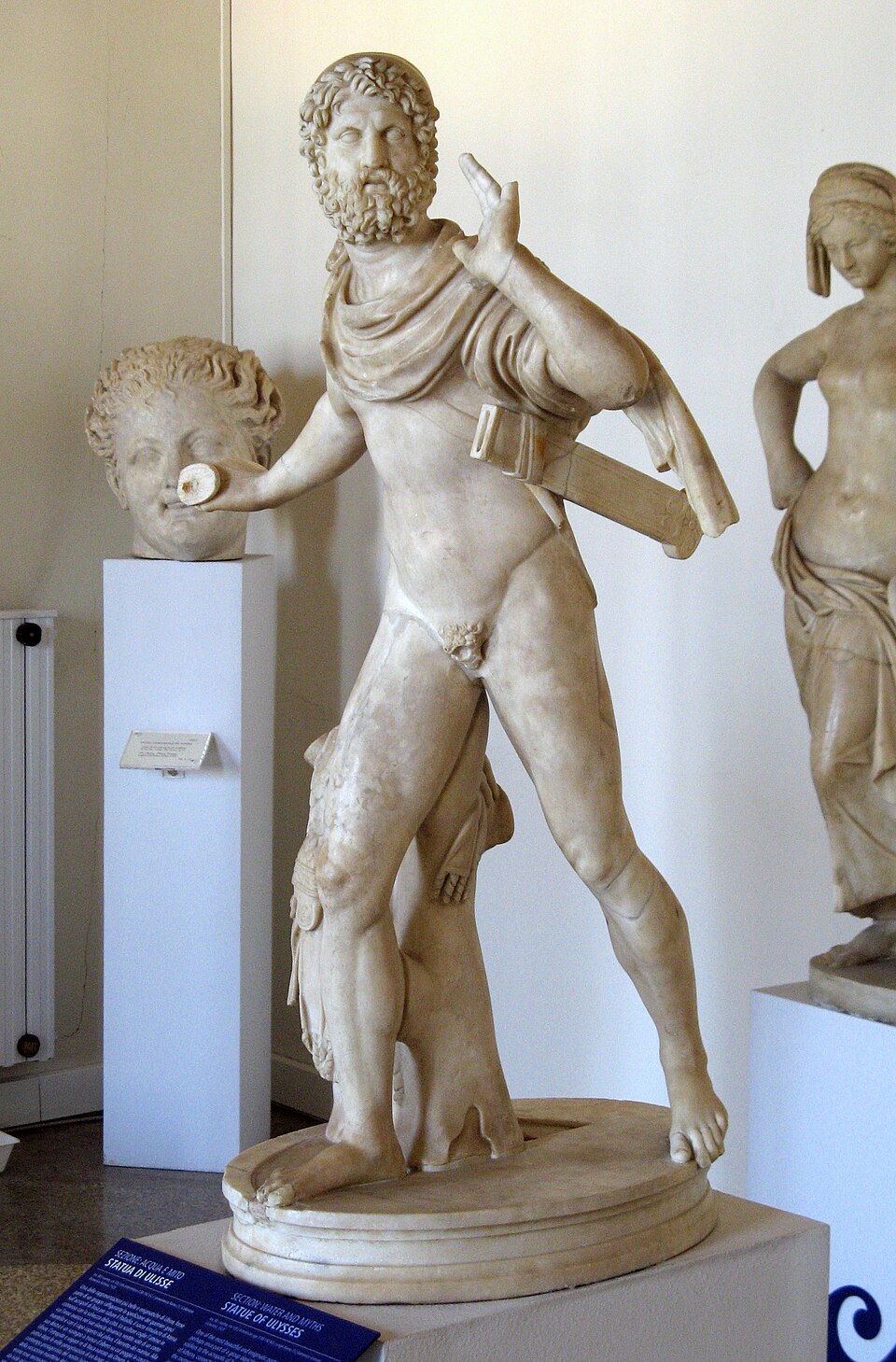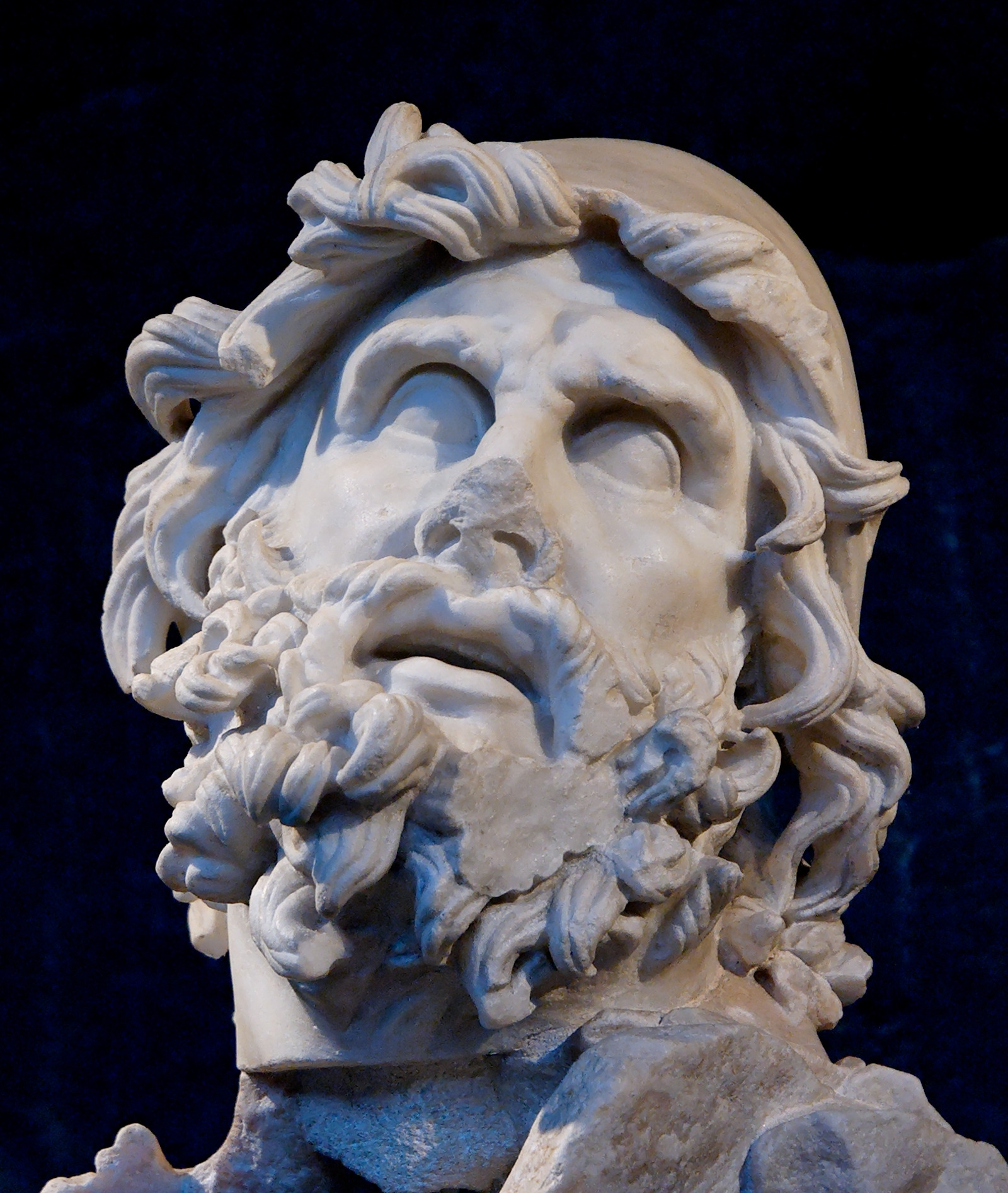
Head of Odysseus
A bearded head in a conical sailor's cap, brow knotted, mouth open with effort — Odysseus in the middle of action, not repose. The head belonged to one of the colossal marble groups that filled a banquet grotto by the sea at Sperlonga.
The grotto was part of a villa used by the emperor Tiberius, and its sculptures, found smashed into thousands of fragments in 1957, staged the hero's adventures at full scale around the diners. The sculptors' style is closely related to the Laocoön in the Vatican.
Odysseus is the first hero in Western literature who wins mainly with his mind. Homer's repeated epithets for him are “the man of many turns” and “much-enduring”: a schemer, a survivor, a teller of necessary lies, and a man who weeps openly and often. What drives him is not glory — he has that — but homesickness: the stubborn preference for one ordinary mortal life, with its wife, son, father, dog, and olive-tree bed, over the immortality he is offered and turns down.
Ancient artists gave him a recognizable face and kept it for centuries: compact and muscular rather than tall, short-bearded, and usually wearing the pilos, the conical felt cap of a sailor. Where Achilles is shown young, beautiful, and bare-headed, Odysseus looks like what he is — a weathered captain who has seen everything. The knotted brow that Hellenistic sculptors carved into his forehead makes cunning and suffering the same expression.
The Sperlonga sculptures are attributed to Hagesandros, Athenodoros and Polydoros of Rhodes — the same three sculptors ancient sources credit with the Laocoön. Their workshop specialized in violent, theatrical marble groups from epic.