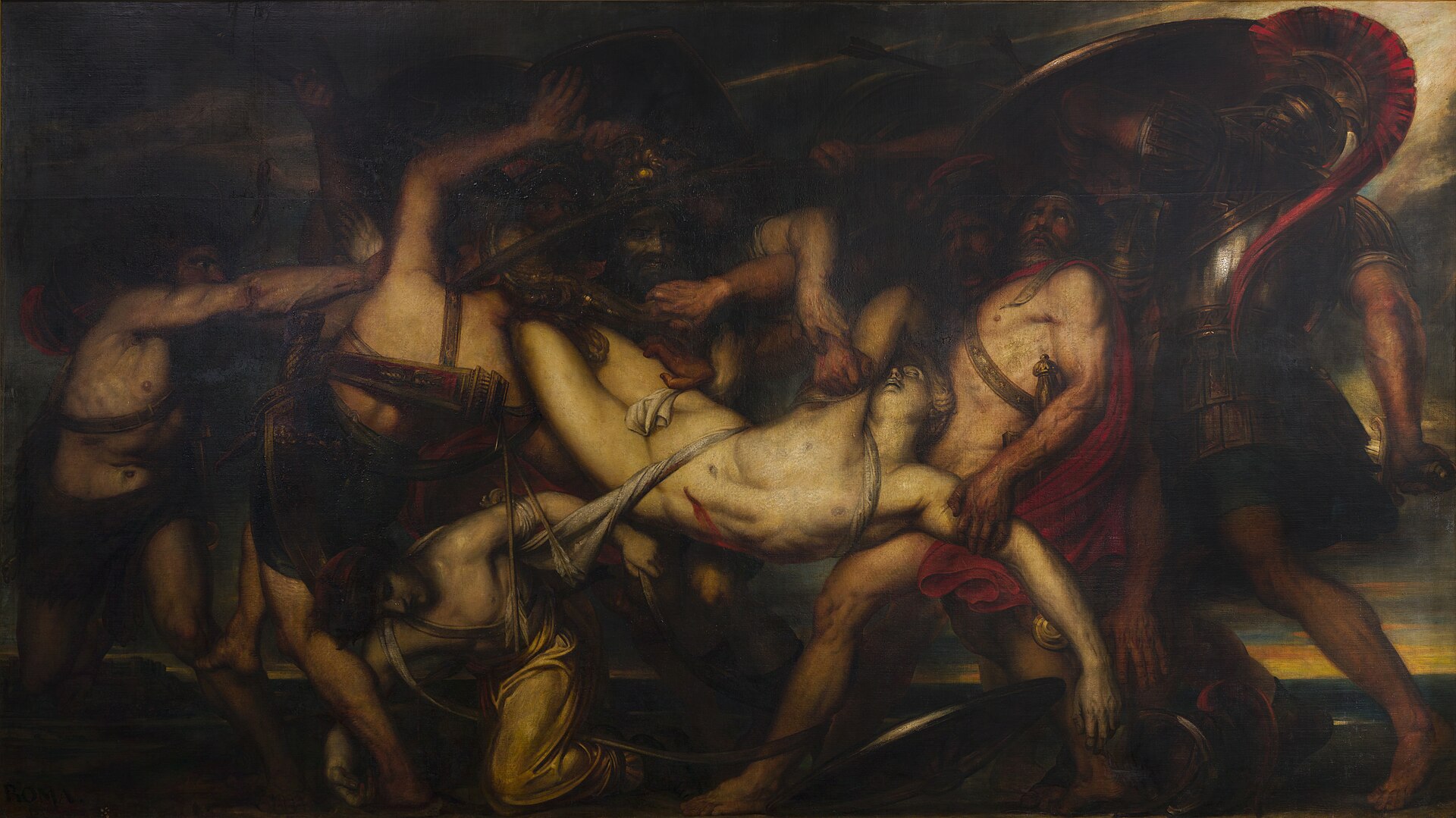
The Greeks and Trojans Fighting over the Body of Patroclus
Homer says the armies fought a whole day over the corpse of Patroclus, and Wiertz takes him literally: a colossal tangle of straining bodies, horses, and spears, with the pale dead man stretched at the center like the prize in a terrible tug-of-war.
Wiertz painted this enormous canvas in Rome in 1836, deliberately challenging Rubens and Michelangelo at their own scale — he repainted the subject more than once, determined to make his name with it. Belgium eventually built him a studio big enough for such pictures; it is now the museum that houses his work.
Patroclus does not stop at the ships. Drunk on victory, he chases the Trojans to the walls of Troy itself. There the god Apollo strikes him from behind, dazing him and knocking off Achilles' armor. A Trojan spears him, and Hector finishes him off and strips the armor for himself.
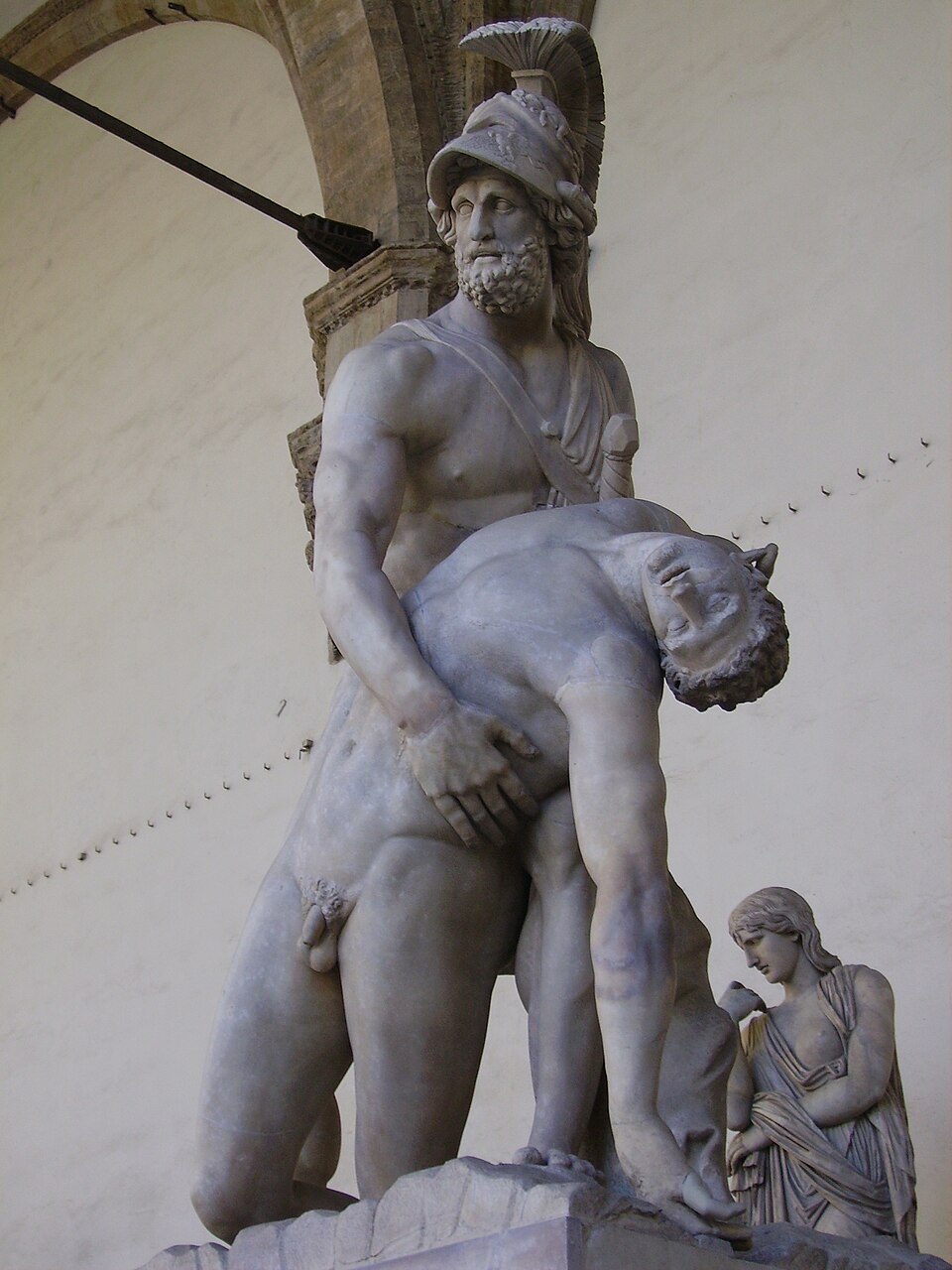
Then comes one of the ugliest fights in the poem: an entire afternoon of battle over Patroclus's corpse. The Trojans want to drag it back as a trophy; the Greeks refuse to leave their dead. Menelaus and Ajax stand over the body and hold the line until it can be carried back to the camp.
Antoine Wiertz (1806–1865) was a Belgian Romantic with boundless ambition, famous for canvases of overwhelming size and shock value. He gave his work to the Belgian state on the condition that his vast Brussels studio be preserved as a museum, and it still is.