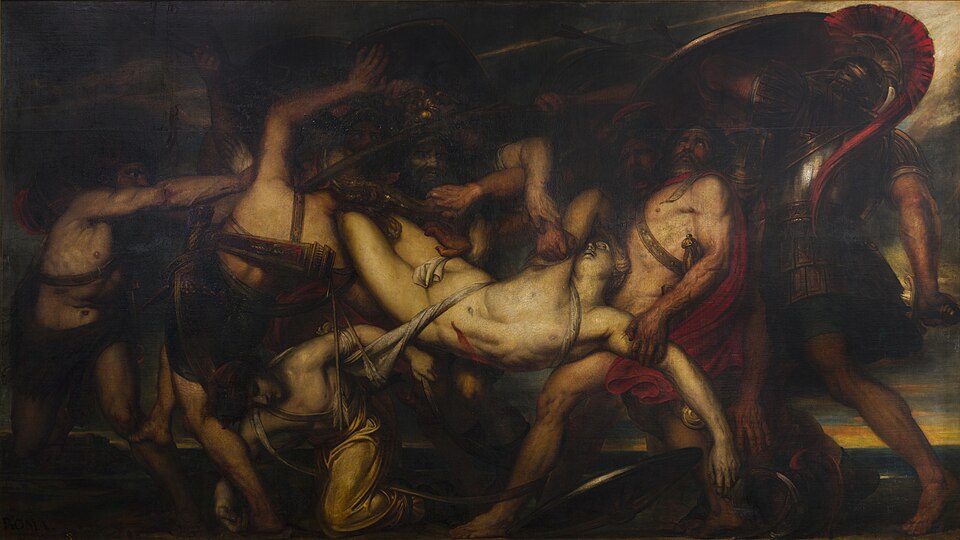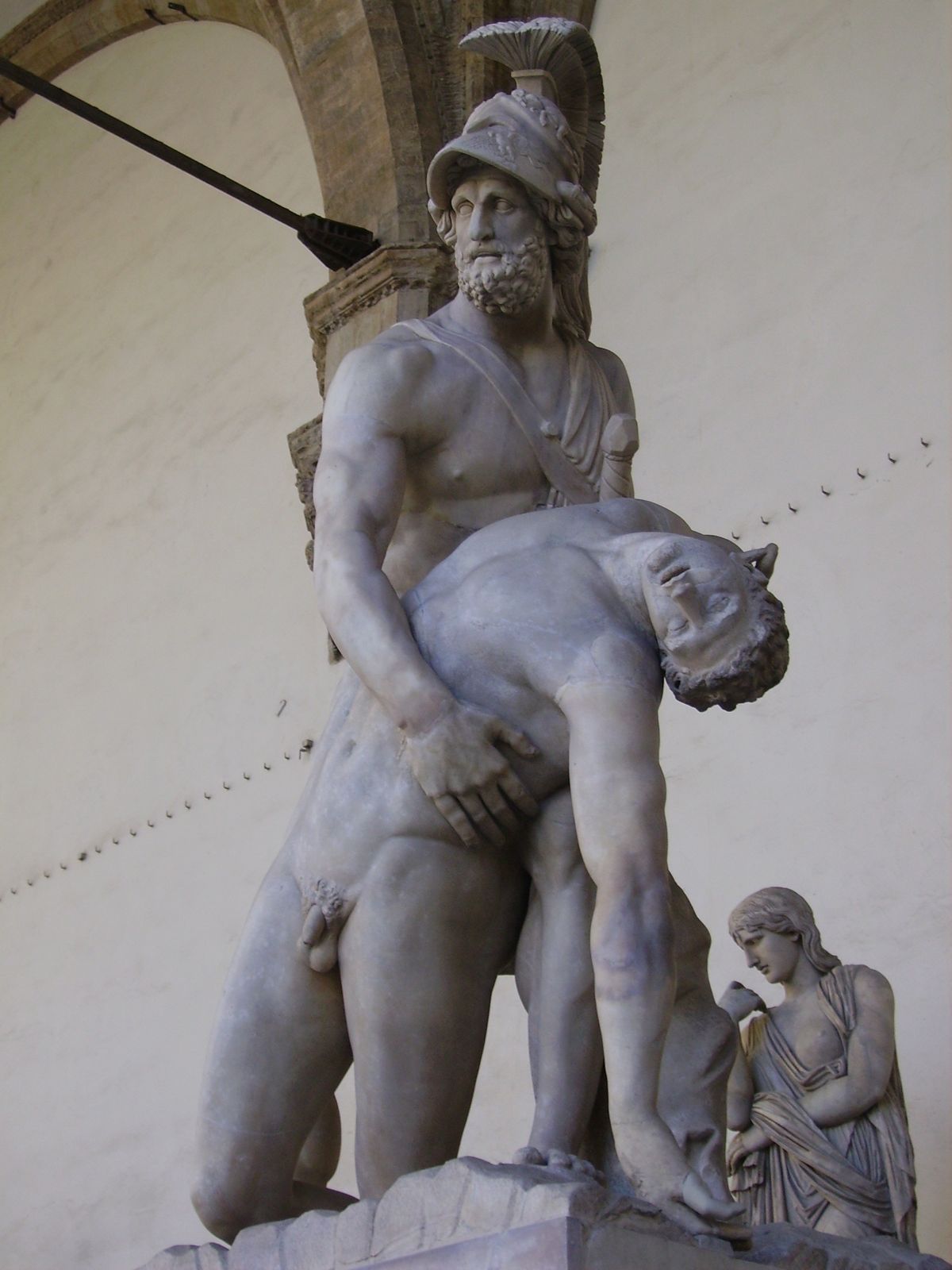
Menelaus Bearing the Body of Patroclus
A bearded warrior in a helmet — Menelaus — turns his head to face the enemy while hauling the naked, lifeless body of young Patroclus out of the battle. The dead weight of the slumping figure is the whole subject: one man carrying another who can no longer carry himself.
The group copies a lost Hellenistic bronze of about 200 BC, a type so admired in antiquity that several Roman marble versions survive. This one was found in Rome, heavily restored, and set up in Florence's Loggia dei Lanzi, where it has stood among the city's most famous sculptures since the Medici placed it there.
Patroclus does not stop at the ships. Drunk on victory, he chases the Trojans to the walls of Troy itself. There the god Apollo strikes him from behind, dazing him and knocking off Achilles' armor. A Trojan spears him, and Hector finishes him off and strips the armor for himself.
Then comes one of the ugliest fights in the poem: an entire afternoon of battle over Patroclus's corpse. The Trojans want to drag it back as a trophy; the Greeks refuse to leave their dead. Menelaus and Ajax stand over the body and hold the line until it can be carried back to the camp.
The original belongs to the Hellenistic age, when Greek sculptors turned from calm perfection to drama — twisting bodies, pain, and pathos. Roman collectors could not get enough of these groups, and most survive today only through their marble copies.