Ajax Carrying the Body of Achilles
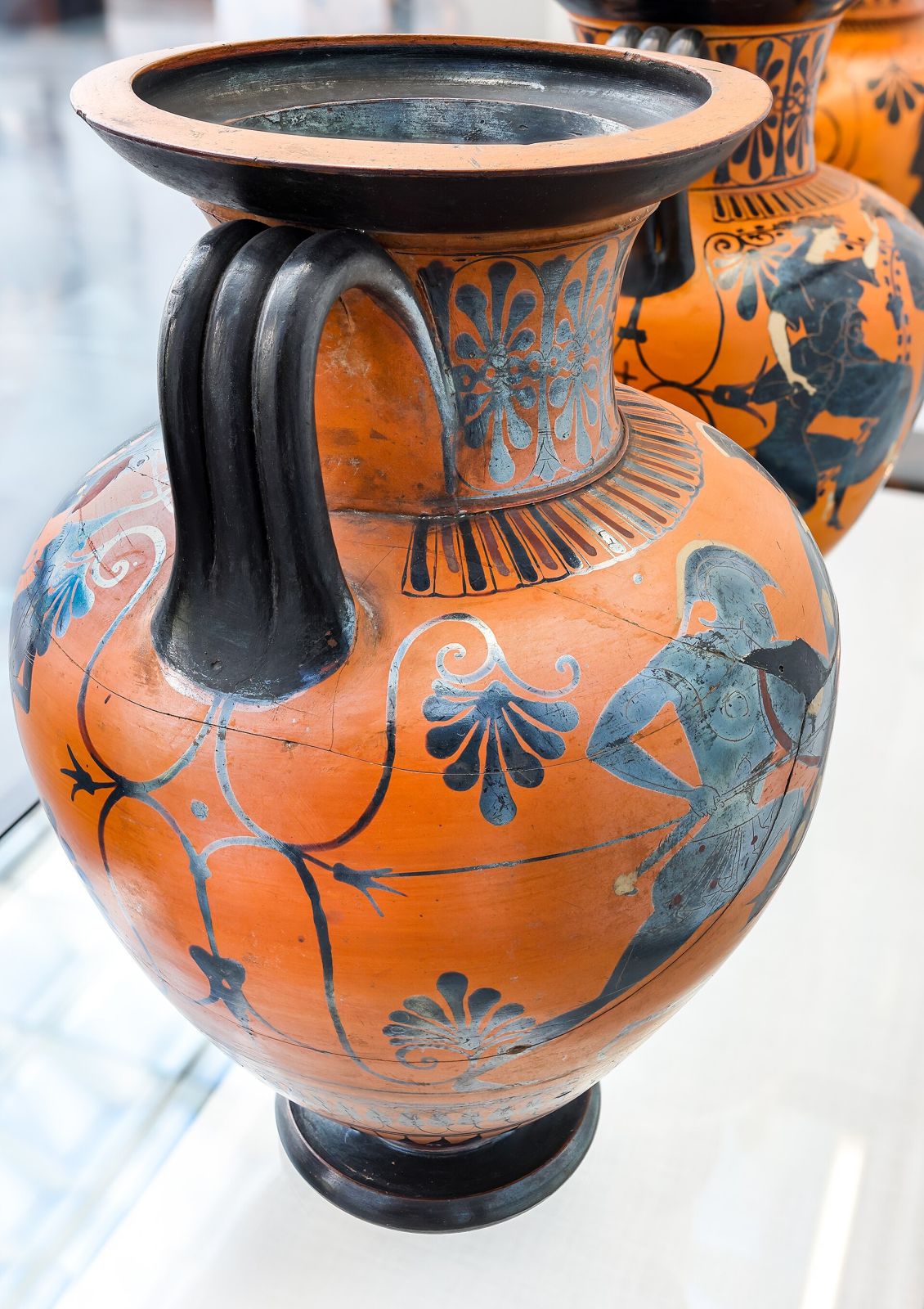
A warrior strides across the vase with a dead man slung over his shoulder, the body's arms and legs hanging straight down. It is Ajax carrying Achilles out of the battle — the strongest of the Greeks bearing the greatest, killed by Paris' arrow.
This scene was one of the most repeated images in Athenian black-figure painting: the drooping limbs of the corpse against the carrier's braced stride said everything about the weight of a dead friend. Painters returned to the motif for a century, and it appears twice on the handles of the celebrated François Vase.
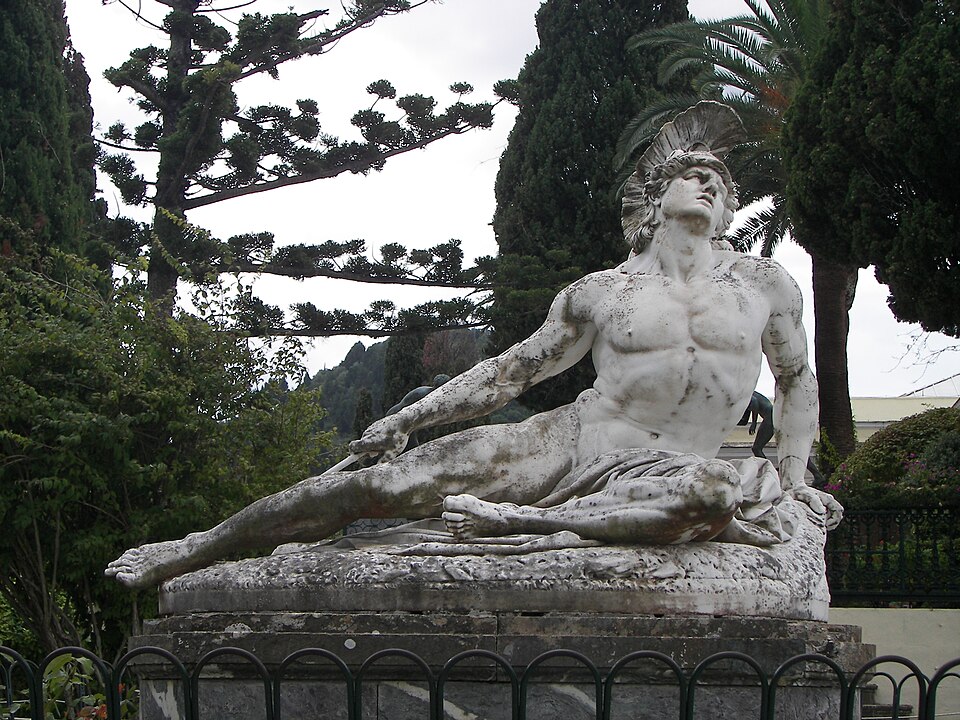
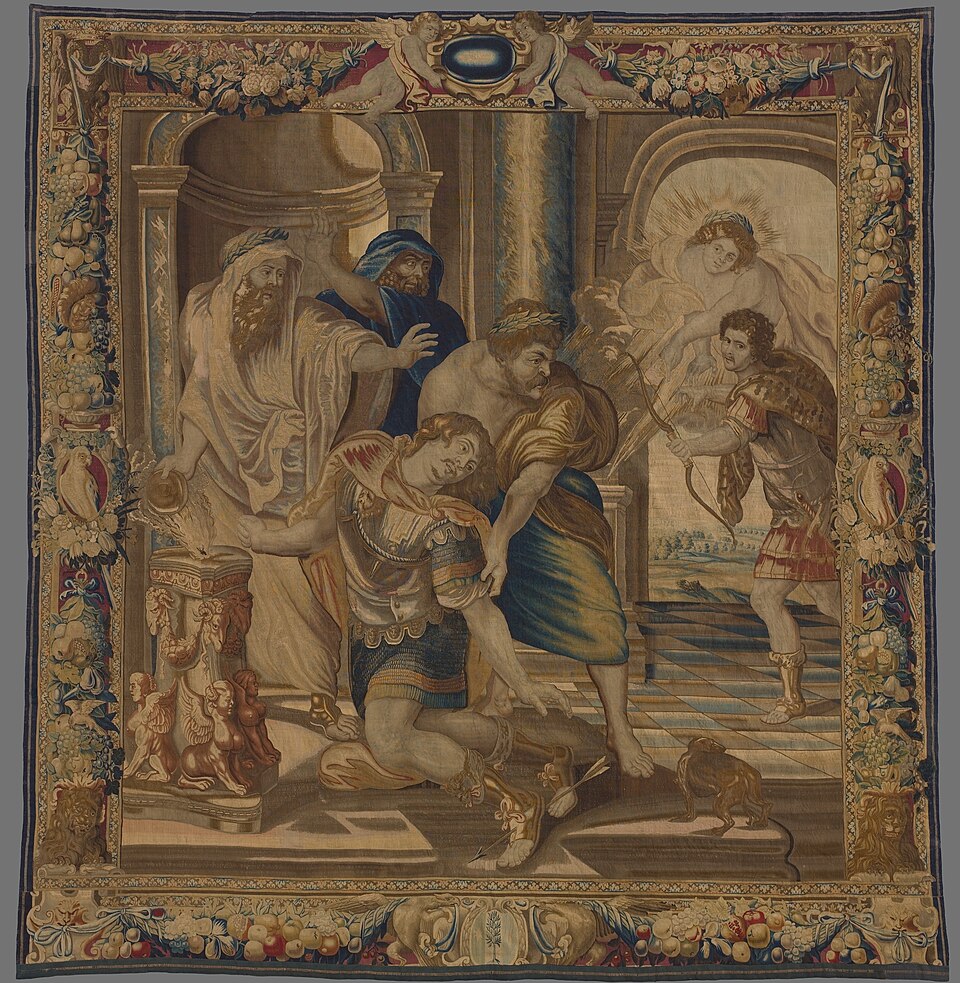
Homer's poem stops, but the story doesn't. Achilles' promised death comes soon after Hector's. In the fighting at the city gates, Paris — the man who started it all, no one's idea of a great warrior — shoots an arrow, and Apollo guides it into Achilles' one mortal spot: the heel his mother held when she dipped him in the Styx.
The greatest warrior of the age is killed by the war's least impressive man. The Greeks fight all day to recover his body, Ajax carrying the corpse while Odysseus holds off the Trojans. Achilles gets exactly the bargain he chose: a short life, and a name that has now outlasted the city he died attacking.
Attic black-figure vases were painted in Athens in the sixth century BC, their figures laid on in black silhouette and detailed with fine incised lines. Scenes from the Trojan War were a favorite subject, keeping Homer's stories in circulation at every table where the vases were used.