The Dying Achilles
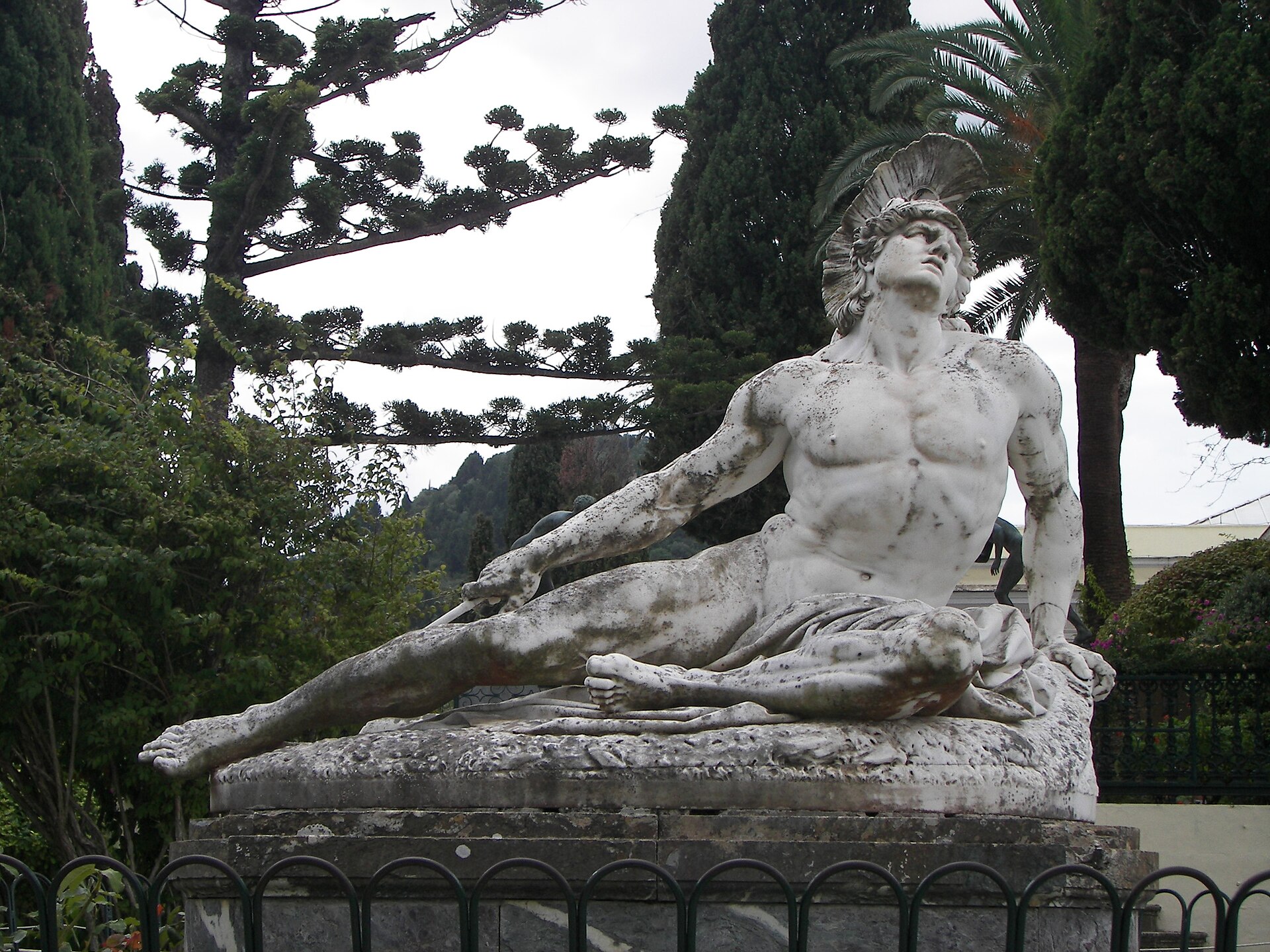
Achilles sits collapsed on the ground, reaching back toward the arrow lodged in his heel — the one place his mother's protection never covered. His face turns toward the sky, as if asking the gods how something so small could kill him.
Herter's marble was made in 1884 and later became the centerpiece of the gardens at the Achilleion on Corfu, the palace Empress Elisabeth of Austria dedicated to her favorite hero. She was drawn to exactly this Achilles — not the triumphant killer but the doomed young man — and the statue's mixture of strength and helplessness suited her melancholy perfectly.
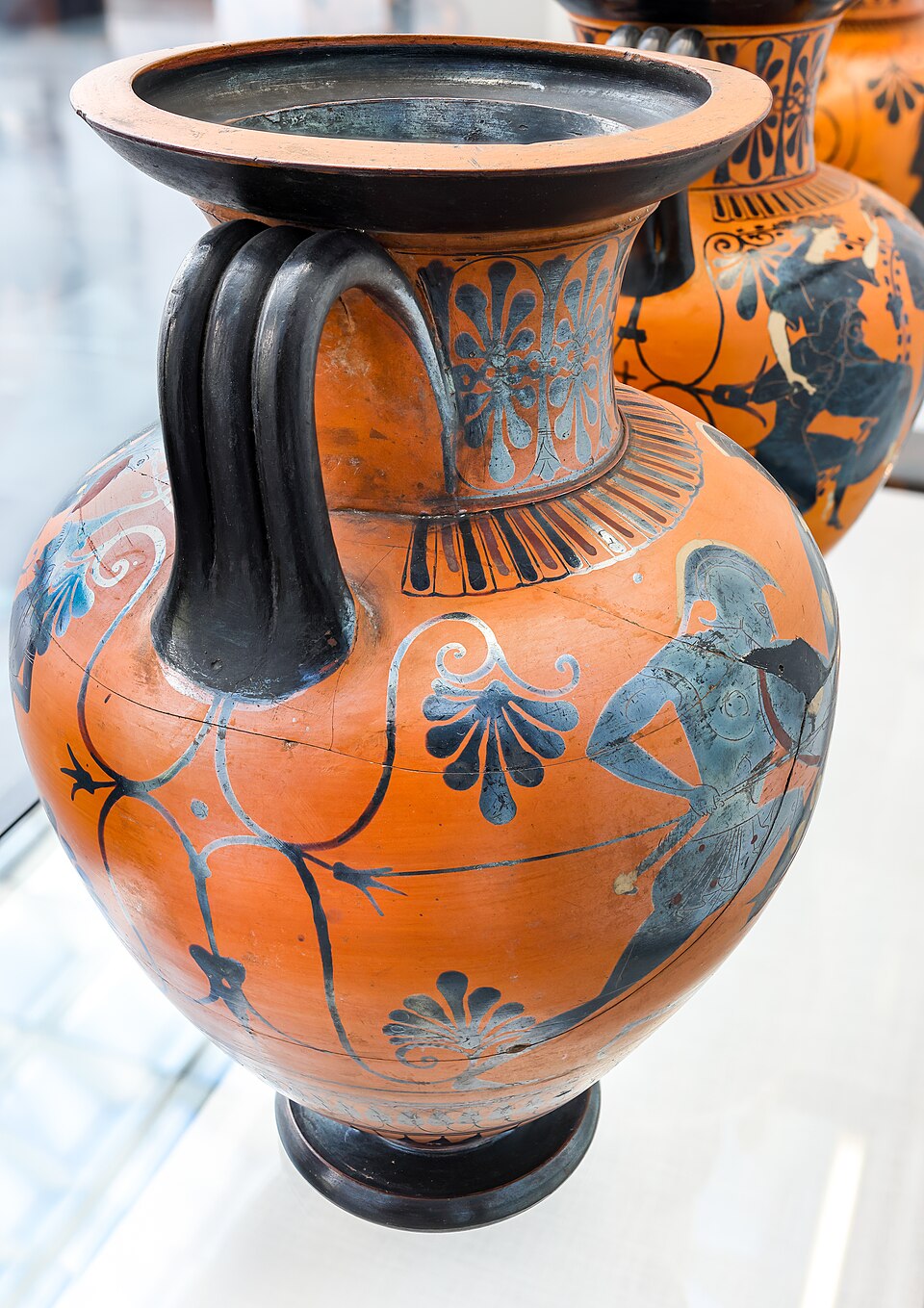
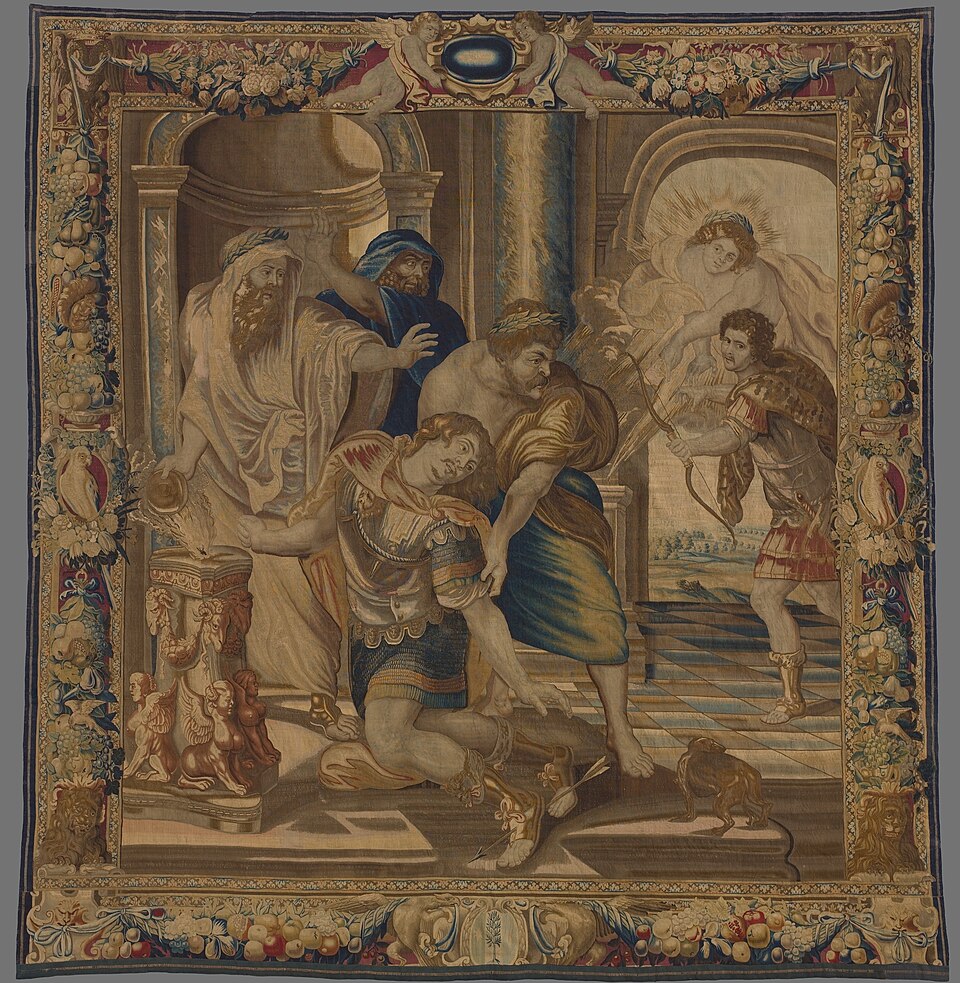
Homer's poem stops, but the story doesn't. Achilles' promised death comes soon after Hector's. In the fighting at the city gates, Paris — the man who started it all, no one's idea of a great warrior — shoots an arrow, and Apollo guides it into Achilles' one mortal spot: the heel his mother held when she dipped him in the Styx.
The greatest warrior of the age is killed by the war's least impressive man. The Greeks fight all day to recover his body, Ajax carrying the corpse while Odysseus holds off the Trojans. Achilles gets exactly the bargain he chose: a short life, and a name that has now outlasted the city he died attacking.
Ernst Herter (1846–1917) was a Berlin sculptor known for public monuments and mythological figures in the polished academic style of imperial Germany. His 'Dying Achilles' became his most famous work thanks to its imperial buyer and its dramatic island setting.