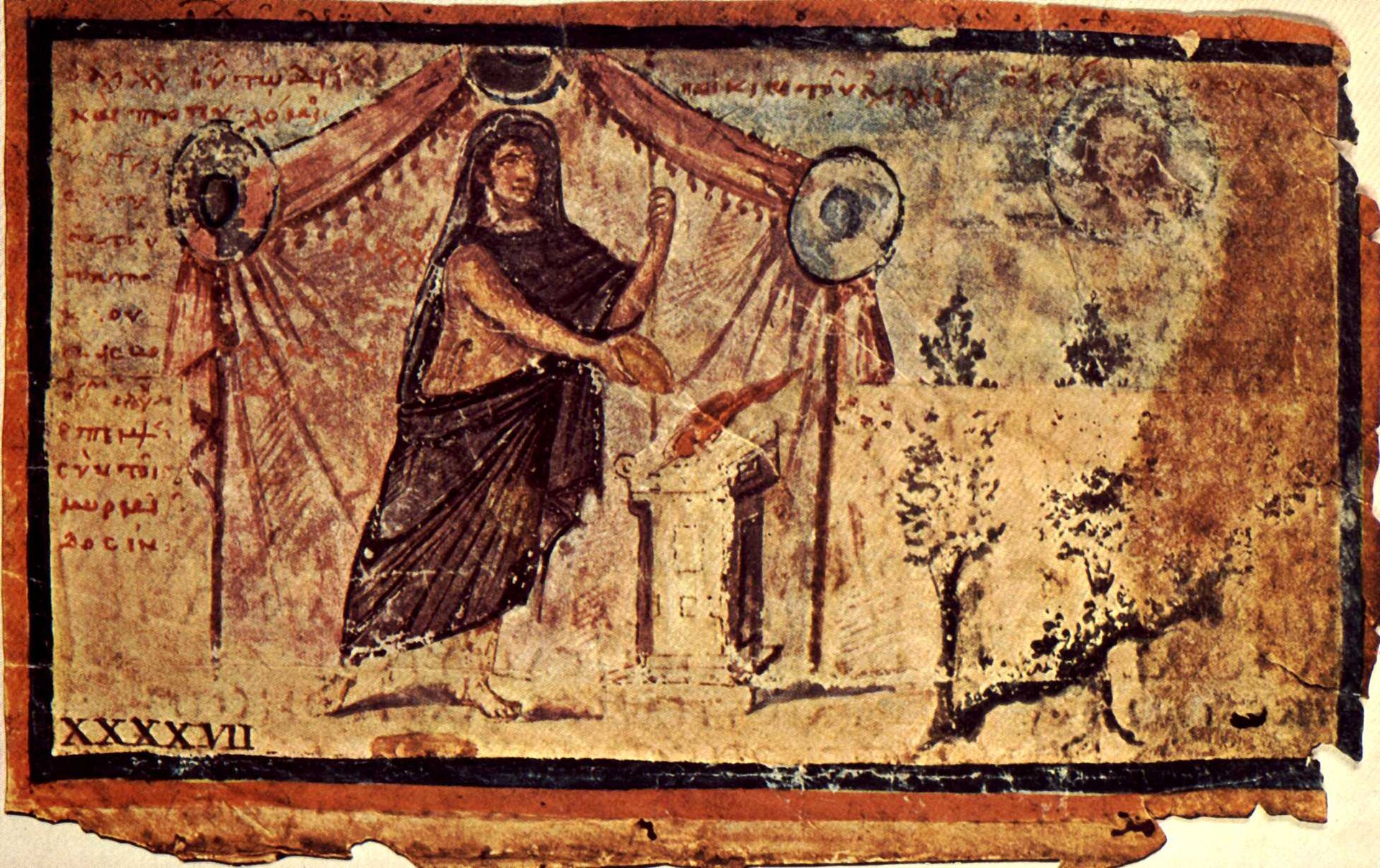
Miniature from the Ambrosian Iliad
This small painting on vellum comes from the oldest surviving illustrated copy of the Iliad, made around 500 AD. The manuscript, kept in Milan, is a set of fifty-odd miniatures cut from a luxury book produced in late antiquity, probably in Constantinople or Alexandria.
The miniatures are the only window we have into how ancient book illustration treated Homer: bright colors, labeled figures, and battle scenes packed into small panels. They preserve a thousand-year-old tradition of picturing the Iliad that would otherwise be completely lost.
Troy does not fall quickly. It is a rich, walled city on the coast of what is now Turkey, ruled by the old king Priam, defended by his son Hector — the greatest of the Trojan warriors, as Achilles is the greatest of the Greeks. The siege grinds on for nine years.
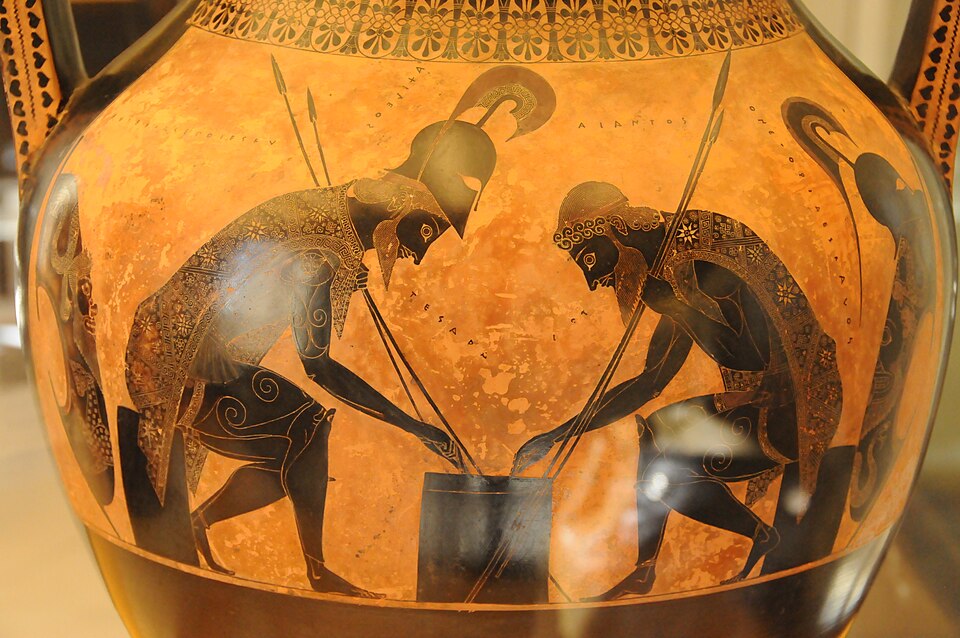
Homer's Iliad skips almost all of this. The poem covers only a few weeks in the tenth year. But ancient artists loved imagining the long dull stretches of the war — including the greatest Greek fighters, Achilles and Ajax, hunched over a board game between battles, killing time instead of Trojans.
In the tenth year, the Greeks are raiding towns around Troy for supplies and captives. Two captive women come back from one of these raids: Chryseis, awarded to Agamemnon, and Briseis, awarded to Achilles. Everything in the Iliad follows from these two prizes.
The illuminator is unknown. Late antique luxury manuscripts like this one were produced in professional workshops for wealthy patrons, at the moment when the ancient scroll was giving way to the bound book.