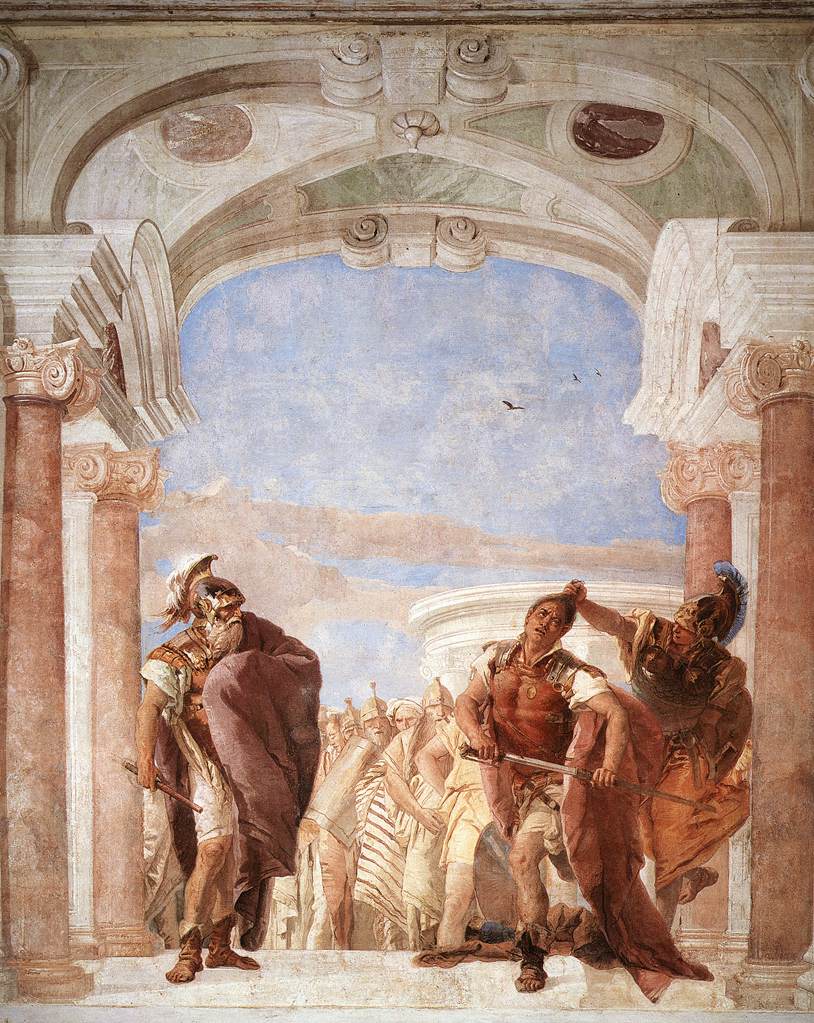
The Wrath of Achilles
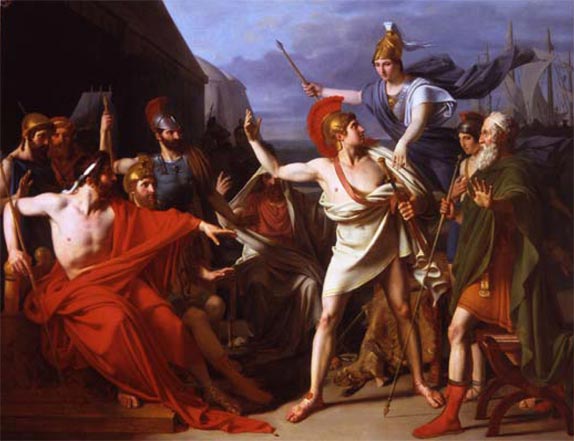
Agamemnon has just claimed Achilles' prize, the captive Briseis, and Achilles goes for his sword. In that instant the goddess Minerva swoops down and seizes him by the hair — visible to him alone. The other Greeks see only a warrior frozen mid-draw, arguing with the air.
The Iliad's first word is "wrath," and Tiepolo paints the exact second it is born and checked. The fresco's theatrical sweep — billowing cloak, braced legs, goddess plunging from above — turns an inner struggle between fury and restraint into something you can watch.
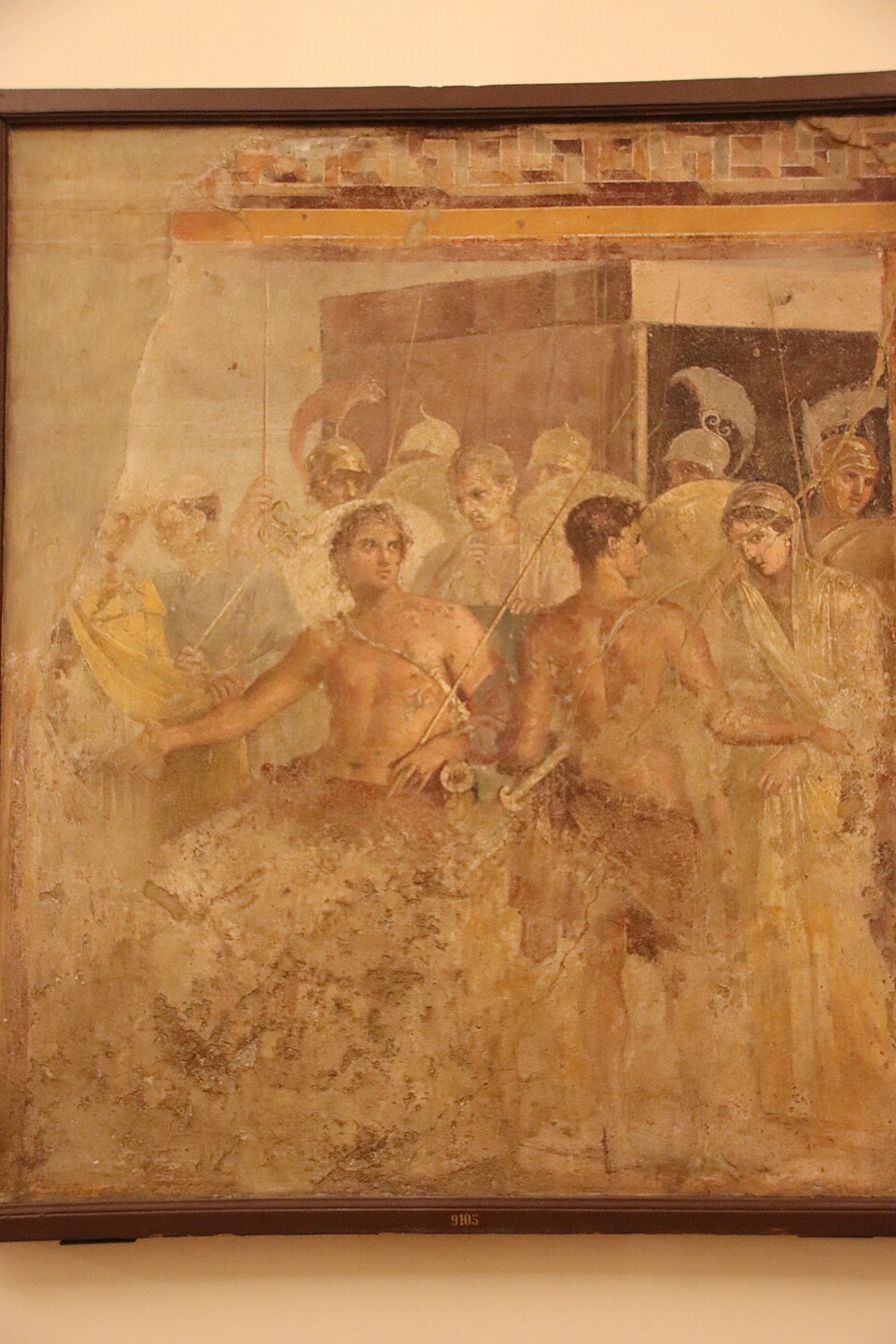
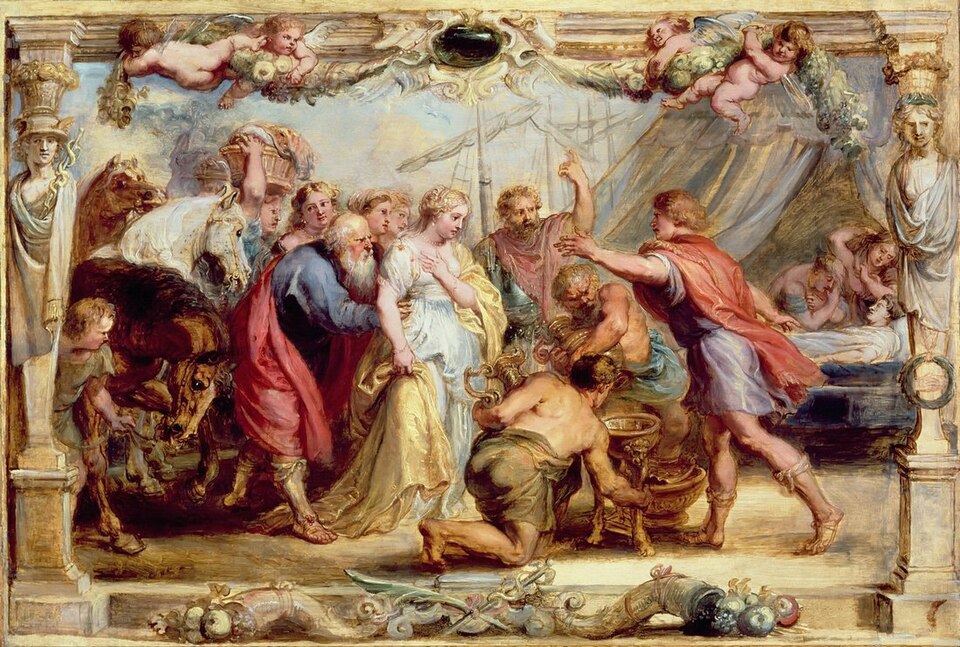
This is where the Iliad begins. Chryseis's father is a priest of the god Apollo. He comes to ransom his daughter, and Agamemnon insults him and sends him away. Apollo answers the priest's prayer by shooting plague-arrows into the Greek camp. Men and animals die for nine days.
A prophet tells the army the truth: the plague is Agamemnon's fault, and Chryseis must go home. Agamemnon gives her up — and then, to save face, takes Briseis from Achilles instead. Achilles nearly kills him on the spot. The goddess Athena, invisible to everyone else, grabs Achilles by the hair and stops his sword hand.
Achilles obeys the goddess, but he is done. He announces that he and his men will no longer fight, walks to his tent, and stays there. The Greeks have just lost their best warrior over a stolen woman and a wounded ego — the 'wrath of Achilles' that is the poem's whole subject.
Giovanni Battista Tiepolo (1696–1770), the last of the great Venetian decorators, painted the Homeric frescoes of the Villa Valmarana near Vicenza in 1757 with his son Giandomenico. His work stands for lightness, air and theatrical imagination.