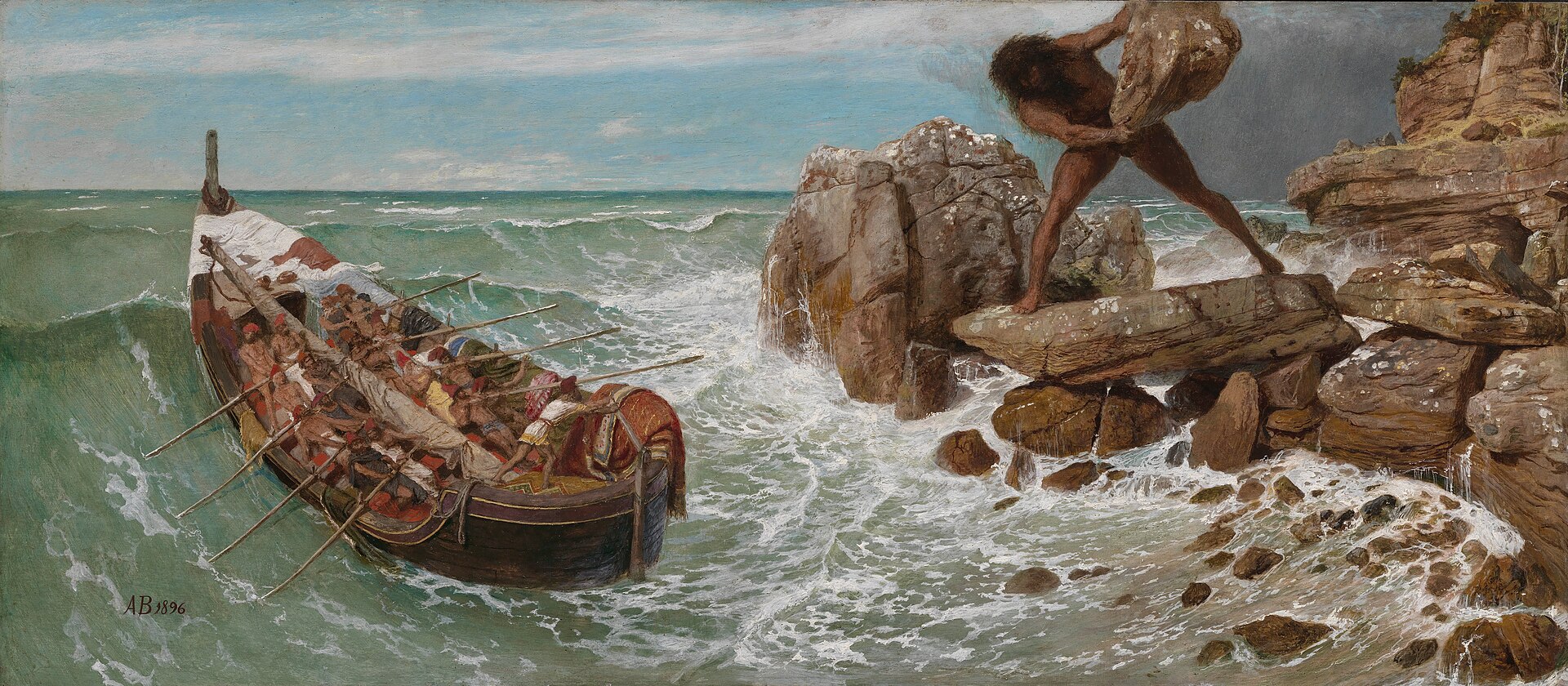
Odysseus and Polyphemus
The blinded Polyphemus, huge and furious, heaves a boulder off the clifftop at the escaping ship. Below, Odysseus' crew row for their lives through heavy green swells, bodies bent flat over the oars.
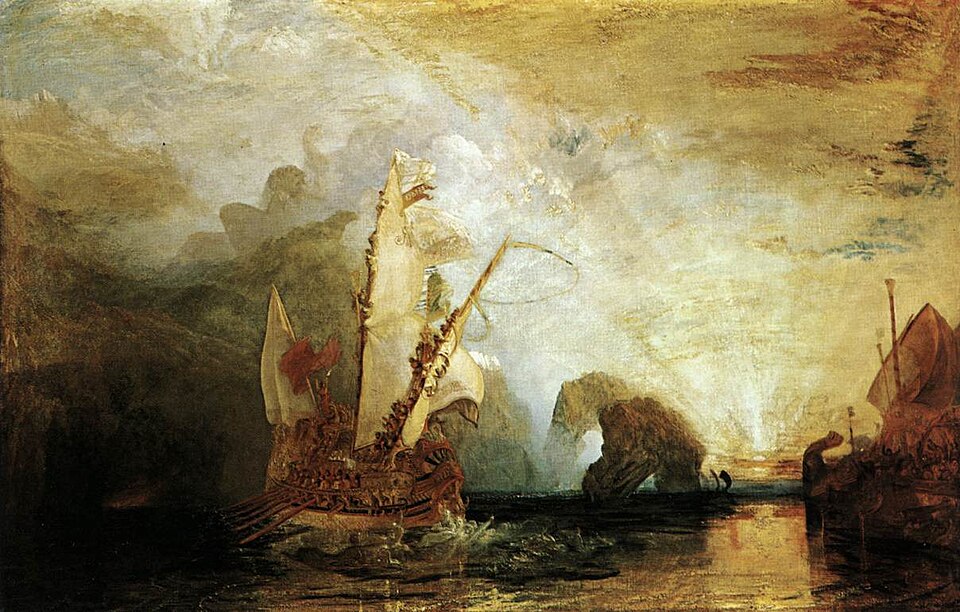
Böcklin paints the sea as the real monster — thick, cold, and about to bury the little boat. Where Turner dissolved this scene into light, Böcklin makes it physical: you can feel the weight of the rock and the pull of every oar stroke.
In the morning the blinded Polyphemus rolls back the stone and feels the backs of his sheep as they file out, checking that no man rides them. Odysseus has thought of that too: he and his men slip out slung underneath the animals, clinging to the wool. They run for the ship and pull for open water.
Then Odysseus makes the worst mistake of the voyage. He cannot resist shouting his real name back at the shore — tell them Odysseus of Ithaca blinded you. Polyphemus hurls half a hilltop at the sound of his voice, then prays to his father Poseidon: let this man lose every companion, wander for years, and come home late, alone, to trouble in his house. The sea god hears him. The rest of the Odyssey is that curse playing out.
Arnold Böcklin (1827–1901) was a Swiss Symbolist painter who spent much of his life in Italy. He painted myth as mood — brooding islands, sea creatures, and gods — and his Isle of the Dead became one of the most famous images of the nineteenth century.
.jpg)