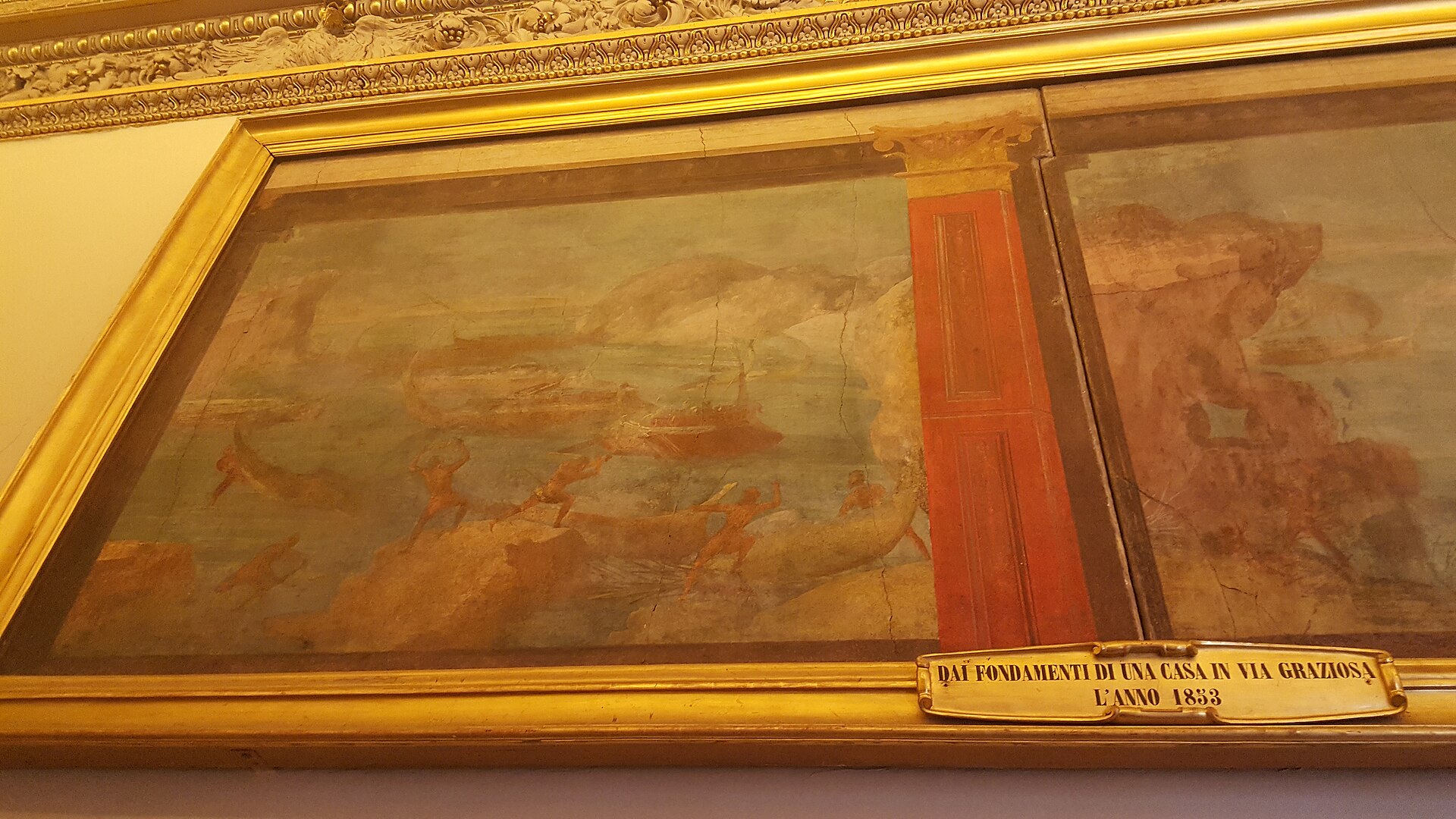
The Laestrygonians Attack the Fleet
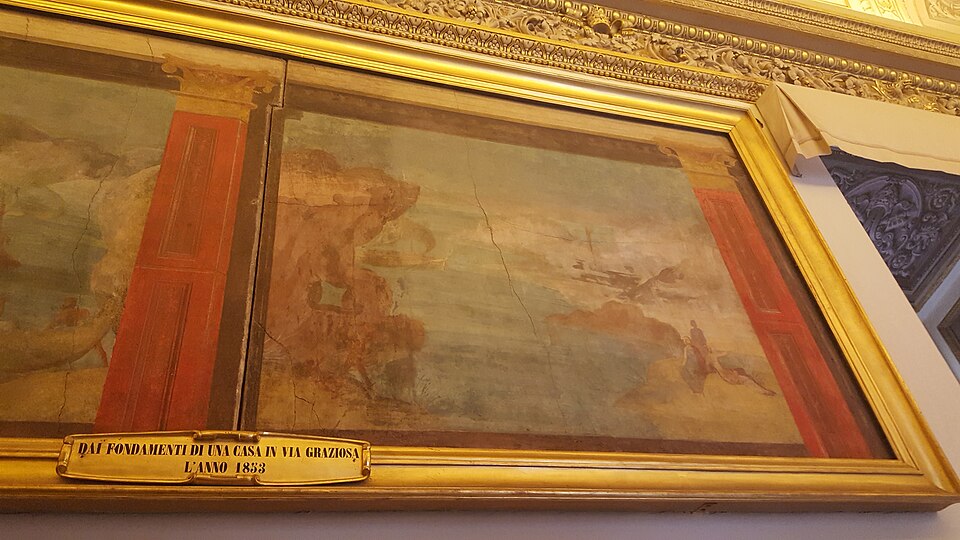
Odysseus' scouts meet the daughter of the Laestrygonian king at a spring, not yet knowing that this land belongs to giants who eat men. The figures are small, labeled in Greek, and almost lost in a vast painted landscape of rocks, trees, and shore.
This fresco comes from a frieze of Odyssey scenes painted around a room in a Roman house on the Esquiline Hill, discovered in 1848. It is among the earliest surviving landscape painting in Western art — the story matters, but the space, air, and distance matter more.
The fleet next reaches the floating island of Aeolus, keeper of the winds, who does Odysseus an extraordinary favor: he ties every unfavorable wind into a leather bag and sends the ships off with a fair breeze. Within sight of Ithaca's fires, while Odysseus sleeps, his crew opens the bag, certain it holds gold. The freed winds blow them all the way back, and Aeolus refuses to help a second time — a man this unlucky, he decides, must be hated by the gods.
Rowing on, the fleet finds a harbor ringed by cliffs in the land of the Laestrygonians. The locals turn out to be giants. They rain boulders down on the trapped ships and spear the swimming sailors like fish. Of the twelve ships that left Troy, only Odysseus's own — cautiously moored outside the harbor mouth — gets away. In one afternoon he loses eleven ships and most of the men he was trying to bring home.
The unknown Roman painter worked around 50 BC, adapting what was probably a Greek model. The Odyssey Landscapes are prized as the first surviving paintings in which landscape, not the human figure, dominates the picture.