Odysseus and Calypso in the Grotto
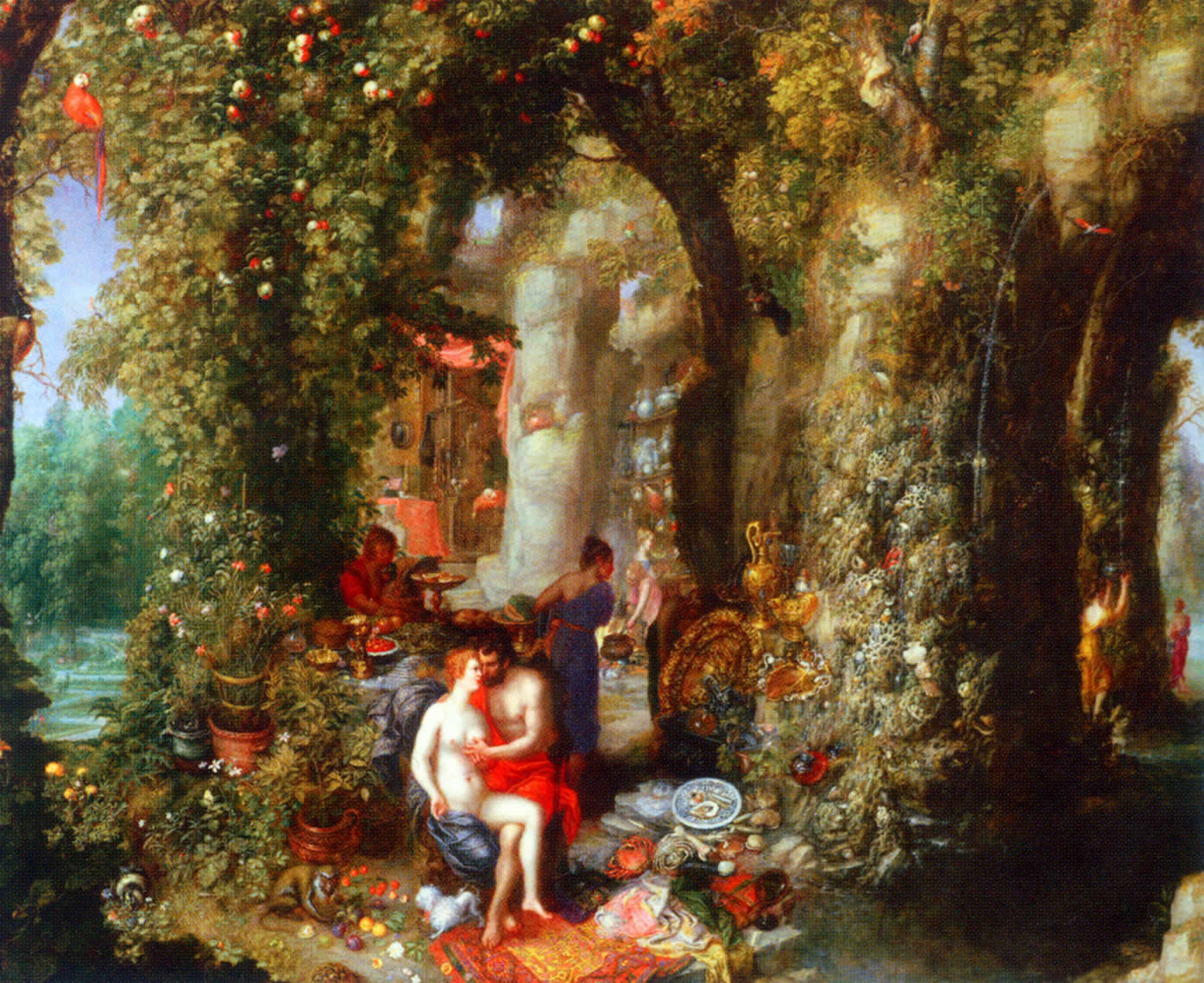
Odysseus and Calypso sit together at the mouth of her grotto, small figures in a huge, overgrown paradise. Around them Brueghel packs the copper panel with flowers, fruit, trees and distant blue coastline, all painted with a miniaturist's precision.
Where most painters stress Odysseus's misery, Brueghel paints the temptation itself: an island so lush it looks like Eden. That makes the hero's eventual refusal feel larger. The tiny scale of the lovers against the landscape is the point — the island swallows them.
The island is Ogygia, home of Calypso, a goddess-nymph who lives in a cave surrounded by alder woods, meadows, and vine-hung springs. She takes in the castaway, falls in love with him, and simply keeps him — for seven years. She offers the one bribe no mortal is supposed to refuse: stay, and never age, and never die.
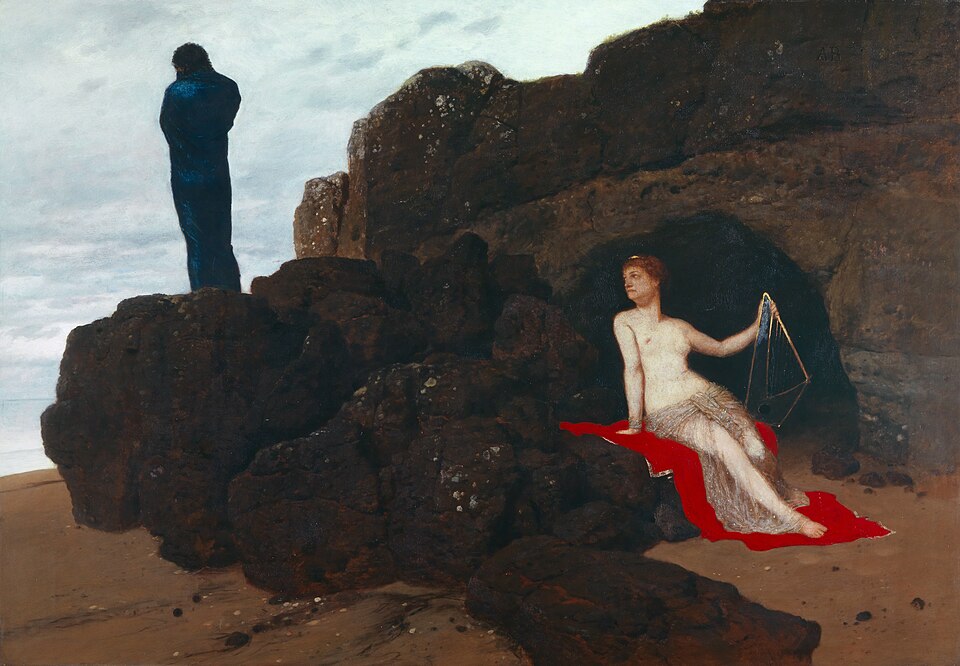
He refuses it, politely, every day. He spends his days on the shore, staring at the horizon and weeping for Ithaca and for Penelope, his wife. When Calypso points out that no mortal woman can match a goddess, he agrees with her — and asks to go home anyway. It is the poem's clearest statement of what its hero actually wants: not immortality, but his own one life back.
Jan Brueghel the Elder (1568–1625) was a Flemish painter, son of the great Pieter Bruegel. Nicknamed 'Velvet Brueghel' for his soft, detailed touch, he specialized in flowers and dense landscapes and often collaborated with his friend Rubens.