Odysseus and Calypso
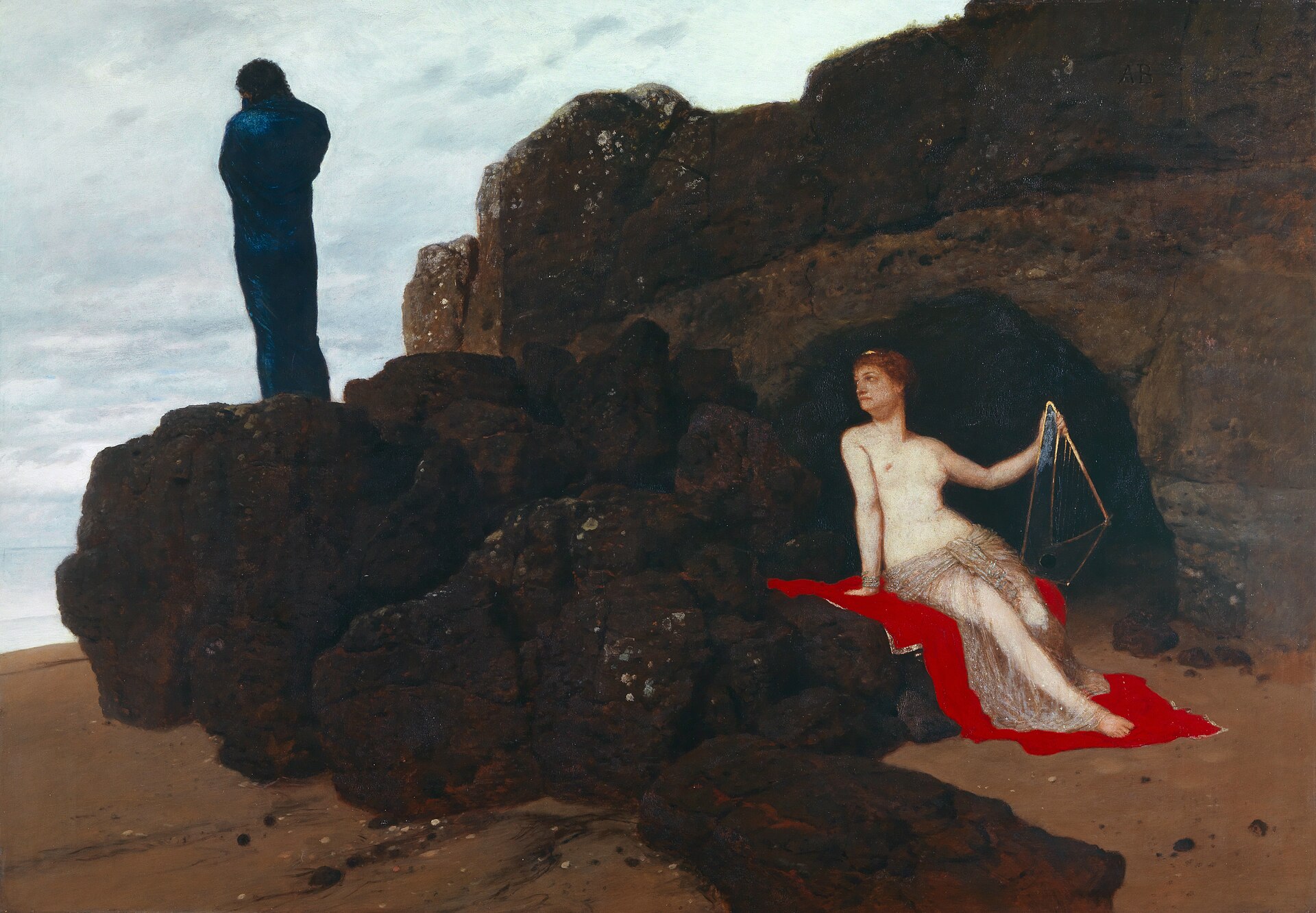
Odysseus stands at the left edge of the picture, wrapped in a dark cloak on a spur of black rock, staring out at the open sea. Calypso sits far to the right at the mouth of her cave, bright against the darkness, with her lyre at hand. The two share the same small island but look in opposite directions.
Böcklin tells the whole story through that gap. The goddess offers music, beauty and comfort; the man has turned his back on all of it, fixed on the horizon and home. The cold blues around Odysseus and the warm tones around Calypso split the painting into two worlds that never touch.
The island is Ogygia, home of Calypso, a goddess-nymph who lives in a cave surrounded by alder woods, meadows, and vine-hung springs. She takes in the castaway, falls in love with him, and simply keeps him — for seven years. She offers the one bribe no mortal is supposed to refuse: stay, and never age, and never die.
He refuses it, politely, every day. He spends his days on the shore, staring at the horizon and weeping for Ithaca and for Penelope, his wife. When Calypso points out that no mortal woman can match a goddess, he agrees with her — and asks to go home anyway. It is the poem's clearest statement of what its hero actually wants: not immortality, but his own one life back.
Arnold Böcklin (1827–1901) was a Swiss painter and one of the leading Symbolists of the nineteenth century. He returned again and again to scenes of myth, water and solitude, most famously in his five versions of Isle of the Dead.