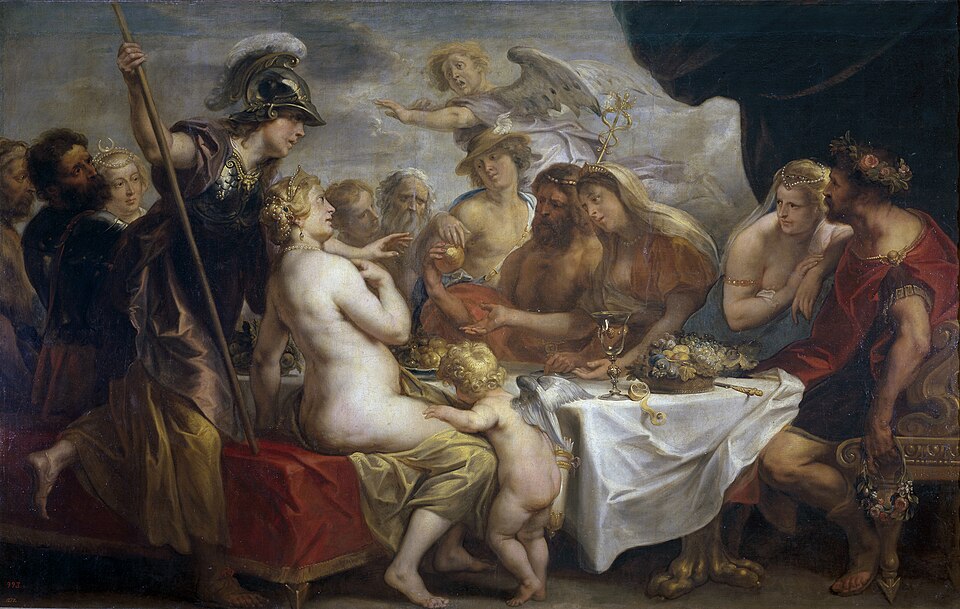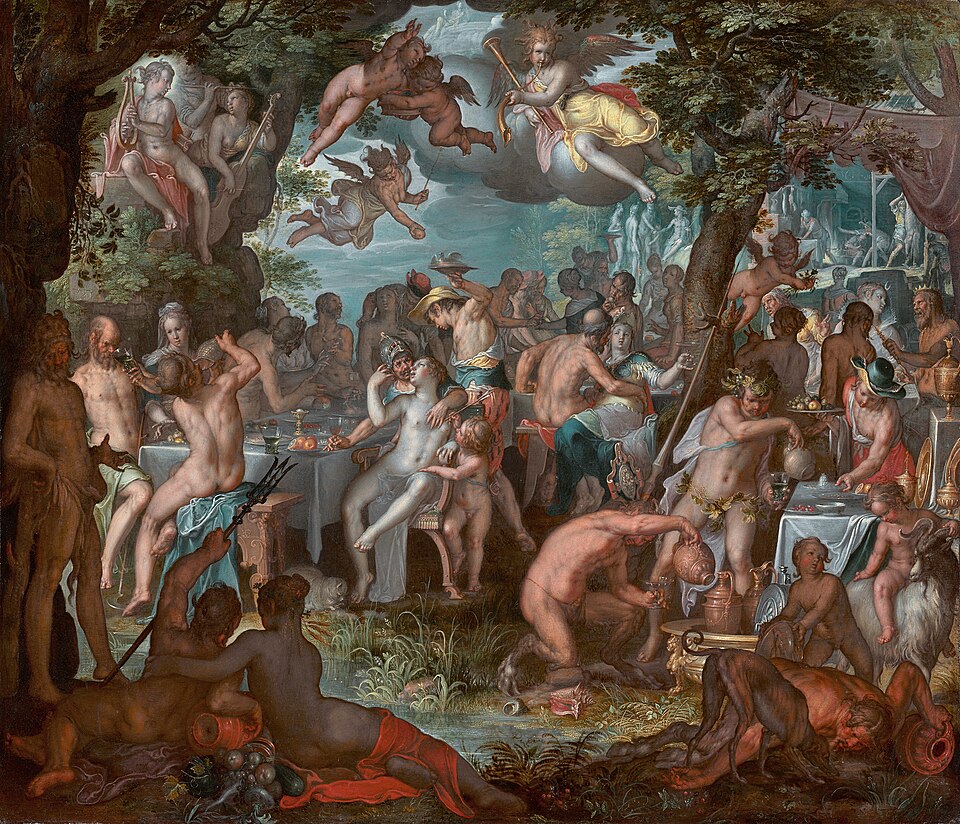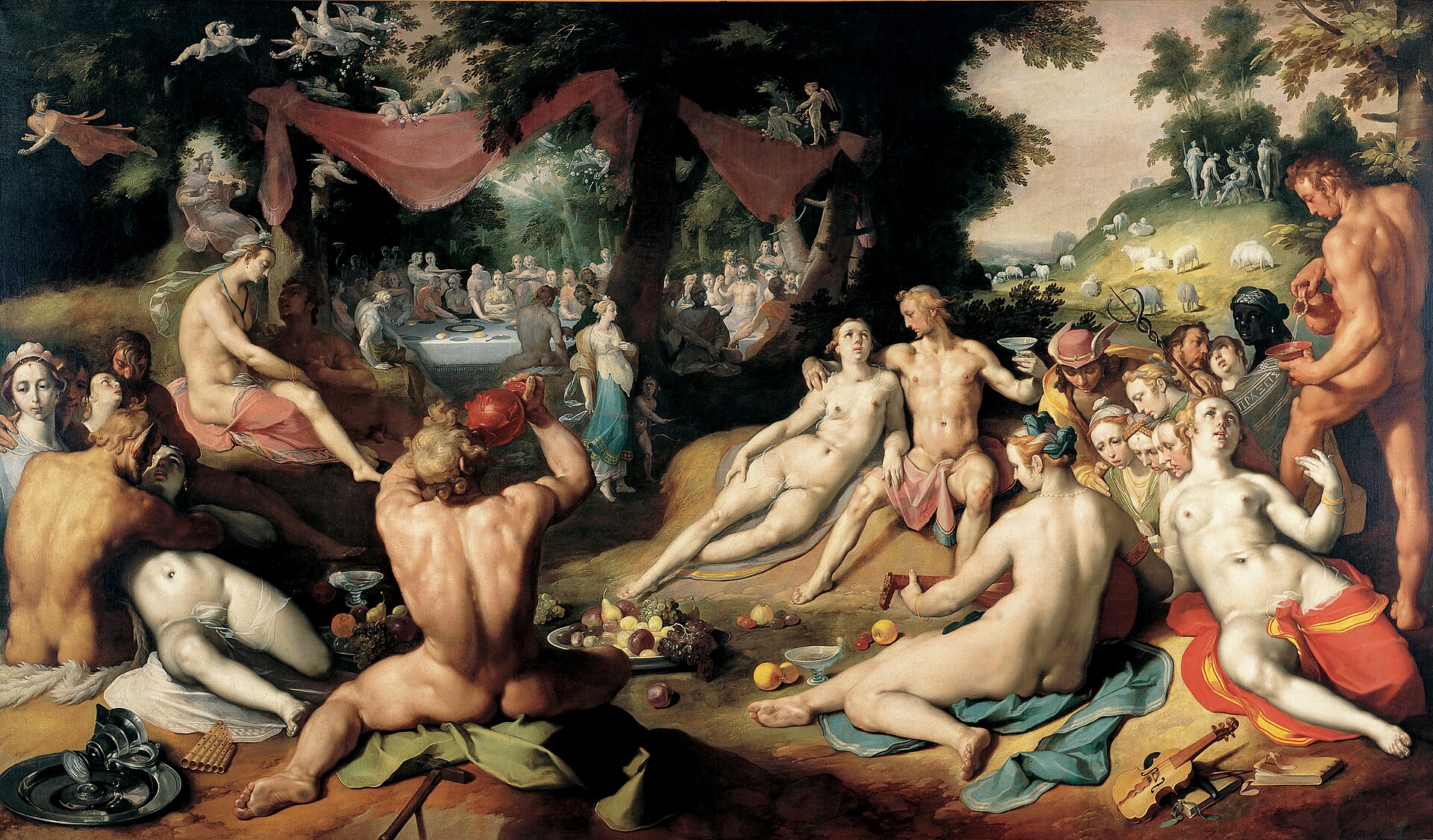
The Wedding of Peleus and Thetis
This is the party where all the trouble started. The gods recline at a wedding banquet in a wooded grove, dozens of nude figures eating, drinking and flirting. Somewhere in this happy crowd, the one goddess who was not invited — Eris, goddess of discord — is about to toss in a golden apple marked "for the fairest."
The painting is enormous, roughly two and a half by four metres, and was made to hang in the Haarlem residence where Dutch leaders entertained. Cornelis fills it with twisting bodies shown from every angle — a deliberate display of skill, and a warning dressed as a feast: even a perfect celebration can carry the seed of war.
The Trojan War starts at a wedding. Peleus, a mortal king, marries Thetis, a sea goddess. All the gods are invited to the feast — except Eris, the goddess of discord. She shows up anyway and throws a golden apple into the crowd. On it is written: 'To the fairest.'
Three goddesses claim it at once: Hera, queen of the gods; Athena, goddess of wisdom and war; and Aphrodite, goddess of love. Zeus, king of the gods, refuses to judge between them — no answer could end well for him. So he hands the problem to a mortal.
One more thing about this wedding: the bride and groom will have a son. His name is Achilles, and he will become the greatest warrior who ever lived. The war that begins with this apple will also be the war that kills him.
Cornelis Cornelisz. van Haarlem (1562–1638) was a leading painter of Dutch Mannerism, working in Haarlem alongside Hendrick Goltzius and Karel van Mander. He specialized in large mythological and biblical scenes crowded with athletic nude figures in complicated poses.