Aristotle with a Bust of Homer
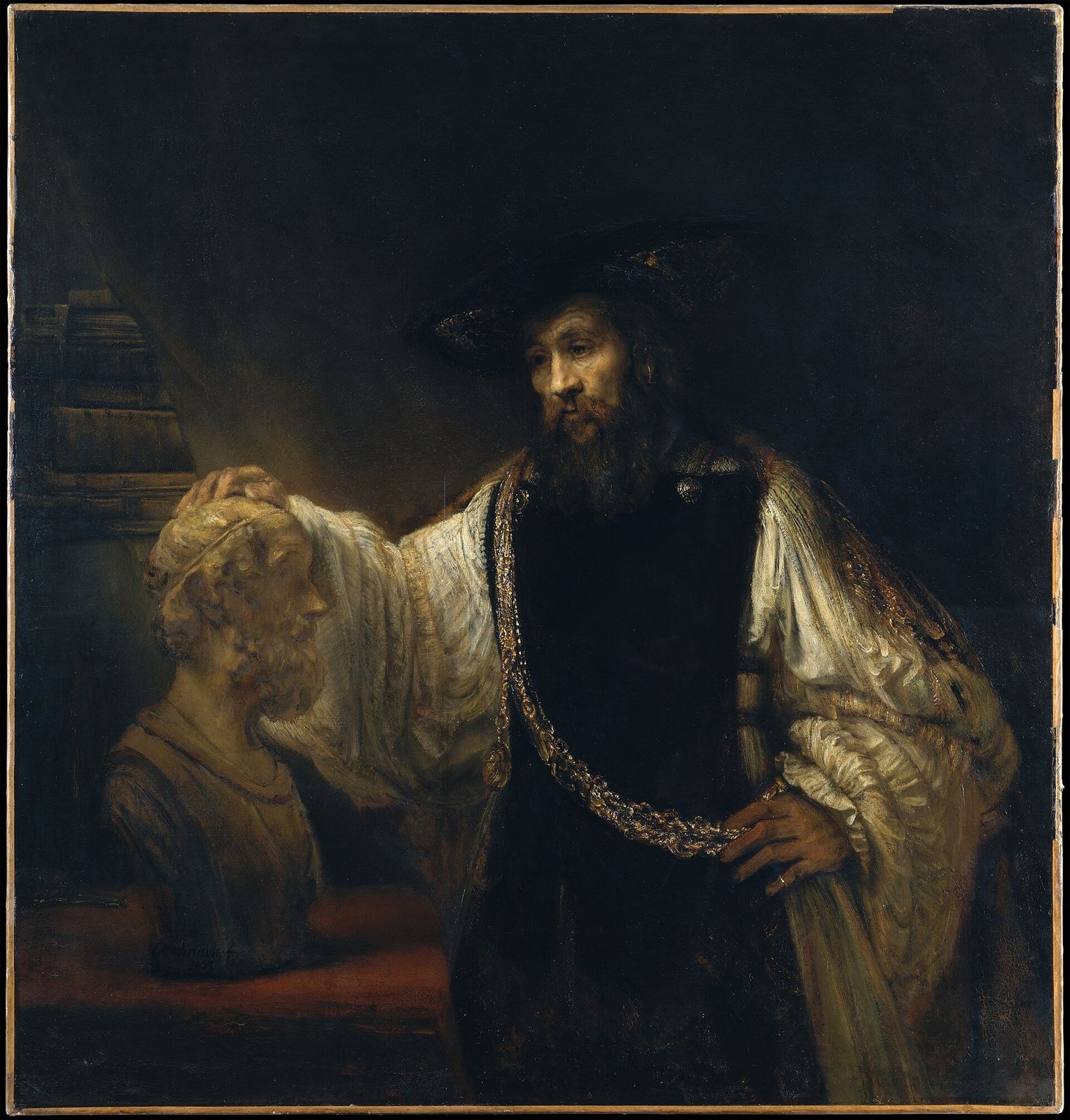
A richly dressed man stands in shadow, one hand resting gently on a marble bust of Homer. He is Aristotle, the philosopher — dressed not as an ancient Greek but in the velvet and gold chain of a wealthy man of Rembrandt's own century. The gold chain carries a medallion of Alexander the Great, Aristotle's famous pupil.
Rembrandt lets the light fall on three things: Aristotle's face, his sleeve, and Homer's marble head. The philosopher who had everything looks at the blind poet who, in legend, had nothing, and seems to weigh worldly success against lasting greatness. The Metropolitan Museum bought the painting in 1961 for a then-record price, and it remains one of Rembrandt's most famous works.
Before the stories, there is the storyteller. Homer is the name the Greeks gave to the poet of the Iliad and the Odyssey, the two long poems at the very beginning of Western literature. Nobody knows for certain who he was, when exactly he lived, or whether one person composed both poems. The best guess is that they took shape in the eighth century BC, woven together from centuries of songs that traveling singers performed from memory.
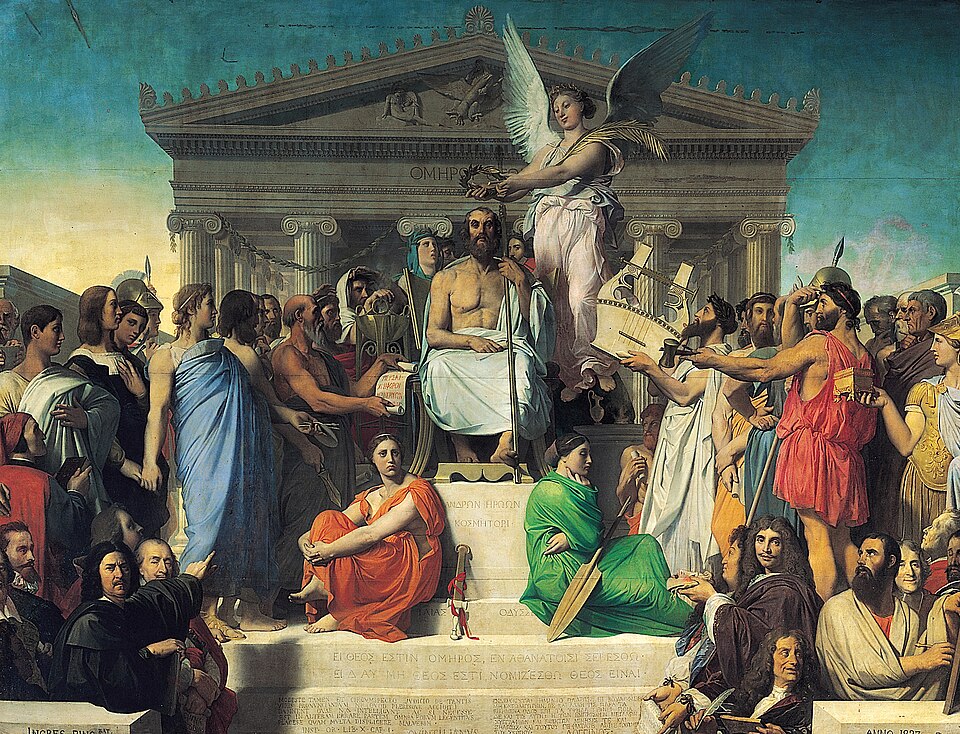
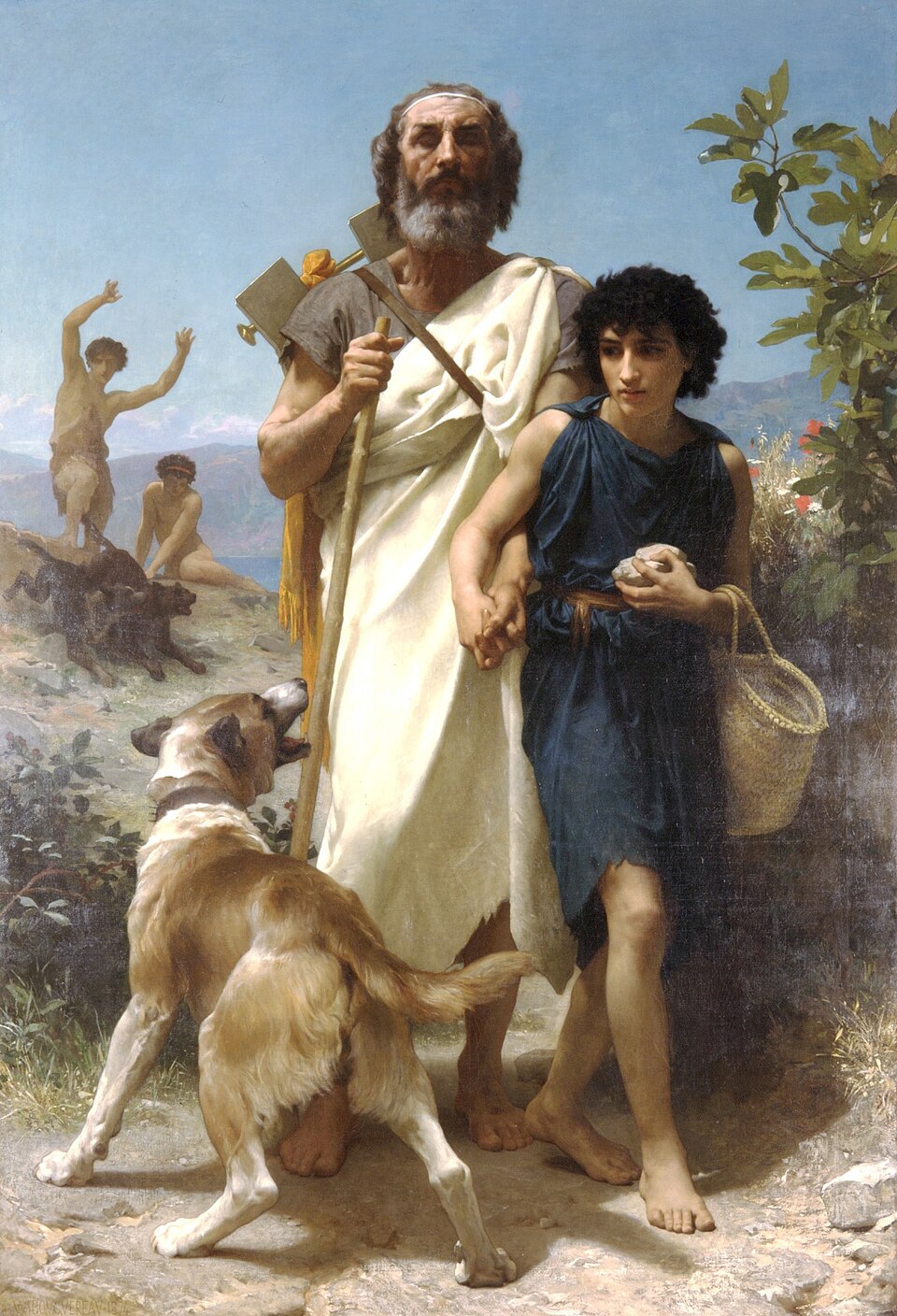
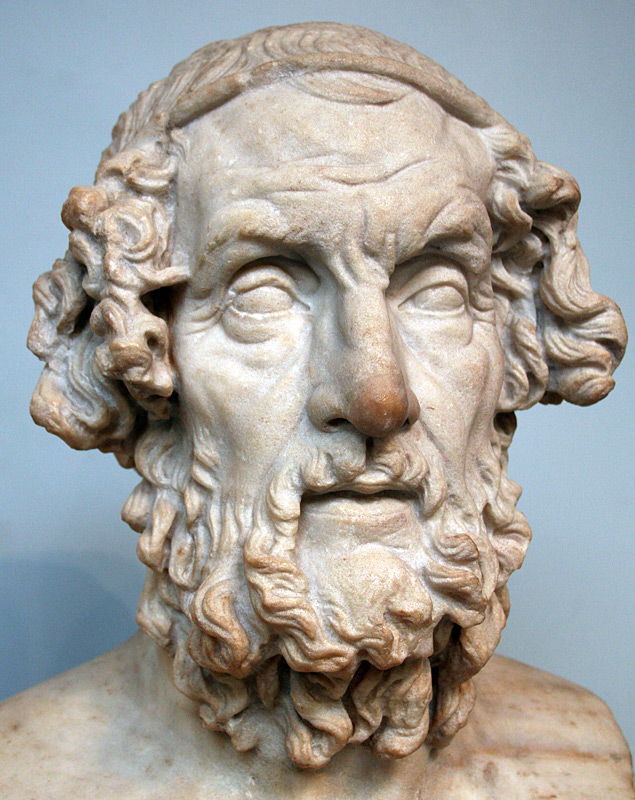
Ancient tradition insisted on one detail: Homer was blind. Every ancient portrait of him is an act of imagination — no one knew what he looked like — yet sculptors settled on a standard face: an old man with a full beard, deep-set sightless eyes, and a band around his hair. Later painters kept imagining him too, as a god among poets or as an old beggar led from town to town. This page begins with those portraits, then follows his two stories scene by scene.
Rembrandt van Rijn (1606–1669) was the greatest painter of the Dutch Golden Age, a master of light, shadow and human character. He painted this canvas for a Sicilian collector while at the height of his powers in Amsterdam.