The Wedding of Peleus and Thetis
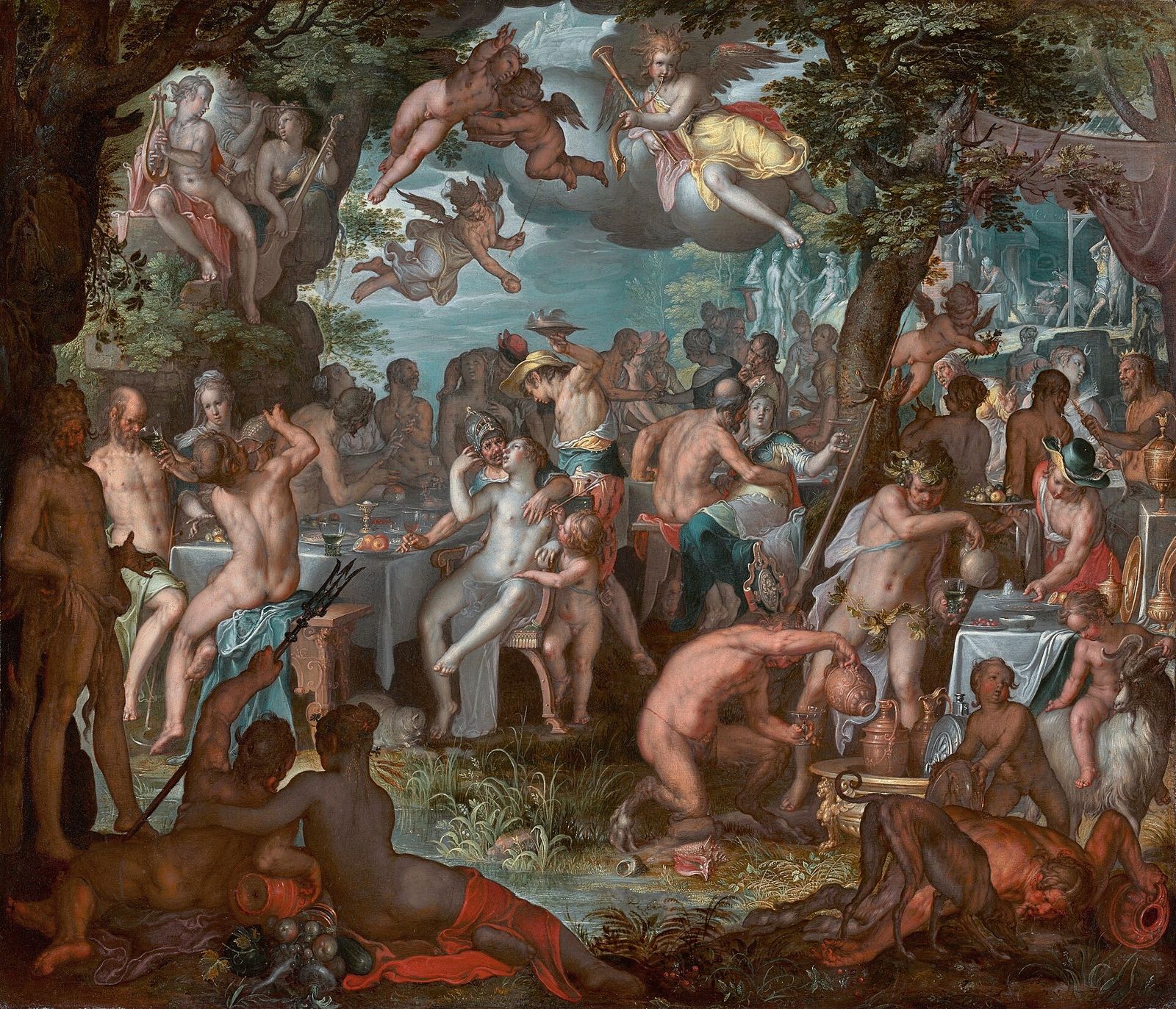
Painted on a sheet of copper not much bigger than a book, this version of the wedding packs in the whole cast of Olympus. The gods banquet in the clouds in miniature detail, and above the celebration Eris hovers with her golden apple, ready to spoil everything.
Copper gives the paint a glassy, jewel-like finish, and Wtewael uses it to show off: dozens of tiny figures, sharp colors, and elegant twisting poses. Collectors of his time prized exactly this kind of small, dazzling cabinet picture — a catastrophe you can hold in your hands.
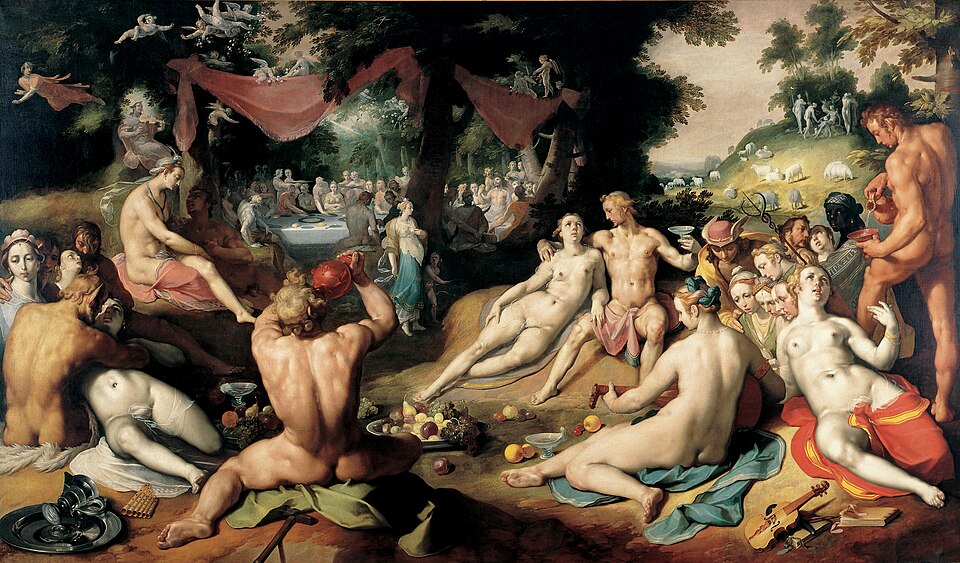
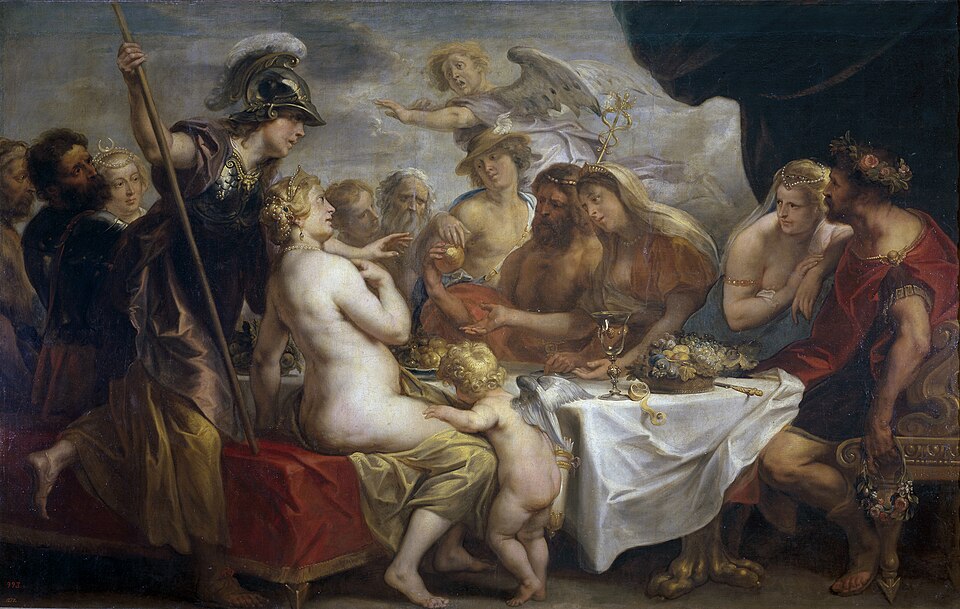
The Trojan War starts at a wedding. Peleus, a mortal king, marries Thetis, a sea goddess. All the gods are invited to the feast — except Eris, the goddess of discord. She shows up anyway and throws a golden apple into the crowd. On it is written: 'To the fairest.'
Three goddesses claim it at once: Hera, queen of the gods; Athena, goddess of wisdom and war; and Aphrodite, goddess of love. Zeus, king of the gods, refuses to judge between them — no answer could end well for him. So he hands the problem to a mortal.
One more thing about this wedding: the bride and groom will have a son. His name is Achilles, and he will become the greatest warrior who ever lived. The war that begins with this apple will also be the war that kills him.
Joachim Wtewael (1566–1638) was a Dutch Mannerist from Utrecht who made his fortune partly as a flax merchant. He is best known for small, meticulously finished paintings on copper, full of acrobatic figures and vivid color.