The Anger of Achilles
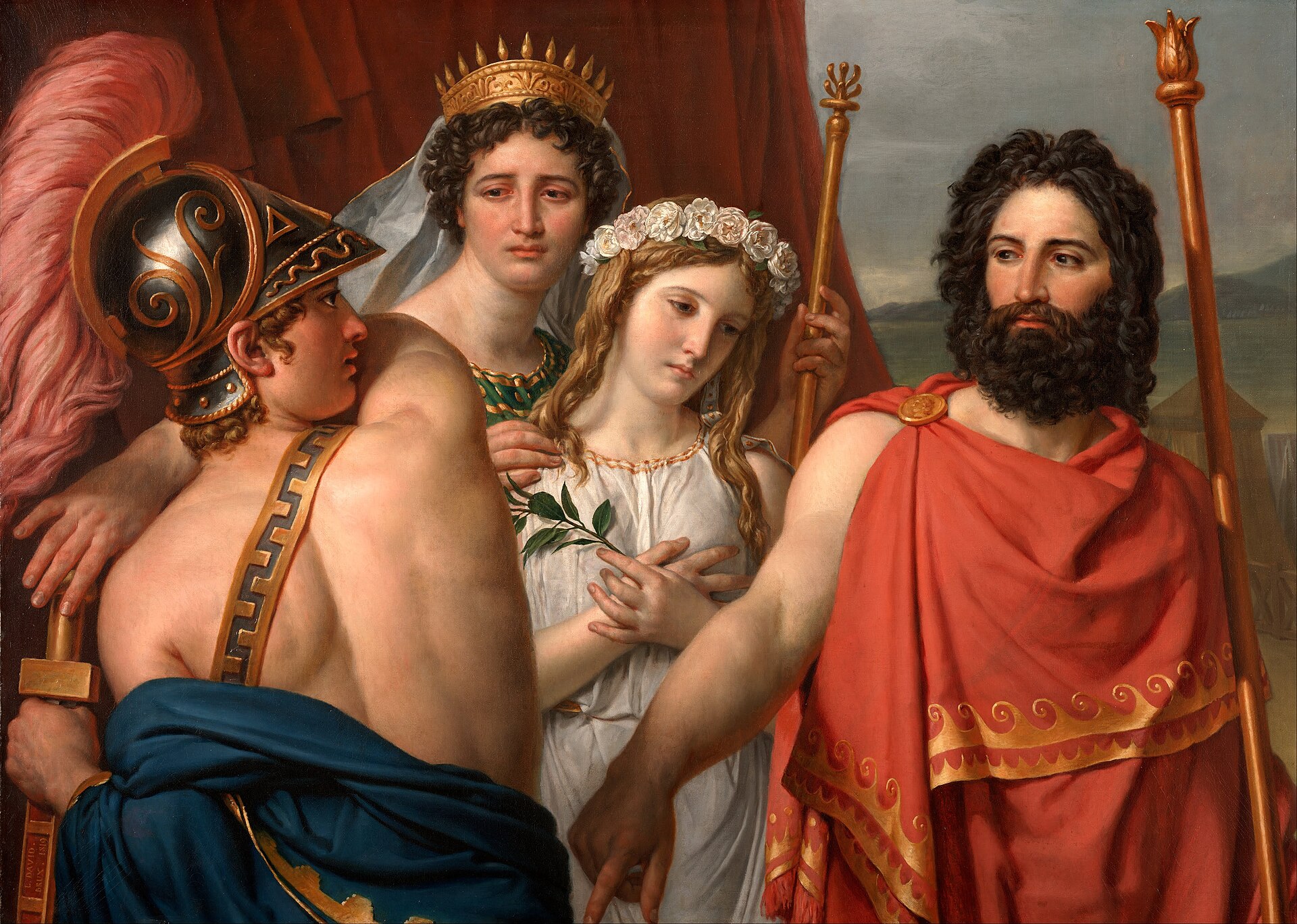
Four figures, close up, at the moment a lie collapses. Achilles was told he had come to Aulis for his wedding to Iphigenia; he has just learned she is to be sacrificed instead, and his hand flies to his sword. Agamemnon stares him down, while Clytemnestra grieves and Iphigenia accepts her fate.
David painted this in Brussels, exiled after Napoleon's fall, compressing an entire tragedy into a single tense row of half-length figures. He called it a test of whether expression alone could carry a history painting — anger, command, sorrow and resignation, shoulder to shoulder.
The Greek fleet assembles at Aulis, a harbor on the Greek coast — and then the wind dies. For weeks, not a single ship can sail. A priest reveals the reason: Agamemnon has offended the goddess Artemis. The price of a fair wind is the life of Agamemnon's own daughter, Iphigenia.
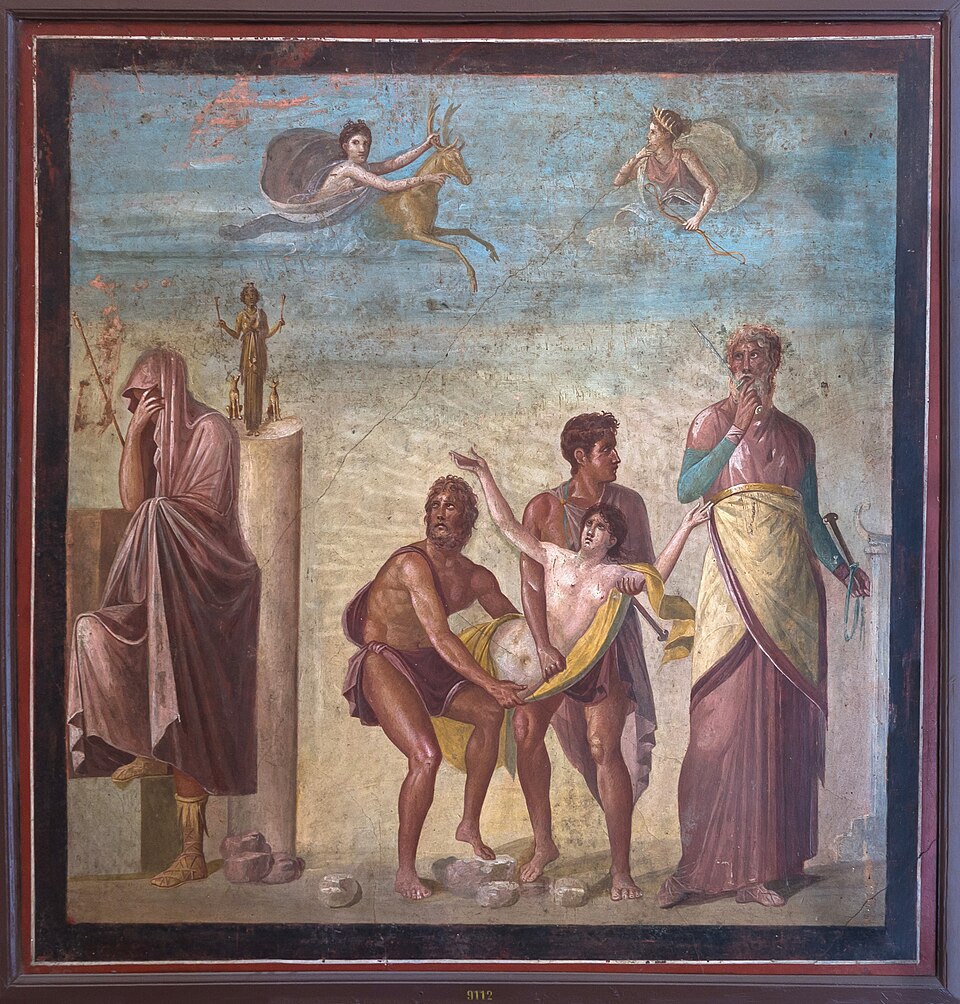
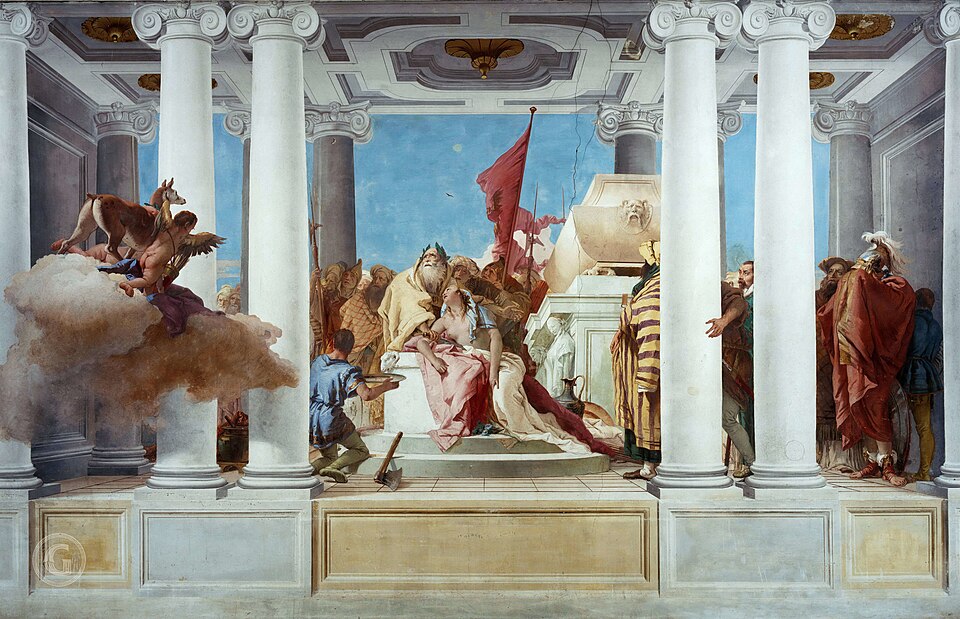
Agamemnon sends for her with a lie — he tells her mother the girl is coming to marry Achilles. When Achilles learns his name was used as bait, he is furious, but it changes nothing. Iphigenia is sacrificed on the altar. In some versions Artemis swaps her for a deer at the last instant; in others the knife falls.
The wind returns and the fleet sails. But Agamemnon has shown what he is willing to pay for this war, and his family will make him pay for it in turn when he comes home.
Jacques-Louis David (1748–1825), the master of French Neoclassicism, spent his last decade exiled in Brussels after the fall of Napoleon, where he continued to paint mythological subjects of concentrated intensity.