The Sacrifice of Iphigenia
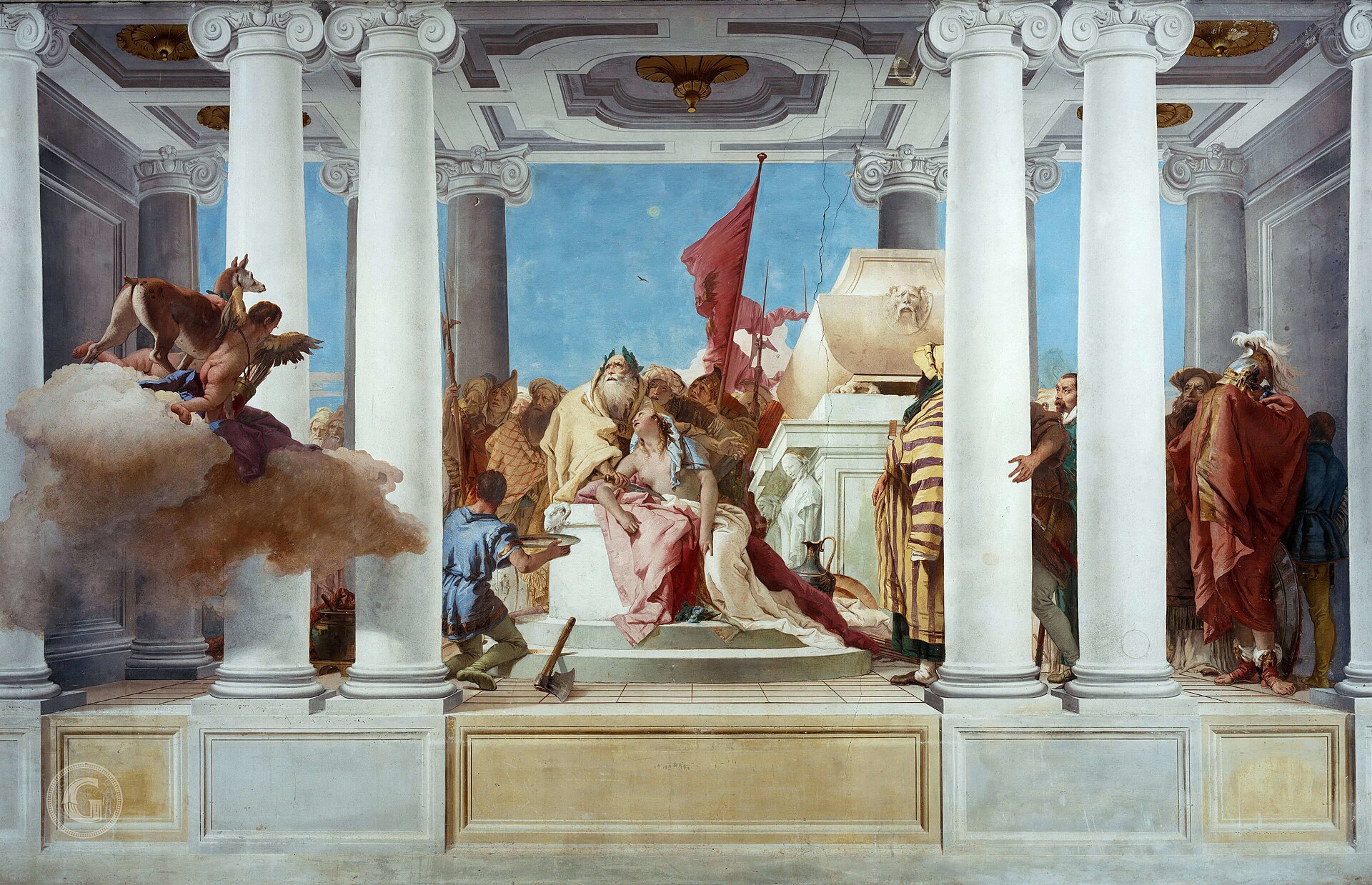
Tiepolo stages the sacrifice as grand theatre. Iphigenia waits at the altar as the priest raises the knife — and in the clouds above, Diana is already arriving with the deer that will take the girl's place. The onlookers see nothing yet; the viewer alone knows the rescue is seconds away.
This fresco opens the cycle of Homeric scenes Tiepolo painted for the Villa Valmarana near Vicenza. Painting the miracle and the horror in the same instant is pure Tiepolo: the airy sky does not just decorate the tragedy, it interrupts it.
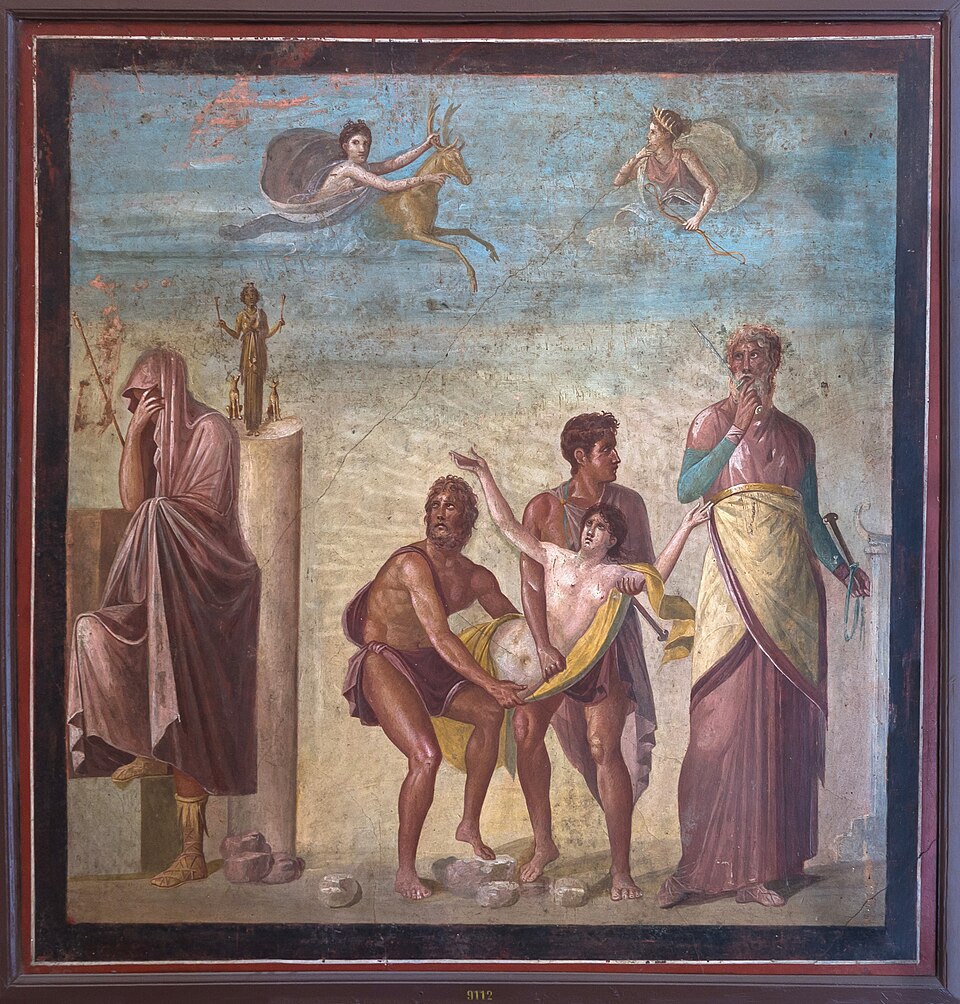
The Greek fleet assembles at Aulis, a harbor on the Greek coast — and then the wind dies. For weeks, not a single ship can sail. A priest reveals the reason: Agamemnon has offended the goddess Artemis. The price of a fair wind is the life of Agamemnon's own daughter, Iphigenia.
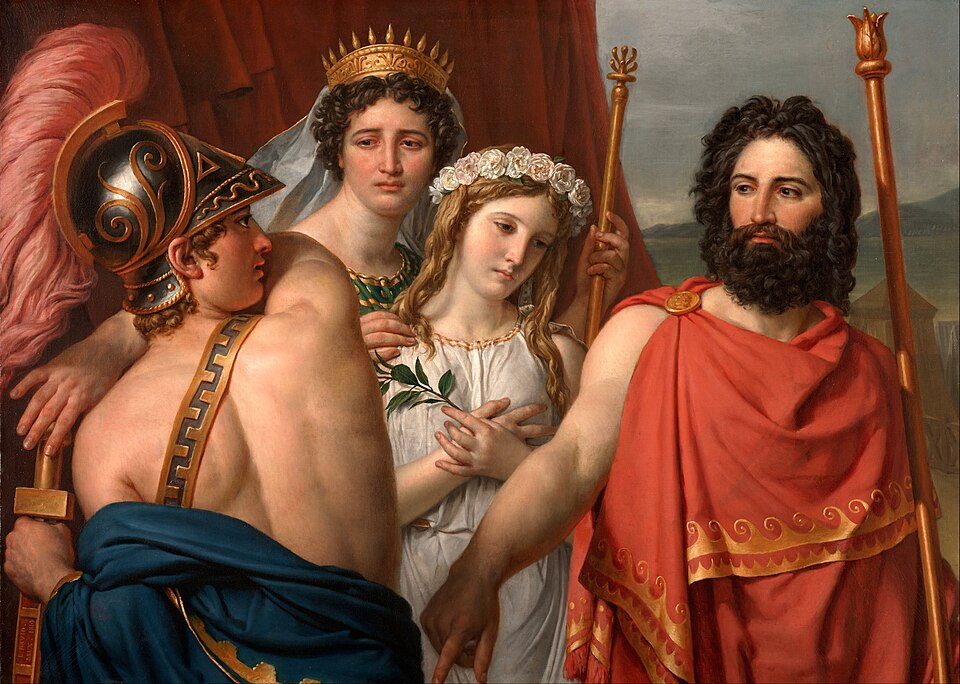
Agamemnon sends for her with a lie — he tells her mother the girl is coming to marry Achilles. When Achilles learns his name was used as bait, he is furious, but it changes nothing. Iphigenia is sacrificed on the altar. In some versions Artemis swaps her for a deer at the last instant; in others the knife falls.
The wind returns and the fleet sails. But Agamemnon has shown what he is willing to pay for this war, and his family will make him pay for it in turn when he comes home.
Giovanni Battista Tiepolo (1696–1770) was the last great Venetian fresco painter, covering ceilings and walls across Italy, Germany and Spain with luminous, weightless scenes. His son Giandomenico worked alongside him.