The Sacrifice of Iphigenia
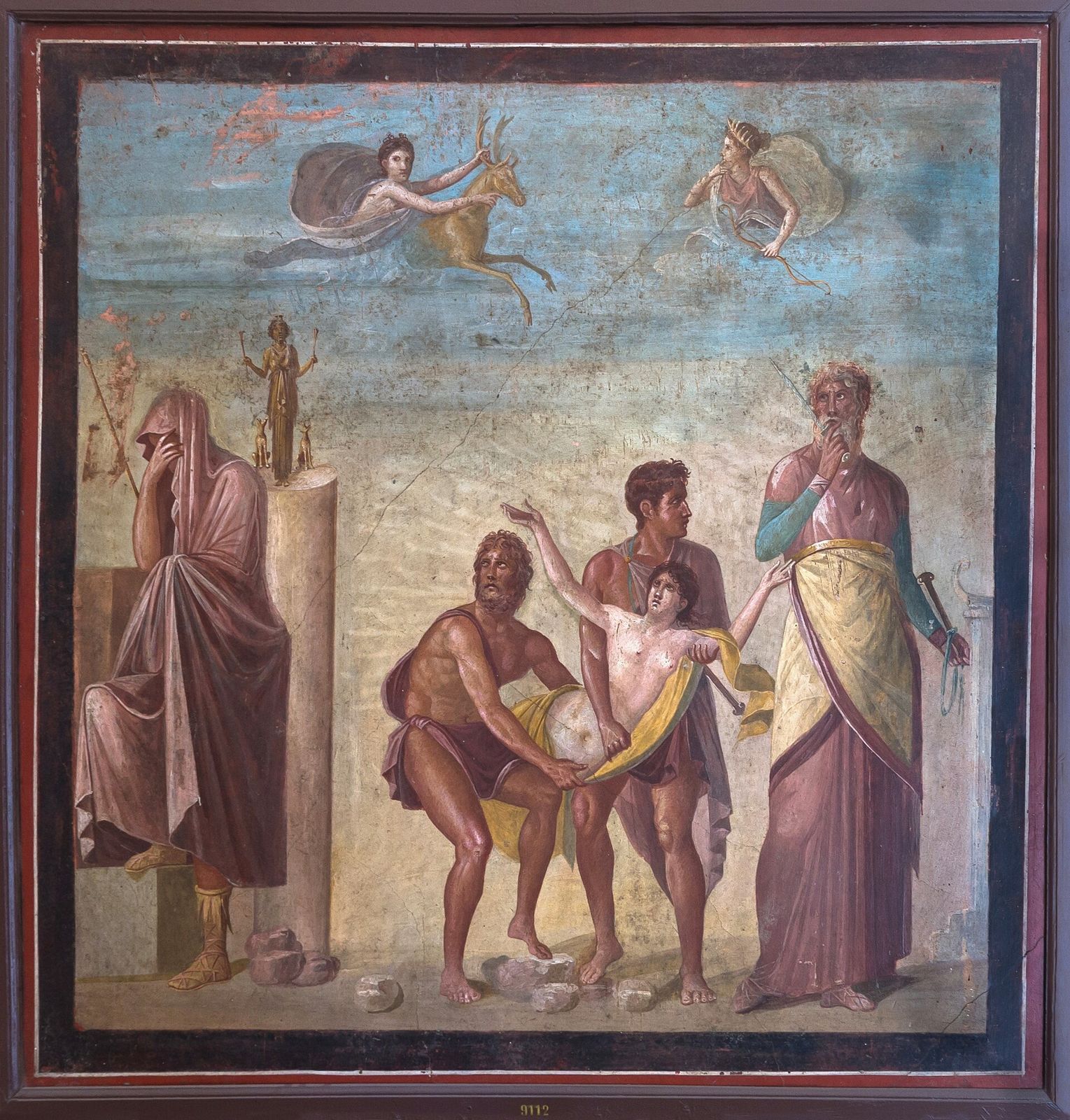
The Greek fleet cannot sail until Agamemnon sacrifices his own daughter. In this fresco from a Pompeii house, Iphigenia is carried to the altar while the seer Calchas stands ready; at the left, Agamemnon turns away with his face hidden in his cloak. Above, the goddess Artemis appears with the deer she will substitute at the last moment.
The veiled Agamemnon is the famous touch. Ancient writers praised the Greek painter Timanthes for admitting that a father's grief at such a moment is beyond depicting — so he hid it. This fresco, buried by Vesuvius in AD 79, is our best echo of that lost masterpiece.
The Greek fleet assembles at Aulis, a harbor on the Greek coast — and then the wind dies. For weeks, not a single ship can sail. A priest reveals the reason: Agamemnon has offended the goddess Artemis. The price of a fair wind is the life of Agamemnon's own daughter, Iphigenia.
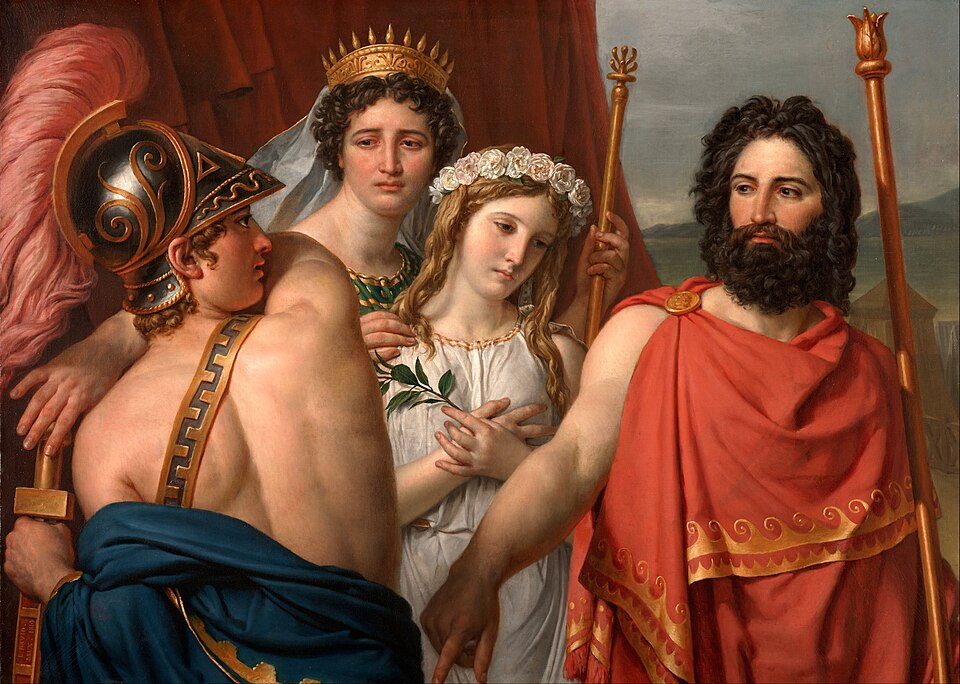
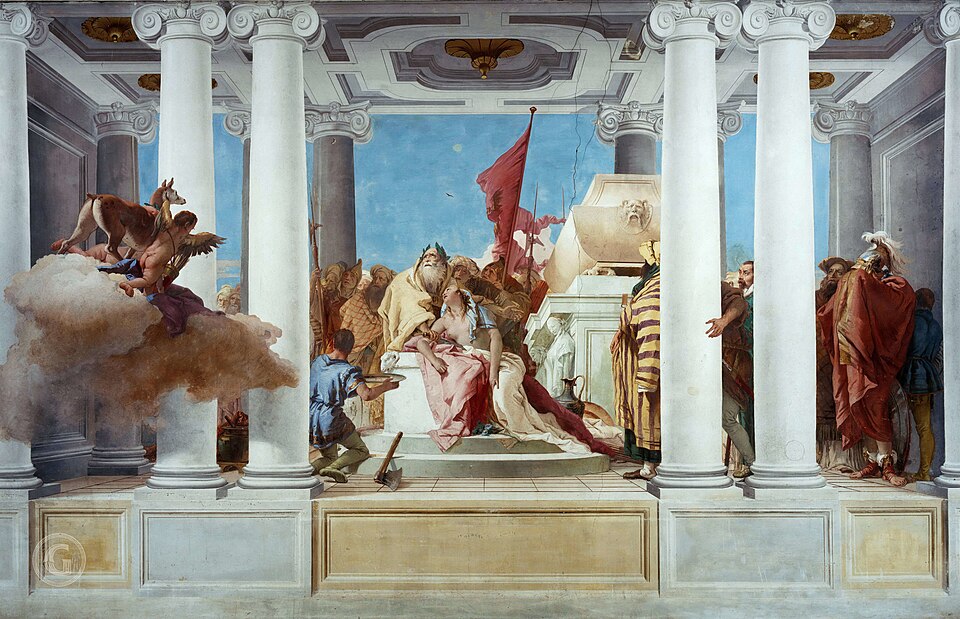
Agamemnon sends for her with a lie — he tells her mother the girl is coming to marry Achilles. When Achilles learns his name was used as bait, he is furious, but it changes nothing. Iphigenia is sacrificed on the altar. In some versions Artemis swaps her for a deer at the last instant; in others the knife falls.
The wind returns and the fleet sails. But Agamemnon has shown what he is willing to pay for this war, and his family will make him pay for it in turn when he comes home.
The wall paintings of Pompeii and Herculaneum were made by anonymous Roman workshops, often adapting famous Greek pictures that are now lost. Buried in the eruption of AD 79, they are the largest body of ancient painting to survive anywhere.