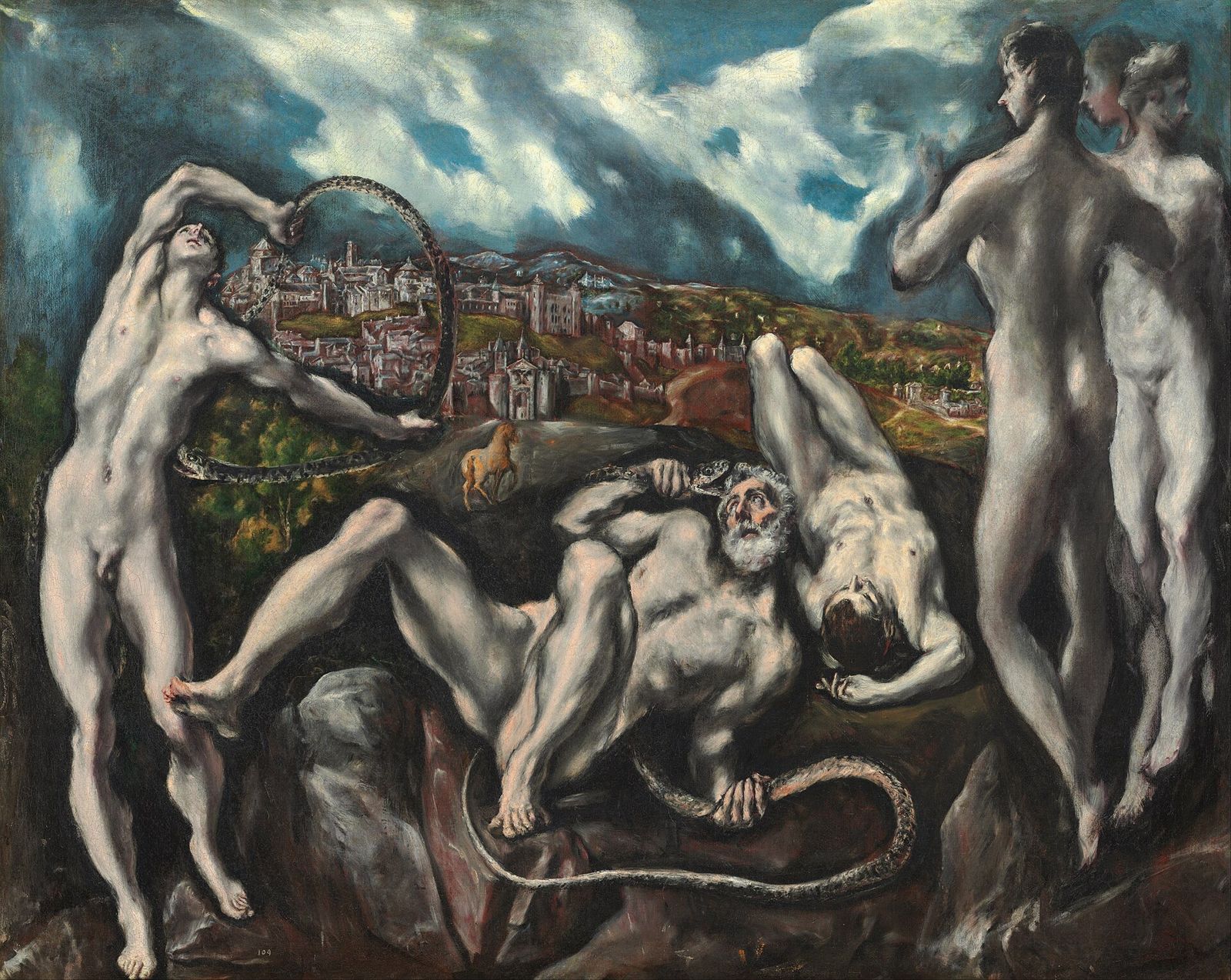
Laocoön
El Greco retells the priest's death in a gray, storm-lit dreamscape: Laocoön sprawls on the ground wrestling a serpent, his sons stretched beside him, while the fatal horse trots toward a city in the distance. The city is not Troy — it is Toledo, El Greco's own home, standing in for every city that refuses a warning.
The elongated, ash-colored bodies and the unexplained standing figures at the right (probably unfinished) give the picture the logic of a vision rather than a history. It is El Greco's only surviving painting of a classical myth, made in his final years, and it feels less like antiquity than prophecy.
One Trojan sees through it. Laocoön, a priest, warns the crowd that Greeks are never to be trusted, gifts least of all — and hurls his spear into the horse's flank, where it stands quivering in the hollow wood. If anyone had listened, Troy would have survived.
The gods who have decided on Troy's destruction cannot allow that. Two enormous serpents come out of the sea, seize Laocoön's two young sons, and crush all three to death at the altar where he was about to sacrifice. The Trojans draw exactly the wrong lesson: the priest was punished for doubting the offering. The horse rolls through the gate over his body.
El Greco (1541–1614) was born on Crete, trained as an icon painter, studied in Venice and Rome, and settled in Toledo, Spain, where his flame-like figures and unearthly color found their audience. Dismissed for centuries as eccentric, he was rediscovered by the modern age as a visionary.
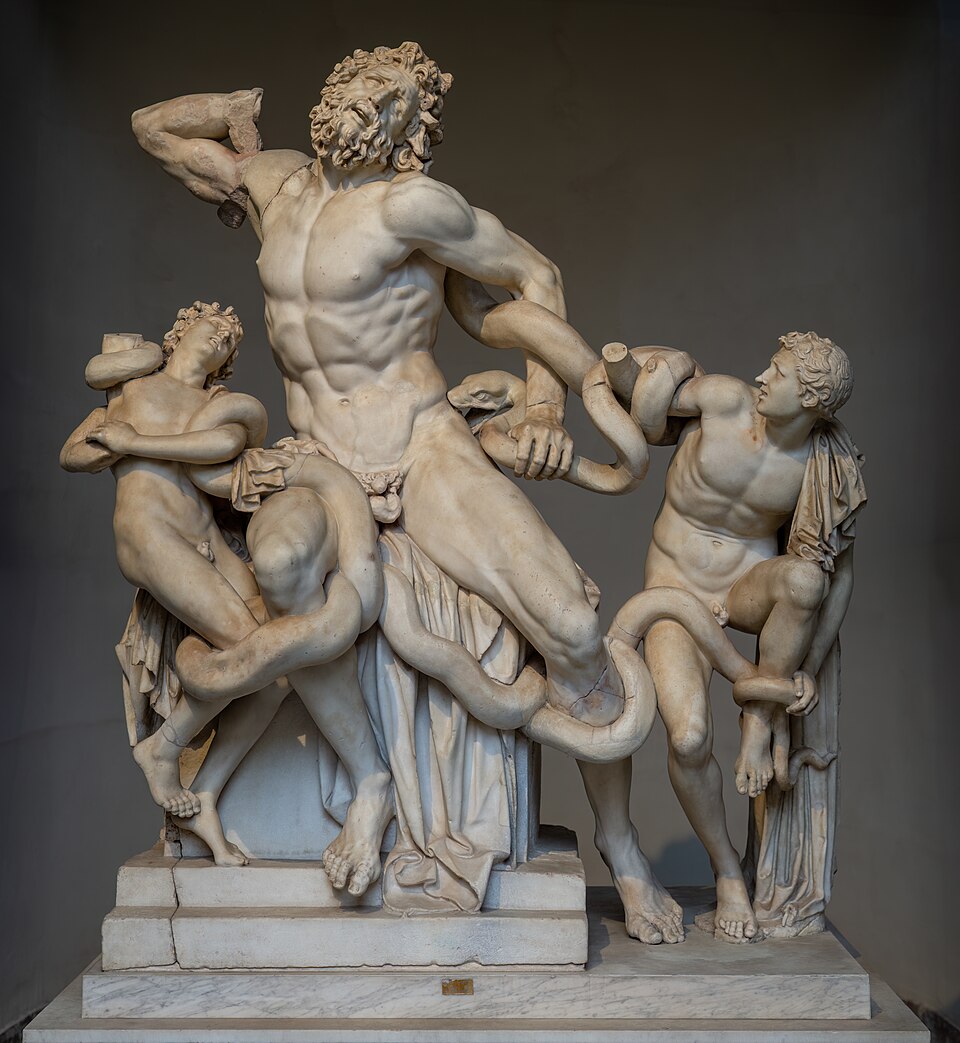
_-_Laoco%C3%B6n_-_Google_Art_Project.jpg)