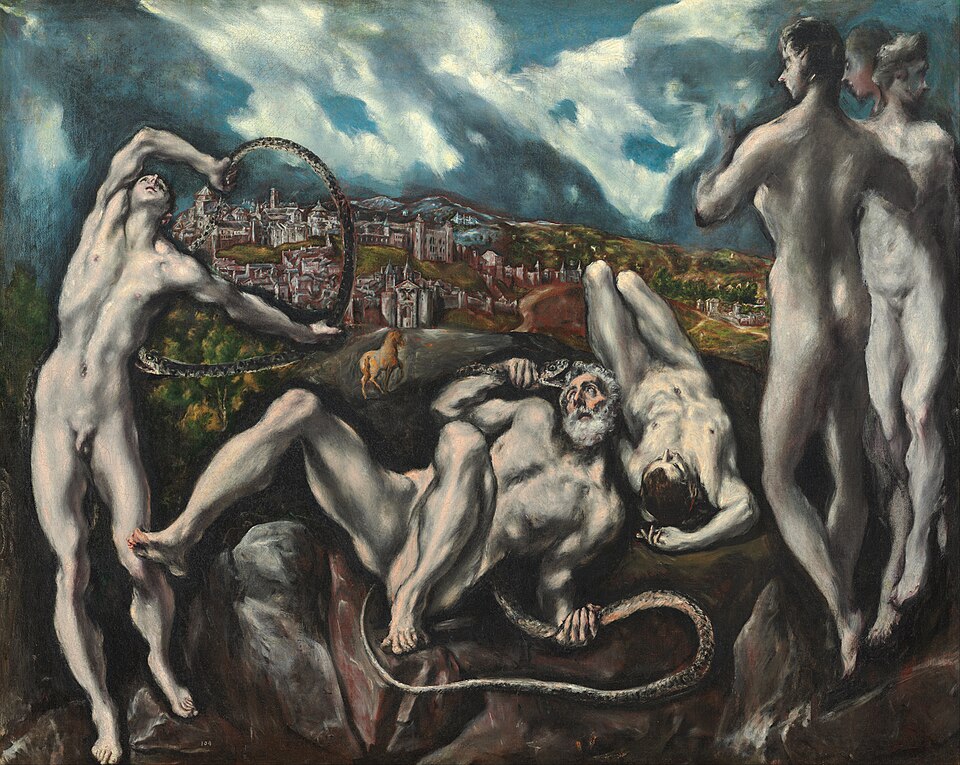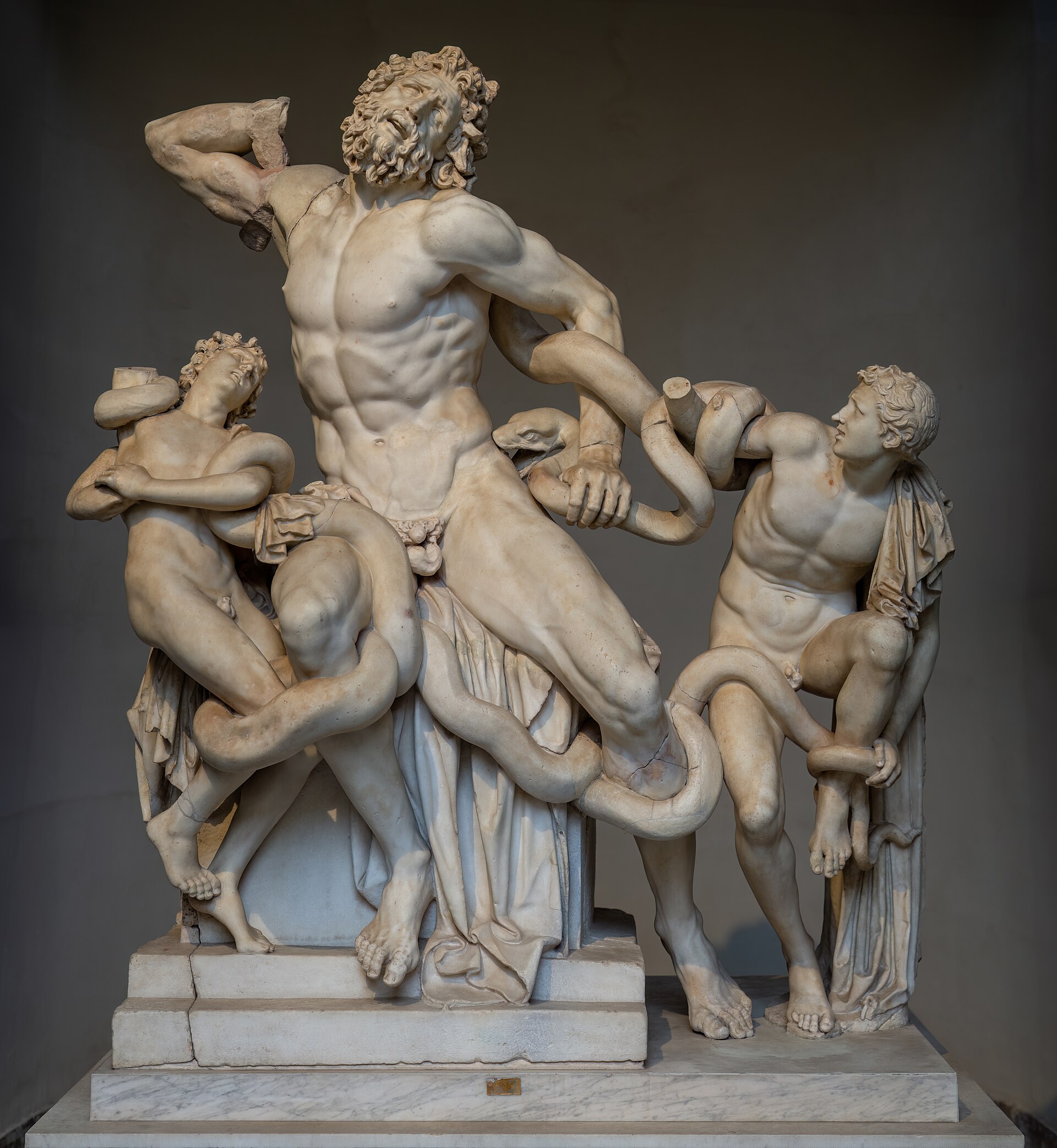
Laocoön and His Sons
The Trojan priest Laocoön warned his city not to trust the wooden horse — and the gods who favored the Greeks sent two sea serpents to silence him. The marble catches him and his two sons at the moment the coils close: every muscle fighting, the father's face tipped back in a cry.
Since its rediscovery in a Roman vineyard in 1506, this group has been perhaps the most influential sculpture in Western art — Michelangelo studied it the day it came out of the ground, and centuries of artists learned the expression of agony from it. Pliny the Elder had praised it in the first century as a work 'superior to all others in painting and sculpture.'
One Trojan sees through it. Laocoön, a priest, warns the crowd that Greeks are never to be trusted, gifts least of all — and hurls his spear into the horse's flank, where it stands quivering in the hollow wood. If anyone had listened, Troy would have survived.
The gods who have decided on Troy's destruction cannot allow that. Two enormous serpents come out of the sea, seize Laocoön's two young sons, and crush all three to death at the altar where he was about to sacrifice. The Trojans draw exactly the wrong lesson: the priest was punished for doubting the offering. The horse rolls through the gate over his body.
Pliny names three sculptors from Rhodes — Hagesander, Athenodoros, and Polydoros — as the makers of the Laocoön. They worked in the late Hellenistic manner, which pushed marble to its limits in the service of extreme motion and extreme feeling.