The Shield of Achilles
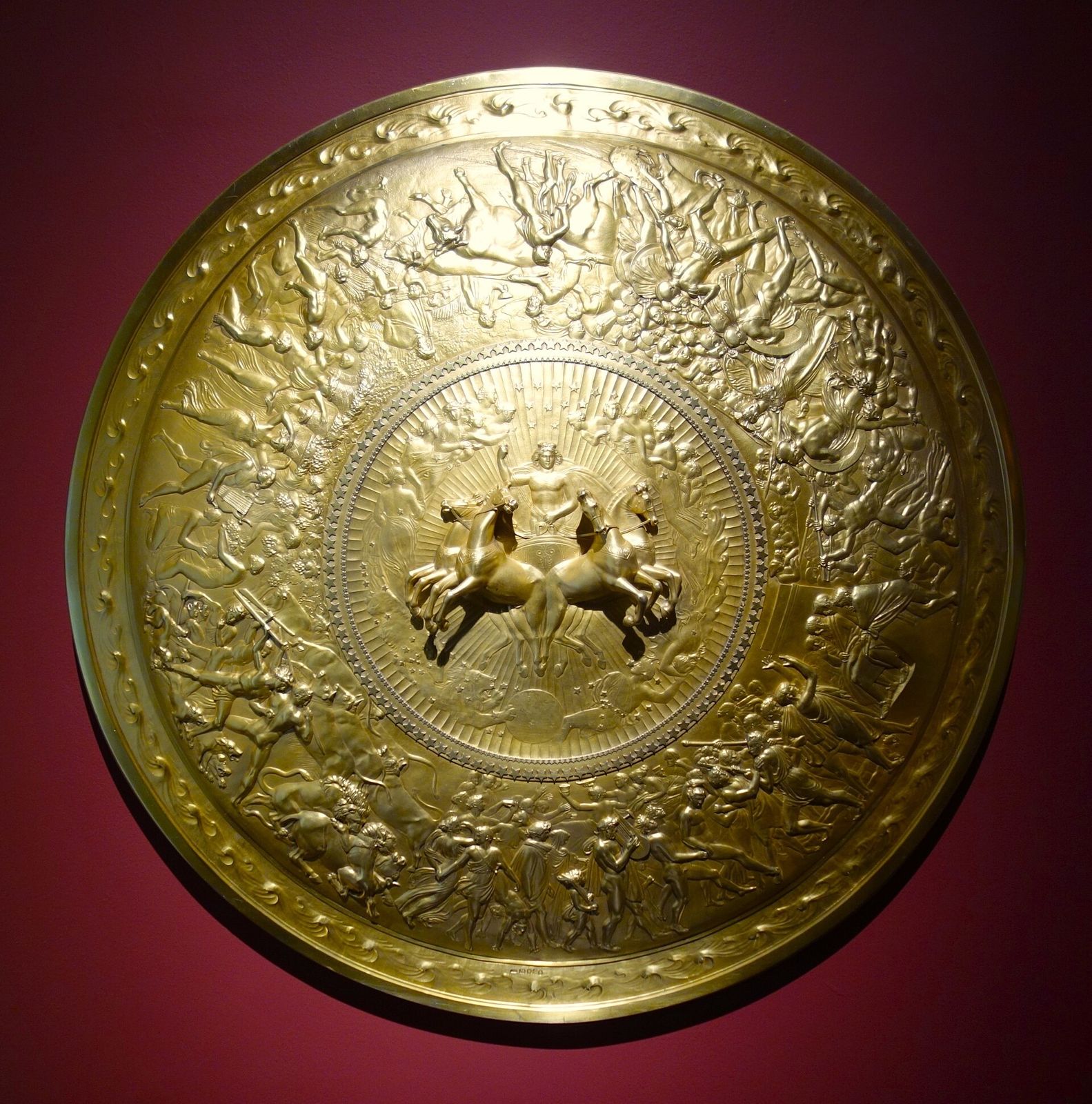
This is Homer's most famous digression made real: the shield Vulcan forges for Achilles, decorated with the whole world. At the center the sun god drives his chariot; around him spread scenes of a city at peace and a city at war, a wedding, a harvest, dancers — and around the rim runs the ocean that circles everything.
The sculptor John Flaxman spent years turning Homer's word-picture into a design, and the royal goldsmiths cast it in silver-gilt in 1821. It was displayed at the coronation banquet of George IV. It is less a piece of armor than an argument that Homer had described, in verse, the first great work of art.
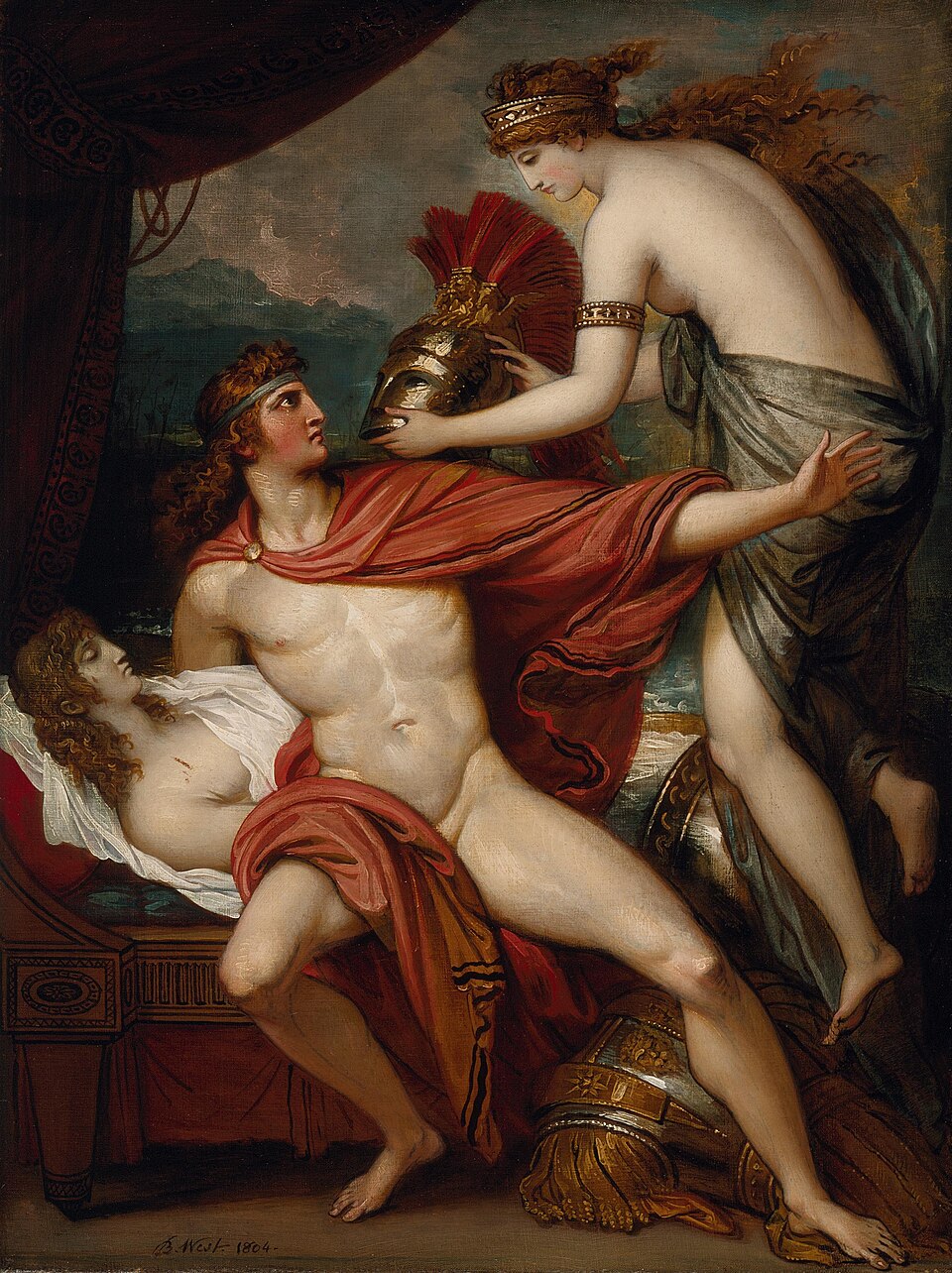
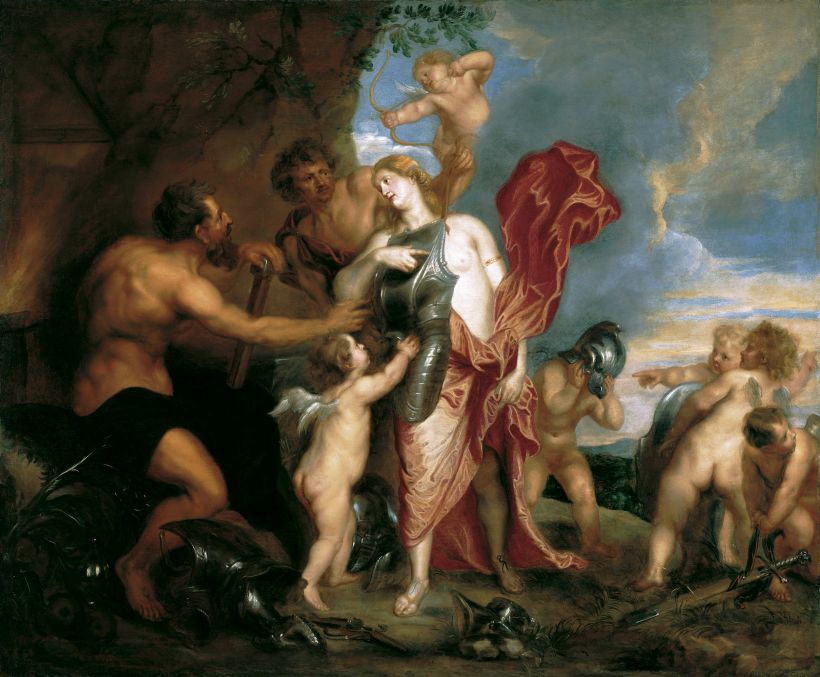
Achilles cannot fight in nothing. Overnight, Thetis goes to Hephaestus — Vulcan to the Romans — the lame smith-god, who owes her a debt from long ago. In his forge he makes Achilles a new set of armor in a single night, including the most famous object in ancient poetry: the shield.
On its surface Hephaestus works images of the whole human world: two cities, one at peace with weddings and law courts, one at war; plowing and harvest; herds, dancers, a vineyard; the ocean running around the rim. It is everything Achilles is about to leave. Thetis delivers it at dawn, and Achilles finally makes peace with Agamemnon — the quarrel dissolved not by treasure but by grief.
John Flaxman (1755–1826) was England's leading neoclassical sculptor, but his widest fame came from spare outline drawings illustrating Homer, which were reprinted across Europe and shaped how the nineteenth century visualized the epics. He began his career designing for Wedgwood pottery.