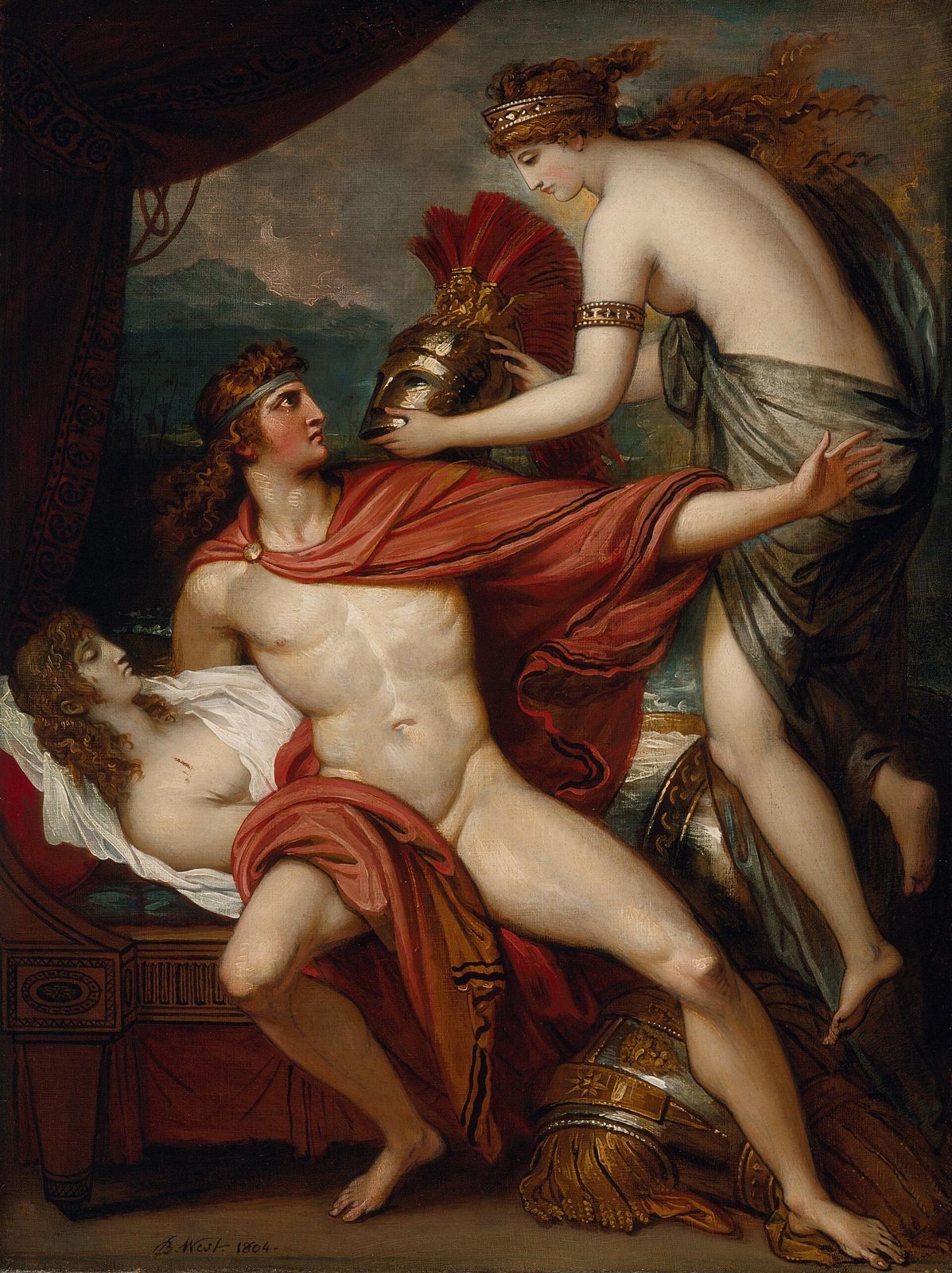
Thetis Bringing the Armour to Achilles
Thetis sweeps down from the sky with the armor her son needs to return to battle — the great shield gleaming, forged overnight by the god Vulcan. Achilles, who has spent that night weeping for Patroclus, reaches up toward his mother.
West compresses the emotional hinge of the whole epic into one exchange of gazes: the mother delivering the gift, knowing (as Achilles knows) that returning to battle means her son will die young. The billowing drapery and divine light are pure theatrical Romanticism from a painter who spent his career staging great moments of history.
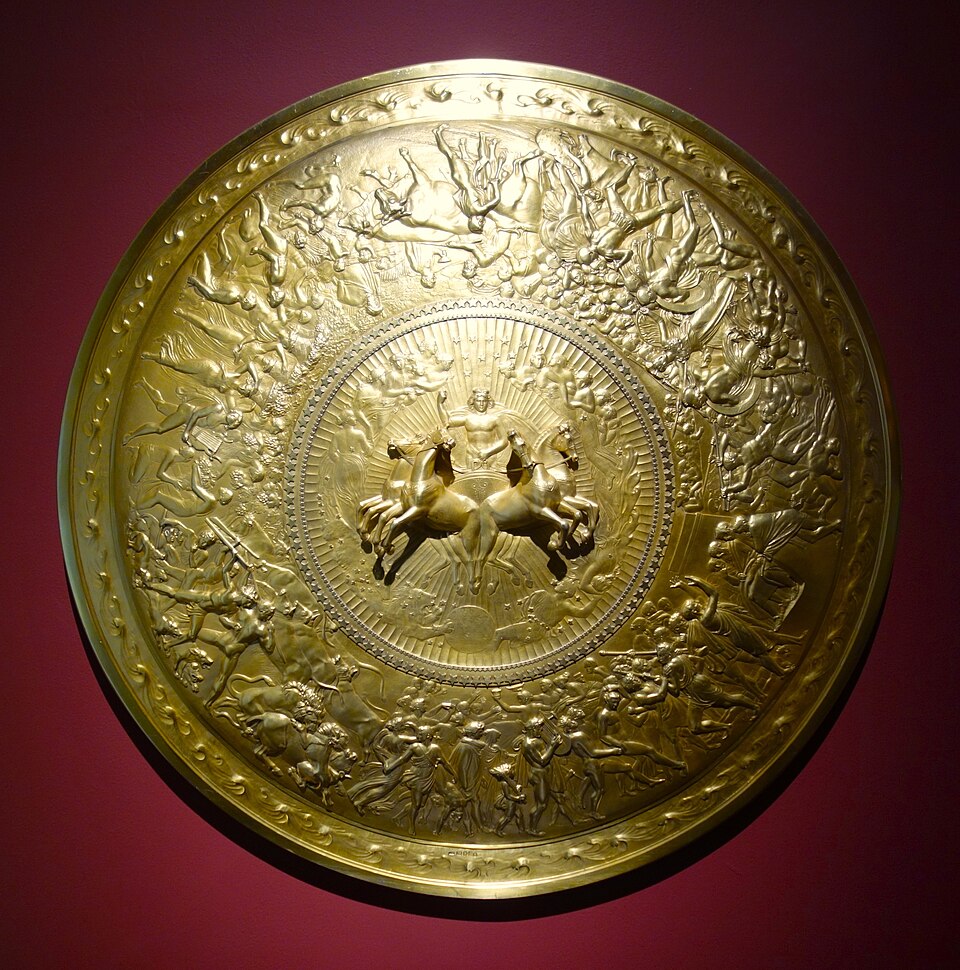
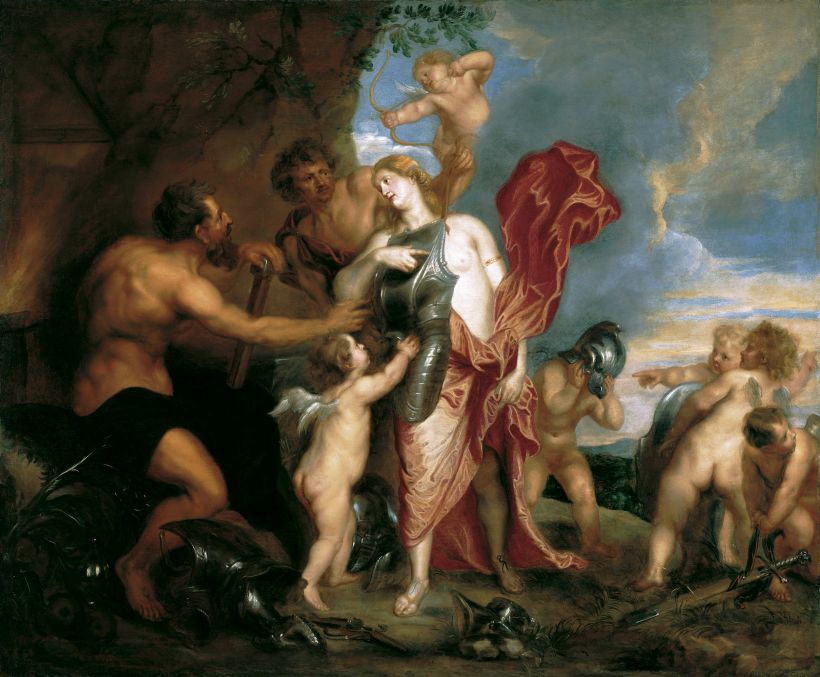
Achilles cannot fight in nothing. Overnight, Thetis goes to Hephaestus — Vulcan to the Romans — the lame smith-god, who owes her a debt from long ago. In his forge he makes Achilles a new set of armor in a single night, including the most famous object in ancient poetry: the shield.
On its surface Hephaestus works images of the whole human world: two cities, one at peace with weddings and law courts, one at war; plowing and harvest; herds, dancers, a vineyard; the ocean running around the rim. It is everything Achilles is about to leave. Thetis delivers it at dawn, and Achilles finally makes peace with Agamemnon — the quarrel dissolved not by treasure but by grief.
Benjamin West (1738–1820) was born in colonial Pennsylvania and became history painter to King George III and the second president of London's Royal Academy. He was the first American artist with a truly international reputation, and half the next generation of American painters trained in his studio.