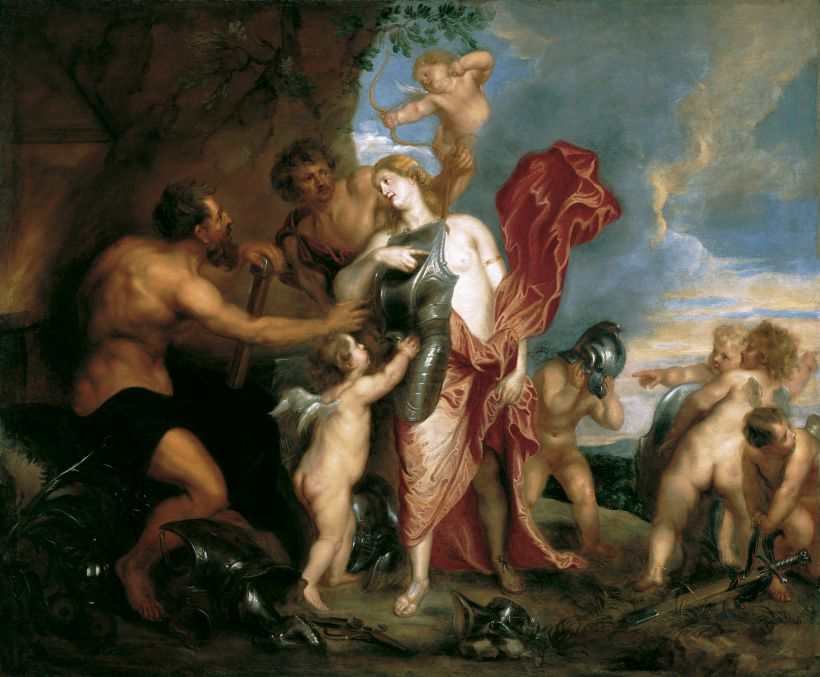
Thetis Receiving the Arms of Achilles from Hephaestus
In the god's smoky forge, Vulcan presents Thetis with the finished armor for her son: a breastplate, weapons, and the famous shield, still glowing with newness. The sea-nymph reaches toward the gift that will send Achilles back to war.
Van Dyck stages the meeting as a quiet transaction between a rough god and a graceful goddess, letting the gleam of metal against soft skin and fabric carry the picture. He painted it in his early thirties, when he was absorbing Rubens' big mythologies and turning them into something silkier and more elegant.
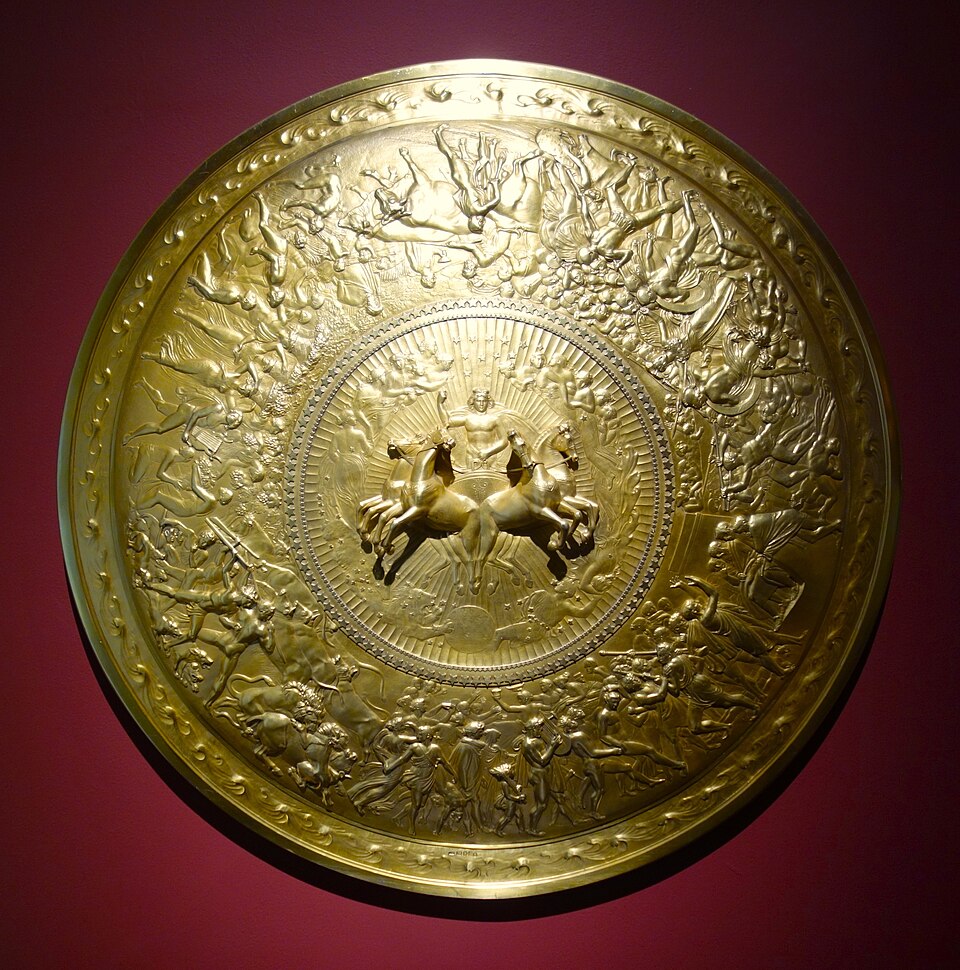
Achilles cannot fight in nothing. Overnight, Thetis goes to Hephaestus — Vulcan to the Romans — the lame smith-god, who owes her a debt from long ago. In his forge he makes Achilles a new set of armor in a single night, including the most famous object in ancient poetry: the shield.
On its surface Hephaestus works images of the whole human world: two cities, one at peace with weddings and law courts, one at war; plowing and harvest; herds, dancers, a vineyard; the ocean running around the rim. It is everything Achilles is about to leave. Thetis delivers it at dawn, and Achilles finally makes peace with Agamemnon — the quarrel dissolved not by treasure but by grief.
Anthony van Dyck (1599–1641) was Rubens' most brilliant assistant before becoming a star in his own right, ending his career as court painter to Charles I of England. His portraits of the English aristocracy set the pattern for society portraiture for the next two hundred years.