The Building of the Trojan Horse
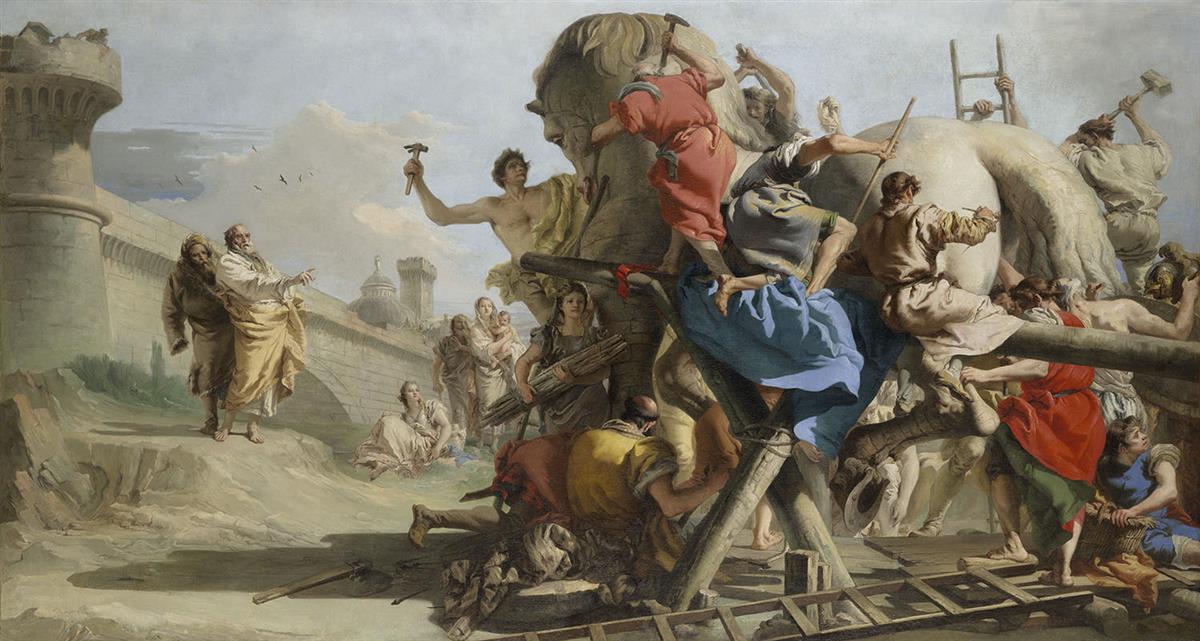
The trick under construction. Greek carpenters clamber over the half-built wooden horse, planing and hammering the huge planks of its flank, while officers direct the work. It looks less like a war scene than a shipyard — which is the point: victory here is a feat of engineering, not courage.
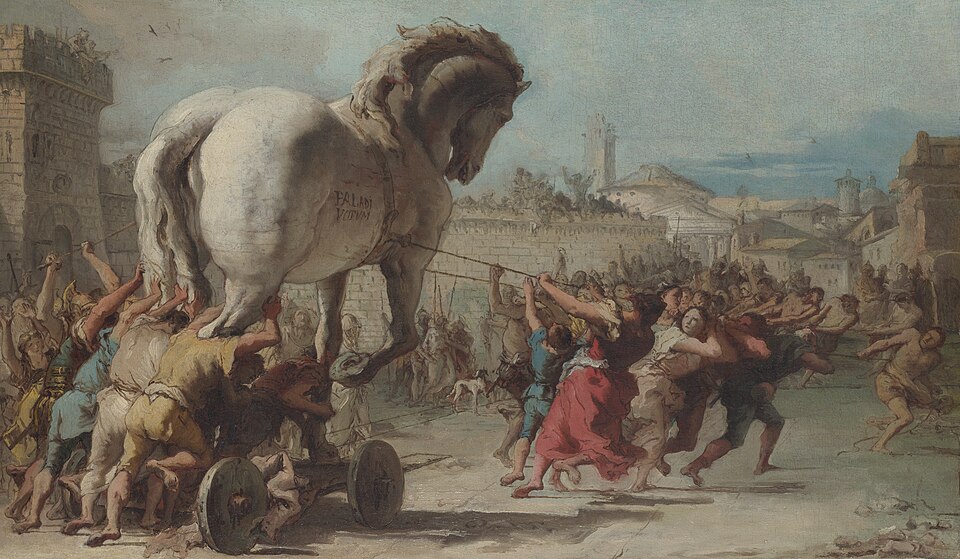
This sketch belongs to the same unfinished Trojan Horse series as the Procession. Tiepolo enjoys the absurd scale of the thing, the workmen dwarfed by the animal they are building, ordinary labor in service of an extraordinary lie.
Ten years, and the walls still stand. What the Greeks cannot do with force, Odysseus finally does with theater. The Greeks build an enormous hollow wooden horse, hide their best fighters inside it, and burn their own camp. The fleet sails away — but only as far as a nearby island, where it waits.
The Trojans wake to silence and an empty beach. Where the enemy camped for ten years there is nothing but ashes and one giant wooden offering, inscribed to the goddess Athena. A planted Greek 'deserter' tells them the story they want to hear: take the horse inside your walls and the city can never be conquered. The Trojans knock a breach in their own defenses and haul it in, celebrating. That night, the hidden Greeks climb out and open the gates.
Giovanni Domenico Tiepolo (1727–1804) worked beside his father on palaces and churches across Venice, Würzburg, and Madrid before emerging as a distinct artist in his own right. His later work trades the gods of ceiling painting for sharp, humane observation of crowds and spectacle.