The Trojan Horse (Mykonos Pithos)
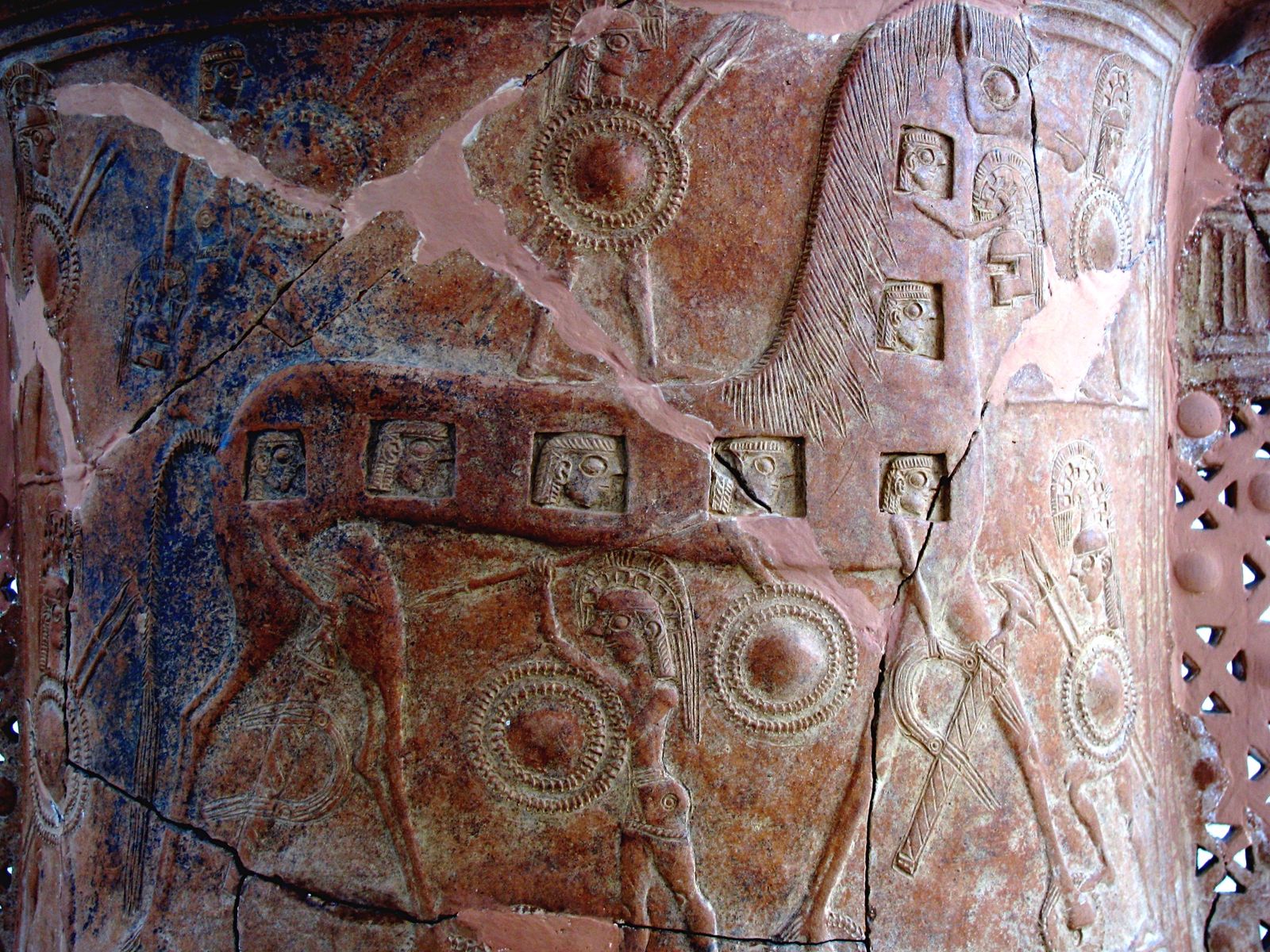
The oldest picture of the Trojan Horse in existence, pressed into the clay of a huge storage jar around 670 BC — within a century or so of the Iliad taking shape. The horse stands on wheels, and little square windows in its side show the armed warriors packed within, some handing weapons out.
Below and around the horse, small panels show what came next: warriors, women, and children in the brutal chaos of the sack. The jar was found on the island of Mykonos in 1961, being used — remarkably — as the lining of a well. Its maker treated the fall of Troy the way a comic strip would: scene by scene, unflinching.
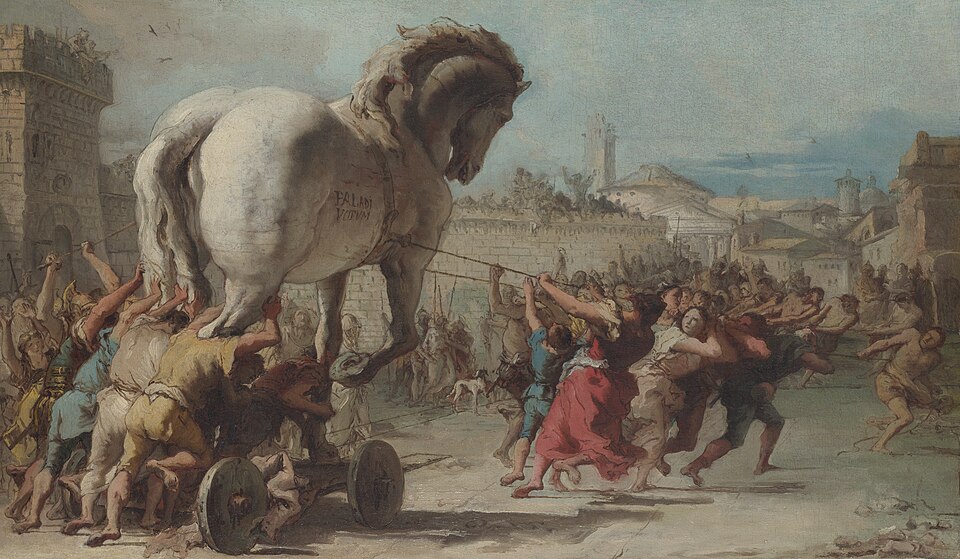
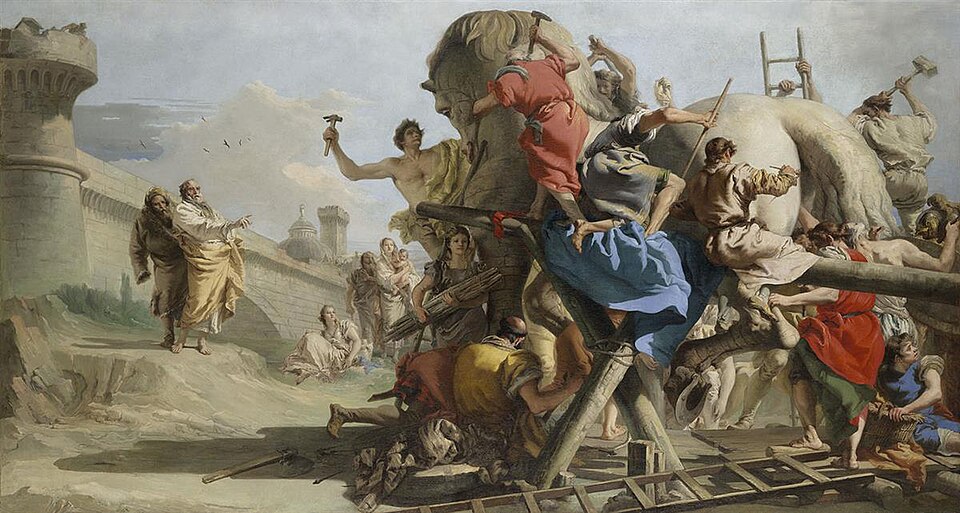
Ten years, and the walls still stand. What the Greeks cannot do with force, Odysseus finally does with theater. The Greeks build an enormous hollow wooden horse, hide their best fighters inside it, and burn their own camp. The fleet sails away — but only as far as a nearby island, where it waits.
The Trojans wake to silence and an empty beach. Where the enemy camped for ten years there is nothing but ashes and one giant wooden offering, inscribed to the goddess Athena. A planted Greek 'deserter' tells them the story they want to hear: take the horse inside your walls and the city can never be conquered. The Trojans knock a breach in their own defenses and haul it in, celebrating. That night, the hidden Greeks climb out and open the gates.
Relief pithoi were massive Greek storage jars decorated by pressing and modeling scenes into the wet clay, a specialty of the Cycladic islands in the seventh century BC. They are among the earliest surviving attempts anywhere to tell Homeric stories in pictures.