The Procession of the Trojan Horse into Troy
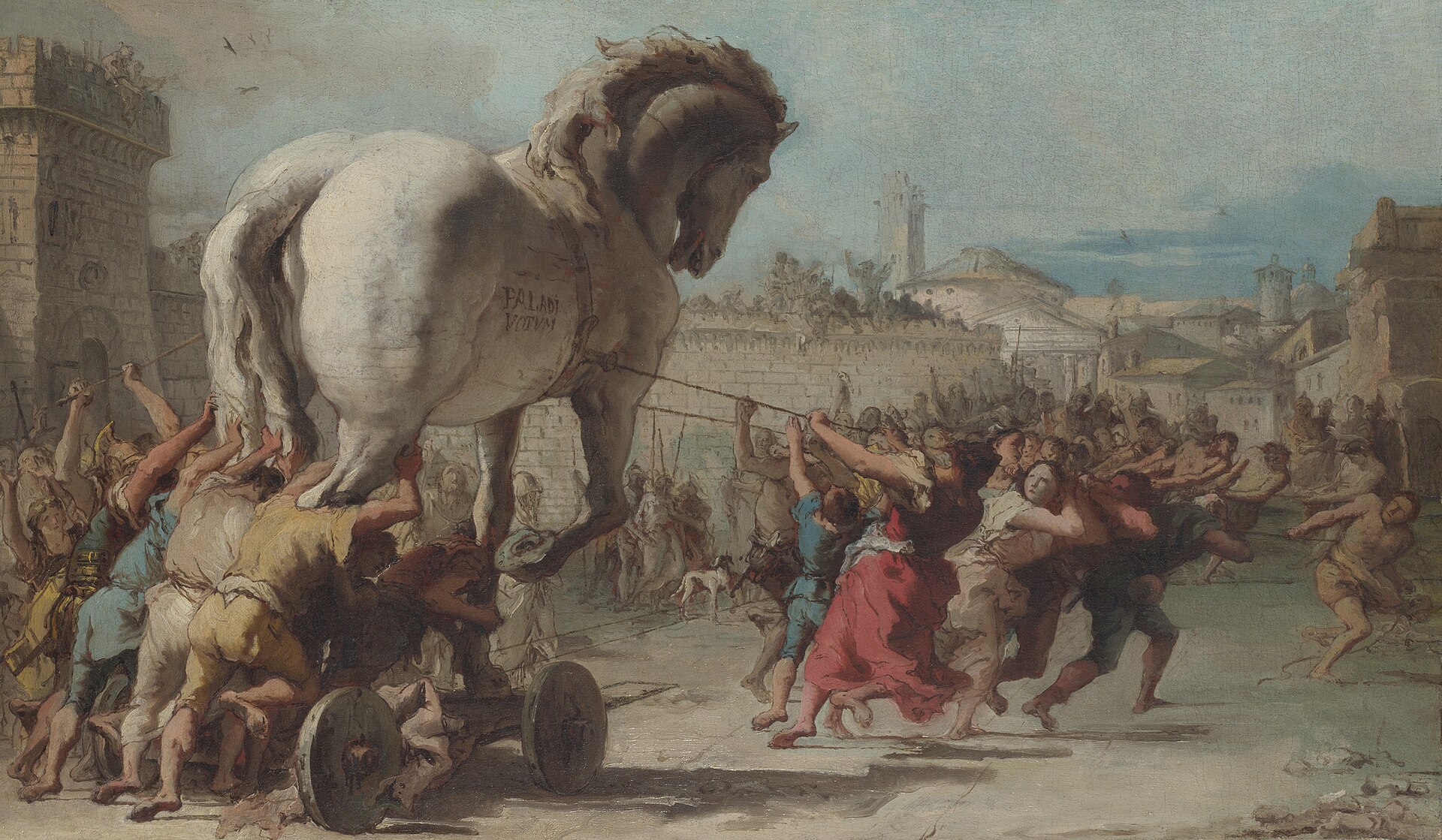
The Trojans have decided the giant wooden horse is a sacred offering, and here they haul it into the city themselves — straining at ropes, swarming around its legs, waving from the walls. The horse towers over the crowd, pale and blank, keeping its secret.
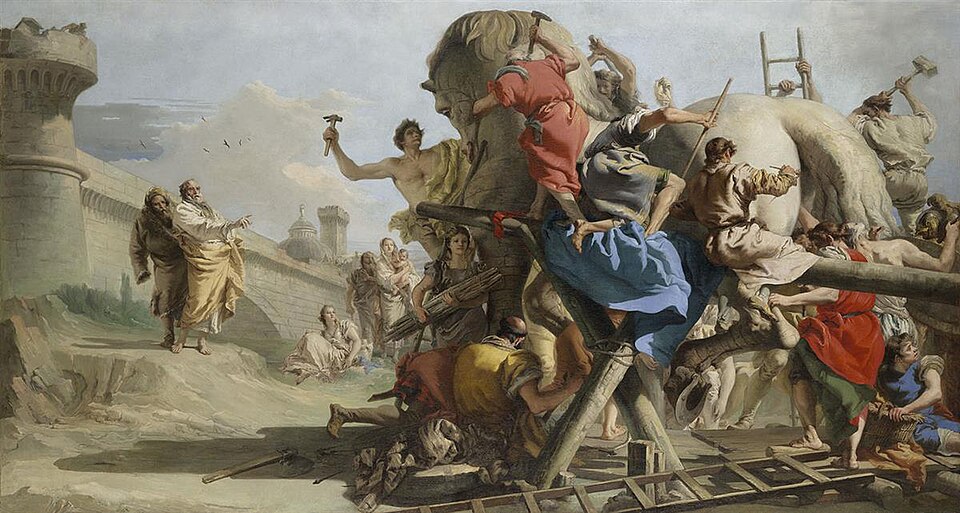
Tiepolo lets the crowd carry the irony: everyone in the picture is celebrating the thing that will destroy them by morning. The painting is one of a set of oil sketches for a larger Trojan Horse series that was never completed, which leaves these lively sketches as the finished story.
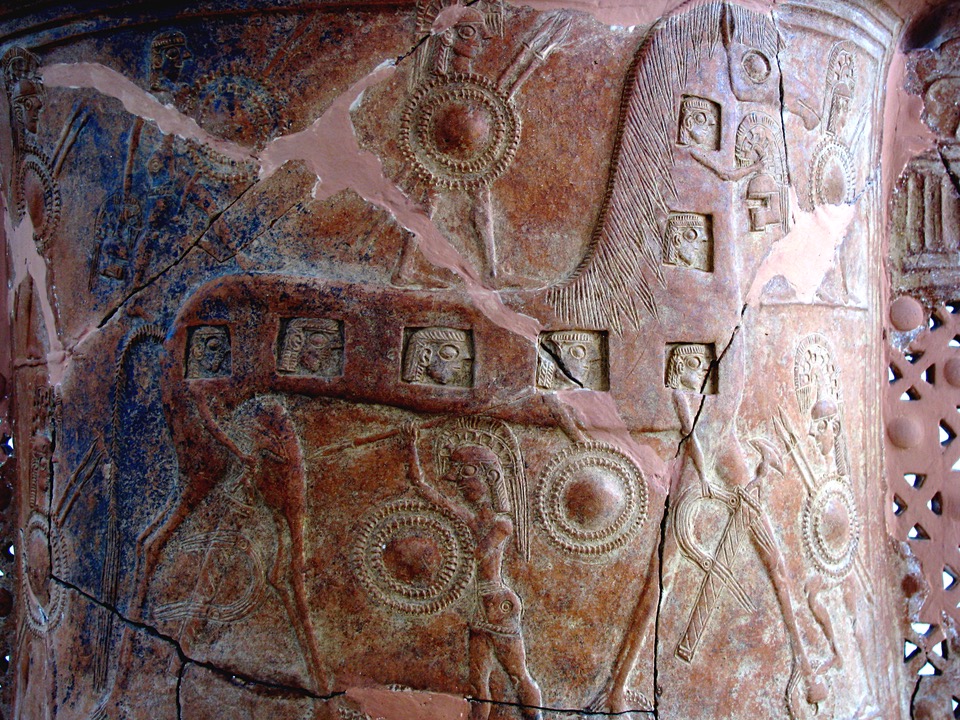
Ten years, and the walls still stand. What the Greeks cannot do with force, Odysseus finally does with theater. The Greeks build an enormous hollow wooden horse, hide their best fighters inside it, and burn their own camp. The fleet sails away — but only as far as a nearby island, where it waits.
The Trojans wake to silence and an empty beach. Where the enemy camped for ten years there is nothing but ashes and one giant wooden offering, inscribed to the goddess Athena. A planted Greek 'deserter' tells them the story they want to hear: take the horse inside your walls and the city can never be conquered. The Trojans knock a breach in their own defenses and haul it in, celebrating. That night, the hidden Greeks climb out and open the gates.
Giovanni Domenico Tiepolo (1727–1804) was the son and chief assistant of the great Venetian decorator Giambattista Tiepolo. Alongside his father's grand mythologies he developed a taste of his own for crowds, carnivals, and the comedy of everyday people — which serves this subject perfectly.