The Farewell of Hector and Andromache
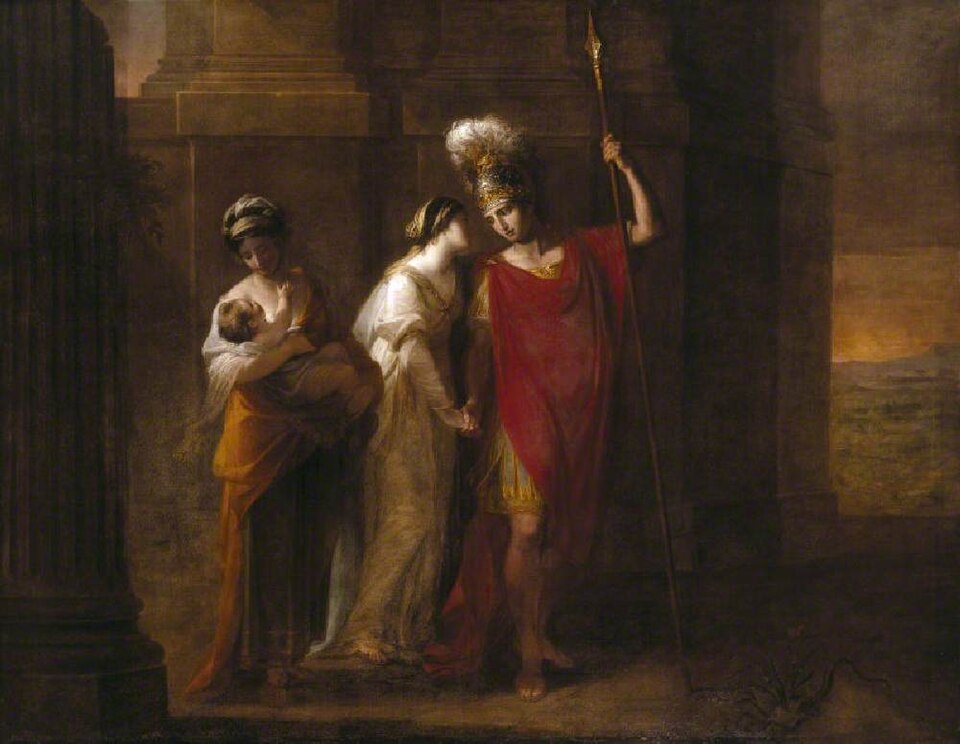
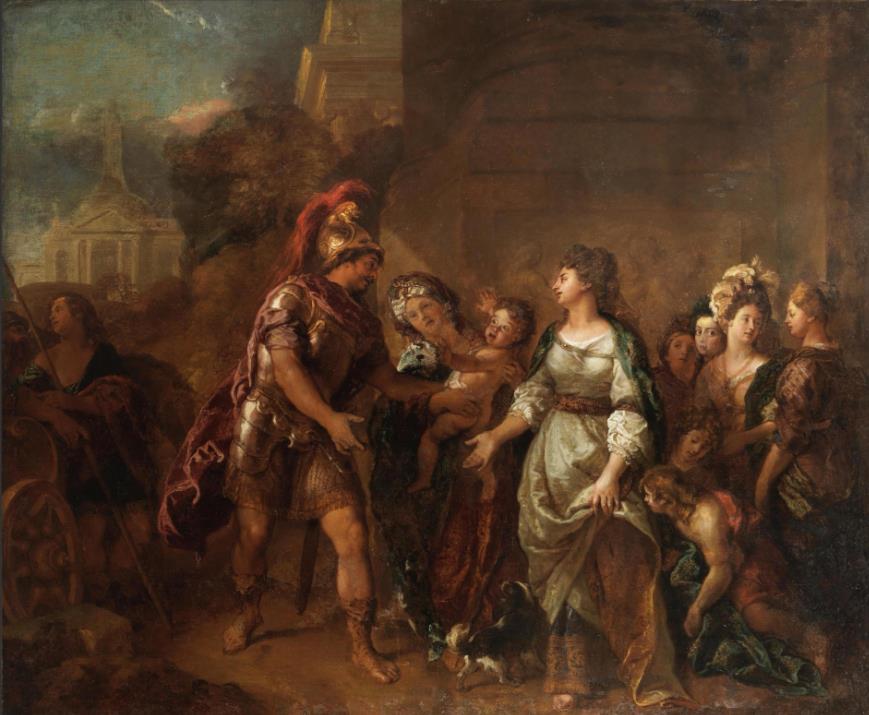
Hector, already in armor with his spear in hand, turns back for a last moment with Andromache, who holds their infant son. Around them, attendants and soldiers wait; the war outside the gate will not.
La Fosse showed the painting at the Paris Salon of 1699. He gives the farewell the full grandeur of French Baroque painting — sweeping drapery, a stage-like setting — while keeping the heart of the scene domestic: a family of three at the moment it breaks apart.
The fighting resumes without Achilles, and at first the Greeks hold their own — their champion Diomedes even wounds two gods, Aphrodite and Ares, with Athena's help. There is a truce for a duel: Paris against Menelaus, the two men the war is actually about. Menelaus wins easily, but Aphrodite whisks Paris off the field in a cloud before he can be killed. The war goes on.
Inside Troy, Hector — Priam's eldest son and the city's one indispensable defender — goes home to find his wife Andromache and their baby son. Andromache begs him to fight from the walls. Achilles has already killed her father and her seven brothers; Hector is everything she has left.
Hector answers that he would die of shame if he hid from battle. He reaches for his son, and the baby screams — terrified of the huge bronze helmet with its horsehair crest. Hector laughs, takes the helmet off, kisses the boy, and prays that he will grow up to be a better man than his father. Then he goes back to the war. It is the most human scene Homer wrote, and everyone in it is doomed.
Charles de La Fosse (1636–1716) was one of the leading French painters of Louis XIV's reign, a favorite decorator of Versailles. He helped loosen French painting's strict classicism with warmer color learned from Rubens and the Venetians.