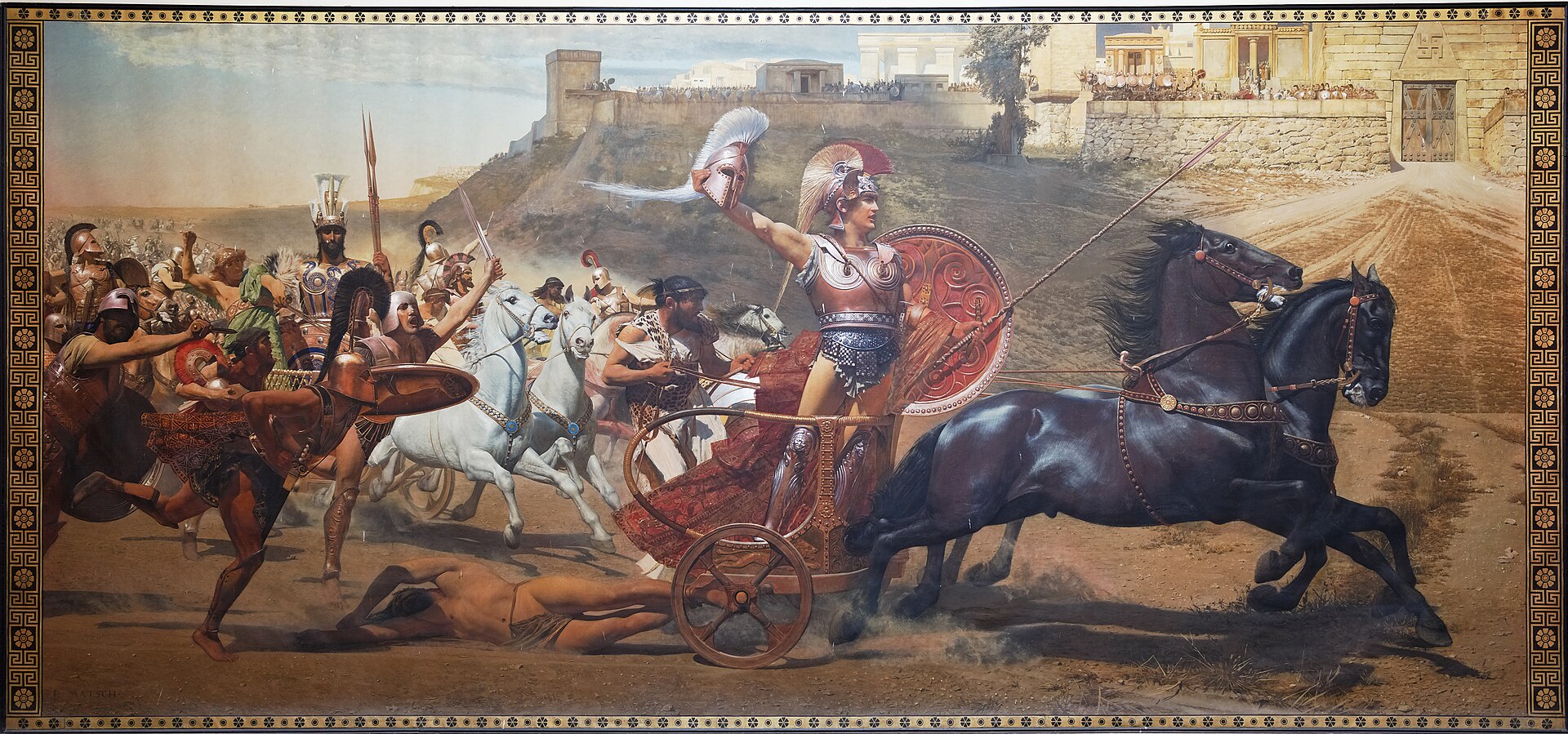
The Triumph of Achilles

Achilles stands in his chariot at full gallop, dragging the body of Hector on a rope behind him beneath the walls of Troy, as Homer describes — an act of victory deliberately pushed past all decency. Soldiers cheer; from the walls, Hector's family watches.
Matsch painted this enormous frieze in 1892 for the Achilleion, the palace on Corfu that Empress Elisabeth of Austria built and dedicated to Achilles. It is triumph without apology, in the polished theatrical style of imperial Vienna — a strange, gleaming monument to the epic's cruelest moment.
Achilles is not finished. He cuts the tendons of Hector's ankles, threads leather straps through them, ties the body to the back of his chariot, and whips the horses. He drags Hector's corpse around the walls of Troy in the dust, in full view of the man's family, then keeps the body by his tent and drags it around Patroclus's tomb every morning.
The gods are disgusted — this is desecration, and Hector was always faithful to them. Apollo shields the corpse from damage day after day. But Achilles is past caring about gods or rules. Grief has burned everything out of him except this.
Franz Matsch (1861–1942) was a Viennese painter who began his career sharing a decorating studio with Gustav Klimt, painting ceilings for theaters across the Austro-Hungarian empire. When Klimt turned radical, Matsch stayed loyal to the polished academic style the court loved.