The Return of Odysseus (Melian Relief)
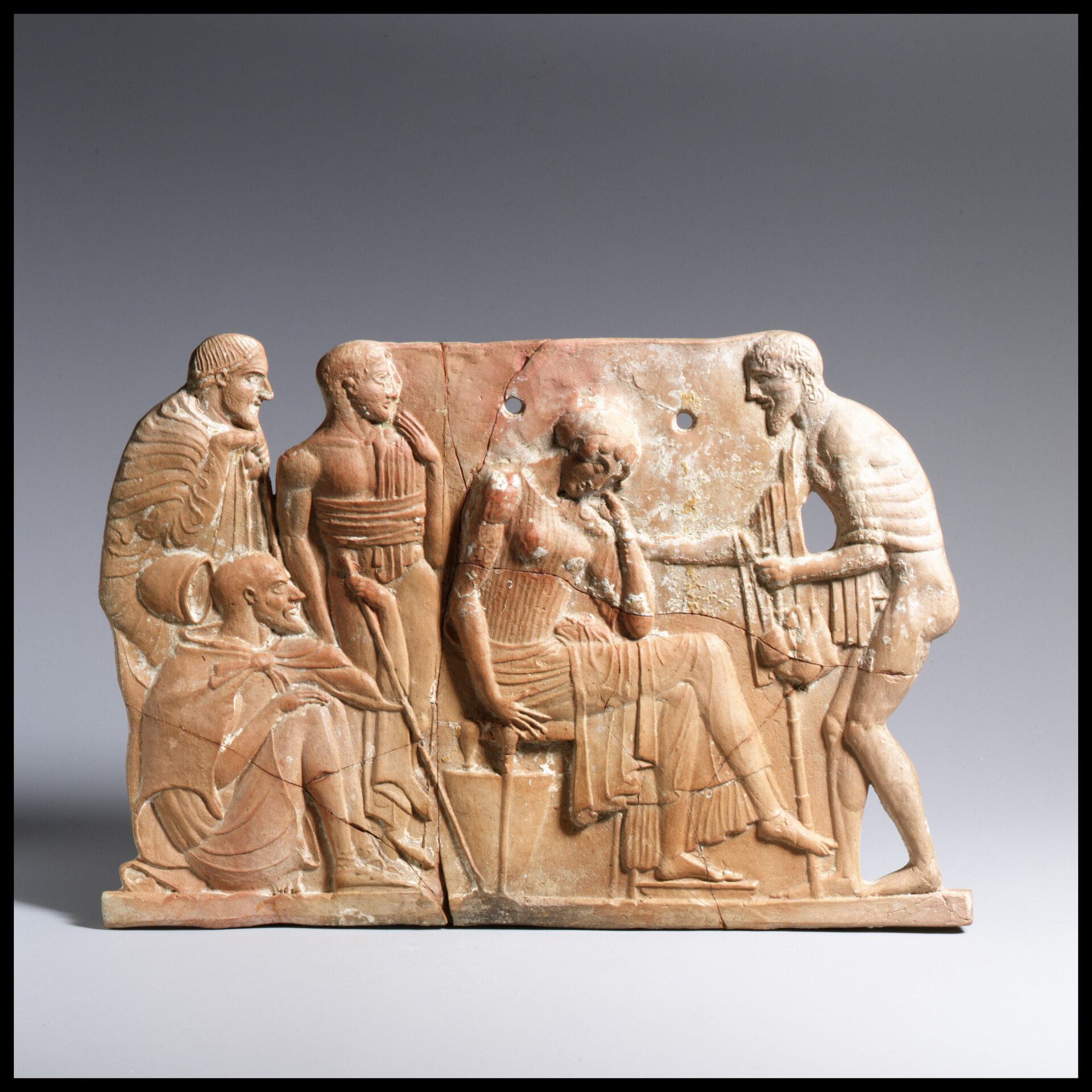
Odysseus, wearing the pointed traveler's cap that marks him in ancient art, approaches Penelope, who sits with her head bowed in the ancient pose of mourning. He is home; she does not yet believe it.
Small terracotta reliefs like this were made on the island of Melos around 460 BC, probably to decorate wooden chests and boxes. That so intimate a scene decorated household objects says how deeply the story lived in Greek homes.
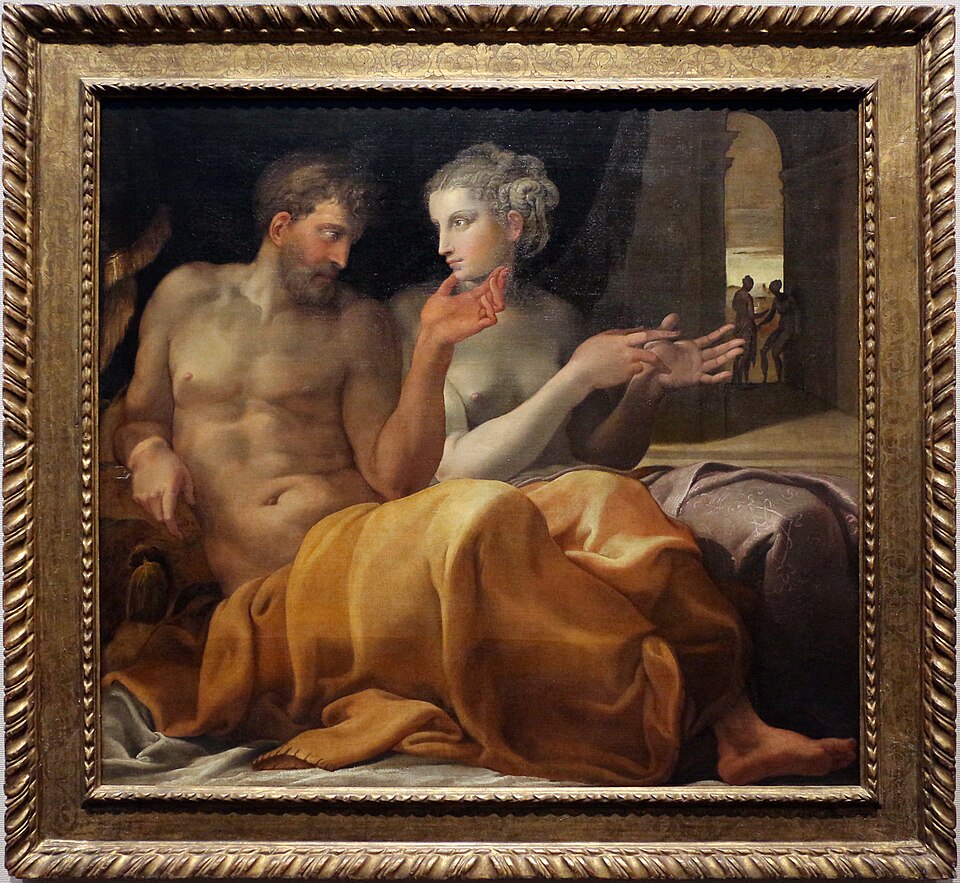
Penelope will not simply believe. Twenty years of rumors and con men have made her as wary as her husband, and the man by the fire, bathed and restored, could still be some god's trick. So she runs a test of her own. Within his hearing, she tells Eurycleia to move the great bed out of the bedchamber and make it up for the stranger there.
Odysseus flares up: no living man could move that bed. He built it himself around a living olive tree, trimming the trunk into a bedpost, and its roots still hold the ground — a secret only he, Penelope, and one maid have ever known. Her knees give way. She runs to him and holds on, and Homer says he was as welcome to her as the sight of land to a shipwrecked swimmer. Athena holds back the dawn to stretch the night. The next day Odysseus finds his old father Laertes in the orchard, and the goddess imposes peace on Ithaca. The long war and the long voyage are finally over.
Melian reliefs are a class of small terracotta plaques produced on the Greek island of Melos in the fifth century BC. Molded in series and attached to furniture and boxes, they favored scenes from epic and myth.