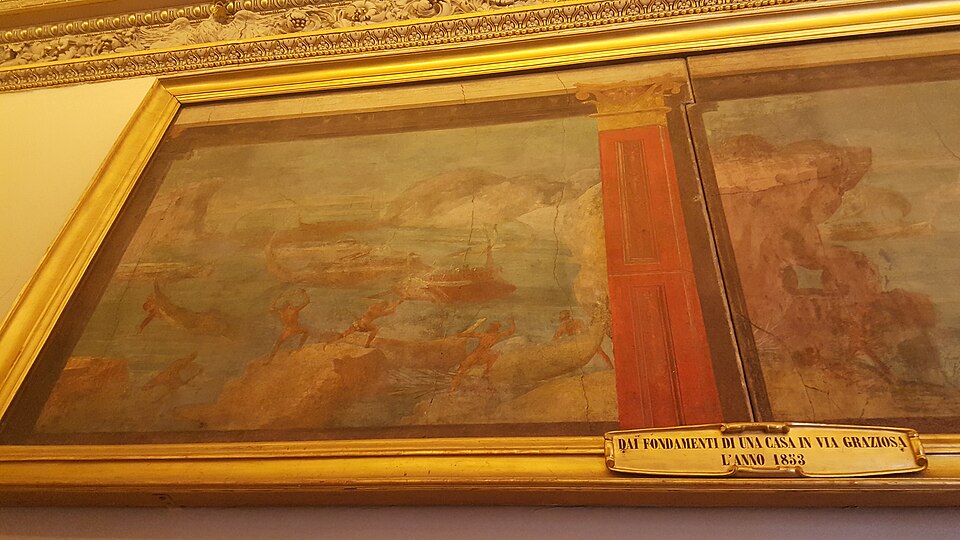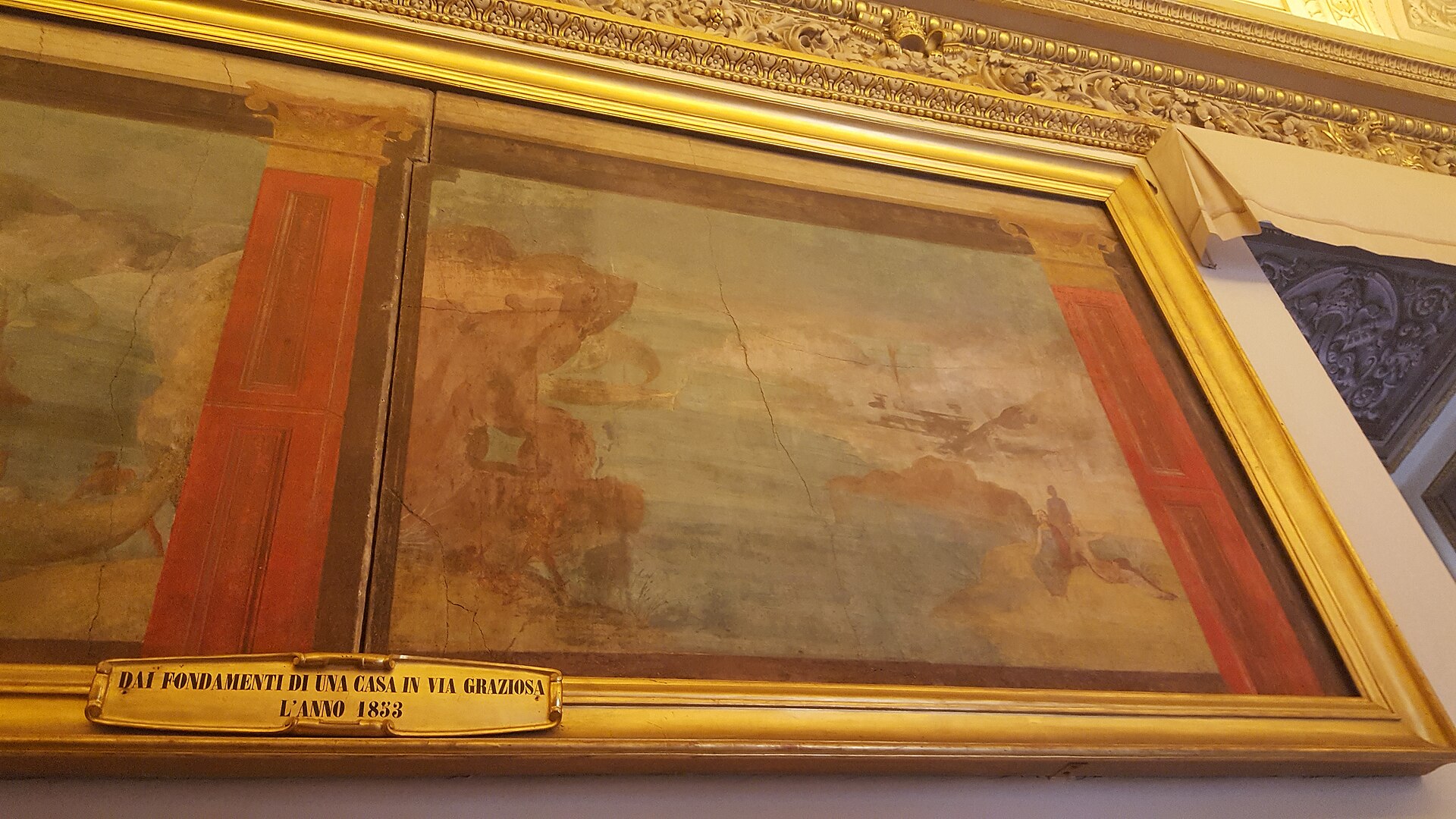
The Laestrygonians Hurling Rocks
The ambush breaks. On the shore, the giant Laestrygonians tear up boulders and hurl them down at the Greek fleet trapped in the harbor, smashing hulls and spearing men, in Homer's words, like fish. Of twelve ships, only Odysseus' own, moored outside the harbor mouth, will get away.
The painter spreads the massacre across a wide, luminous bay, so the violence happens inside a calm and beautiful world. That contrast — tiny struggling figures, indifferent landscape — is what makes the Odyssey Landscapes feel strikingly modern.
The fleet next reaches the floating island of Aeolus, keeper of the winds, who does Odysseus an extraordinary favor: he ties every unfavorable wind into a leather bag and sends the ships off with a fair breeze. Within sight of Ithaca's fires, while Odysseus sleeps, his crew opens the bag, certain it holds gold. The freed winds blow them all the way back, and Aeolus refuses to help a second time — a man this unlucky, he decides, must be hated by the gods.
Rowing on, the fleet finds a harbor ringed by cliffs in the land of the Laestrygonians. The locals turn out to be giants. They rain boulders down on the trapped ships and spear the swimming sailors like fish. Of the twelve ships that left Troy, only Odysseus's own — cautiously moored outside the harbor mouth — gets away. In one afternoon he loses eleven ships and most of the men he was trying to bring home.
This panel belongs to the same Esquiline frieze of Odyssey scenes, painted by an unknown Roman artist around 50 BC and now kept with its companions in the Vatican.