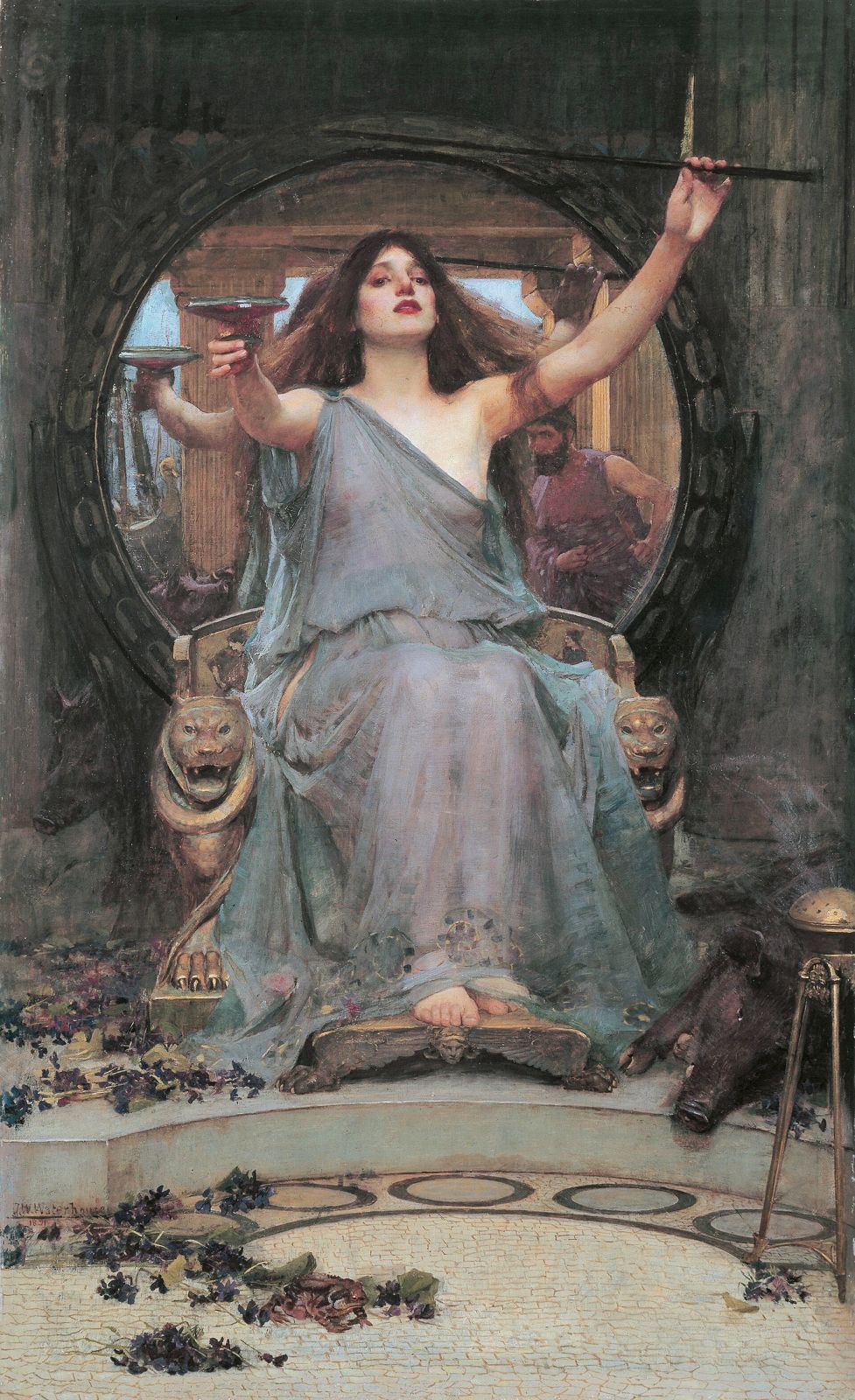
Circe Offering the Cup to Ulysses
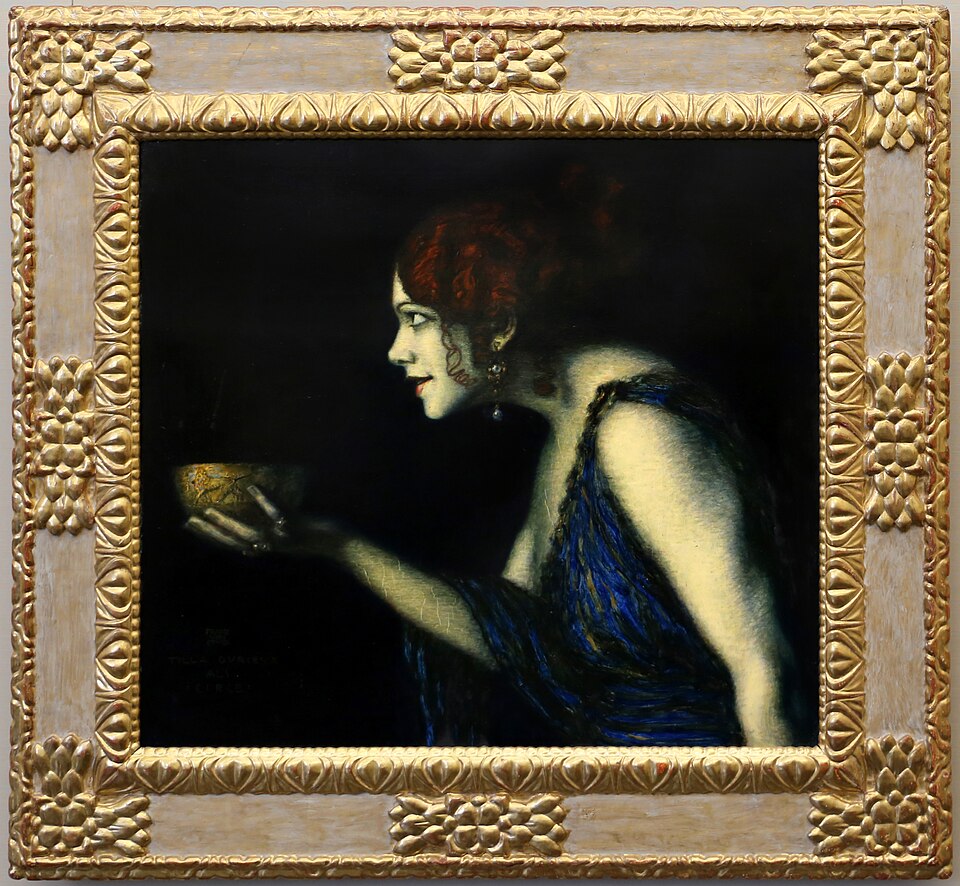
Circe sits on a bronze throne, raises the drugged cup in one hand and her wand in the other, and looks straight at you — because you are standing where Ulysses stands. His reflection appears in the round mirror behind her. At her feet, next to the incense burner, a pig snuffles: one of his transformed crew.
Waterhouse builds the whole picture around the offer. The throne's lion arms, the scattered herbs, and the mirror all frame a simple question: drink or don't. Ulysses, protected by a magic herb from Hermes, will drink and stay a man.
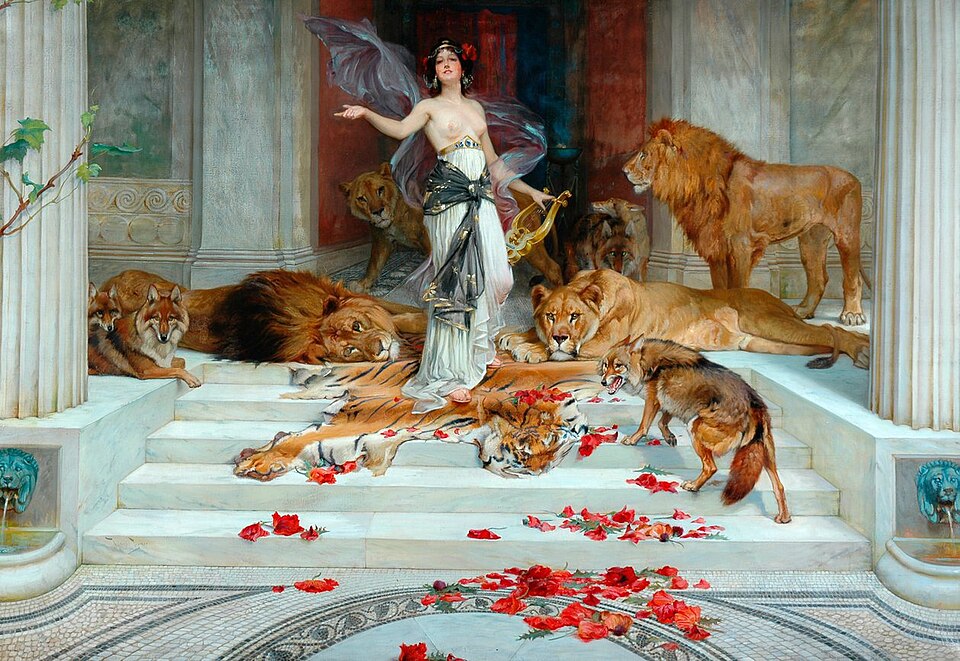
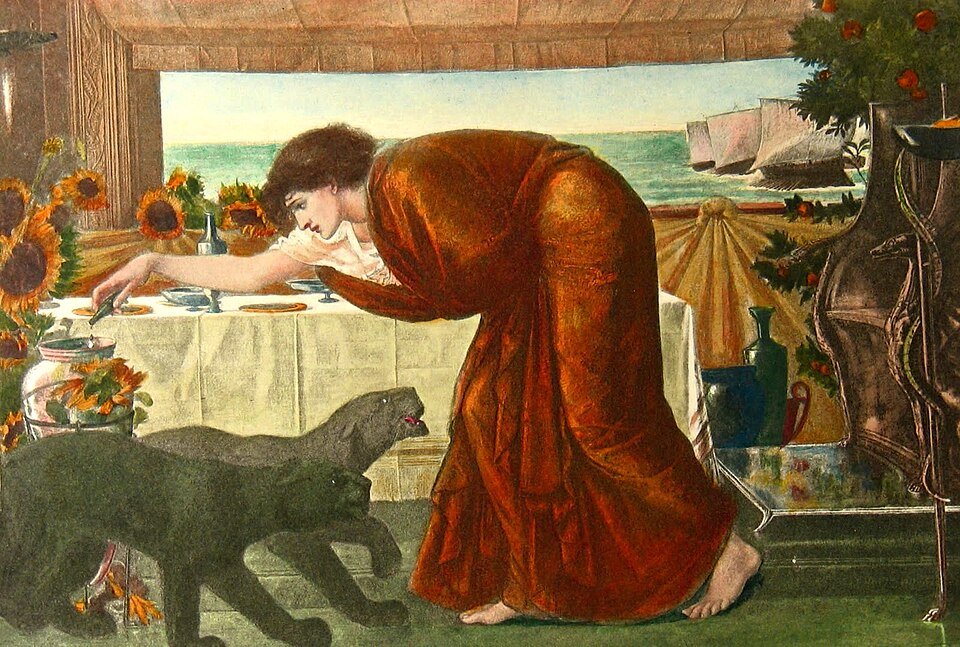
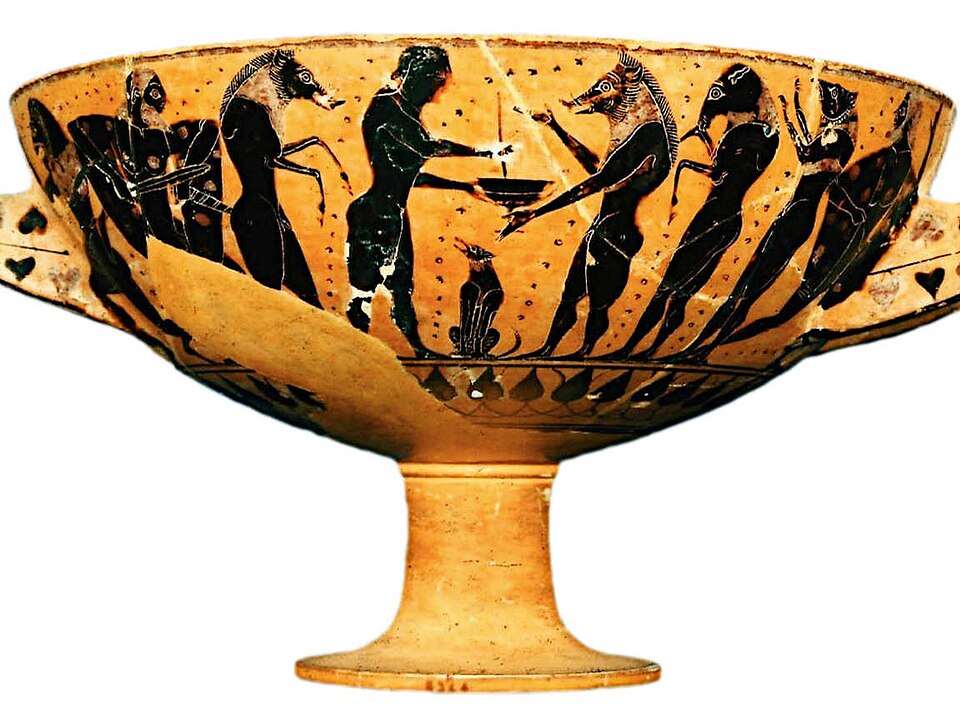
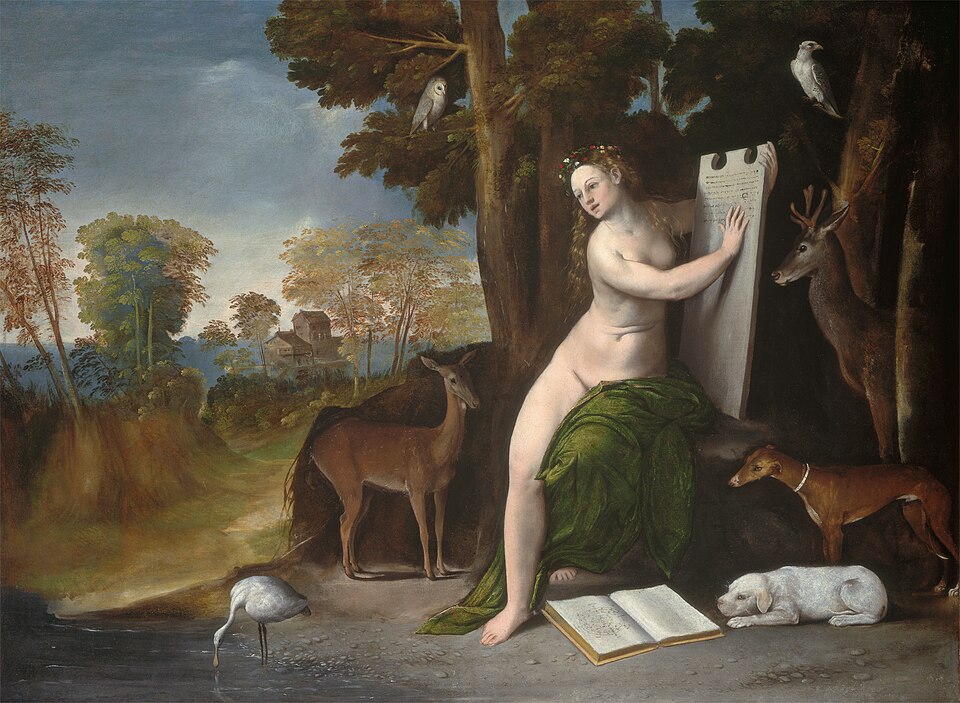
The single surviving ship reaches Aeaea, the island of Circe, a goddess and an enchantress. A scouting party finds her stone house in a clearing, guarded by wolves and mountain lions that fawn like dogs — men she has already transformed. She invites the sailors in, feeds them drugged cheese and wine, touches them with a wand, and turns them into pigs: pig bodies, human minds.
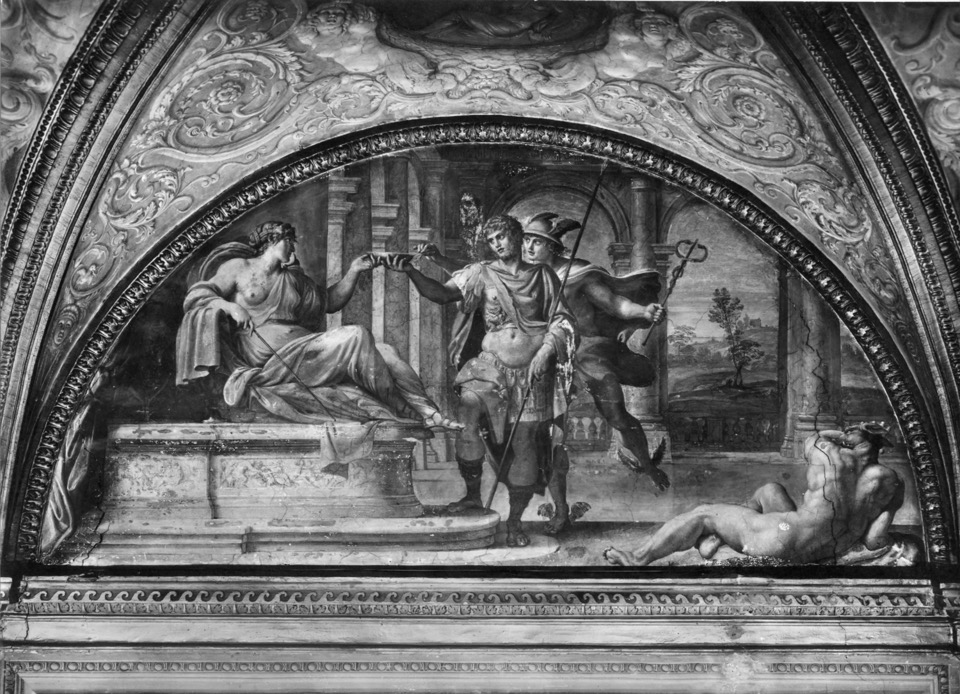
One man escapes to warn Odysseus, who goes back alone. On the way the god Hermes stops him, gives him a protective herb called moly, and tells him exactly what to do. Circe's drug fails; when she raises her wand, Odysseus draws his sword. Recognizing the man a prophecy warned her about, she restores his crew and takes him as her lover.
They stay a year, resting and feasting, until the crew reminds their captain that home still exists. Circe does not try to keep him. But she tells him the road home runs through a place no living man visits: he must sail to the edge of the world and question the dead.
John William Waterhouse (1849–1917) was a British painter who carried the Pre-Raphaelite love of myth and legend to the end of the Victorian age. He returned again and again to enchantresses and doomed heroines, painted with soft realism and theatrical staging.
.jpg)