The Slaying of the Suitors
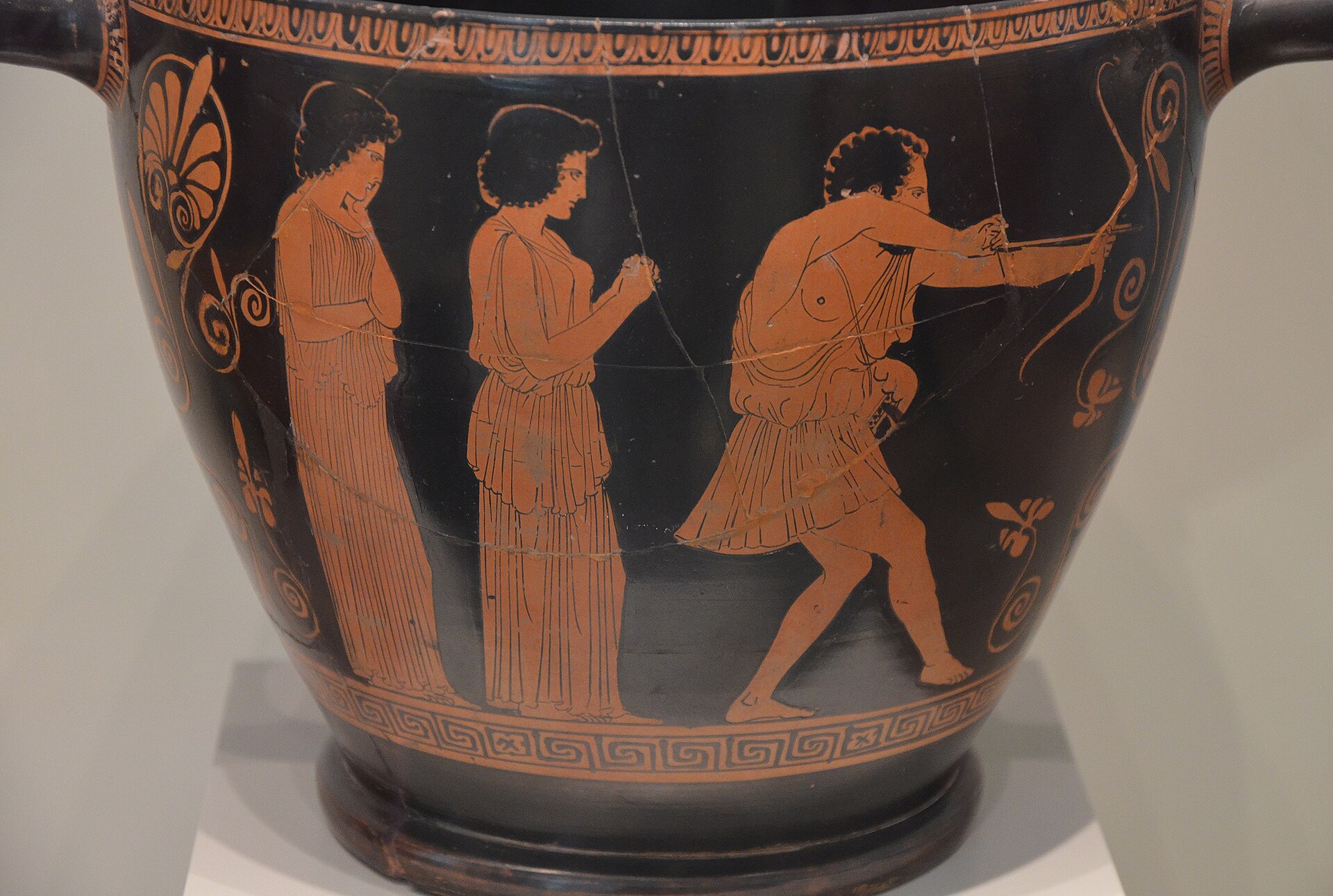
Odysseus draws his bow at close range while the suitors, caught at their feast, try to shield themselves with tables and cushions. One reaches for a sword too late. The archer's calm and the diners' panic share a single band of red-figure drawing.
Painted around 440 BC, this cup is one of the earliest surviving pictures of the massacre. The painter shows the suitors as frightened men, not villains — a surprisingly even-handed reading that matches Homer's own.
The second arrow goes through the throat of Antinous as he lifts a golden wine cup. For a moment the suitors think it is a shooting accident. Then the beggar throws off his rags, and names himself, and the hall understands: the man they have robbed for years is standing in the only doorway with a full quiver.
They have numbers; he has the locked door, the bow, Telemachus, two loyal herdsmen, and Athena. Homer gives the fight the full, unsparing brutality of an Iliad battle, fought indoors among the dinner tables. By the end every suitor — more than a hundred men — is dead, the disloyal maids are hanged, and the hall is fumigated with sulfur. Poseidon's curse has run its course exactly: he has come home late, alone, and to trouble.
This skyphos is attributed to the Penelope Painter, an Athenian artist of the mid-400s BC named for his image of Penelope at her loom. His Odyssey scenes are among the most thoughtful in Greek vase painting.
,_around_440_BC,_Altes_Museum_Berlin_(13718420225).jpg)