Odysseus and Leucothea
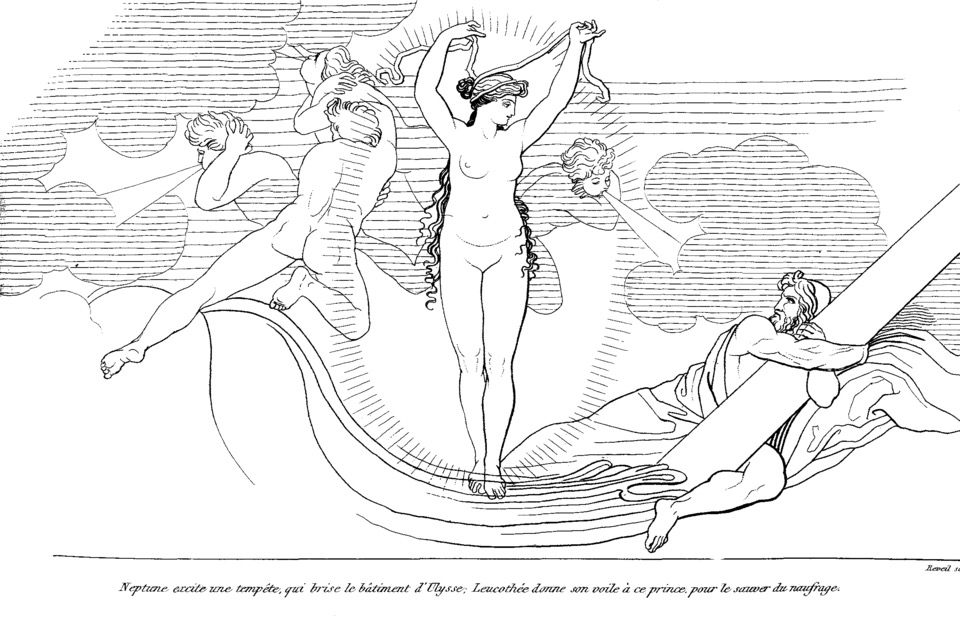
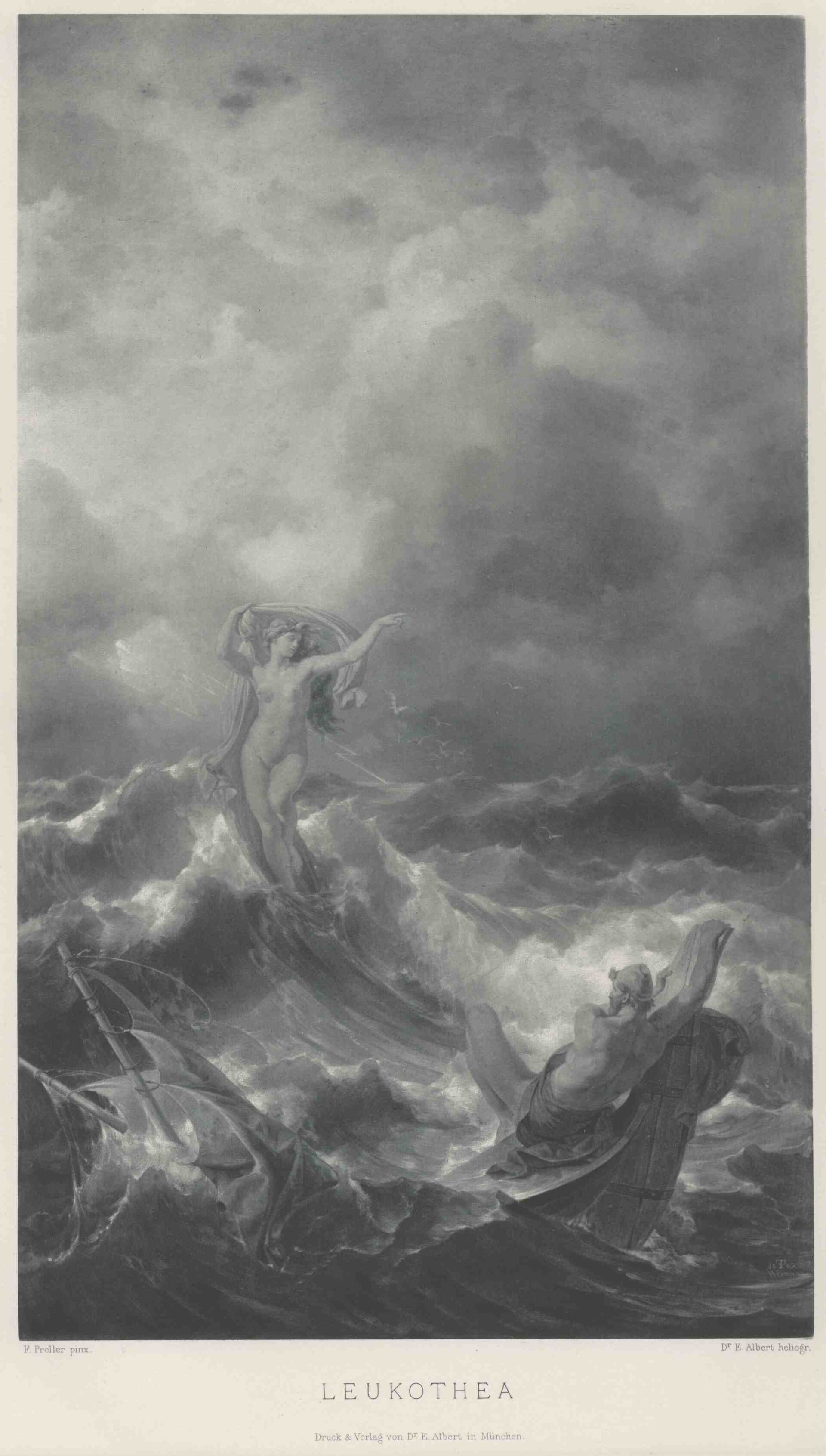
Odysseus clings to the last timbers of his raft as the storm sent by Poseidon tears it apart. Beside him appears Leucothea, a sea goddess who was once a mortal woman. She offers him her veil — a charm that will keep him alive until he reaches land.
Preller was above all a landscape painter, and here the sea is the real subject: heaped waves, driven spray, a sky with no comfort in it. The scene comes from his celebrated cycle of Odyssey landscapes, the project that occupied much of his career.
On Olympus, the goddess Athena — Odysseus's constant protector — finally forces the issue, and Zeus sends Hermes, the messenger god, to order Calypso to release her prisoner. She protests the gods' double standard bitterly, then gives in with grace: tools, timber, provisions, a favoring wind. Odysseus builds a raft with his own hands and sails alone for seventeen days.
Then Poseidon, returning from a feast, spots the raft and remembers his blinded son. He stirs the sea into a chaos of wind from every direction, and a wave the size of a hillside tears the raft apart. What saves Odysseus is Ino Leucothea, the “white goddess” of the waves, who rises like a seabird and lends him her veil — with it, he cannot drown. He swims for two days and two nights and crawls ashore, naked and half dead, in the mouth of a river on the island of Scheria.
Friedrich Preller the Elder (1804–1878) was a German painter closely tied to Weimar and the legacy of Goethe, who encouraged him as a young man. He is remembered almost entirely for his heroic landscape cycles illustrating the Odyssey.