Scylla
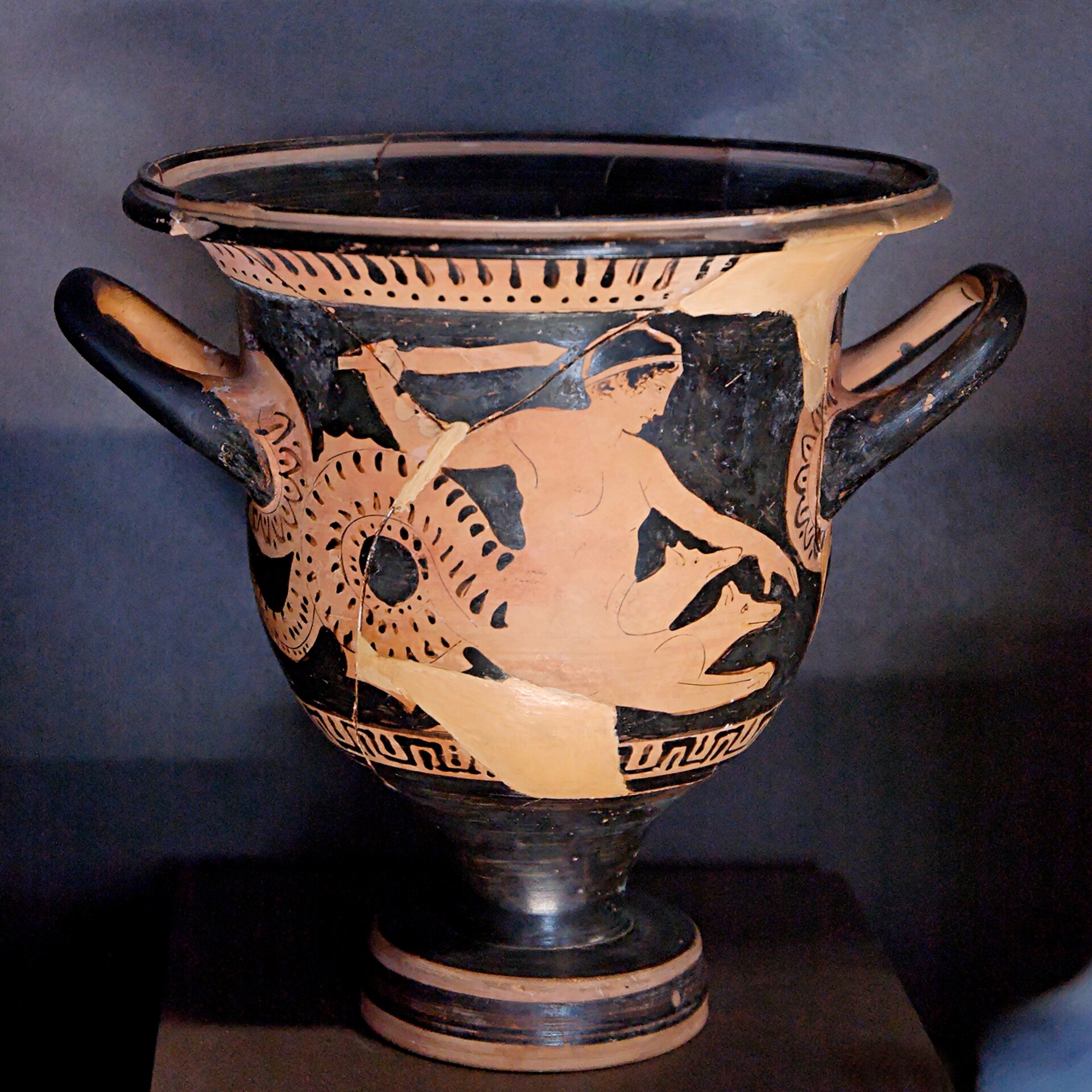
Here is Scylla as the Greeks pictured her: a woman above the waist, a ring of dog heads springing from her hips, and a long fish tail behind. Vase painters usually show her mid-attack, arm raised, exactly as sailors were supposed to dread her.
The mixed body is the whole horror — beauty, hounds, and sea creature fused into one. Homer's Scylla lives in a cliff cave and takes one man for each of her six heads; painters compressed that into a single unforgettable silhouette.
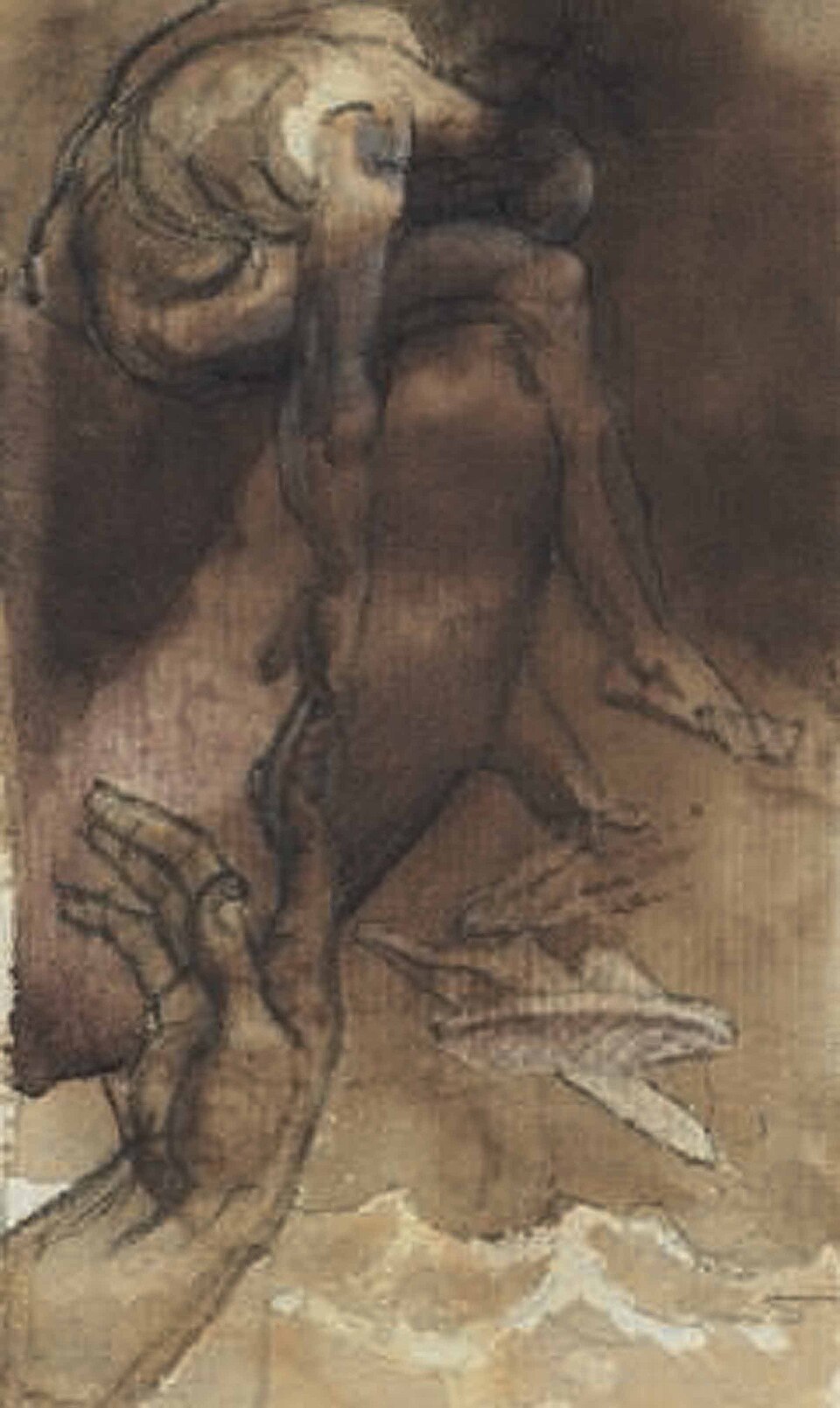
The next passage offers no good choice. On one side of a narrow strait, under a fig tree, is Charybdis: a whirlpool that swallows the whole sea three times a day and spews it back. On the other side, in a cliff-face cave, lives Scylla: six heads on six long necks, each mouth packed with three rows of teeth.
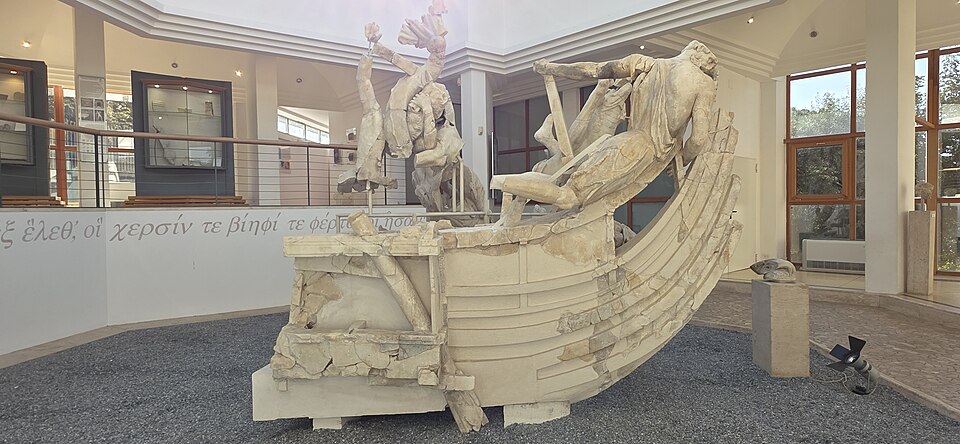
Circe's advice was cold arithmetic — steer close to Scylla, because Charybdis takes the whole ship and Scylla takes only six men. Odysseus puts on his armor anyway, unable to simply stand and watch. It changes nothing. While every eye is on the whirlpool, the six heads strike the deck and lift six rowers into the air, calling his name as they go. It is, he says later, the most pitiful thing he saw in all his years at sea.
This krater was painted in the Greek cities of southern Italy in the later fifth century BC, where vase workshops flourished alongside the Athenian tradition and favored dramatic mythological monsters.