The Scylla Group of Sperlonga
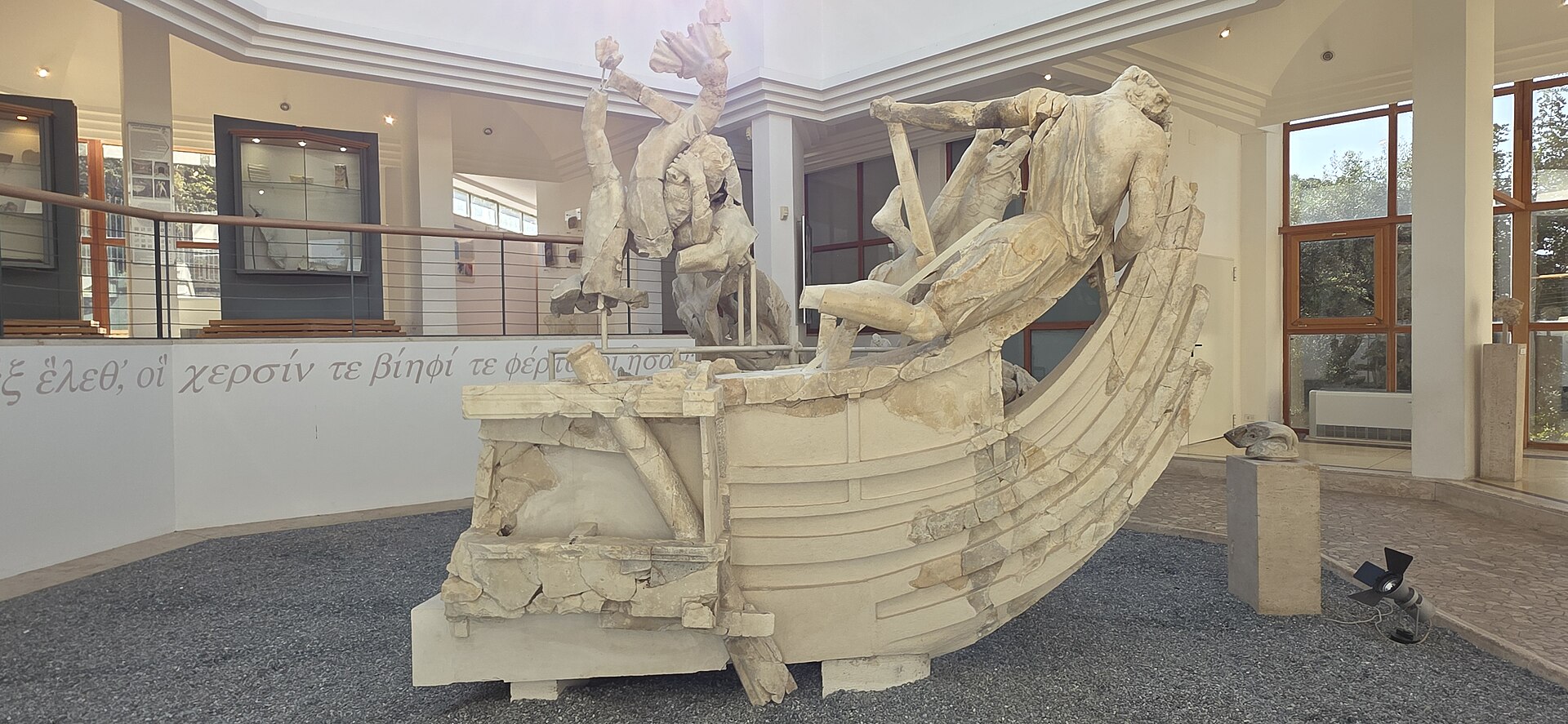
The centerpiece of the emperor Tiberius' grotto at Sperlonga was this enormous marble group: Odysseus' ship caught by Scylla, whose waist sprouts the foreparts of ravening dogs, seizing sailors as they scramble over the hull. It survives only in fragments, displayed alongside a reconstruction.
Diners in the grotto sat surrounded by the Odyssey's most violent moments carved at colossal scale, with this shipwreck rising from the water at the center. It is Hellenistic sculpture at its most theatrical — the same taste for agony and motion as the Laocoön.
The next passage offers no good choice. On one side of a narrow strait, under a fig tree, is Charybdis: a whirlpool that swallows the whole sea three times a day and spews it back. On the other side, in a cliff-face cave, lives Scylla: six heads on six long necks, each mouth packed with three rows of teeth.
Circe's advice was cold arithmetic — steer close to Scylla, because Charybdis takes the whole ship and Scylla takes only six men. Odysseus puts on his armor anyway, unable to simply stand and watch. It changes nothing. While every eye is on the whirlpool, the six heads strike the deck and lift six rowers into the air, calling his name as they go. It is, he says later, the most pitiful thing he saw in all his years at sea.
The group is attributed to the circle of the Rhodian sculptors who made the other Sperlonga marbles — the same masters ancient writers credit with the Laocoön. They specialized in vast, multi-figure dramas in stone.