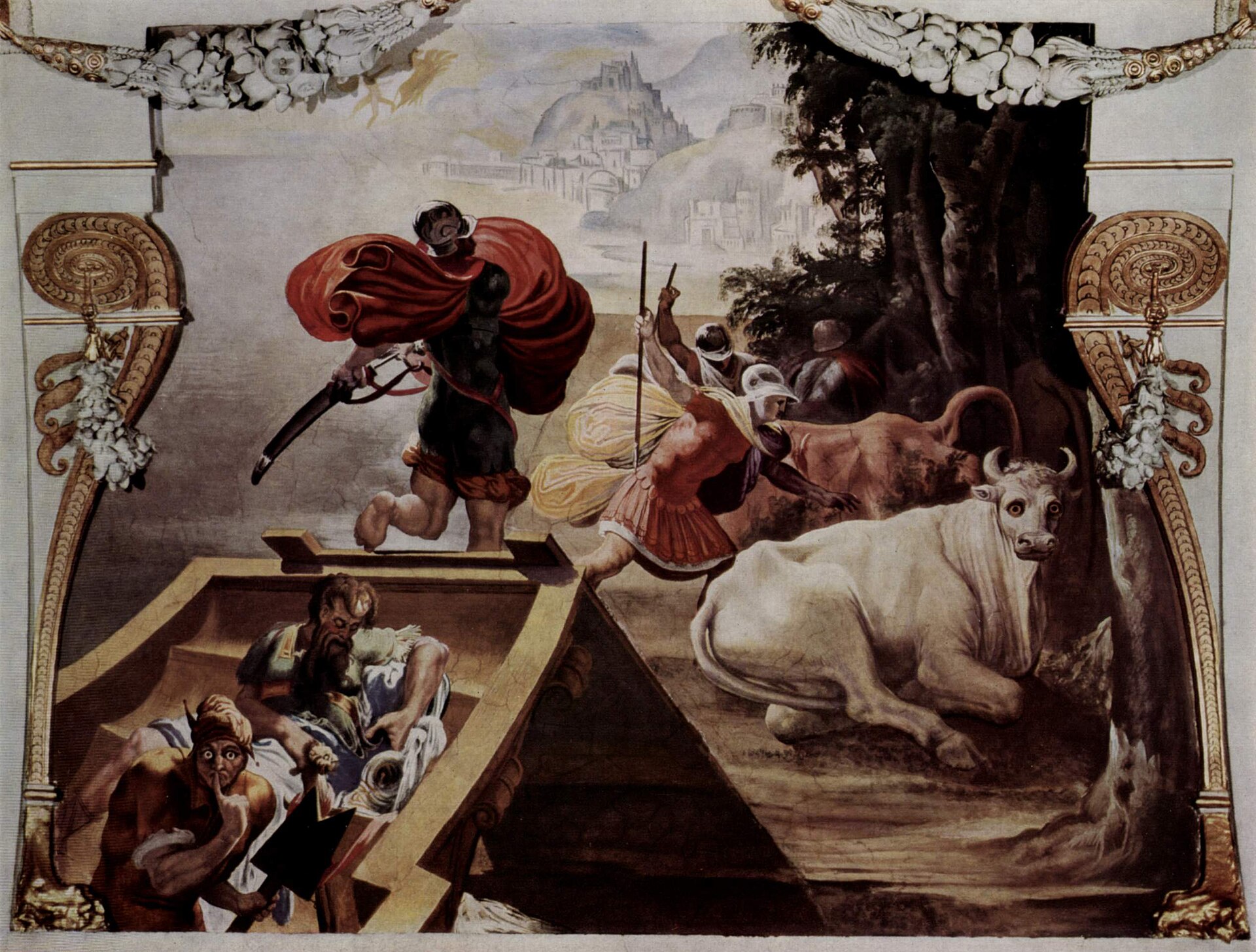
The Companions of Ulysses Slaying the Cattle of the Sun

Starving on the island of the Sun, Odysseus' men break their oath and butcher the god's sacred cattle. Tibaldi fills the fresco with huge, twisting, Michelangelesque bodies — the slaughter painted like a heroic battle, though it is really the crew's death warrant.
The scene belongs to a cycle of Ulysses frescoes painted for the Palazzo Poggi in Bologna. Tibaldi's figures, seen from below at steep angles, turn Homer's grim warning about appetite into a display of muscular bravura.
The exhausted crew begs to land on Thrinacia, the island where Helios, the sun god, pastures his sacred cattle — exactly the place Tiresias warned about. Odysseus makes every man swear an oath not to touch the herds. Then the winds turn contrary and pin them on the island for a month, and the provisions run out.
While Odysseus sleeps, his men butcher the best of the cattle. The omens are immediate and horrible: the hides crawl, and the meat lows on the spits. When the ship finally sails, Zeus, king of the gods, answers Helios with a single thunderbolt. The ship is smashed and every man drowns — except Odysseus, who lashes mast and keel together, rides the wreck back through Charybdis itself, and after nine days washes ashore alone on a distant island.
Pellegrino Tibaldi (1527–1596) was a Bolognese painter and architect of the Mannerist generation, deeply influenced by Michelangelo. He later became court painter to Philip II of Spain, decorating the Escorial.