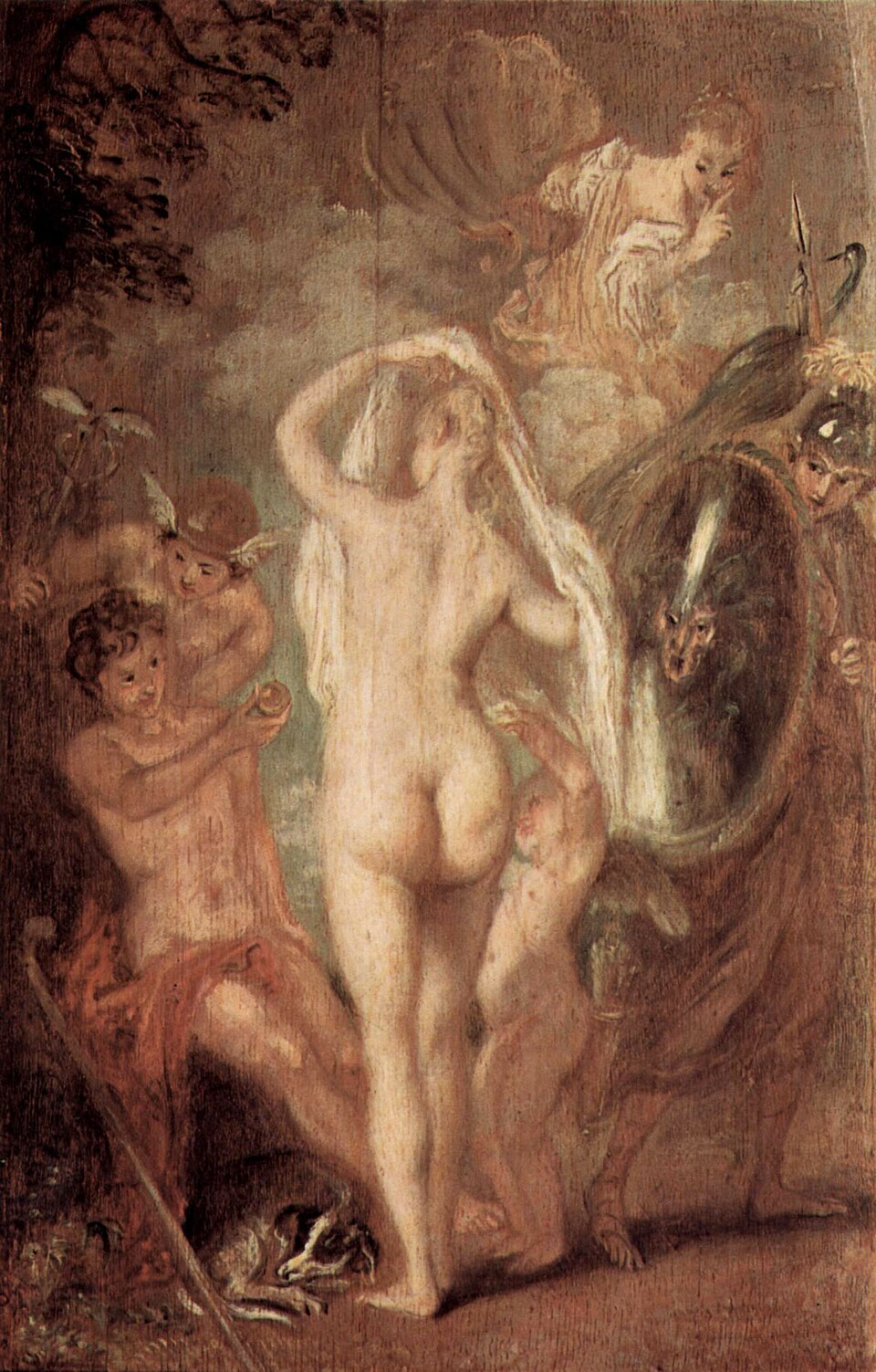
The Judgement of Paris
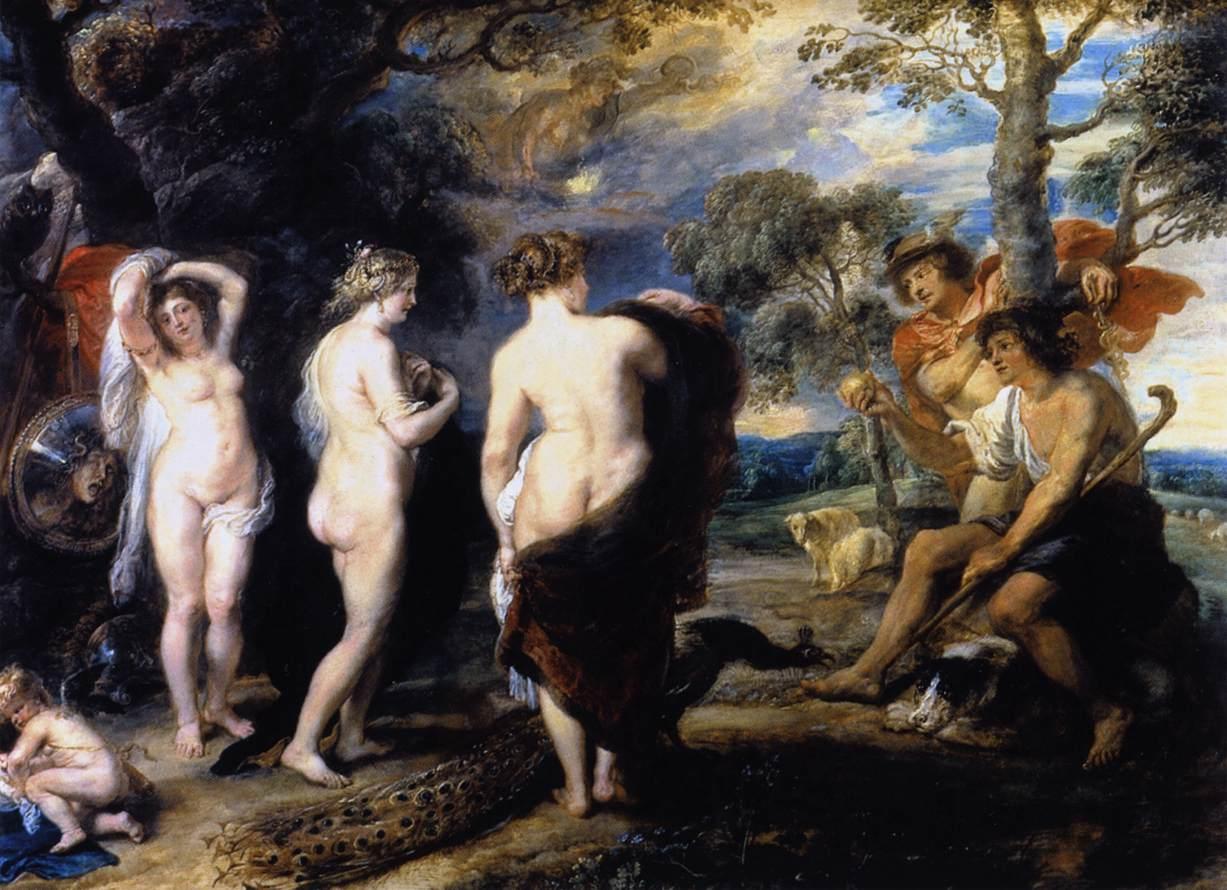
Paris, the shepherd-prince of Troy, sits at the right with the messenger god Mercury and holds out the golden apple. Before him stand the three contestants: Minerva with her armor and shield, Venus in the center, and Juno with her peacock. Above them, a Fury glowers in the sky — the coming war already gathering.
Rubens painted this near the end of his life, and it is less a beauty contest than a quiet tragedy. Paris is choosing pleasure over power and wisdom, and everyone in the sky seems to know what it will cost. The soft, glowing flesh tones are Rubens at his most confident — this is one of the most famous versions of the subject ever painted.
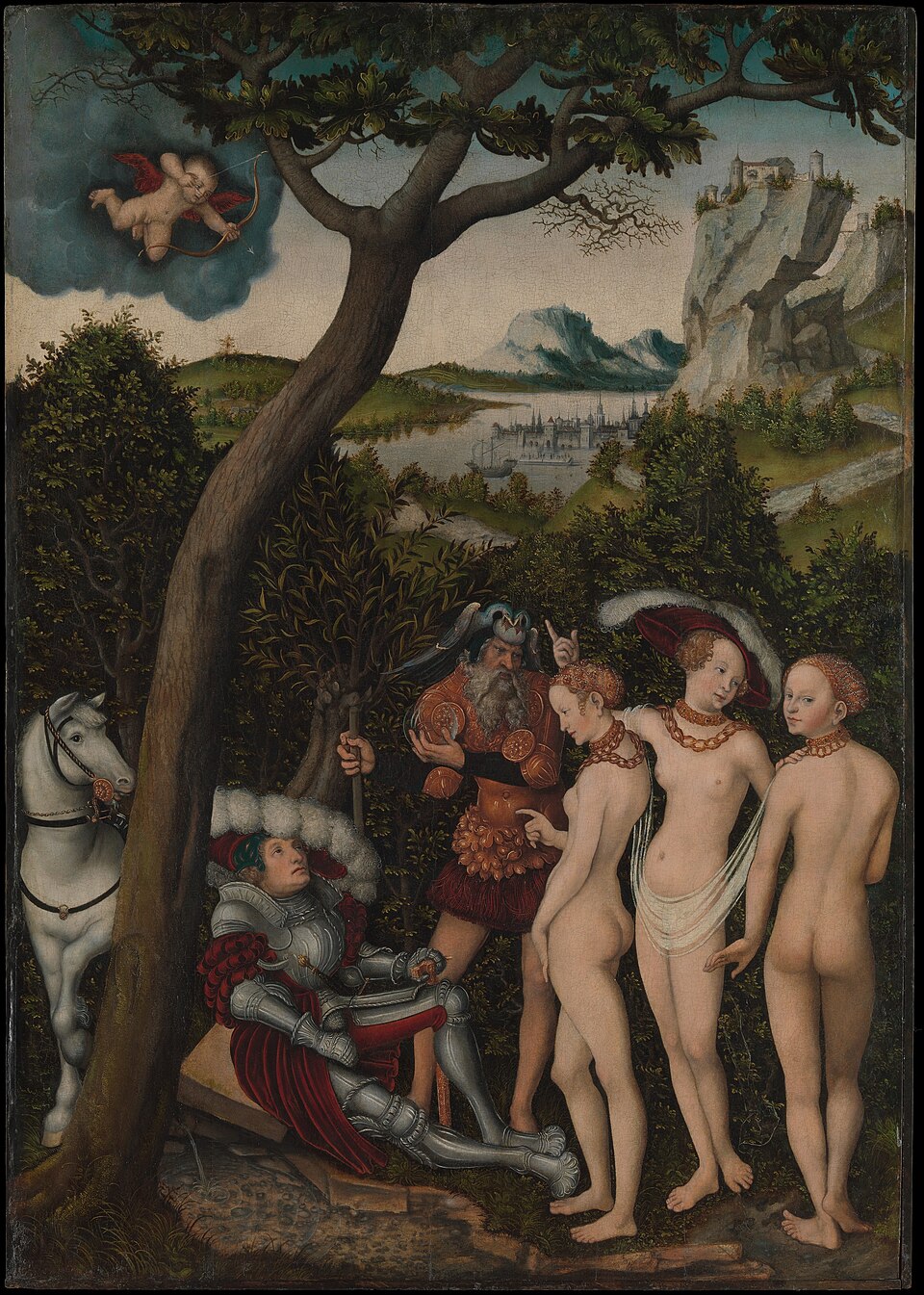
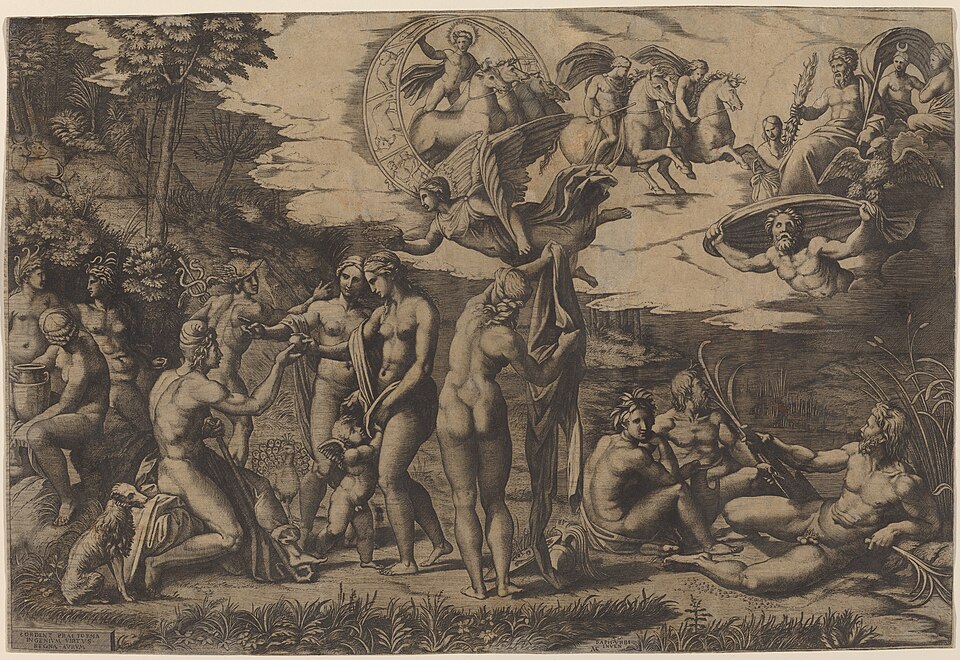
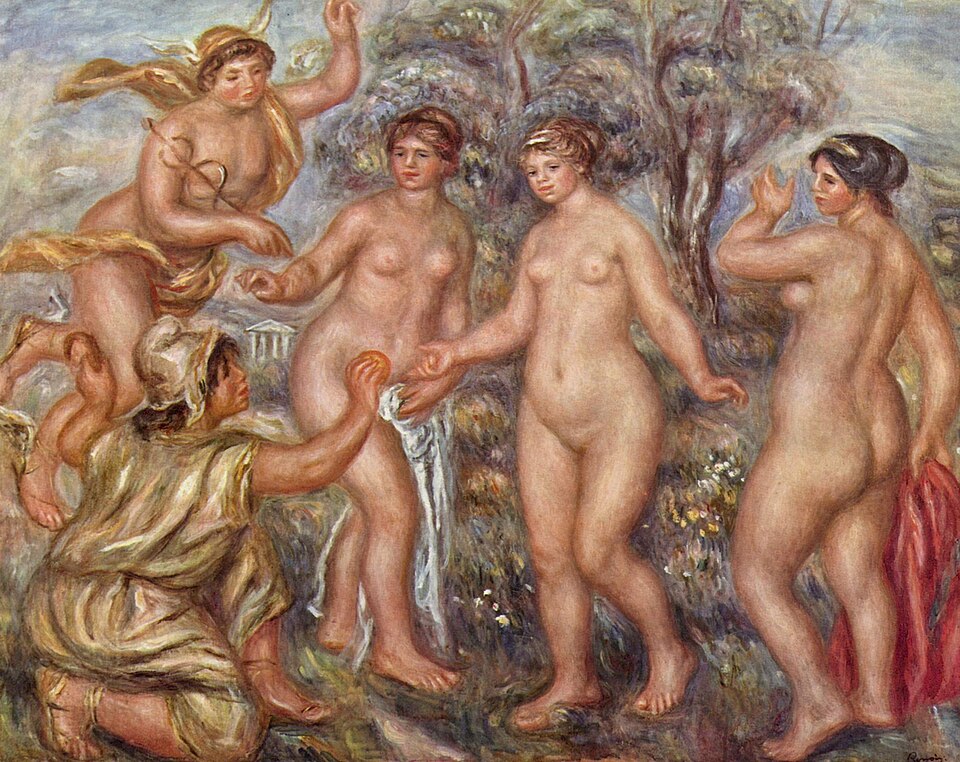
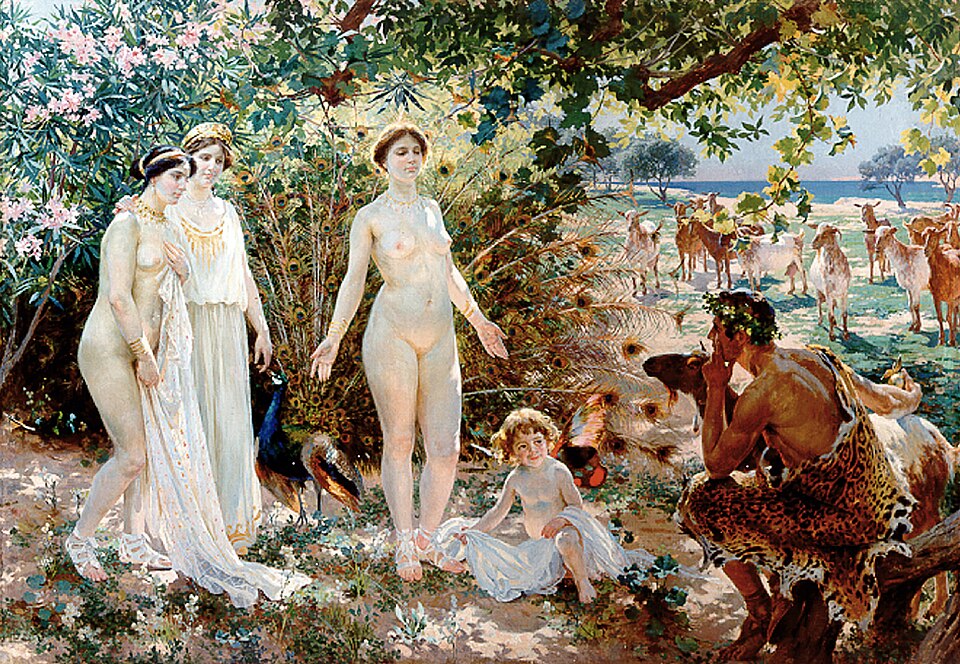
The mortal Zeus picks is Paris, a prince of Troy who is living as a shepherd on Mount Ida. The three goddesses appear before him and each offers a bribe. Hera offers power — rule over all of Asia. Athena offers victory in every battle. Aphrodite offers the most beautiful woman in the world.
Paris gives the apple to Aphrodite. It is the worst decision in Greek mythology. The woman Aphrodite has promised him is Helen, queen of Sparta — and she is already married. Worse, Paris has just made permanent enemies of Hera and Athena, who will spend the coming war working for Troy's destruction.
Peter Paul Rubens (1577–1640) was the dominant painter of the Flemish Baroque, running the busiest workshop in Europe while also serving as a diplomat between royal courts. He returned to classical myths, and to the Judgement of Paris in particular, throughout his career.