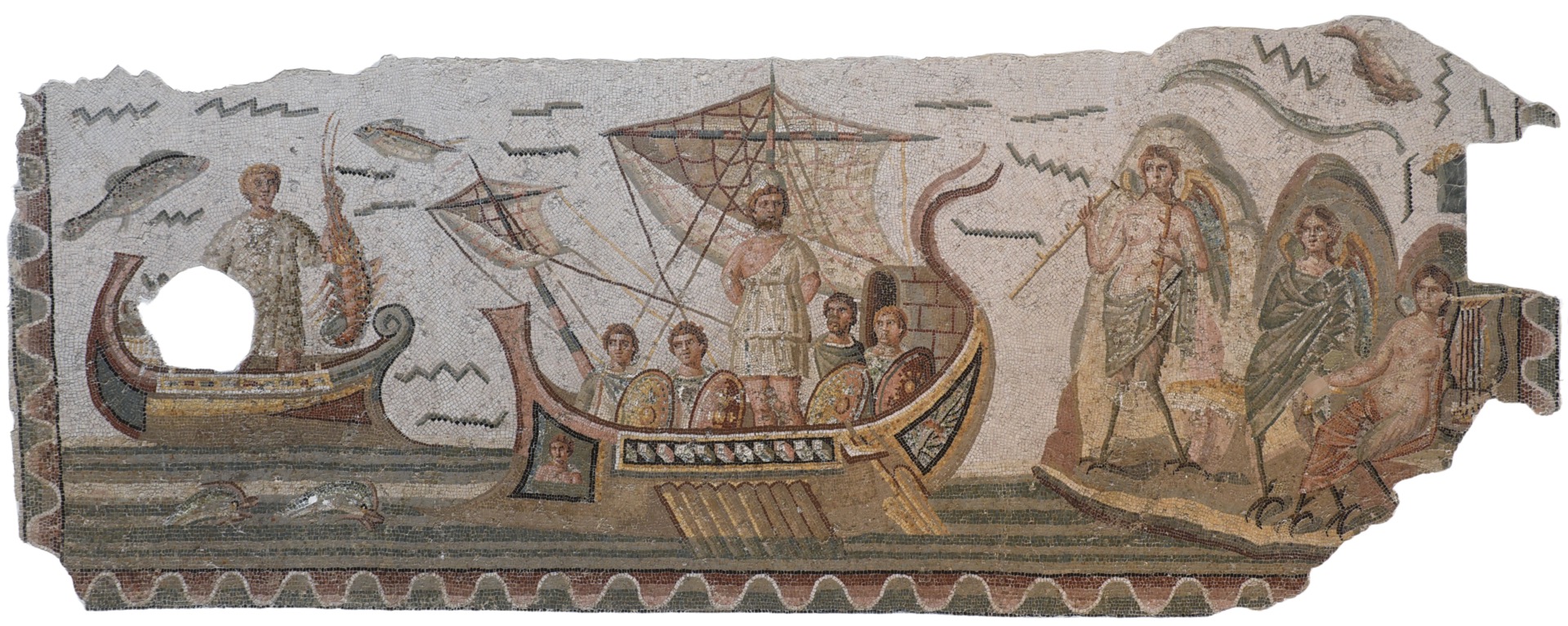
Ulysses and the Sirens (Bardo Mosaic)
Ulysses stands bound to the mast of a fine Roman ship, his crew rowing on, while the Sirens wait on the shore — women with birds' legs and wings, holding a double flute and a lyre. The mosaic floor comes from a wealthy house at Dougga in Roman North Africa.
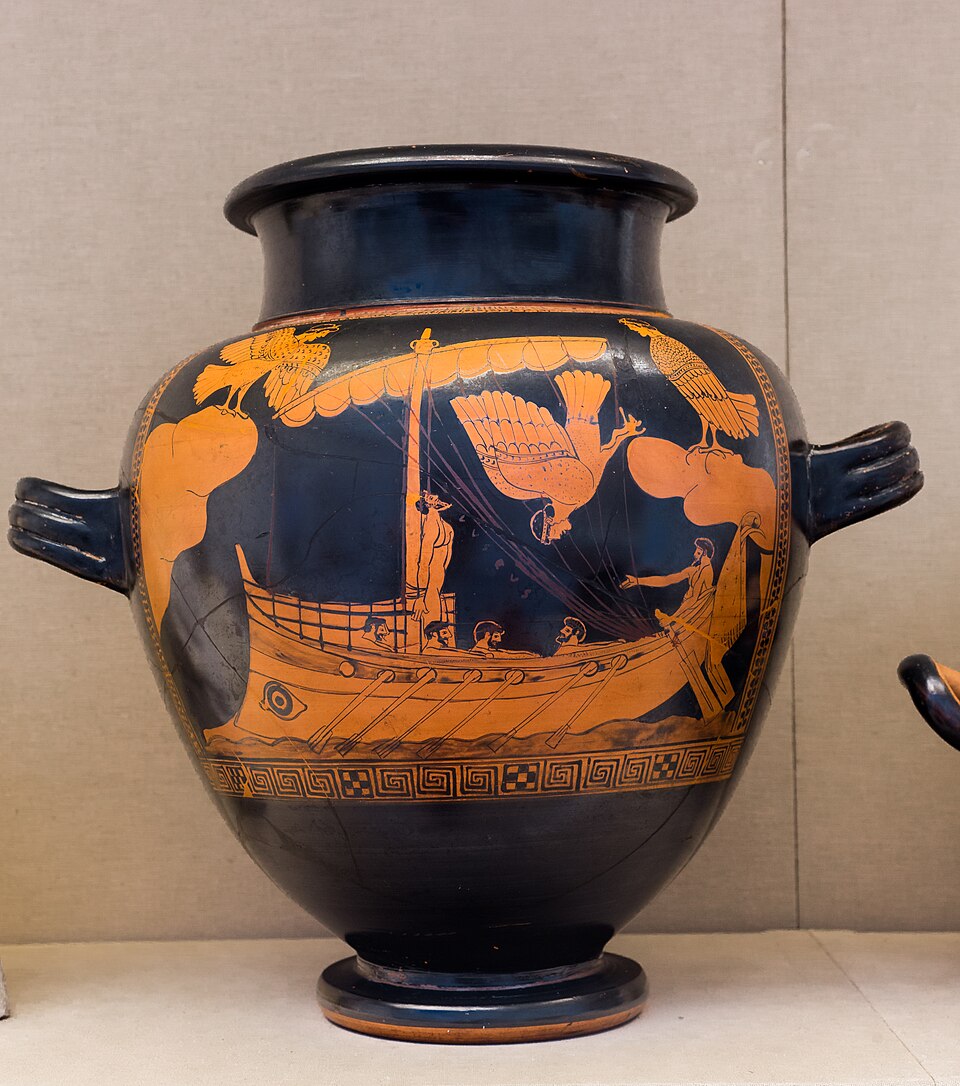
Six centuries after the Siren Vase, the story is still recognizably the same picture: ship, mast, bound hero, singing monsters. That continuity is the point — by the third century AD, Homer's scenes had become part of the standard furniture of Mediterranean life, right down to the dining-room floor.
Sailing back past Aeaea — where Circe gives him precise directions for the horrors ahead — Odysseus approaches the island of the Sirens. They are singers with the bodies of birds, and their song makes an irresistible promise: listen, and you will know everything that has ever happened on earth. No one who hears it sails on. Their meadow is heaped with the bones of men who stayed to listen until they died.
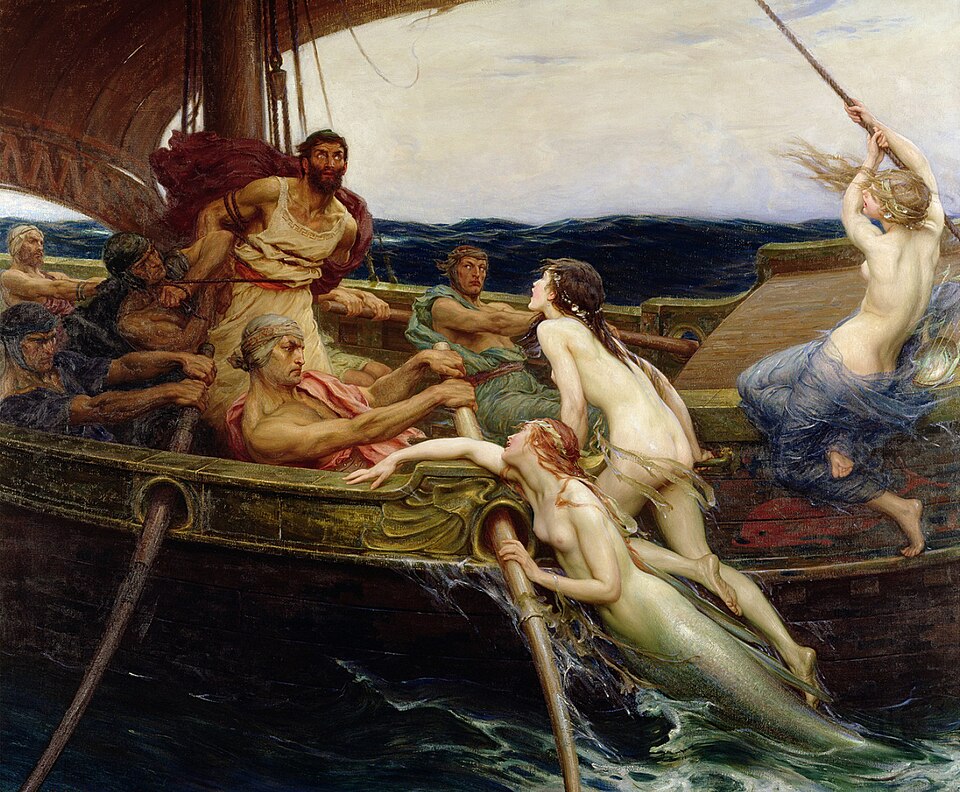
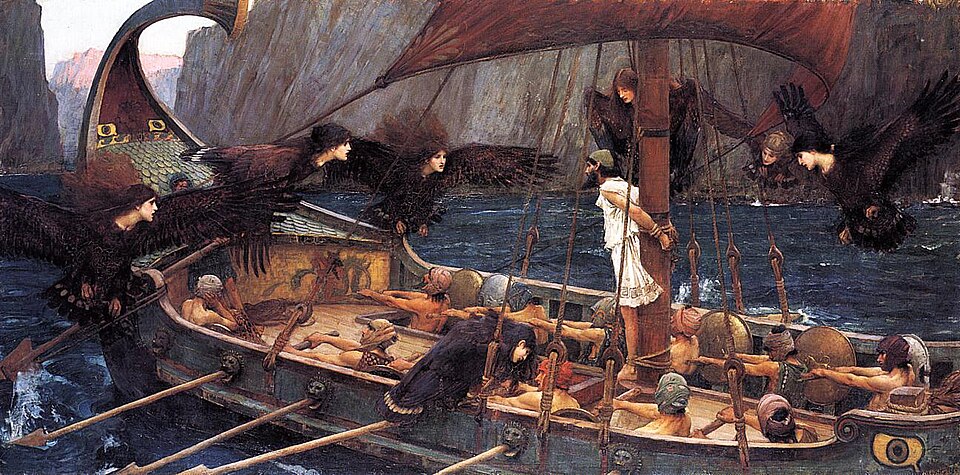
Circe has told him the trick, and it is pure Odysseus: he wants to hear the song and live. He plugs his crew's ears with softened beeswax, then has them tie him upright to the mast, ears open — with orders to bind him tighter the more he begs. The song reaches him and he strains against the ropes, shouting to be released. The deaf crew just rows harder until the island is out of earshot.
The mosaic was laid by a Roman-African workshop in the third century AD. North African mosaicists were among the finest in the empire, and their floors preserve much of what we know about Roman painting's lost repertoire.
.png)