Ulysses and the Sirens
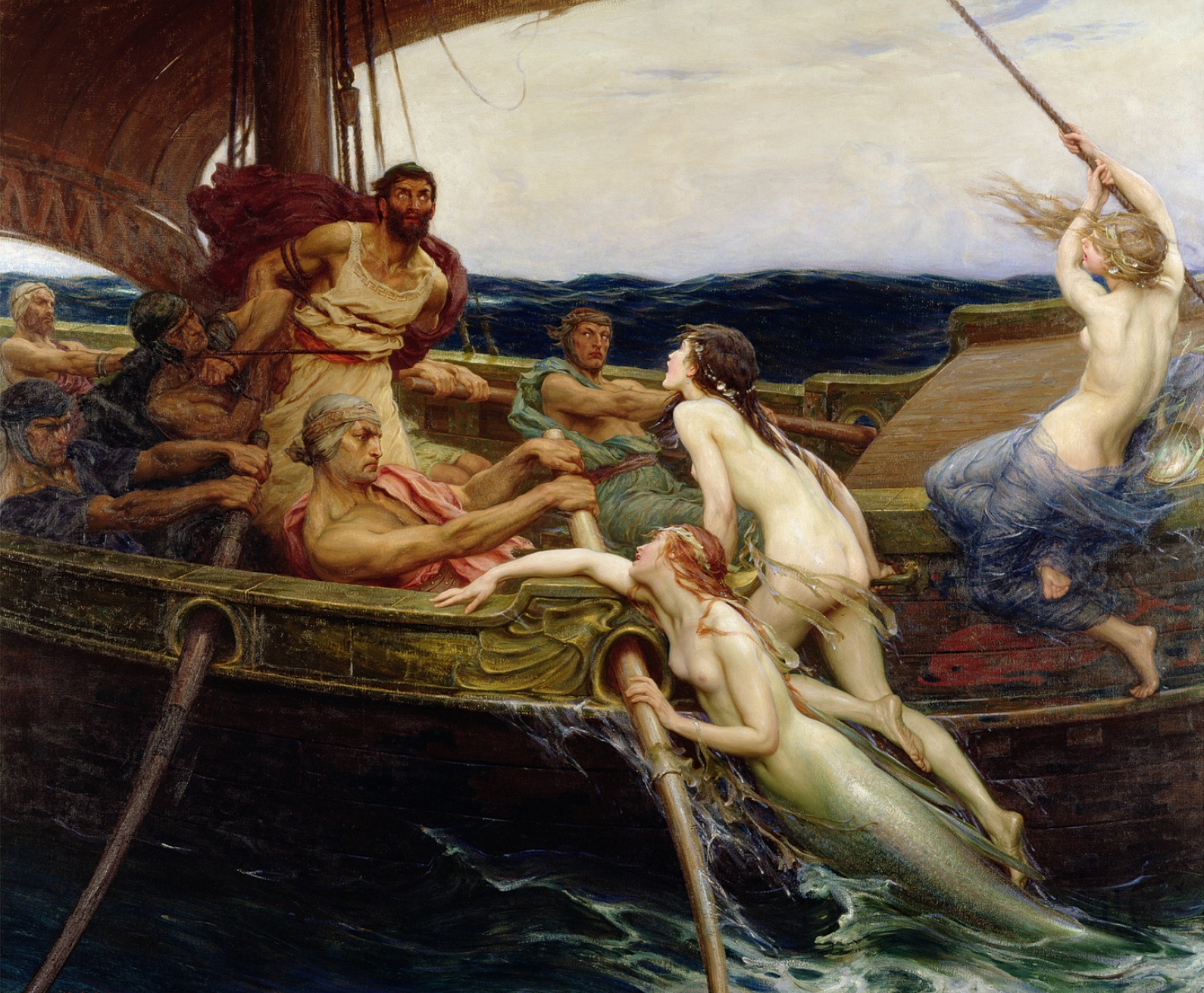
Draper's Sirens do not sing from a distant rock — they climb aboard. Three of them surge over the gunwale, shifting from fish-tailed sea creatures to fully human women as they come, while the wax-deafened crew keep rowing and Ulysses strains against the ropes at the mast.
By making the temptation board the ship, Draper turns an episode about listening into one about reaching. The painting's churning water and daylight realism made it one of the most popular mythological pictures of its era.
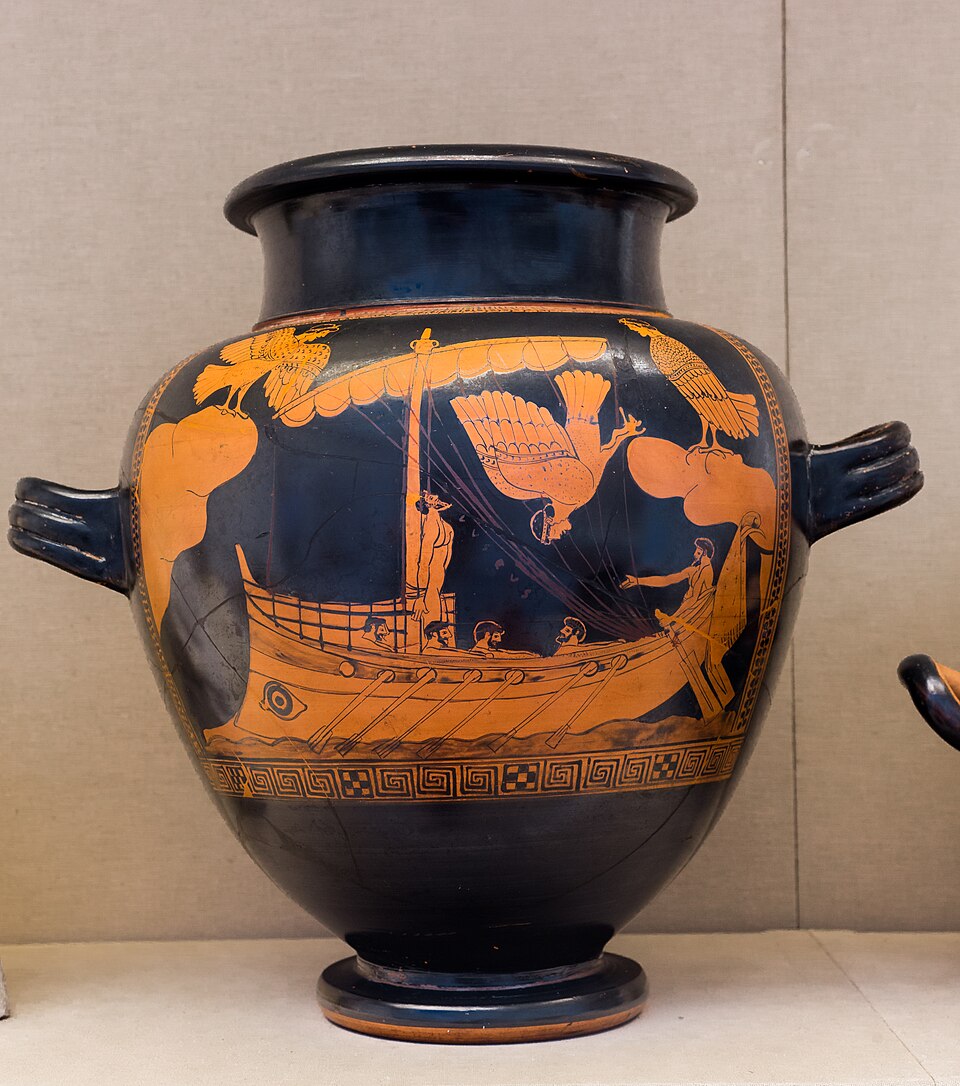
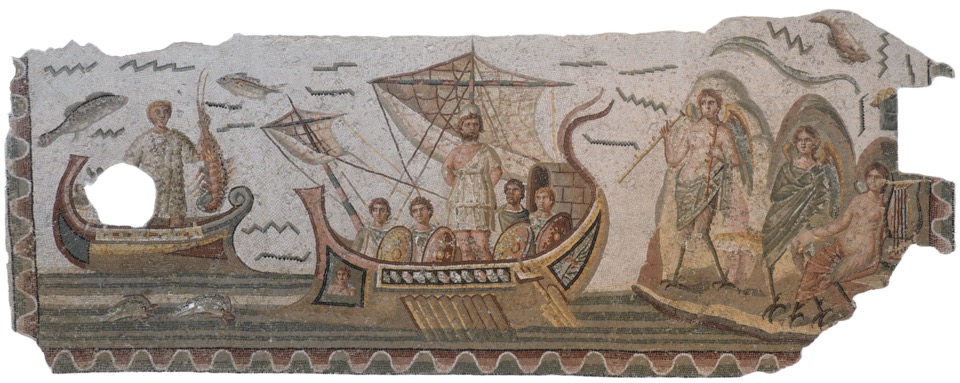
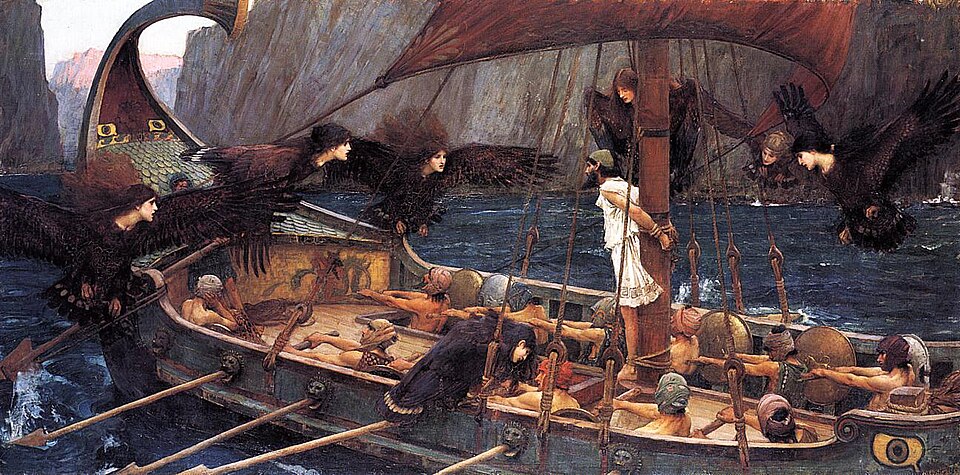
Sailing back past Aeaea — where Circe gives him precise directions for the horrors ahead — Odysseus approaches the island of the Sirens. They are singers with the bodies of birds, and their song makes an irresistible promise: listen, and you will know everything that has ever happened on earth. No one who hears it sails on. Their meadow is heaped with the bones of men who stayed to listen until they died.
Circe has told him the trick, and it is pure Odysseus: he wants to hear the song and live. He plugs his crew's ears with softened beeswax, then has them tie him upright to the mast, ears open — with orders to bind him tighter the more he begs. The song reaches him and he strains against the ropes, shouting to be released. The deaf crew just rows harder until the island is out of earshot.
Herbert James Draper (1863–1920) was a London painter devoted to classical subjects, especially myths of the sea. His best-known work, The Lament for Icarus, hangs in Tate Britain.