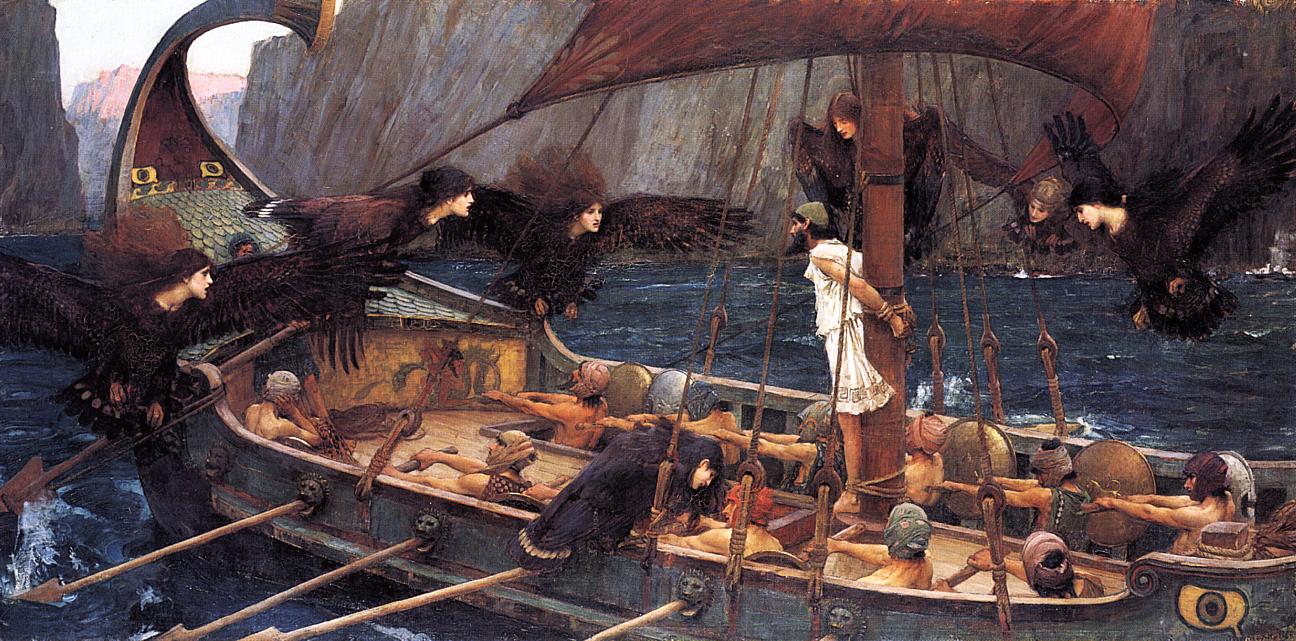
Ulysses and the Sirens
Waterhouse went back to the ancient sources: his Sirens are great birds with the heads of beautiful women, perching on the rigging and rails of the ship itself. They lean close to the rowers' plugged ears while Ulysses twists against his bonds at the mast.
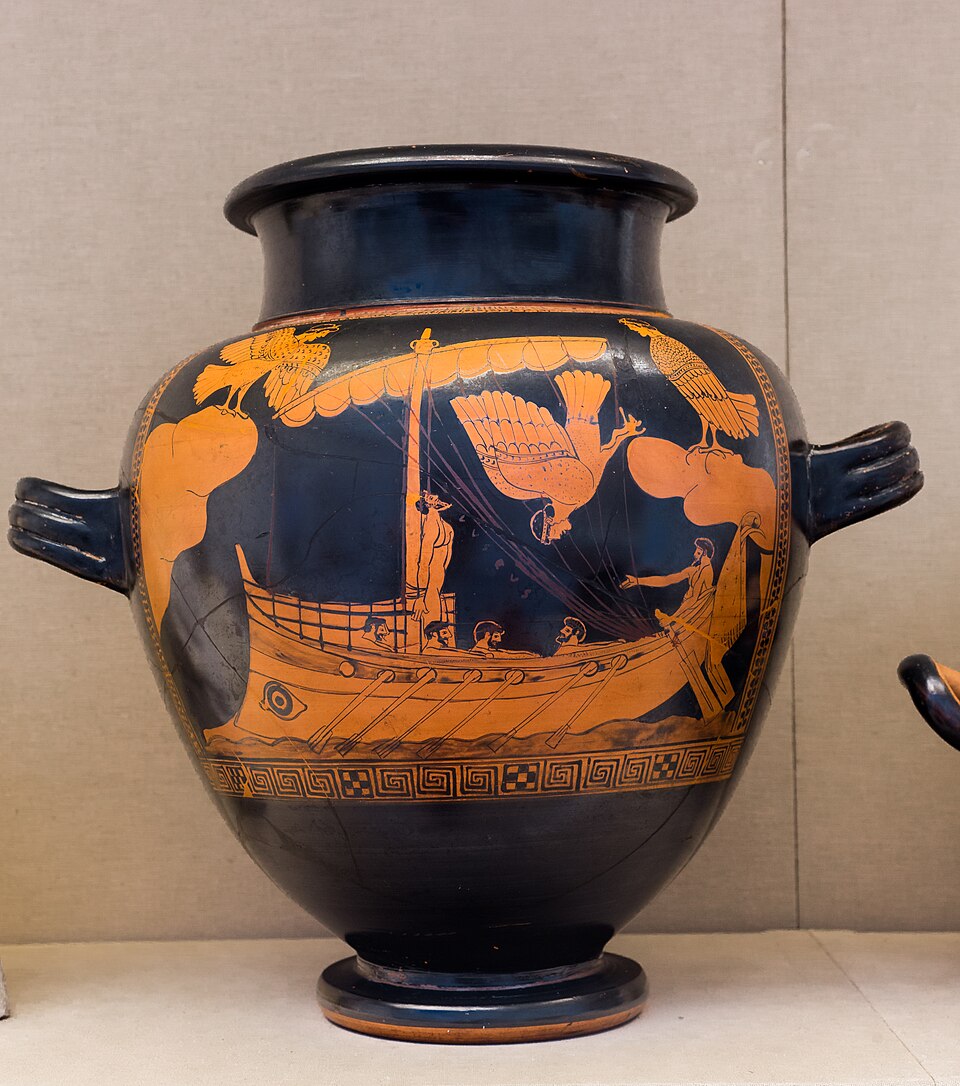
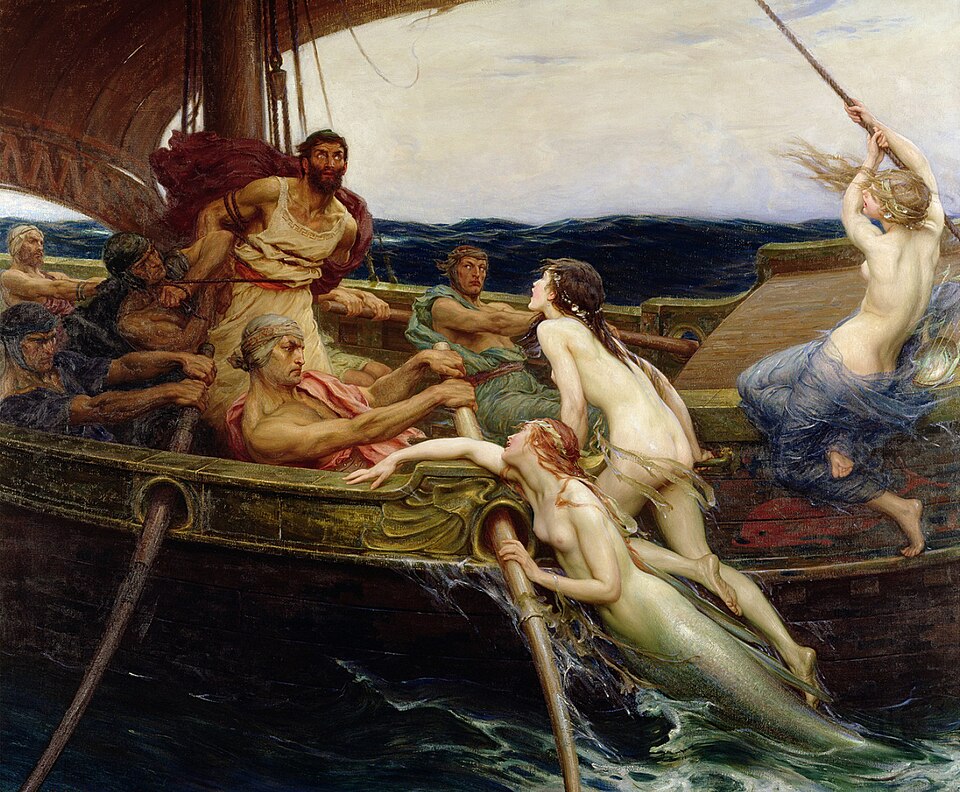
The bird-women come straight from Greek vases like the Siren Vase in the British Museum, which Waterhouse studied. The result is stranger and more unsettling than the era's usual mermaid-Sirens — beauty perched like carrion birds.
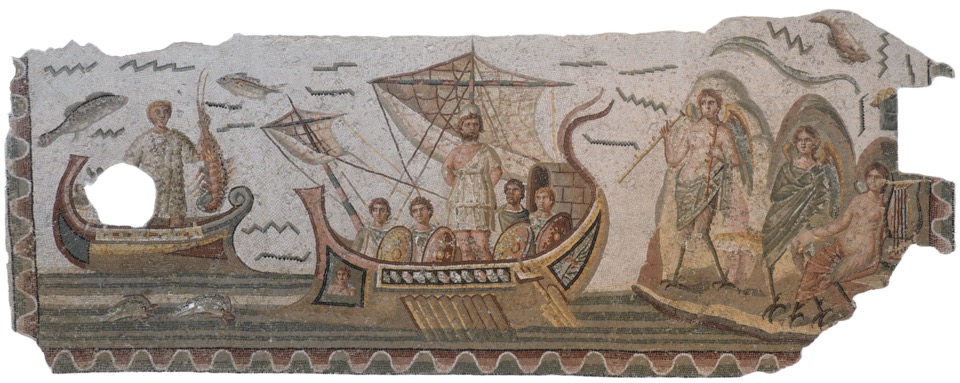
Sailing back past Aeaea — where Circe gives him precise directions for the horrors ahead — Odysseus approaches the island of the Sirens. They are singers with the bodies of birds, and their song makes an irresistible promise: listen, and you will know everything that has ever happened on earth. No one who hears it sails on. Their meadow is heaped with the bones of men who stayed to listen until they died.
Circe has told him the trick, and it is pure Odysseus: he wants to hear the song and live. He plugs his crew's ears with softened beeswax, then has them tie him upright to the mast, ears open — with orders to bind him tighter the more he begs. The song reaches him and he strains against the ropes, shouting to be released. The deaf crew just rows harder until the island is out of earshot.
John William Waterhouse (1849–1917) was a British painter who carried the Pre-Raphaelite love of myth and legend to the end of the Victorian age. He painted the women of the Odyssey — Circe, the Sirens, Penelope — throughout his career.
.jpg)